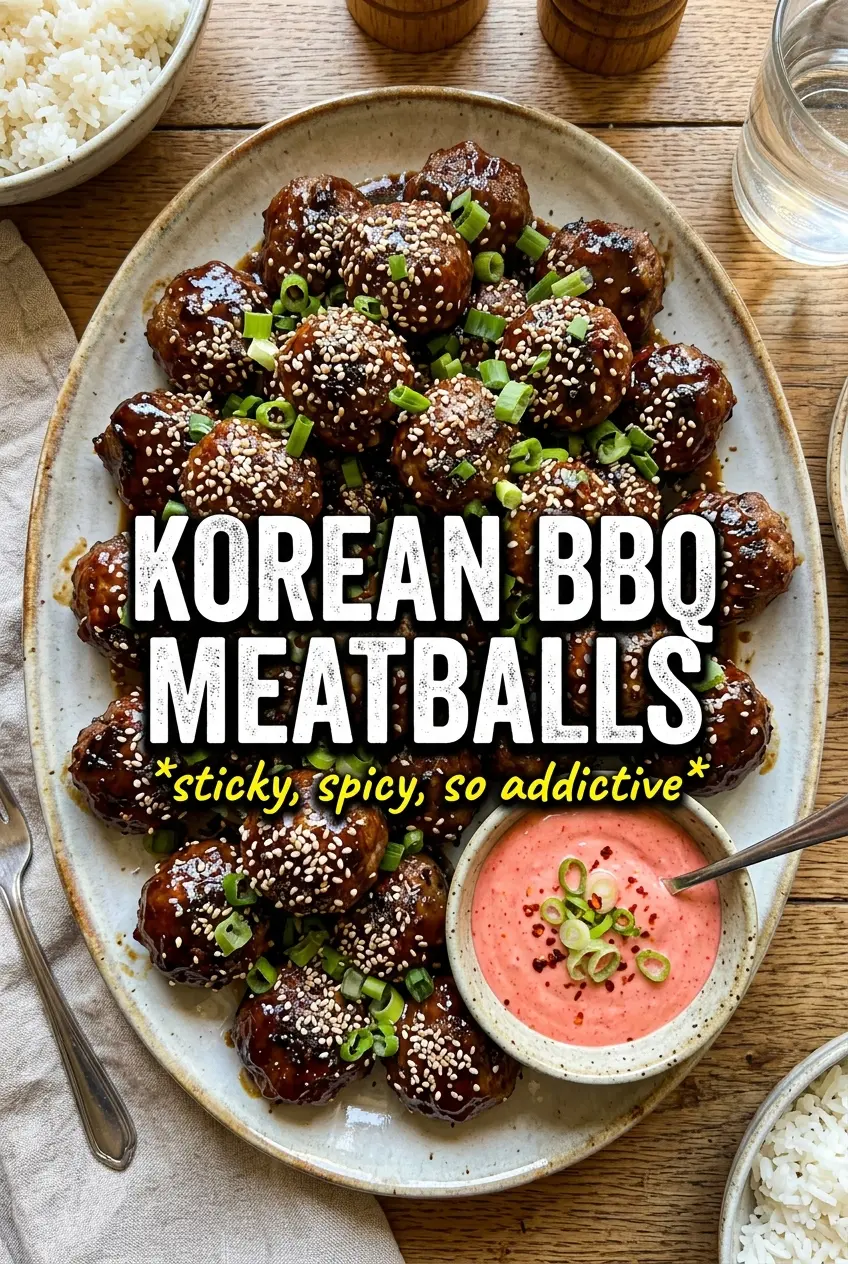
Glossy, sticky Korean BBQ meatballs hit the sweet spot between party food and weeknight dinner. The beef stays juicy, the glaze clings in a shiny lacquer, and the spicy mayo cuts through the richness with a cool, creamy bite. They disappear fast because every part of the plate pulls its weight: savory, a little sweet, a little smoky, and just enough heat to keep you reaching for one more.
What makes this version work is balance. Panko keeps the meatballs tender without turning them bready, while sesame oil and ginger push the flavor in the right direction before the glaze even hits the pan. The gochujang sauce only needs a short simmer; cook it until it looks slightly syrupy, not jammy, or it can go from glossy to sticky in the wrong way once it coats the meatballs.
Below, you’ll find the small details that keep the meatballs from drying out and the glaze from tasting flat. I also included the best way to get ahead for a party, because these are at their best when the sauce is hot and the dipping bowl is cold.
The glaze thickened just enough to coat every meatball without turning sticky-hard, and the spicy mayo was the perfect cool dip. I baked them right at 18 minutes and they came out juicy in the middle.
Korean BBQ meatballs with spicy mayo dip are the kind of appetizer that stays glossy, saucy, and crowd-friendly from the first tray to the last.
The Trick Is in the Glaze, Not the Meatball
People often overwork meatballs because they’re trying to make them hold together before baking. That’s not the goal here. The egg and panko do the binding, but the real payoff comes after baking, when the hot meatballs go into the simmered glaze and soak up that sweet-salty heat without falling apart. Bake them first so the outside sets; then toss. If you try to glaze them too early, the sauce can thin out in the oven and bake onto the pan instead of staying on the meat.
Gochujang is what gives the sauce depth, not just heat. It brings fermented chili flavor, a little sweetness, and a dark red color that clings beautifully to beef. Honey smooths the edges, soy sauce sharpens the savoriness, and rice vinegar keeps the glaze from tasting heavy. That balance matters more than extra spice.
What Each Ingredient Is Actually Doing in These Meatballs
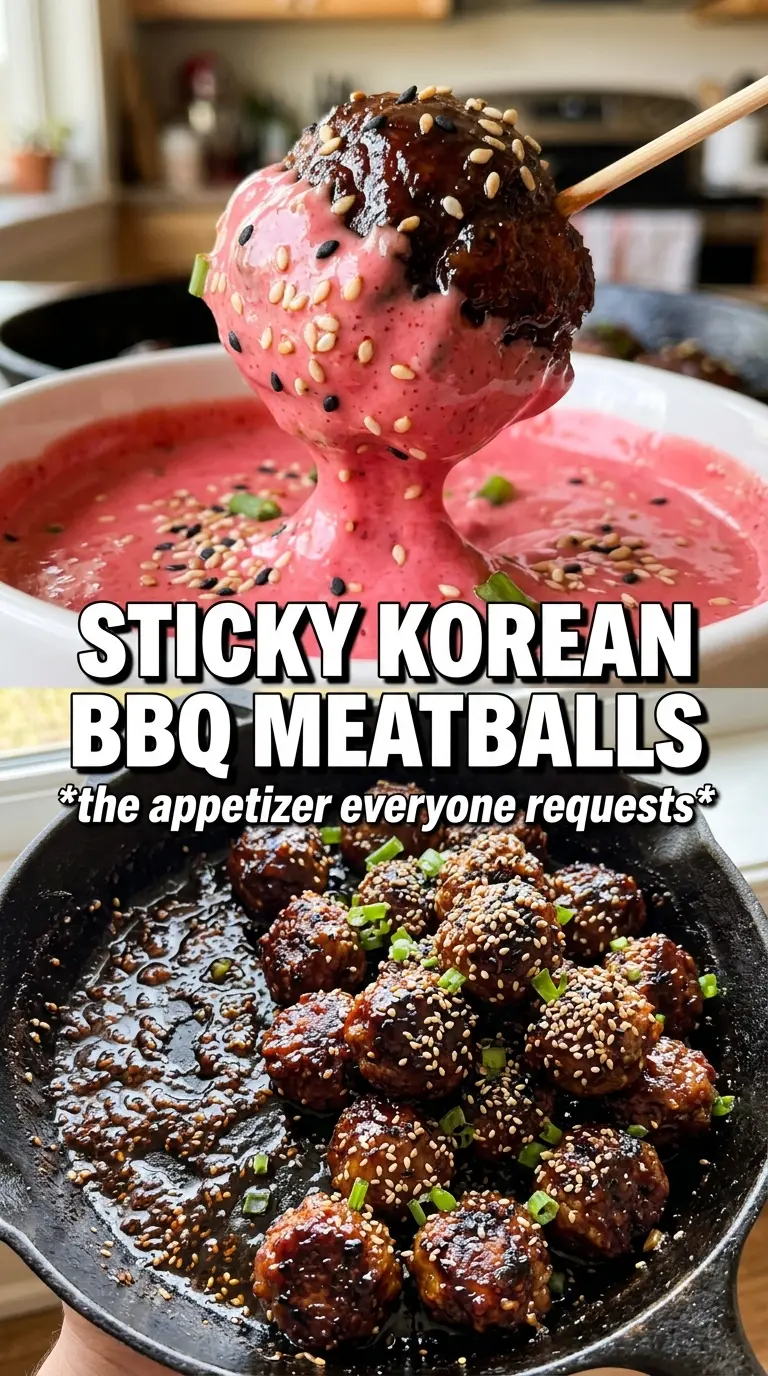
- Ground beef — Use 85/15 if you can. It stays juicy in the oven and holds up once it’s tossed in the glaze. Leaner beef works, but the meatballs will taste a little drier unless you pull them the moment they’re cooked through.
- Panko breadcrumbs — Panko keeps the texture light. Regular breadcrumbs work in a pinch, but they make the meatballs denser and a little more uniform. If you need gluten-free, use gluten-free panko and keep the amount the same.
- Sesame oil, soy sauce, garlic, and ginger — These season the meat from the inside, so the final dish tastes layered instead of sauced-on at the end. Fresh ginger matters more than powder here; it gives the meatballs a sharper, cleaner finish.
- Gochujang — This is the backbone of the glaze. There isn’t a true substitute for its funky-sweet heat, but in a pinch you can mix 2 tablespoons sriracha with 1 tablespoon miso and a little extra honey for body.
- Spicy mayo — Mayo cools the heat and makes the platter feel complete. Lime juice is the small thing that keeps it from tasting flat, and it cuts through the richness of the beef and sesame oil.
Building the Meatballs Before the Sauce Ever Touches Them
Mixing Without Packing the Meat
Combine the beef, panko, egg, garlic, soy sauce, sesame oil, ginger, salt, and pepper just until everything looks evenly distributed. If you mash the mixture around too long, the meatballs turn dense and springy instead of tender. The mixture should hold together when you press it, but it shouldn’t feel paste-like. Wet your hands lightly before rolling so the mixture doesn’t cling to your palms.
Baking Until They’re Just Set
Space the meatballs on a parchment-lined sheet so they bake instead of steam. You’re looking for cooked-through centers and lightly browned edges, not a hard crust. At 400°F, 15 to 18 minutes is the sweet spot for 1.5-inch meatballs, but the safest test is visual: the tops should look set and the juices should run clear, not pink. Pull them as soon as they’re done, because they’ll keep tightening once they hit the glaze.
Cooking the Glaze to the Right Thickness
Simmer the gochujang, soy sauce, honey, rice vinegar, sesame oil, and garlic just until the sauce looks glossy and slightly thickened. It should coat a spoon, then slide off in a slow ribbon. If it reduces too far, it turns sticky and can overpower the meatballs instead of coating them cleanly. Take it off the heat once the raw garlic smell softens and the sauce smells round and savory.
Tossing and Finishing for the Best Shine
Add the hot meatballs to the pan or bowl while the glaze is still warm, then turn them gently until every side is coated. The warmth of the meat helps the sauce cling. Finish with sesame seeds and sliced green onions for crunch and freshness. Serve the spicy mayo on the side, not mixed in, so people can control the heat and keep the glaze from getting muddy.
How to Adapt These Meatballs for a Party, a Pantry Swap, or a Lower-Carb Plate
Make-Ahead Party Meatballs
Bake the meatballs a day ahead and refrigerate them without glaze. Rewarm them in a 350°F oven, then toss with the freshly simmered sauce right before serving. That keeps the coating glossy instead of gummy, which matters when the platter sits out.
Gluten-Free Version
Swap the panko for gluten-free panko and use tamari instead of soy sauce. The texture stays light, and the flavor still lands in the same savory-sweet place. Don’t skip the egg, since it helps the gluten-free crumbs bind cleanly.
Lower-Carb Serving Style
Skip the panko and use 2 to 3 tablespoons almond flour instead. The meatballs will be a little more tender and less springy, but they still hold together well. Serve them over shredded cabbage or cucumber ribbons to keep the dish light without losing the punchy glaze.
Less Heat, Same Depth
Cut the sriracha in the mayo in half and use a little extra lime juice for lift. If you also want the glaze milder, reduce the gochujang slightly and add one extra tablespoon of honey. The dish will be gentler, but it will still taste distinctly Korean-inspired rather than just sweet barbecue beef.
Storage and Reheating
- Refrigerator: Store glazed meatballs in an airtight container for up to 4 days. The sauce will thicken as it chills.
- Freezer: Freeze the baked meatballs without glaze for up to 2 months. Thaw overnight in the fridge, then warm and glaze before serving for the best texture.
- Reheating: Reheat gently in a covered skillet with a splash of water over low heat, or in a 325°F oven until hot. High heat can make the glaze tighten and the meatballs dry out.