When the beef hits the hot Dutch oven, resist the urge to stir it around. Give each batch room to brown, and those dark bits left behind will become the backbone of the tomato sauce. That’s the part I pay attention to when I make kokkinisto Greek beef stew: a deep sear first, then a slow simmer that turns chuck tender without losing its shape.
This Greek stew gets its character from a short list of whole spices—cinnamon, bay leaves, and allspice—rather than a long parade of seasonings. They infuse the tomato and beef as everything simmers, lending warmth without turning the pot into a dessert-like sauce. A little red wine helps lift the browned bits from the pot, and tomato paste gives the base a more concentrated, savory start.
Give the beef time to soften, then let the pot rest before serving. The sauce settles around the tender pieces, carrying the savory depth of the browned beef and a gentle hint of spice.
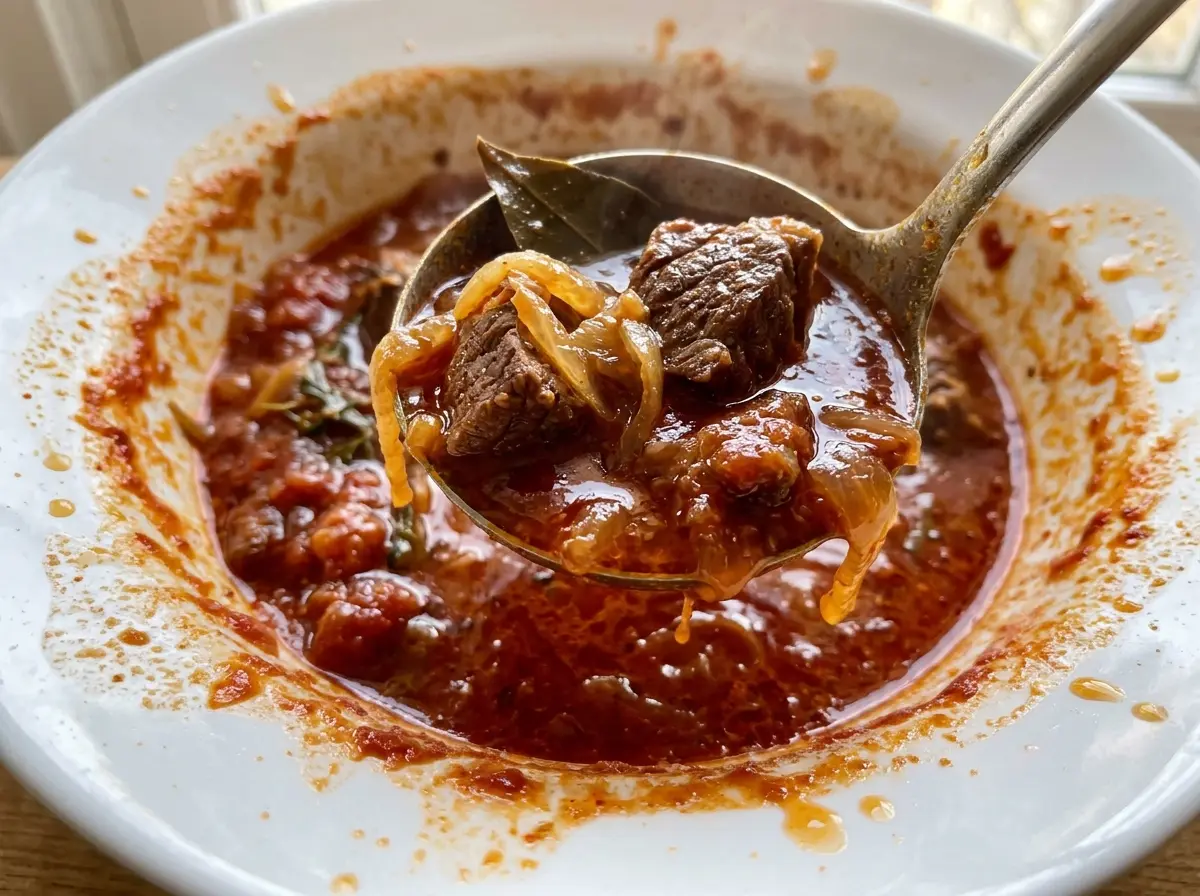
Kitchen Note
Let the stew rest off the heat for 10 minutes before serving. That brief pause gives the sauce a chance to settle around the beef instead of rushing straight from the pot to the bowl.
Save this kokkinisto Greek beef stew for a slow-simmered pot of fork-tender chuck in a tomato sauce scented with cinnamon and allspice.
Why Kokkinisto’s Tomato Sauce Needs a Gentle Simmer
The warm spices in kokkinisto should sit in the background, not take over the beef or make the tomato sauce taste sweet. Whole cinnamon and allspice release their flavor gradually as the pot simmers, while the bay leaves add another quiet layer. Keeping them whole matters: you can lift them out before serving, so nobody ends up with a bite of cinnamon or an allspice berry.
Tomatoes bring acidity, and the long, low cook gives their sharp edge time to mellow alongside the beef. A hard boil isn’t a shortcut here. It can make the liquid reduce too quickly while the chuck still needs time to soften. Aim for a gentle simmer, with small, occasional bubbles rather than a fast, rolling boil. That steady heat lets the meat become fork-tender while the tomato, beef, and spices have time to come together.
The sauce doesn’t need to be thick before the beef goes in. If it needs more body near the end, removing the lid for the final part of cooking lets extra liquid evaporate without changing the ingredients.
How Chuck, Tomato, and Whole Spices Shape Kokkinisto
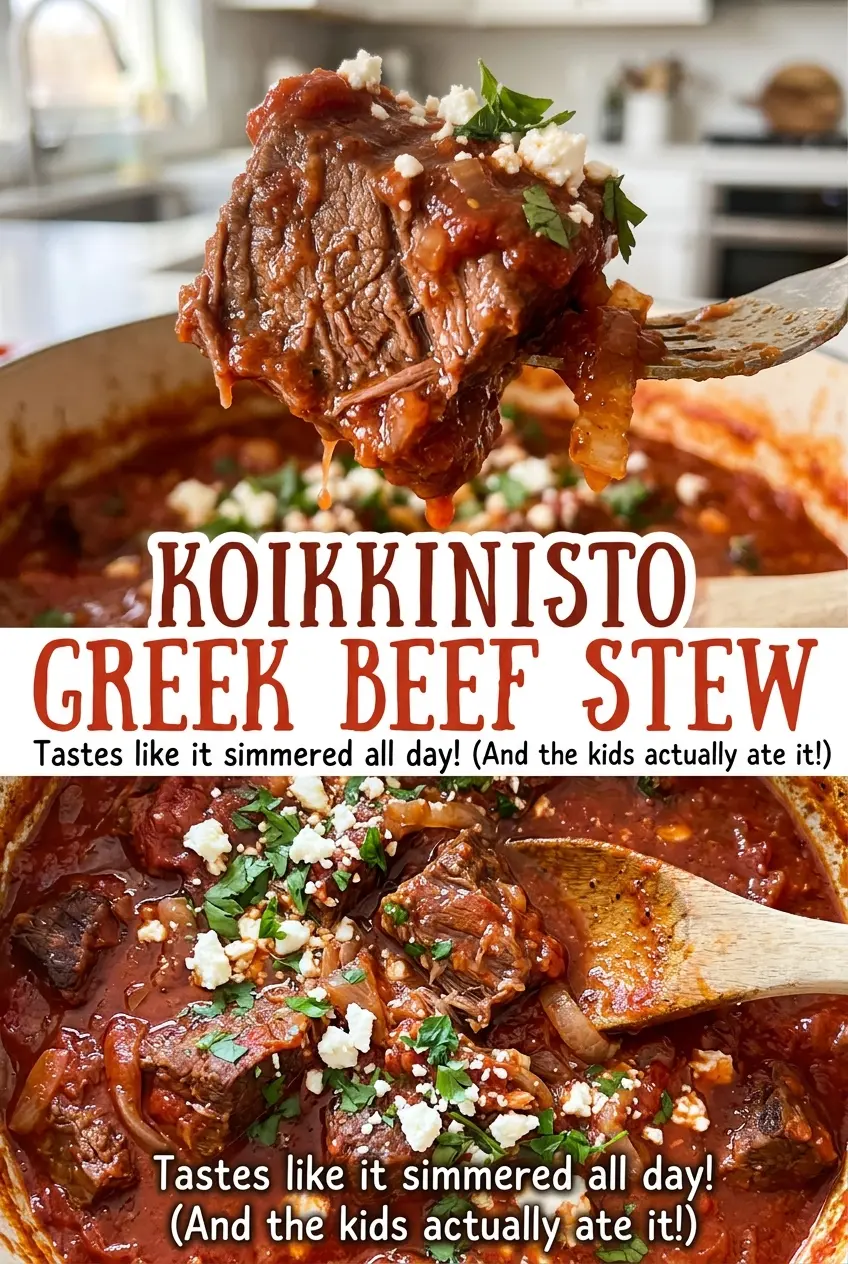
- Beef chuck — Chuck has enough connective tissue to become tender through a long, moist simmer, and its beefy flavor gives the sauce substance. Cut it into even pieces so they cook at a similar pace. Freshly cut chuck is a good choice; there’s no need to pay extra for premium steak cuts, which aren’t meant for this slow-cooked texture.
- Yellow onions and garlic — Finely chopped onion softens into the base rather than staying in large, watery pieces. Fresh garlic gives the pot a brighter savory note; mince it just before cooking if you can, because it cooks quickly once it hits the hot onions.
- Tomato paste and crushed tomatoes — Tomato paste adds concentrated, savory depth after a brief cook in the pot. Crushed tomatoes bring both the body and the main tomato flavor, so choose a can you already like the taste of. A smooth passata isn’t a perfect stand-in here; crushed tomatoes leave a fuller texture in the finished sauce.
- Dry red wine — Wine loosens the browned bits from the pot and adds acidity to balance the tomatoes. An everyday dry red is fine; avoid a sweet wine, which can pull the sauce in the wrong direction. For a no-wine version, use beef broth in its place; the sauce will taste a little less bright.
- Cinnamon, bay leaves, and allspice — Whole spices infuse the sauce slowly and are easy to remove before serving. Whole allspice berries matter here because ground allspice would disperse through the sauce and taste more assertive. Use a cinnamon stick rather than ground cinnamon for the same controlled, easy-to-remove infusion.
From Browned Chuck to a Tender, Glossy Stew
Brown the Beef in Uncrowded Batches
Pat the beef dry, then season it with 1 teaspoon of the kosher salt and the black pepper. Heat 2 tablespoons of olive oil in a 6- to 7-quart Dutch oven over medium-high heat. Brown the pieces in batches, turning them to color several sides, then transfer each batch to a plate. If the pot is crowded, the beef will steam instead of developing browned surfaces, so leave space between pieces.
Soften the Onion and Toast the Tomato Paste
Add the remaining tablespoon of olive oil and the finely chopped onions to the pot. Cook over medium heat for 6 to 8 minutes, stirring occasionally, until softened; the onions should look glossy and no longer feel crisp. Stir in the minced garlic and tomato paste and cook for 1 minute. Keep the garlic moving through the onion mixture so it cooks without scorching.
Deglaze and Build the Tomato Base
Pour in the dry red wine and scrape the bottom of the Dutch oven to loosen the browned bits. Let it simmer for 2 to 3 minutes, until slightly reduced. Stir in the crushed tomatoes, beef broth, remaining 1/2 teaspoon of salt, cinnamon stick, bay leaves, and whole allspice berries. Return the beef and any juices on the plate to the pot, then bring everything to a gentle simmer.
Simmer Until the Chuck Gives Easily
Cover the pot and simmer over low heat for 2 to 2 1/2 hours, stirring occasionally. The beef is ready when a fork slides in easily; if it still feels firm, it needs more time at that gentle simmer. If the sauce looks thinner than you’d like, remove the lid for the final 15 to 20 minutes of cooking. Take out and discard the cinnamon stick, bay leaves, and allspice berries before serving.
Three Practical Changes Without Losing the Stew’s Character
Make It Without Red Wine
Replace the dry red wine with the same amount of beef broth. Simmer it briefly after scraping up the browned bits, just as you would the wine. The stew will still be savory, though it won’t have quite the same acidic lift.
Use Gluten-Free Beef Broth
For a gluten-free pot, replace standard beef broth with broth specifically labeled gluten-free. The stew keeps its same tomato-and-beef character, so this change doesn’t require a different cooking method.
Turn Down the Cinnamon
Leave out the cinnamon stick and keep the bay leaves and allspice berries. The stew will taste more directly tomato-and-beef-forward, with less of the warm, rounded aroma associated with kokkinisto.
Storage and Reheating
- Refrigerator: Cool and refrigerate leftovers within 2 hours; keep them for 3 to 4 days. The sauce may thicken as it chills.
- Freezer: Freeze cooled portions in airtight containers for up to 3 months for best quality. Thaw in the refrigerator before reheating.
- Reheating: Warm gently in a saucepan over low heat, stirring occasionally, until the stew reaches 165°F. Avoid a hard boil, which can break up the tender beef before the center is hot.
Questions That Come Up While the Beef Simmeres
Kokkinisto Greek Beef Stew
Ingredients
Equipment
Method
- Pat the beef dry and season it with 1 teaspoon of the salt and the pepper.
- Heat 2 tablespoons of the olive oil in a 6- to 7-quart Dutch oven over medium-high heat. Brown the beef in batches, turning to brown several sides, then transfer it to a plate.
- Add the remaining 1 tablespoon olive oil and the onions to the pot. Cook over medium heat for 6 to 8 minutes, stirring occasionally, until softened; add the garlic and tomato paste and cook for 1 minute.
- Pour in the wine and scrape up any browned bits from the bottom of the pot. Simmer for 2 to 3 minutes, until the wine is slightly reduced.
- Stir in the crushed tomatoes, beef broth, remaining 1/2 teaspoon salt, cinnamon stick, bay leaves, and allspice berries. Return the beef and any juices to the pot and bring to a gentle simmer.
- Cover and simmer over low heat for 2 to 2 1/2 hours, stirring occasionally, until the beef is fork-tender. Remove the lid for the last 15 to 20 minutes if the sauce needs to thicken, then discard the cinnamon stick, bay leaves, and allspice berries.
- Remove the pot from the heat and let the stew rest for 10 minutes before serving.