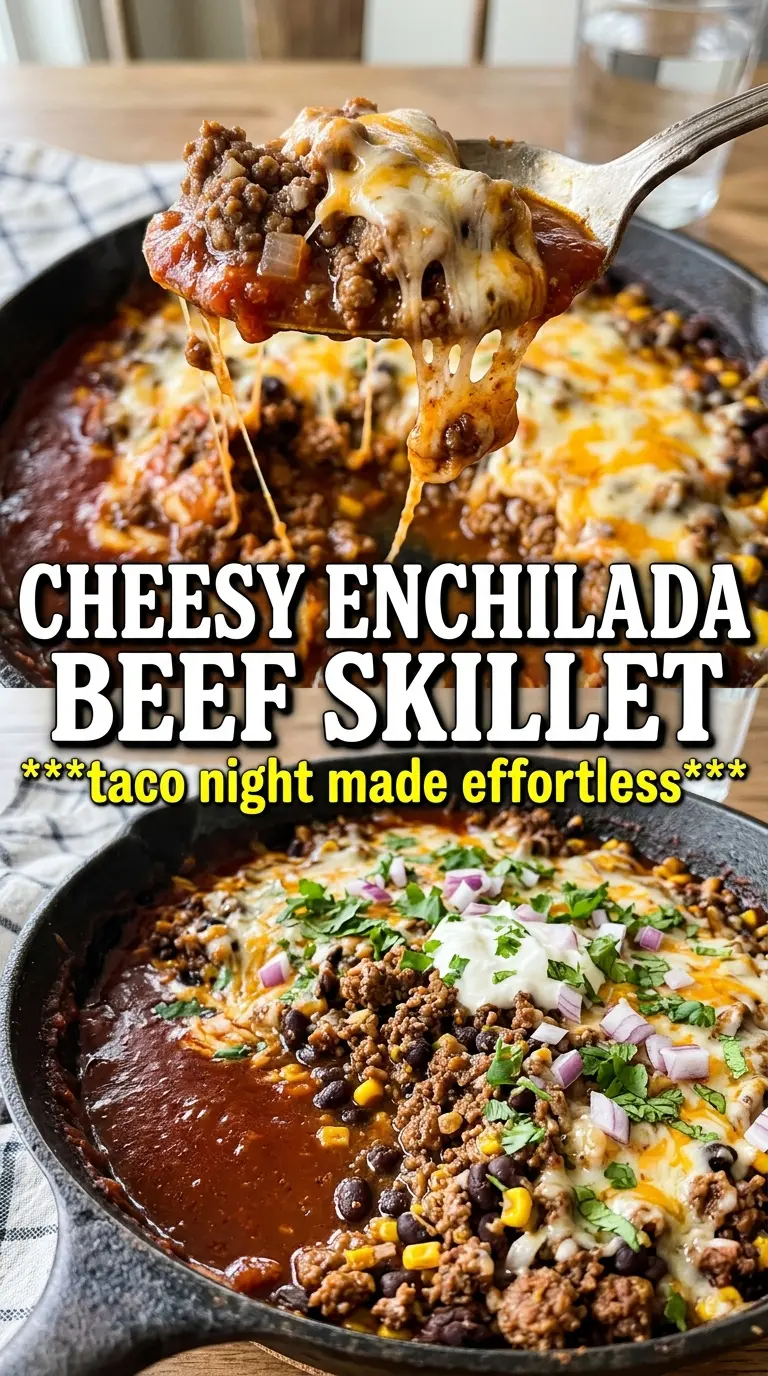
Smoky enchilada sauce, seasoned beef, black beans, sweet corn, and soft tortilla strips all come together in one skillet with just enough cheese to tie it all together. The result is saucy and hearty without turning heavy, and the tortilla strips soak up the sauce instead of going limp in a soggy mess.
What makes this version work is the order. The beef browns first so you get real flavor at the bottom of the pan, then the sauce simmers long enough to thicken before the tortilla strips go in. That keeps the finished skillet spoonable instead of watery, and it gives the tortillas time to soften while still holding some texture.
Below, I’ve included the little details that matter most, including how to keep the filling from getting thin and what to swap if you want a lighter version without losing the Tex-Mex comfort of the dish.
The sauce thickened up perfectly and the tortilla strips stayed tender without disappearing. I added avocado on top and my husband went back for seconds before I even sat down.
Like this Healthy Enchilada Skillet? Save it for busy nights when you want one-pan Tex-Mex with smoky sauce, tender tortilla strips, and minimal cleanup.
The Part That Keeps This Skillet From Getting Watery
Most skillet enchilada recipes go thin because everything gets dumped together before the sauce has a chance to tighten up. The beef and onions need to brown first, and the enchilada sauce needs a few minutes on the heat before the tortillas go in. That simmer reduces the canned tomato base just enough so it clings to the meat and beans instead of pooling at the bottom.
The other thing that matters is the tortilla timing. If they go in too early, they break down and turn the whole dish mushy. Added at the end, they soften in the sauce and keep a little bite, which is exactly what makes the skillet feel like enchiladas instead of soup.
- Browned ground beef — Lean beef gives you enough flavor without a greasy skillet. If you use a higher-fat blend, drain it well or the sauce can taste oily.
- Red enchilada sauce — This is the backbone of the dish, so use one you like. A thicker canned sauce gives you better body; a thinner one works too, but it needs the full simmer time.
- Corn tortillas — Corn tortillas hold up better than flour here and bring that classic enchilada flavor. Cut them into strips so they fold into the skillet instead of clumping together.
- Greek yogurt — It stands in for sour cream and keeps the topping light while still adding creaminess. Stir it on top after cooking so it stays cool and tangy instead of curdling.
What Each Ingredient Is Actually Doing in This Recipe
- Primary ingredient (the star) — Quality matters most. Choose the best you can find.
- Cooking medium (oil, butter, or broth) — This carries flavors and prevents dryness.
- Seasonings (salt, pepper, spices, herbs) — Layer flavors so nothing overpowers. Build depth gradually.
- Aromatics (garlic, onion, herbs) — Cook with fat to bloom flavors. Become the foundation.
- Supporting ingredients — Complement the main ingredient without overpowering it.
- Sauce or liquid (if applicable) — Brings flavors together. Balance richness with acid.
- Acid (lemon, vinegar, wine, or other) — Brightens and prevents flat-tasting results.
- Final finish (garnish, glaze, or sauce) — Prevents one-dimensional taste and adds visual appeal.
Building the Skillet in the Right Order
Getting the Beef and Onion Browned
Start the beef and onion in a hot skillet and let the meat take on some color before you stir too often. You want browned bits, not gray steam, because those bits give the sauce depth once the enchilada sauce goes in. If there’s a lot of fat in the pan after browning, drain it off so the finished skillet stays bright and saucy instead of heavy.
Letting the Sauce Tighten Before the Tortillas Go In
Once the beans, corn, enchilada sauce, tomatoes, and spices are in, let everything simmer until the liquid looks glossy and slightly reduced. That usually takes 8 to 10 minutes, and the skillet should look thick enough that a spoon leaves a trail for a second before it closes. If it still looks brothy, give it another minute or two; the tortillas will soak up some liquid, but they can’t fix a watery base.
Melting the Cheese Without Drying Out the Top
Stir in the tortilla strips, then scatter the cheese over the top and cover the skillet right away. Low heat is enough to melt the cheese, and high heat only dries out the bottom while the top races ahead. The cheese is ready when it looks fully glossy and the edges just start to sink into the sauce.
Ways to Change It Without Losing the Point
Make It Lighter With Ground Turkey
Ground turkey works well here if you want a leaner skillet. It’s milder than beef, so the cumin, chili powder, and enchilada sauce matter more, and you may want to add a pinch more salt to keep the flavor from falling flat.
Make It Vegetarian
Skip the beef and add an extra can of beans, or swap in crumbled tofu or plant-based crumbles if that’s what you keep on hand. The skillet will still be hearty, but it’ll taste a little lighter and depend more on the enchilada sauce for depth.
Make It Gluten-Free
This recipe is naturally close to gluten-free if your enchilada sauce is certified gluten-free and your tortillas are corn. That’s the one label worth checking, since sauces sometimes hide flour-based thickeners even when the rest of the ingredients look safe.
Storage and Reheating
- Refrigerator: Store leftovers in an airtight container for up to 4 days. The tortillas soften more as it sits, but the flavor holds up well.
- Freezer: It freezes, though the tortillas will be softer after thawing. Freeze in portions for up to 2 months, then thaw overnight in the fridge before reheating.
- Reheating: Warm it on the stovetop over medium-low heat with a splash of water if needed, or microwave in short bursts. The common mistake is blasting it on high heat, which dries out the beef and makes the cheese rubbery.
Answers to the Questions Worth Asking
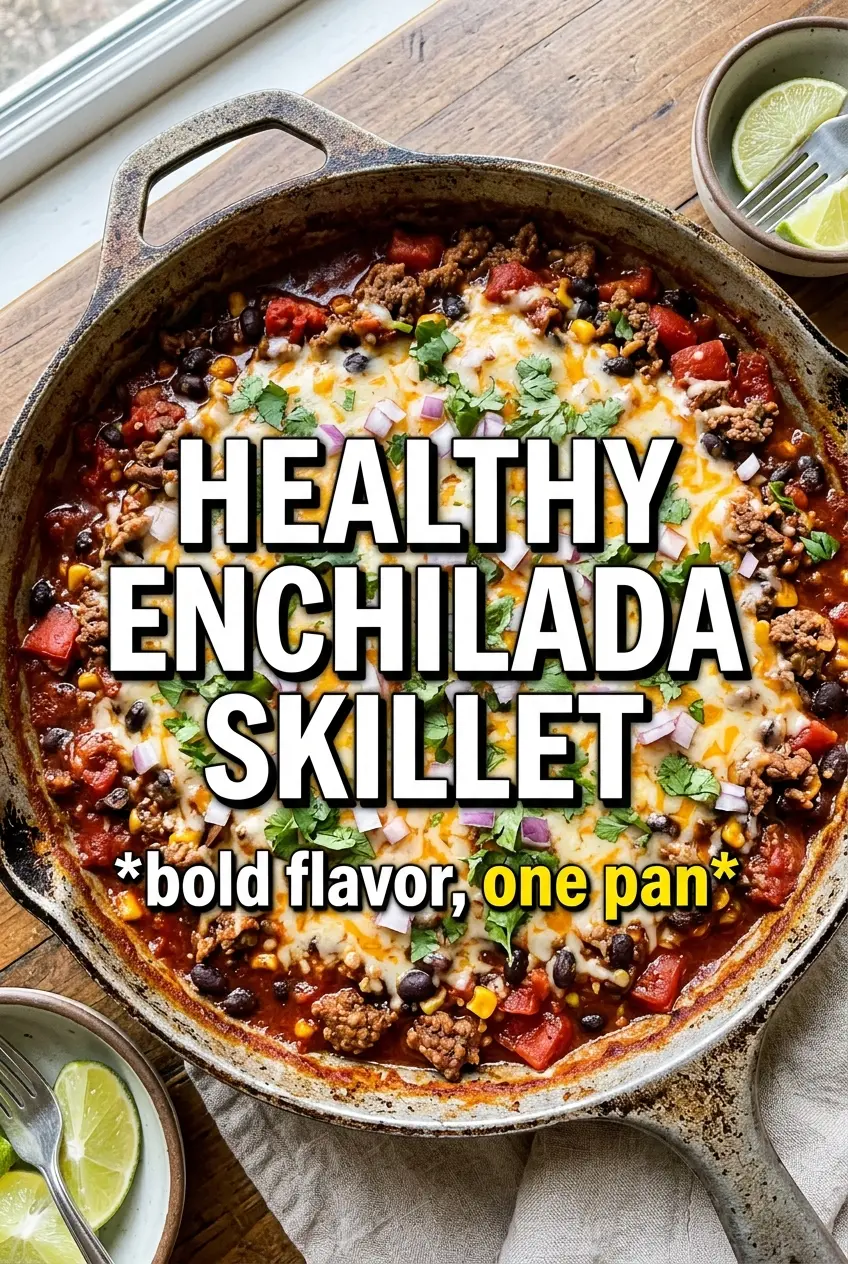
Healthy Enchilada Skillet
Ingredients
Equipment
Method
- Brown the lean ground beef with the diced onion over medium-high heat, then drain any excess fat and stir in the minced garlic for 30 seconds. The beef should look no longer pink as the onion softens.
- Stir in black beans, frozen corn, red enchilada sauce, diced tomatoes with green chiles, cumin, chili powder, salt, and pepper. Mix until everything is evenly coated in smoky sauce.
- Simmer the skillet over medium heat for 8–10 minutes until the sauce thickens slightly. You should see bubbling around the edges and a glossy, more clingy sauce.
- Stir in the corn tortilla strips and mix to combine, letting the strips settle into the sauce. The tortilla pieces should start to soften and look saucy rather than dry.
- Top the skillet with the shredded Mexican cheese blend, then cover with a lid. The cheese layer should look evenly distributed across the top.
- Cook on low for 2–3 minutes until the cheese melts completely. You should see the cheese turn glossy and lightly bubble at the edges.
- Serve hot with sliced avocado, fresh cilantro, and a dollop of Greek yogurt. The cool toppings should contrast the warm, saucy skillet.