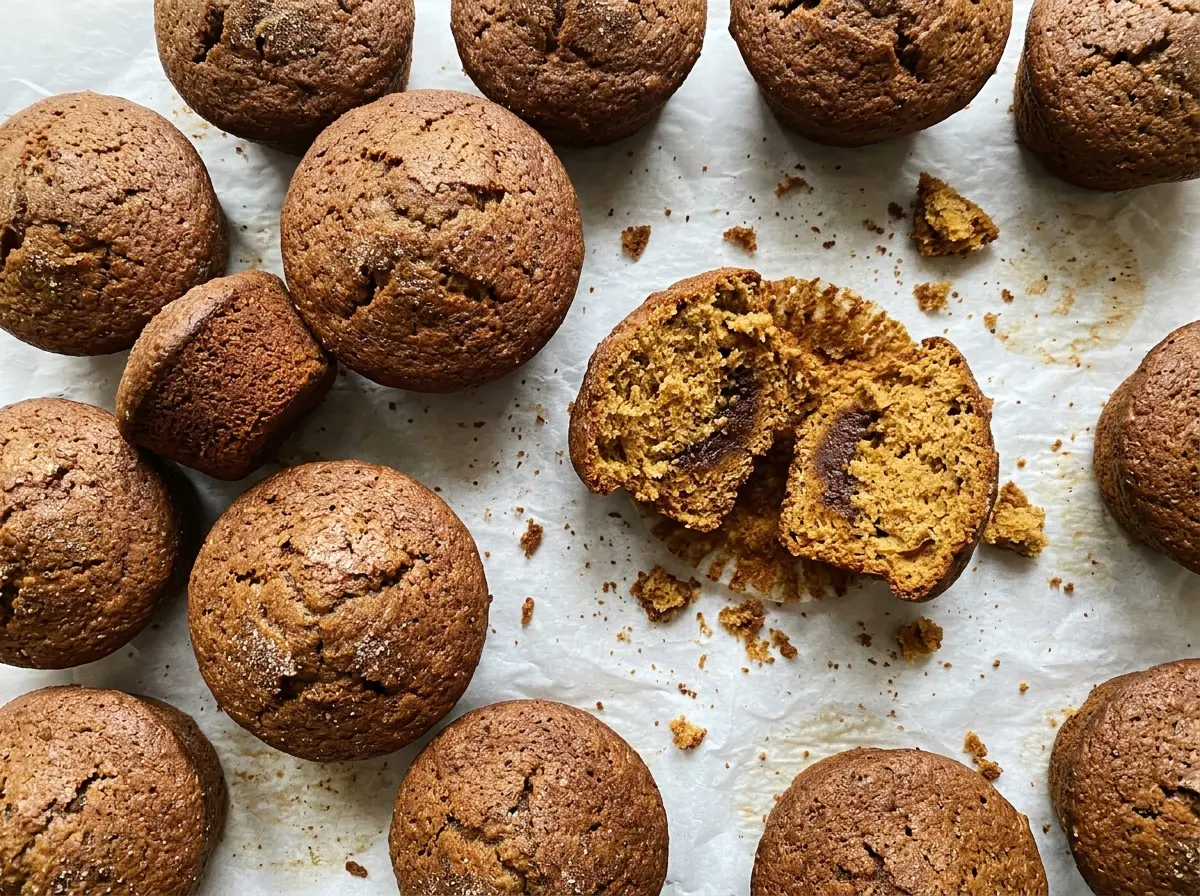
The batter goes into the muffin cups a deep, glossy brown, and the first thing you notice while they bake is the ginger. It rises above the sweetness of the molasses without making these Gingerbread Muffins taste sharp or heavy. I like that they’re sturdy enough to grab for breakfast but still tender in the middle, with tops that spring back when they’re ready.
The small detail that makes mixing easier is letting the melted butter cool slightly before it meets the egg. Warm butter blends smoothly with the brown sugar and molasses; butter that’s still hot can make the egg start to set. Once the wet and dry mixtures come together, a light hand keeps the crumb soft. The finished muffins have a gentle spice warmth and a rich, dark sweetness in every bite.
Kitchen Note
Give the melted butter a few minutes to cool before whisking it with the egg. It should still be fluid, but not hot to the touch; that keeps the egg smooth in the wet mixture.
Save these Gingerbread Muffins for a soft, warmly spiced bake with a rich molasses crumb.
Why Gingerbread Muffins Need Both Baking Soda and Baking Powder
Molasses brings more than sweetness to this batter. It has enough acidity to react with baking soda, which helps the muffins rise, but relying on that reaction alone would leave less room for a light, even crumb. Baking powder gives the batter additional lift, so the centers don’t feel dense under the weight of the molasses.
That balance is why I keep both leaveners in the mix rather than treating them as interchangeable. Baking soda and baking powder do different jobs here, and changing or leaving out one can affect the rise and texture. Whisking them thoroughly with the flour also spreads them through the batter, rather than leaving a concentrated pocket that can taste soapy or bitter. Measure them carefully and use fresh leaveners; the goal is a muffin that rises evenly and stays tender, not one with a sharp aftertaste.
What Gives These Muffins Their Deep Gingerbread Flavor
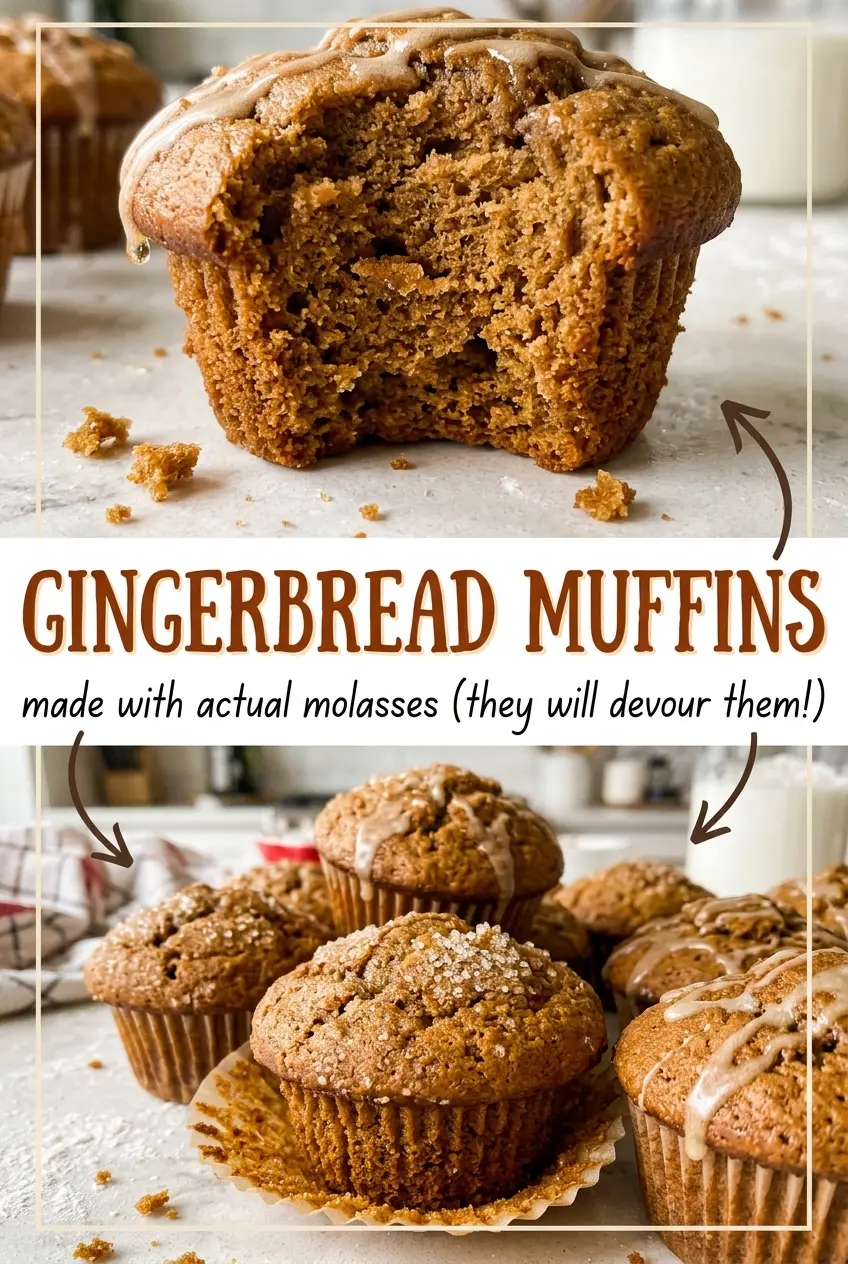
- Unsulphured molasses — This is where the dark, bittersweet gingerbread character comes from, along with moisture that helps keep the crumb soft. Use unsulphured molasses for a balanced flavor; blackstrap is much more intense and can make the muffins taste bitter. Give the jar a stir if it has been sitting for a while.
- Ground ginger, cinnamon, and cloves — Ginger brings the main warmth, cinnamon rounds it out, and cloves add a concentrated background note. Ground spices lose their punch with age, so fresher jars make a noticeable difference. Cloves are especially assertive, so measure them carefully rather than estimating.
- All-purpose flour — Flour gives the muffins their structure. For a gluten-free adaptation, use a cup-for-cup gluten-free baking blend that includes xanthan gum; the crumb may be a little more delicate than the all-purpose version.
- Light brown sugar — Its soft, moist texture blends readily with the melted butter and contributes a mild caramel note. Pack it into the measuring cup so the sweetness stays consistent from batch to batch.
- Unsalted butter, egg, and whole milk — Butter adds richness, the egg helps hold the crumb together, and milk loosens the batter so it can be stirred without becoming stiff. Use butter without salt so the measured salt in the dry mix stays in balance. The egg should be at room temperature if you have time; it blends more smoothly into the other wet ingredients.
Mixing and Baking for a Tender, Even Crumb
Whisk the Dry Ingredients Thoroughly
Heat the oven to 375°F and grease a standard 12-cup muffin pan. In a medium bowl, whisk the flour, baking soda, baking powder, ginger, cinnamon, cloves, and salt until the spices look evenly distributed. Break up any small clumps of brown-looking spice as you whisk. This even mix helps every muffin bake with the same balance of leavening and spice.
Build the Molasses Mixture
In a large bowl, whisk the melted butter with the brown sugar until the mixture looks evenly combined. Whisk in the molasses, then the egg and milk. The wet mixture will be dark and fluid, with no visible streaks of egg. If the butter is hot, pause and let it cool slightly before adding the egg.
Stir Just Until the Flour Disappears
Add the dry ingredients to the wet mixture and stir until no dry flour remains. The batter will be thick and dark; a few small lumps are fine. If you keep stirring until it looks perfectly smooth, the muffins can turn tough instead of tender. Divide the batter evenly among the prepared muffin cups so they bake at the same pace.
Check the Centers, Not Just the Tops
Bake for 18–22 minutes. The tops should spring back when you press them lightly, and a toothpick inserted in the center should come out clean or with a few moist crumbs. If the toothpick has wet batter on it, give the muffins a little longer and check again. Cool them in the pan for 5 minutes, then transfer them to a wire rack so the bottoms don’t stay damp.
Easy Ways to Adapt These Gingerbread Muffins
Make the Batch Gluten-Free
Replace the all-purpose flour with the same amount of a cup-for-cup gluten-free baking blend that contains xanthan gum. The spice and molasses still come through, though the muffins may have a slightly more delicate crumb. Let them cool fully before handling so they have time to set.
Make Them Dairy-Free
Use the same amount of plant-based butter in place of the unsalted butter, and plain unsweetened oat milk in place of whole milk. Choose a stick-style butter substitute rather than a spread, which can contain more water. The muffins will still be moist and spiced, with a slightly less buttery finish.
Keep the Clove Note Subtle
For a gentler spice blend, leave out the ground cloves and keep the ginger and cinnamon in place. The muffins will taste cleaner and less pungent, while still reading as gingerbread thanks to the molasses and ginger.
Storage and Reheating
- Room temperature: Once completely cool, keep the muffins in an airtight container for up to 2 days. They’ll stay soft, though the tops lose a little of their fresh-baked texture.
- Refrigerator: Store airtight for up to 5 days; chilling firms the crumb, so let a muffin come to room temperature or warm it before eating.
- Freezer: Freeze completely cooled muffins in a freezer-safe airtight container for up to 3 months. Thaw at room temperature, or warm one from frozen.
- Reheating: Warm a muffin in the microwave for about 10–15 seconds, or heat it in a 300°F oven until warm. Avoid leaving it in the microwave too long, which can make the crumb rubbery.
Questions I Get Asked About Gingerbread Muffins
Gingerbread Muffins
Ingredients
Equipment
Method
- Heat the oven to 375°F.
- Grease a standard 12-cup muffin pan.
- Whisk the all-purpose flour, baking soda, baking powder, ground ginger, ground cinnamon, ground cloves, and salt together in a medium bowl.
- Whisk the melted and slightly cooled unsalted butter with the packed light brown sugar in a large bowl.
- Whisk in the unsulphured molasses, large egg, and whole milk until combined.
- Add the dry ingredients to the wet ingredients and stir just until no dry flour remains.
- Divide the batter evenly among the muffin cups.
- Bake for 18–22 minutes, until the tops spring back when lightly pressed and a toothpick inserted in the center comes out clean or with a few moist crumbs.
- Cool the muffins in the pan for 5 minutes.
- Transfer the muffins to a wire rack.