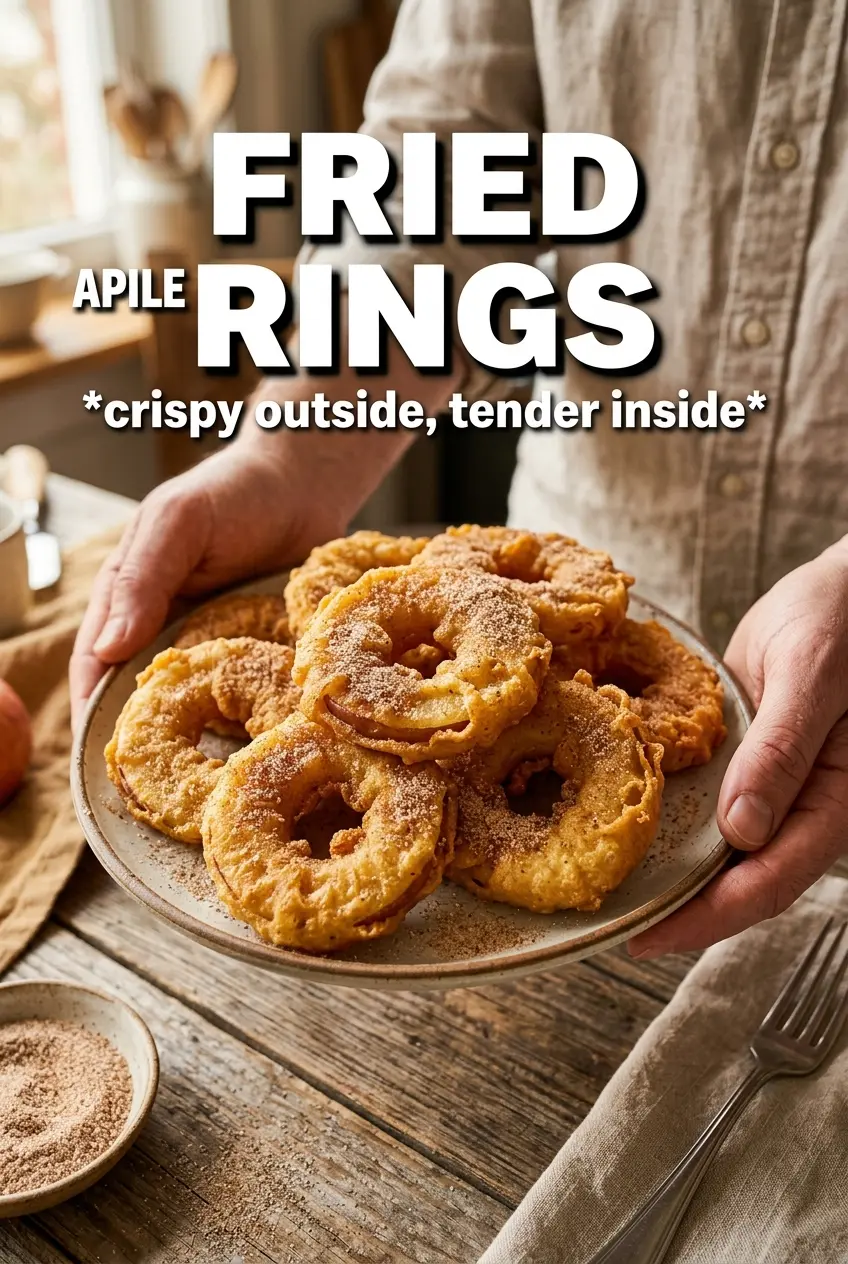
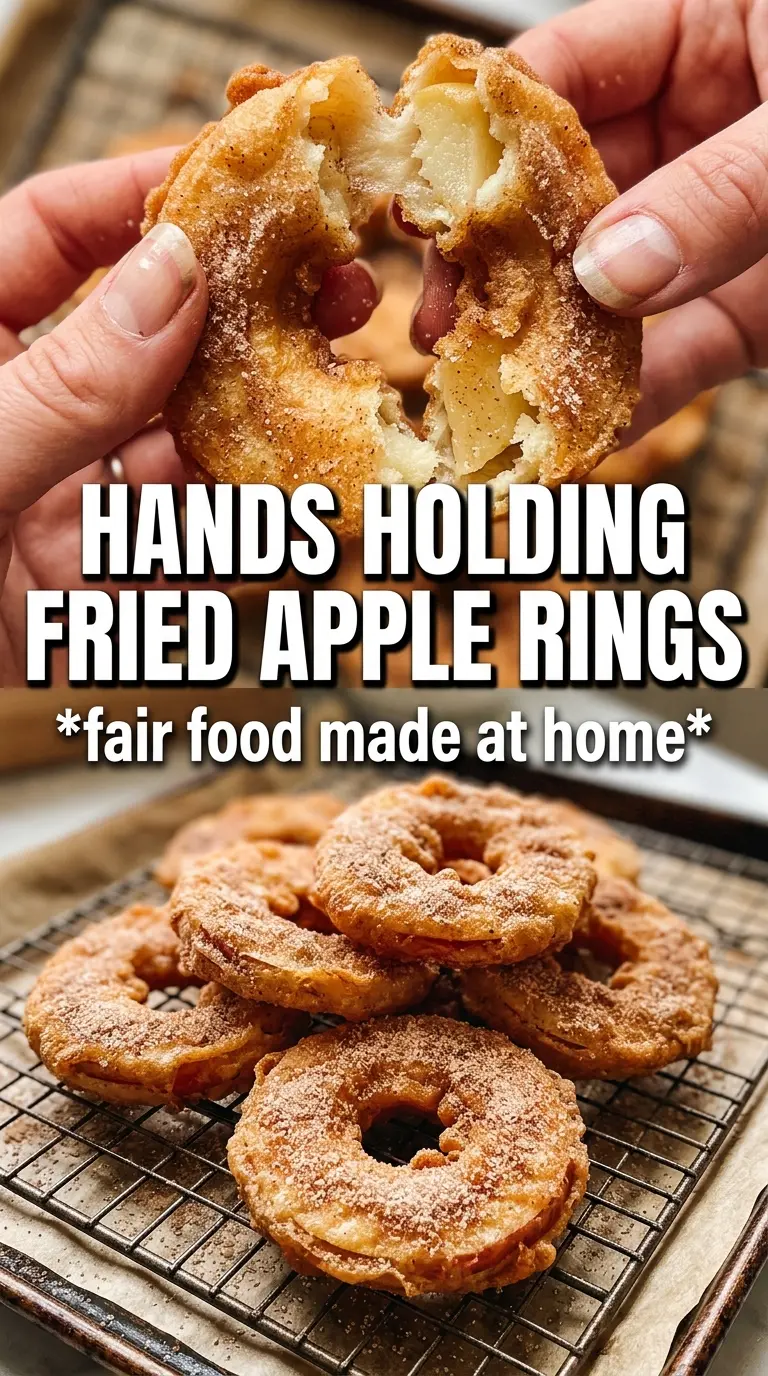
Fried apple rings come out with the best kind of contrast: crisp, bronzed batter on the outside and a soft, tart apple center that stays bright instead of turning mushy. The cinnamon sugar clings to the hot coating, and the whole thing lands somewhere between a doughnut and an apple fritter, which is exactly why they disappear fast once they hit the plate.
What makes this version work is the dry batter and the hot oil. Sparkling water keeps the coating light, while the egg gives it enough structure to stay on the apple instead of sliding off. Granny Smith gives you more bite and tang, while Honeycrisp leans sweeter and softer, so you can choose the direction you want before the first ring even hits the pan.
Below, I’ve included the small details that matter most, like how dry the apples need to be before battering and why the cinnamon sugar goes on right after frying. Those two steps make the difference between a coating that stays crisp and one that turns soggy fast.
The batter stayed light and crisp, and tossing the rings in cinnamon sugar right after frying made them taste like fresh apple doughnuts. Mine were gone before the caramel sauce even made it to the table.
Save these fried apple rings for the day you want crisp apple slices, warm cinnamon sugar, and a little caramel on the side.
The Batter Stays Crisp When the Apples Stay Dry
The biggest mistake with fried apple rings is rushing the prep and battering wet fruit. Apples release moisture as soon as they’re cut, and that surface water thins the batter, weakens the coating, and sends hot oil splattering. Patting the rings completely dry before dipping gives the batter something to grip, and frying at 375°F keeps the outside crisp before the apple inside has time to turn soft and mealy.
Another detail that matters here is thickness. Half-inch rings give you enough apple to stay juicy without taking so long to cook that the batter overbrowns. If the slices are too thin, they can soften too fast and lose their shape. If they’re too thick, the batter darkens before the center is tender.
What Each Ingredient Is Actually Doing in This Dish
- Granny Smith or Honeycrisp apples — Granny Smith stays tart and firm, which gives you that classic fried-apple bite. Honeycrisp is a little sweeter and juicier, so the finished rings taste more dessert-like. Use a firm apple only; softer varieties collapse in the fryer.
- All-purpose flour — This gives the batter enough backbone to hold onto the fruit without turning heavy. A more delicate flour blend can work, but all-purpose is dependable and fries up with the kind of crisp shell you want here.
- Cold sparkling water or beer — The bubbles lighten the batter and help it fry up airy instead of dense. Cold liquid matters because it slows gluten development. Beer adds a faint malty note, while sparkling water keeps the flavor neutral.
- Baking powder — This is what gives the batter lift in the hot oil. Without it, the coating eats more like a pancake shell than a crisp fried crust.
- Cinnamon and nutmeg — These season the batter itself, not just the coating, so every bite has warmth built in. The nutmeg should stay subtle; too much reads sharp and fights the apple.
- Egg and vanilla — The egg helps the batter cling and brown, and vanilla makes the whole thing taste rounder. Don’t skip the vanilla if you want the rings to taste like dessert instead of just fried fruit.
- Vegetable oil — A neutral frying oil keeps the apple flavor front and center. You need enough depth to fry the rings without dragging them across the bottom of the pan.
The Frying Window That Makes or Breaks the Texture
Mix the Batter Until It Barely Comes Together
Whisk the dry ingredients first, then add the cold sparkling water, egg, and vanilla just until combined. Lumps are fine; overmixing builds gluten and makes the coating tough instead of crisp. The batter should look thick enough to cling to the apple rings but still loose enough to drip in slow ribbons.
Keep the Oil Hot, Not Smoker-Hot
Heat the oil to 375°F and keep it there. If the oil is too cool, the batter absorbs grease and turns soggy; if it’s too hot, the outside darkens before the apple softens. Fry in batches so the temperature doesn’t crash when the rings go in.
Roll Them While They’re Still Hot
Drain the fried rings on paper towels for just a moment, then roll them in the cinnamon sugar right away. The heat helps the sugar stick, and waiting too long means the coating dries out before it can grab onto the surface. Finish with powdered sugar and caramel sauce once they’re on the plate.
Make Them Gluten-Free
A 1:1 gluten-free flour blend works well here because the batter doesn’t need a lot of structure beyond coating the apple. Choose a blend that includes xanthan gum, or the batter may slip off in the fryer. The rings will still taste crisp and sweet, though the crust will be a touch more delicate.
Use Beer for a Slightly Deeper Flavor
Swap the sparkling water for a light lager or pale ale if you want a faint malty note under the cinnamon. Keep the beer cold and pour it in gently so it stays bubbly. This version tastes a little richer, but the apple still stays in charge.
Make the Coating Less Sweet
Cut the sugar in the final cinnamon-sugar coating if you want the apple flavor to stand out more. You’ll still get warmth from the cinnamon and a little sparkle on the surface, but the rings won’t taste as candy-like. This is the version I’d pick if serving them with a generous drizzle of caramel sauce.
Storage and Reheating
- Refrigerator: Fried apple rings are best the day they’re made, but leftovers keep for 1 day in the fridge. The coating softens as it sits, so don’t expect the same crackly finish.
- Freezer: I don’t recommend freezing them. The batter and apple both change texture after thawing, and the rings come back soft instead of crisp.
- Reheating: Warm them on a wire rack in a 375°F oven for 5 to 8 minutes. Skip the microwave; it steams the coating and turns the apple layer floppy.