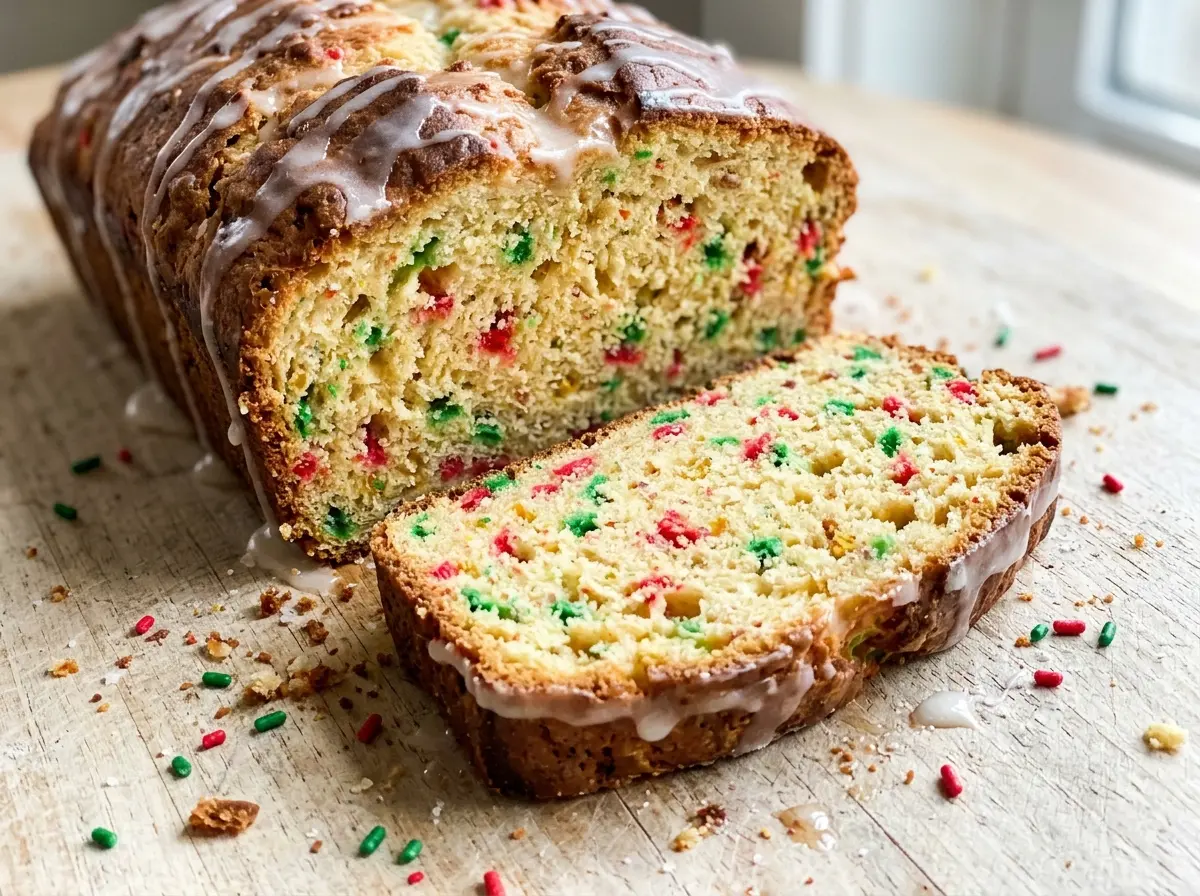
The top of this loaf turns golden while the red and green sprinkles peek through the crumb, which is exactly the cheerful look I want from a Christmas bread. The first time I made it, I was tempted to slice in while it was still warm. Waiting paid off: the loaf held together neatly, and the vanilla glaze stayed in a pretty drizzle instead of melting into the surface.
The batter gets its tender texture from creaming softened butter and sugar, then adding the flour and milk in alternating additions. I keep the mixer on low and stop as soon as the flour disappears; a few streaks of batter are easier to finish mixing by hand than to fix after the loaf turns dense. Fold in the jimmies last, spread the batter into the pan, and let this festive confetti Christmas bread bake until a toothpick comes out clean or with a few moist crumbs. The slices are soft, sweet, and dotted with holiday color.
Kitchen Note
Grease the corners and edges of the loaf pan well, not just the flat bottom. A little care there makes it much easier to turn out the tender loaf without leaving bits behind.
Save this Festive Confetti Christmas Bread for a soft vanilla loaf with red and green sprinkles and a sweet, simple glaze.
Why the Flour Goes In First and Last
Alternating flour and milk isn’t fussy extra work; it helps the batter come together without asking you to beat a thick mass of flour into the butter mixture all at once. The flour additions build structure gradually, while the milk loosens the batter between them. Starting and finishing with flour also means the final addition is easy to mix in gently.
This matters in a loaf because the batter sits in a deep pan and needs an even, tender crumb from edge to center. Once flour is mixed in, prolonged beating develops more gluten, which can leave the bread tight or tough. Use low speed and stop as soon as the dry streaks disappear. If a little flour clings to the bowl, scrape it down and finish with a few slow folds rather than turning the mixer back up.
That light hand also gives the folded-in jimmies a better chance of staying distributed instead of getting beaten around and streaking the batter. Think of the last few turns as bringing everything together, not making the batter perfectly smooth. The finished loaf should be soft, not chewy like a kneaded bread.
What Makes the Sprinkle-and-Vanilla Combination Work

- All-purpose flour — It gives the loaf enough structure to slice cleanly while keeping the crumb tender. Spoon it into the measuring cup and level the top rather than packing it down, since extra flour can make the batter stiff.
- Baking powder — This is the leavener that lifts the loaf as it bakes. Check that it’s fresh if your quick breads have been coming out flat; old baking powder loses its punch.
- Unsalted butter — Softened butter traps air as it’s beaten with sugar, which helps the loaf rise and keeps the texture fine. It should give slightly when pressed but shouldn’t look shiny or melted.
- Granulated sugar — Besides sweetening the bread, sugar helps the butter cream to a light, fluffy texture. The recipe’s regular granulated sugar gives a familiar, delicate crumb.
- Eggs — Room-temperature eggs blend more evenly into the creamed butter than cold eggs do. Set them out with the milk before you start mixing so the batter doesn’t have to work around a temperature difference.
- Milk — Milk loosens the batter and adds moisture to the crumb. Bring it to room temperature along with the eggs; cold milk can make the butter mixture look less smooth when it’s added.
- Vanilla extract — Vanilla carries the simple cake-like flavor through both the bread and glaze. Since it’s a leading flavor here, use an extract you like rather than an imitation with a harsh aftertaste.
- Red and green jimmies — Jimmies bring the festive color and little flecks of sweetness. Fold them in gently at the end so they stay distinct; nonpareils are not a like-for-like replacement because their small coating can bleed more readily into batter.
- Powdered sugar — Its fine texture makes a smooth glaze without a gritty finish. Break up any visible lumps as you stir so the drizzle stays even.
Mixing and Baking the Loaf Without a Heavy Crumb
Get the Pan and Dry Ingredients Ready
Heat the oven to 350°F and grease a 9×5-inch loaf pan. Whisk the flour, baking powder, and salt together in a medium bowl so the leavener is spread through the flour before it reaches the wet ingredients. Set that bowl aside while you cream the butter and sugar. Having it ready keeps you from stopping mid-mix to measure or whisk.
Cream the Butter, Then Add the Eggs
Beat the softened butter and granulated sugar in a large bowl until light and fluffy, about 2 minutes. The mixture should look paler and airy rather than like dense wet sand. Beat in the eggs one at a time, letting each incorporate before adding the next, then mix in the vanilla. If the mixture looks a little uneven, keep mixing just until it comes together; don’t rush ahead with the flour.
Alternate the Flour and Milk, Then Fold
With the mixer on low, add the flour mixture in three additions and the milk in two, beginning and ending with flour. Stop as soon as the batter is combined; scraping the bowl once is more useful than beating longer. Fold in the red and green jimmies with a spatula, turning the batter gently until the colors are spread throughout. Transfer it to the pan and smooth the top into an even layer.
Bake, Cool, and Finish with Glaze
Bake for 50 to 60 minutes, until a toothpick inserted in the center comes out clean or with a few moist crumbs. A wet streak of batter means the center needs more time, so test again rather than judging by the golden top alone. Cool the loaf in the pan for 15 minutes, then turn it onto a wire rack and let it cool completely. Stir the powdered sugar, milk, and vanilla, adding more milk a little at a time until the glaze is thick but pourable; drizzle it over the cool loaf and let it set before slicing.
Small Changes for a Different Holiday Loaf
Switch the Sprinkle Colors
Use jimmies in another color combination to take the same vanilla loaf in a different direction for a birthday or winter gathering. Keep the sprinkle style the same; changing only the colors keeps the familiar look and texture without changing how the batter comes together.
Leave the Loaf Unglazed
Skip the glaze for a less-sweet finish and a loaf that’s easier to wrap and pack. The bread still has vanilla flavor and colorful sprinkles, but you lose the thin, sweet topping that makes the slices look dressed up.
Make a Plain Vanilla Version
Leave out the jimmies for a simple vanilla loaf with the same tender crumb. The batter will look plainer, but the glaze still gives the top a sweet finish; this is a useful option when you want the loaf without the colored flecks.
Storage and Reheating
- Room temperature: Keep the cooled loaf covered in an airtight container for up to 3 days. The glaze may soften slightly in a humid kitchen.
- Refrigerator: Store it covered for up to 5 days; refrigeration can make the crumb feel firmer, so let slices come to room temperature before serving.
- Freezer: Freeze the completely cooled loaf, preferably without glaze, tightly wrapped for up to 2 months. Thaw it while still wrapped at room temperature, then glaze once it has thawed if desired.
- Reheating: For a warm slice, microwave it briefly, about 10 seconds. Longer heating can dry the crumb and make the glaze run.
Questions That Come Up When Baking This Confetti Bread
Festive Confetti Christmas Bread
Ingredients
Equipment
Method
- Heat the oven to 350°F.
- Grease a 9x5-inch loaf pan.
- Whisk together the flour, baking powder, and salt in a medium bowl.
- Beat the butter and granulated sugar in a large bowl until light and fluffy, about 2 minutes.
- Beat in the eggs one at a time.
- Mix in the vanilla.
- Add the flour mixture in three additions, alternating with the milk in two additions, mixing on low just until combined; begin and end with the flour mixture.
- Fold in the sprinkles.
- Spread the batter evenly in the prepared pan.
- Bake for 50 to 60 minutes, until a toothpick inserted in the center comes out clean or with a few moist crumbs.
- Cool in the pan for 15 minutes.
- Turn the loaf out onto a wire rack and cool completely.
- Stir together the powdered sugar, 1 tablespoon milk, and vanilla, adding more milk a little at a time until the glaze is thick but pourable.
- Drizzle the glaze over the completely cooled loaf.
- Let the glaze set before slicing.