The first thing you notice when beef stew starts coming together is the sound of the beef hitting a hot Dutch oven. If the pot is crowded, it goes quiet and the meat releases liquid instead of forming a deep brown crust. I brown the beef in three batches for this Dutch Oven Beef Stew, which takes a little patience but gives the broth a richer, more savory foundation.
After the beef is browned, the onion softens in the same pot, and the tomato paste and flour cook briefly before the wine goes in. Scraping up those browned bits as you add the wine pulls all that flavor into the broth, while the flour helps give it body. The vegetables wait until the beef has had its first stretch in the oven, so the carrots and potatoes don’t spend the whole braise softening. The finished stew has fork-tender beef, tender vegetables, and a deep, cozy broth.
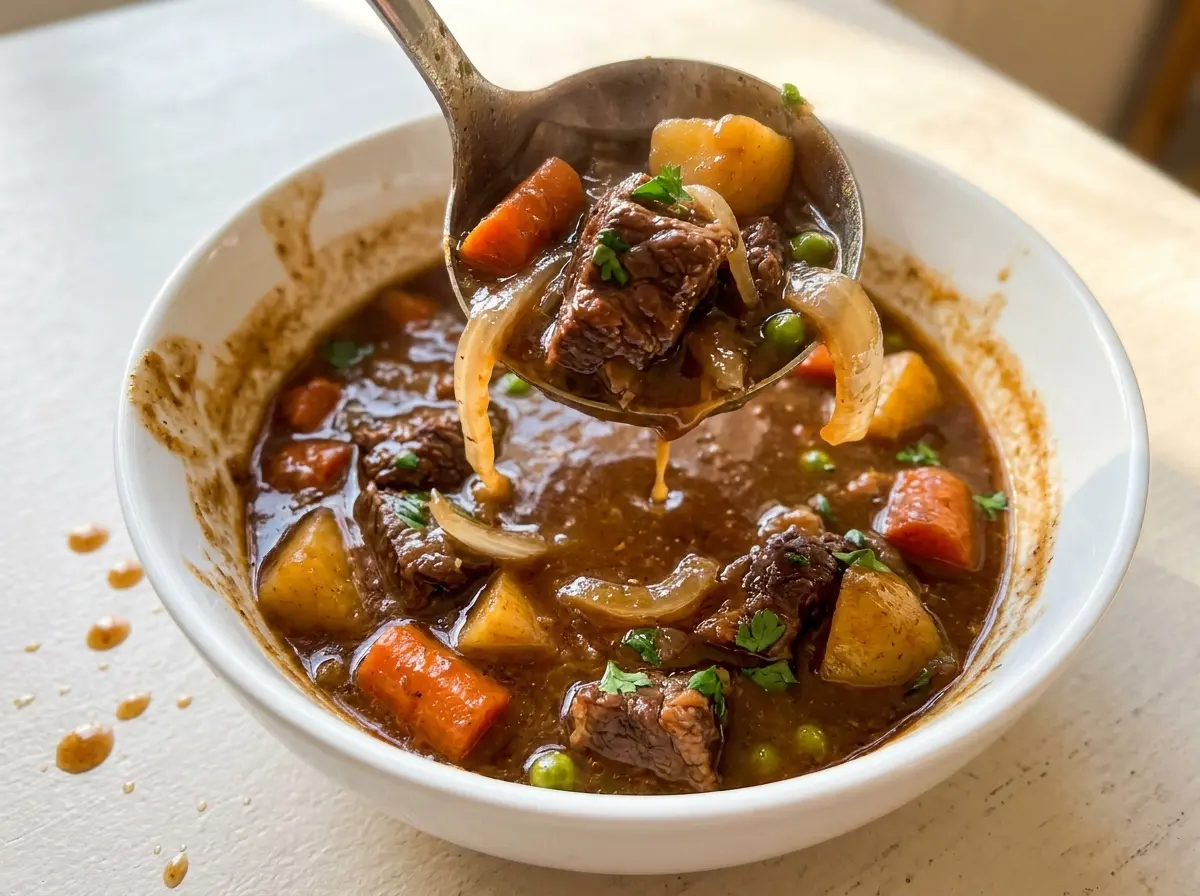
Kitchen Note
Let the stew rest covered for the full 10 minutes after it comes out of the oven. That short pause gives the broth time to settle, and the beef and vegetables are easier to serve without breaking them up.
Save this Dutch Oven Beef Stew for a day when you want fork-tender beef, soft carrots, and a rich broth built right in the pot.
Why the Beef Needs Three Separate Searing Batches
Putting all the beef in the pot at once seems like a shortcut, but it works against the crust that gives a braise its depth. When too many pieces cover the bottom, the moisture coming off the meat has nowhere to go. The beef steams, and you miss the browned bits that later become part of the broth.
Three batches give the pieces room to brown against the hot pot. Patting the chuck dry first helps, too; a damp surface has to dry before it can color. Use a plate for the browned batches while you finish the rest, then return all of the beef to the pot with the broth ingredients. Those browned bits aren’t something to scrub away: the wine loosens them from the bottom, and they become part of the stew’s savory base. This is a useful distinction with any braise: the beef doesn’t need to cook through during searing, only to develop color on the outside.
Why Chuck, Red Wine, and Yukon Golds Shape the Stew
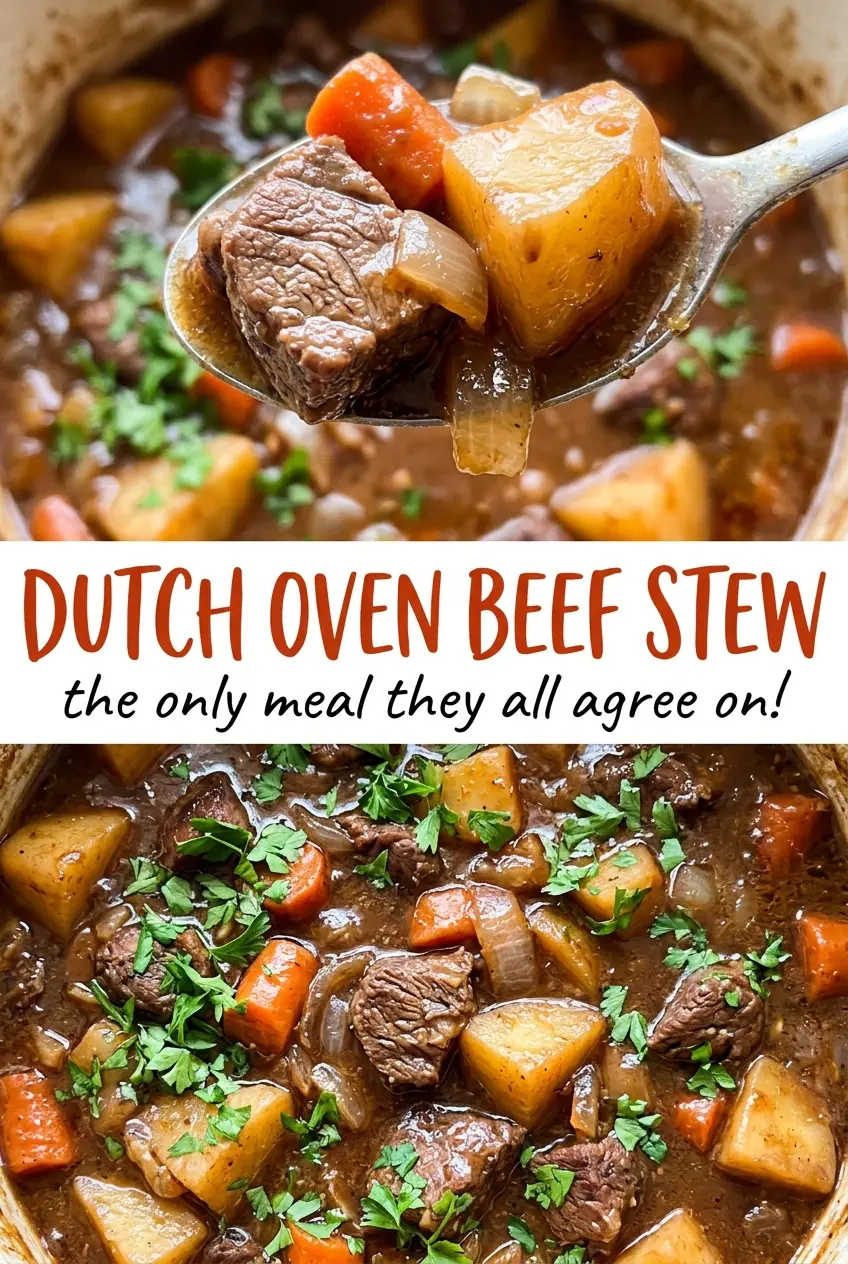
- Beef chuck — Chuck has the marbling and connective tissue that turn tender during a long, moist cook. Choose pieces with some visible marbling, and cut them into even 1 1/2-inch cubes so they braise at a similar pace. Precut stew meat is convenient, but the pieces may vary in size and cut.
- Dry red wine — Wine brings acidity and depth to the broth, and it helps loosen the flavorful browned bits from the pot. An inexpensive dry red is all you need; there’s no reason to open a special bottle for this. If you avoid cooking with wine, the variation below explains a simple broth swap.
- Tomato paste and flour — Tomato paste adds concentrated savory flavor, while the flour helps the finished liquid cling to the beef and vegetables. Cook both briefly with the aromatics before adding liquid; adding the flour later makes it harder to work smoothly into the broth.
- Carrots and Yukon Gold potatoes — Yukon Golds hold their shape well in a covered braise and have a naturally creamy texture. Peel the carrots and cut both vegetables into the specified chunky pieces; smaller pieces soften sooner during the final oven time.
Building the Broth Before the Long Oven Braise
Brown the Chuck Without Steaming It
Heat the oven to 325°F and pat the beef dry before seasoning it with kosher salt and black pepper. Warm a tablespoon of vegetable oil in a 6-quart Dutch oven over medium-high heat, then brown the beef in three batches, using a tablespoon of oil for each batch. Give the pieces space and let them color before turning; if the pot fills with liquid, the pieces are too crowded. Transfer each finished batch to a plate.
Soften the Onion and Cook the Paste
Add the chopped onion to the same pot and cook it for 5 minutes, stirring occasionally, until softened. Stir in the minced garlic and tomato paste and cook for 1 minute; the garlic should smell fragrant, not scorched. Sprinkle in the flour and stir for another minute so it coats the onion and cooks briefly. Keep the mixture moving across the bottom so the paste doesn’t catch while you build the base.
Turn the Browned Bits Into Broth
Pour in the dry red wine gradually, scraping the pot as you stir so the browned bits lift into the liquid. Add the beef broth, Worcestershire sauce, dried thyme, bay leaves, and the browned beef. Bring the liquid to a simmer before covering the pot and moving it to the oven. Starting with a simmer gets the braise going evenly rather than asking the covered pot to heat from cold in the oven.
Add the Vegetables for the Final Stretch
Let the covered stew braise for 1 1/2 hours before stirring in the carrots and potatoes. Cover the pot again and return it to the oven for 45 to 60 minutes, until the beef is fork-tender and the vegetables are tender. Start checking at the shorter end of that range; the beef should yield easily to a fork, and the potatoes shouldn’t feel firm in the center. Remove the bay leaves and rest the covered stew for 10 minutes before serving.
Two Useful Ways to Adapt This Dutch Oven Stew
Make It Without Red Wine
Replace the red wine with an equal amount of low-sodium beef broth. The stew will still have a savory base, though it will lose some of the wine’s acidity and depth. Scrape the browned bits into the broth as you pour it in.
Make a Gluten-Free, Lighter-Bodied Stew
Leave out the all-purpose flour for a gluten-free version. The broth will be thinner and less glossy because it won’t have the flour to thicken it, but the beef, vegetables, and braising liquid still come together into a hearty stew.
Storage and Reheating
- Refrigerator: Store covered for 3 to 4 days. The broth thickens as it chills, and the potatoes soften slightly.
- Freezer: Freeze in airtight containers for up to 3 months. The stew is safe to freeze, though the potatoes and carrots may be softer after thawing.
- Reheating: Reheat gently in a covered saucepan over medium-low heat, stirring carefully, until the stew reaches 165°F. Avoid a hard boil, which can break apart the vegetables.
Questions That Come Up While the Stew Braises
Dutch Oven Beef Stew
Ingredients
Equipment
Method
- Heat the oven to 325°F.
- Pat the beef dry, then season it with the salt and pepper.
- Heat 1 tablespoon of the oil in a 6-quart Dutch oven over medium-high heat.
- Brown the beef in three batches, adding 1 tablespoon of oil for each batch, then transfer the browned beef to a plate.
- Add the onion to the pot and cook for 5 minutes, stirring occasionally, until softened.
- Add the garlic and tomato paste and cook for 1 minute.
- Sprinkle in the flour and cook, stirring, for 1 minute.
- Gradually stir in the wine, scraping up the browned bits from the bottom of the pot.
- Stir in the beef broth, Worcestershire sauce, thyme, bay leaves, and browned beef.
- Bring the liquid to a simmer, cover the pot, and transfer it to the oven for 1 1/2 hours.
- Stir in the carrots and potatoes, cover, and return the pot to the oven for 45 to 60 minutes, until the beef is fork-tender and the vegetables are tender.
- Remove the bay leaves and let the stew rest, covered, for 10 minutes before serving.