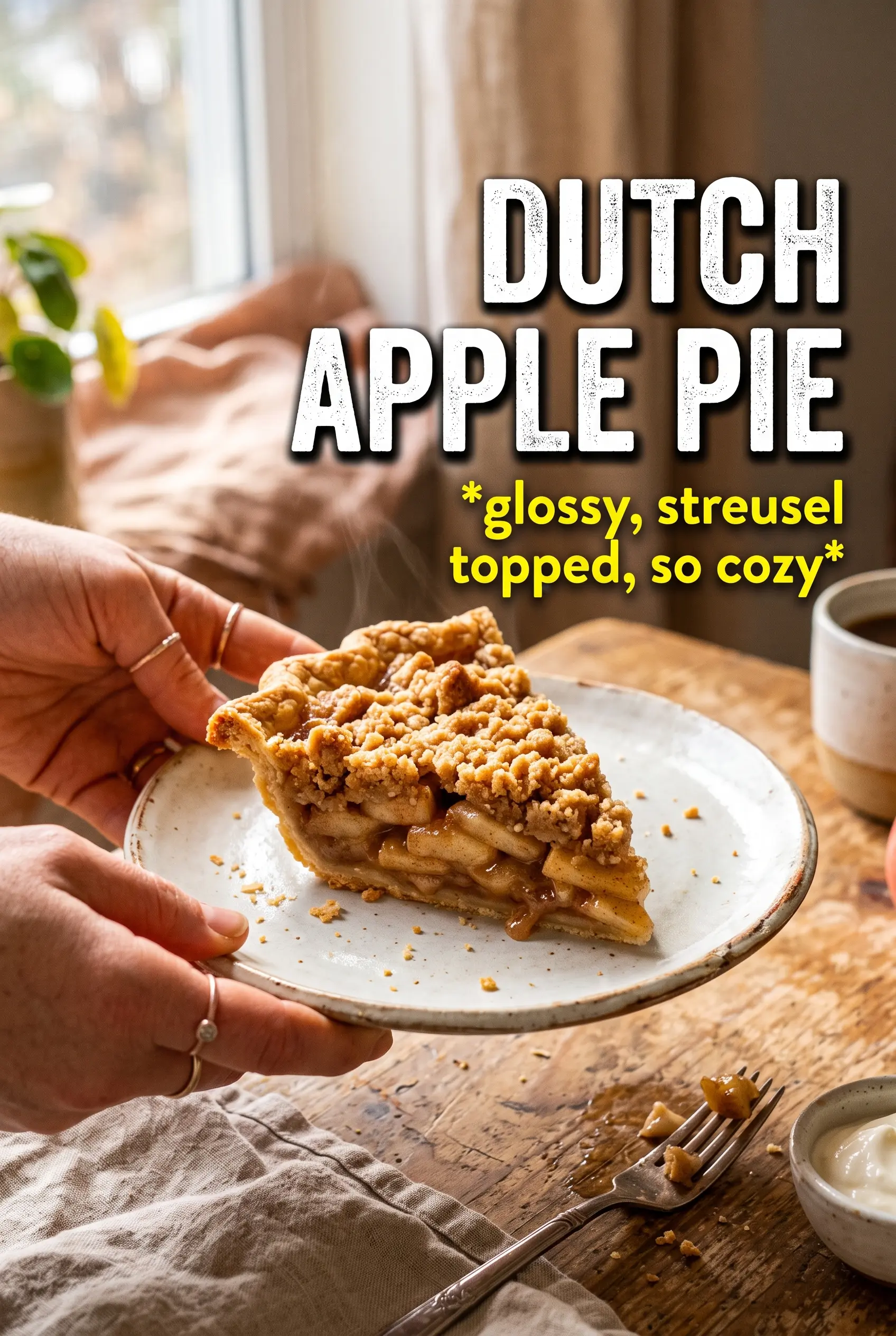
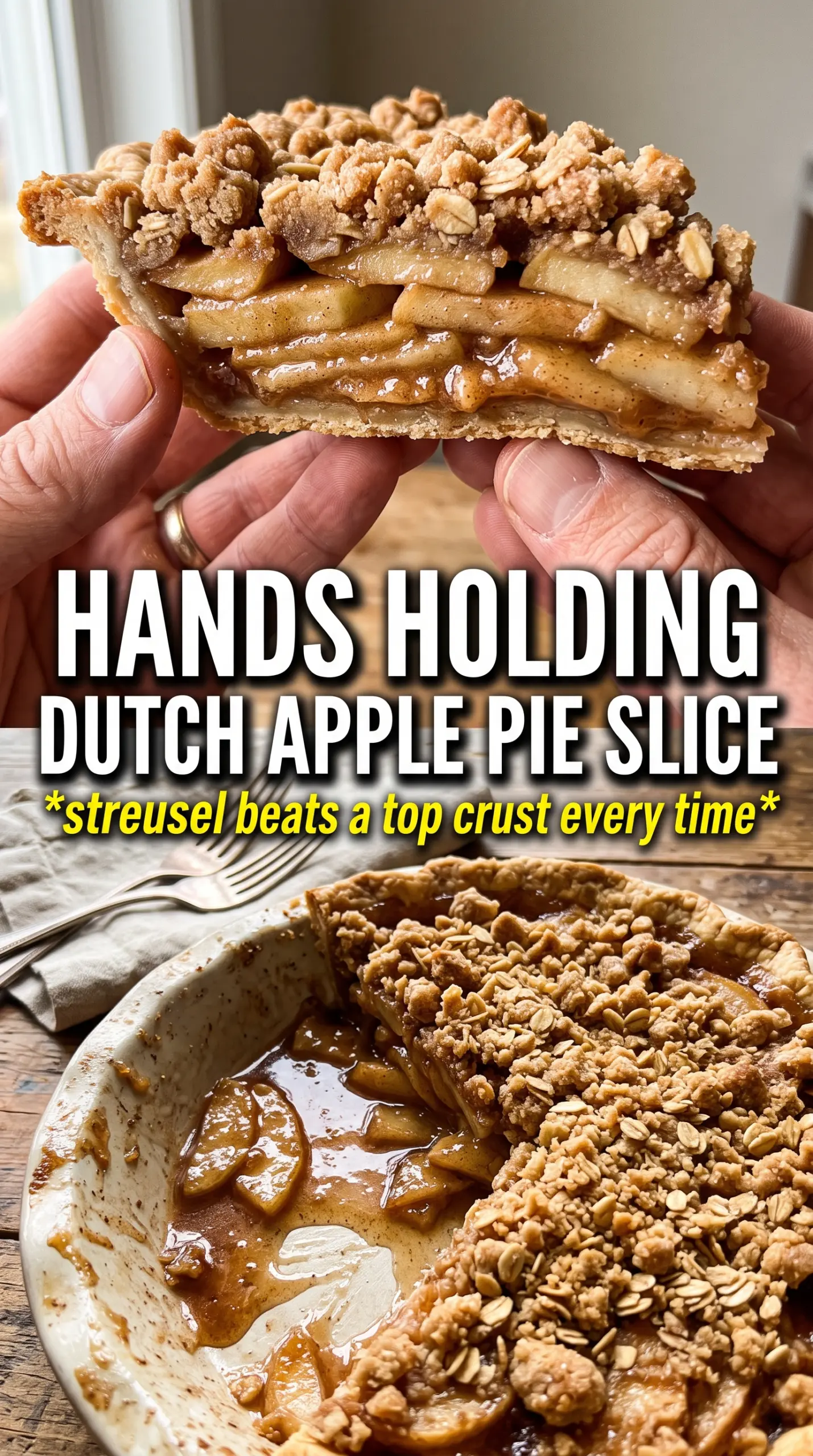
Thick, crunchy streusel over tender spiced apples is what keeps Dutch apple pie in regular dessert rotation. The topping bakes into a golden, craggy lid that stays crisp at the edges while the filling underneath turns soft and jammy without going watery. You get all the comfort of classic apple pie, minus the fuss of a full top crust.
This version works because the apples are tossed with cornstarch before they hit the shell, which helps the juices thicken as they bake instead of running all over the plate. The butter for the crust and the streusel stays cold on purpose. That cold fat is what gives you a flaky base and those big, bakery-style crumble clumps on top.
Below you’ll find the trick for getting the streusel thick enough to cover the pie without sinking, plus the apple combination I keep coming back to when I want a filling that tastes bright, not bland.
The streusel stayed crisp even after the pie cooled, and the filling set up beautifully instead of flooding the plate. I used Granny Smith and Honeycrisp like suggested, and the balance of tart and sweet was spot on.
Save this Dutch Apple Pie for the kind of dessert night where you want a tall streusel crown and a filling that slices cleanly.
The Reason the Filling Stays Thick Under All That Streusel
Old-fashioned apple pies often fail in one of two ways: the filling turns soupy, or the topping bakes before the apples have time to soften. This pie avoids both problems by using cornstarch directly on the sliced apples, then baking long enough for the juices to bubble at the edges. That bubbling matters. It tells you the starch has actually activated and the filling will set once it cools.
The other piece that matters is the apple mix. Tart Granny Smith apples hold their shape and keep the pie from tasting flat, while Honeycrisp brings sweetness and a softer bite. If you use only one variety, the filling can turn one-note or mushy. A blend gives you clean slices, better flavor, and apples that still taste like apples after an hour in the oven.
- Granny Smith apples bring structure and tartness. They hold up better than softer baking apples, so the filling doesn’t collapse into applesauce.
- Honeycrisp apples add sweetness and juiciness. They soften more than Granny Smith, which gives the filling a better texture contrast.
- Cornstarch thickens the fruit juices as the pie bakes. Flour can work in a pinch, but it gives a cloudier, heavier filling.
- Cold butter in the streusel creates those big crumbs instead of a sandy topping. If the butter warms up before baking, the crumble melts into the surface instead of staying crisp.
What Each Part Is Doing Before It Hits the Oven
- All-purpose flour shows up in both the crust and streusel, but it does different jobs. In the crust, it gives enough structure to roll and bake cleanly; in the topping, it helps form those loose crumbs that brown well.
- Brown sugar in the streusel brings moisture and a deeper caramel note. Granulated sugar would work, but the topping would taste flatter and bake up drier.
- Lemon juice wakes up the apples and keeps the filling from tasting dull. It also helps slow browning while you mix everything together.
- Cold unsalted butter is non-negotiable for both crust and crumble. Salted butter can work, but you’ll lose some control over the final seasoning, and room-temperature butter will make the topping paste-like.
Building the Pie So the Bottom Crust and Top Crumble Finish Together
Mixing the Crust Without Overworking It
Start with flour, salt, sugar, and cold butter, then cut the butter in until the mixture looks like coarse crumbs with a few bigger pieces left behind. Those bits of butter are what turn into flaky layers in the oven. Add the ice water a tablespoon at a time and stop as soon as the dough holds together when pressed. If it feels sticky or elastic, it has already been worked too far.
Getting the Apples Into the Shell
Toss the sliced apples with sugar, cinnamon, nutmeg, cornstarch, and lemon juice until every slice is coated. The cornstarch should disappear into the fruit, not sit in dry patches at the bottom of the bowl. Pile the apples into the unbaked shell and mound them a little in the center. They settle as they bake, and an underfilled pie looks skimpy.
Making a Streusel That Stays Craggy
Combine the flour, brown sugar, and cinnamon, then cut in the cold butter until you get large clumps. Don’t chase a sandy texture here. Bigger clumps bake into the kind of crunchy top that looks like it came from a bakery. Scatter the streusel thickly over the apples and cover every inch, pressing just enough so the topping sits on the fruit without compacting.
Baking Until the Edges Bubble
Bake at 375°F until the streusel is deep golden and the filling is bubbling around the edges, usually 55 to 65 minutes. If the top browns too quickly, lay foil loosely over the pie after about 30 minutes. The pie isn’t done when it looks browned; it’s done when the fruit juices are actively bubbling. Cool it for at least an hour so the filling can set and the slices hold their shape.
How to Adapt This Pie When You Need a Different Result
Gluten-Free Dutch Apple Pie
Use a gluten-free 1:1 flour blend in both the crust and streusel. The crust may be a little more fragile, so chill it well before filling and don’t try to roll it too thin. The pie still bakes up with the same crisp-topped, soft-centered contrast.
Extra-Caramel Streusel
Replace 2 tablespoons of the brown sugar with dark brown sugar for a deeper molasses note. The topping will bake a shade darker and taste a little richer, which works well if your apples lean very tart.
Making It Ahead
You can bake the pie a day ahead and let it cool completely before covering it loosely. The streusel stays pleasantly crisp on day one, and the filling slices even cleaner after an overnight rest. Warm slices briefly in the oven if you want the topping to perk back up.
Storage and Reheating
- Refrigerator: Store covered for up to 4 days. The streusel softens a bit in the fridge, but the flavor holds well.
- Freezer: Freeze baked slices tightly wrapped for up to 2 months. The crumble won’t stay perfectly crisp after thawing, but the pie still tastes great.
- Reheating: Warm slices in a 325°F oven for 10 to 15 minutes. The microwave softens the topping too much and can make the crust gummy.