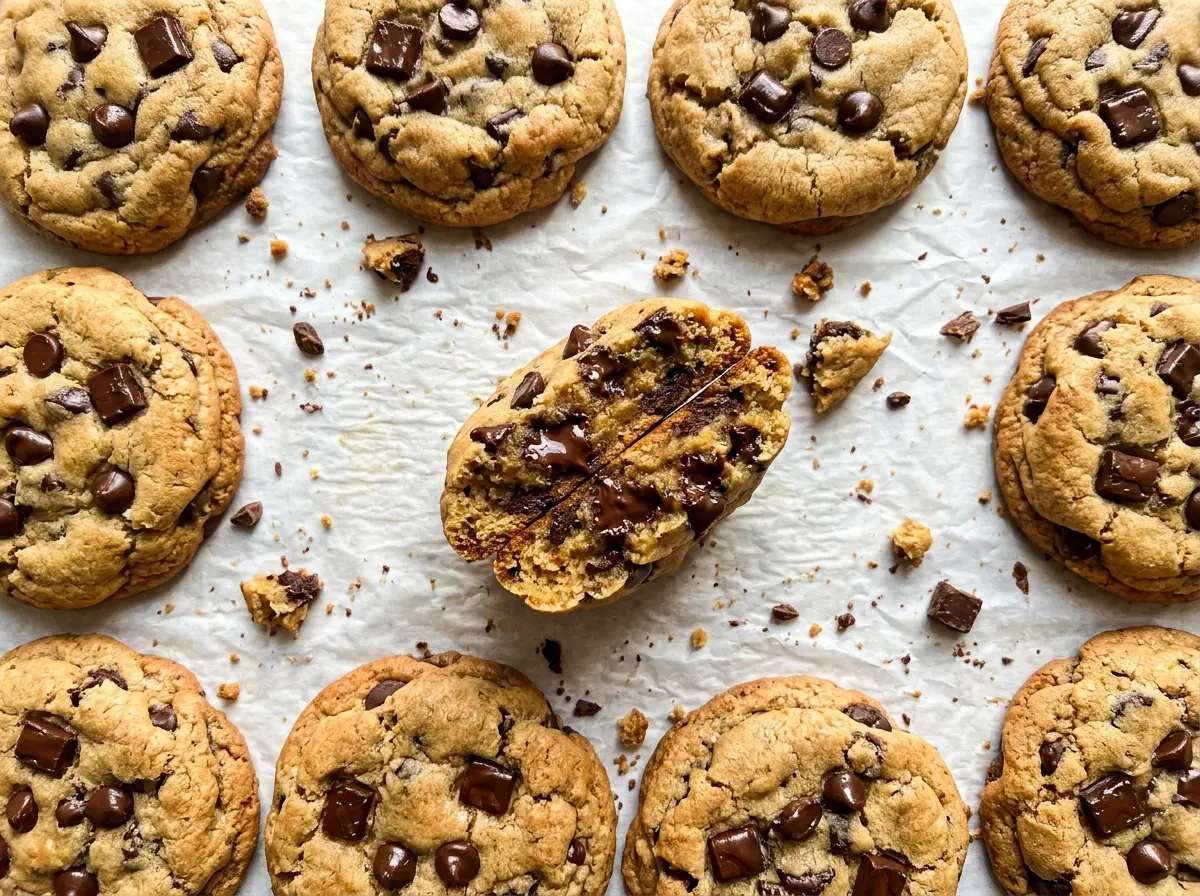
The edges turn lightly golden while the middles still look soft, and that’s the moment I resist leaving these cookies in the oven. Their size makes the timing feel a little different from an everyday chocolate chip cookie. These Crumbl copycat chocolate chip cookies bake up thick, with plenty of milk chocolate in every bite.
I portion the dough into generous rounds and bake only six at a time, so they have room to spread without crowding. A short rest in the refrigerator helps the dough hold its shape, and letting the cookies sit on the hot baking sheet after baking gives the centers time to set without drying out. The result is a soft-centered cookie with lightly golden edges and big pools of chocolate.
Kitchen Note
Use butter that’s softened enough to press easily, but not shiny or melted. Melted butter loosens the dough and makes these thick rounds harder to shape.
Save these Crumbl copycat chocolate chip cookies for their thick, soft centers and generous milk chocolate chips.
The 30-Minute Chill Is What Keeps These Big Cookies From Spreading Flat
Large cookies need enough structure to hold a thick center as they bake. Chilling the mixed dough for 30 minutes gives the butter time to firm back up after mixing, so the rounds don’t race outward the moment they hit the oven. Skip that pause and you’re more likely to get flatter cookies with less contrast between the edge and center.
This isn’t an overnight dough rest or a fussy step; it’s a short, practical pause while the oven heats and the pan gets lined. Keep the bowl covered in the refrigerator, then shape the dough while it’s cool. The dough should feel firm enough to form into thick rounds, not stiff or crumbly. If your kitchen is warm and the dough feels soft after shaping, return the unbaked portions to the refrigerator while the first batch bakes.
The extra-large portions are part of the texture, too. Smaller scoops bake through more quickly and won’t give you the same thick-cookie center, so divide the dough evenly rather than making one tray of noticeably different sizes.
How the Sugars, Flour, and Chocolate Shape Every Bite

- Light brown and granulated sugar — Brown sugar brings moisture and a soft, chewy middle, while granulated sugar helps the edges bake up lightly crisp. Pack the brown sugar into the measuring cup so the balance stays consistent. Dark brown sugar works in a pinch, but its stronger molasses taste will come through more.
- All-purpose flour — Flour gives these substantial cookies their structure. For a gluten-free batch, replace it with a cup-for-cup gluten-free baking flour blend intended to substitute for all-purpose flour; the texture may be a little more delicate. Measure without packing the flour tightly, since too much can leave the cookies dry and dense.
- Baking soda and baking powder — Both leaveners contribute to the lift and shape of the thick rounds. Keep them fresh; old leavening can leave cookies flatter and heavier than expected. They aren’t interchangeable one-for-one, so don’t leave one out or replace the pair with only one type.
- Eggs and vanilla extract — Eggs bind the dough and add richness, while vanilla rounds out the brown sugar and chocolate. Bring the eggs to room temperature if you have time so they blend smoothly into the creamed butter rather than leaving the mixture looking curdled.
- Milk chocolate chips — Milk chocolate gives the cookies a sweeter, creamy chocolate bite. Semisweet chips are an easy swap if you want more bittersweet contrast; chopped milk chocolate also works and makes the chocolate pockets less uniform. Use chocolate you enjoy eating on its own, since it’s a major part of each cookie.
From Creamed Butter to Thick, Soft-Centered Cookies
Cream the Butter and Sugars Until Fluffy
Beat the softened butter with both sugars in a large bowl for about 2 minutes. The mixture should look lighter and fluffy, with no large streaks of butter; a quick blend won’t incorporate as much air. Scrape down the sides of the bowl if sugar is clinging there. Avoid beating long after the mixture looks creamy, since the next ingredients need only to be combined.
Add the Eggs, Then Mix the Dry Ingredients Gently
Beat in the eggs one at a time, letting each disappear into the butter mixture before adding the next, then mix in the vanilla. In a separate medium bowl, whisk together the flour, baking soda, baking powder, and salt so the leaveners are distributed. Add the dry mixture to the butter mixture and stop as soon as no dry flour remains. Overmixing at this point can make the cookies tougher.
Fold in the Chips and Chill the Dough
Stir in the milk chocolate chips until they’re spread through the dough. Cover the bowl and refrigerate the dough for 30 minutes; don’t leave it uncovered, where the surface can dry out. While it chills, heat the oven to 350°F and line an 18×13-inch rimmed baking sheet with parchment paper. The dough should be cool when you portion it.
Space the Rounds and Bake in Two Batches
Divide the dough into 12 equal portions, about 4 1/2 ounces each, and shape them into thick rounds. Arrange six on the prepared baking sheet with at least 3 inches between them, keeping the rest of the dough refrigerated. Bake for 14–17 minutes, rotating the sheet halfway through; look for lightly golden, set edges while the centers still appear slightly soft. If the whole cookie looks firm in the oven, it’s likely already gone past the soft-centered stage.
Let the Hot Pan Finish the Centers
Leave the cookies on the baking sheet for 15 minutes before moving them to a wire rack. They’re fragile while hot, and lifting them too soon can break the soft centers. Let the baking sheet cool completely before lining it again and baking the remaining dough the same way. A warm pan starts the next batch spreading before it has a chance to bake evenly.
Three Practical Ways to Change These Chocolate Chip Cookies
Use Semisweet Chips for a Less-Sweet Cookie
Replace the milk chocolate chips with semisweet chips in the same quantity. You’ll get a deeper, less-sweet chocolate contrast against the brown sugar, while keeping the same dough and baking approach.
Make Them Gluten-Free With Cup-for-Cup Baking Flour
Swap the all-purpose flour for a gluten-free baking blend labeled as a cup-for-cup replacement. The cookies keep their chocolate-and-brown-sugar character, though the crumb may be slightly more delicate than the wheat-flour version.
Chop Milk Chocolate Instead of Using Chips
Use chopped milk chocolate in place of the chips for irregular pieces and wider chocolate streaks. The pieces won’t distribute as evenly, so some cookies may have larger pockets and others a little less chocolate.
Storage and Reheating
- Refrigerator: Store cooled cookies in an airtight container for up to 1 week; chilling firms the centers, so bring them back to room temperature for a softer bite.
- Freezer: Freeze fully cooled cookies in an airtight freezer-safe container for up to 2 months. Thaw at room temperature before serving.
- Reheating: Warm a cookie briefly in the microwave, just until the chocolate softens. Long reheating dries the edges and makes the center less tender.
Questions I Get Asked About These Thick Chocolate Chip Cookies
Crumbl Copycat Chocolate Chip Cookies
Ingredients
Equipment
Method
- In a large bowl, beat the butter, brown sugar, and granulated sugar until creamy and fluffy, about 2 minutes.
- Beat in the eggs one at a time, then mix in the vanilla extract.
- In a medium bowl, whisk together the flour, baking soda, baking powder, and salt.
- Add the flour mixture to the butter mixture and mix just until no dry flour remains.
- Stir in the milk chocolate chips.
- Cover the bowl and refrigerate the dough for 30 minutes.
- Heat the oven to 350°F.
- Line an 18x13-inch rimmed baking sheet with parchment paper.
- Divide the dough into 12 equal portions, about 4 1/2 ounces each.
- Shape the portions into thick rounds.
- Arrange 6 rounds on the prepared sheet, leaving at least 3 inches between them.
- Keep the remaining dough refrigerated.
- Bake for 14–17 minutes, rotating the sheet halfway through, until the edges are set and lightly golden while the centers still look slightly soft.
- Let the cookies rest on the baking sheet for 15 minutes.
- Transfer the cookies to a wire rack.
- Let the baking sheet cool completely.
- Line the cooled baking sheet again with parchment paper.
- Arrange the remaining dough rounds on the sheet, leaving at least 3 inches between them.
- Bake for 14–17 minutes, rotating the sheet halfway through, until the edges are set and lightly golden while the centers still look slightly soft.