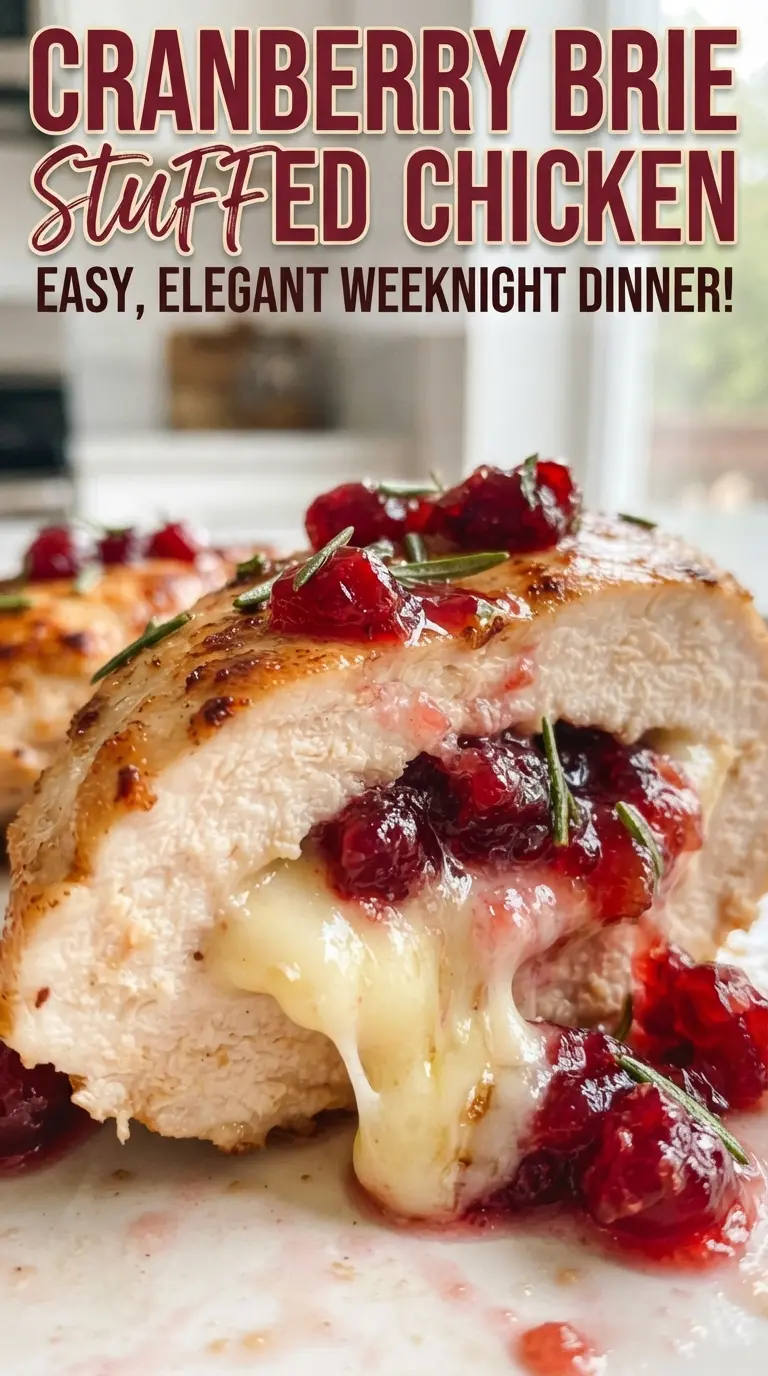
Golden-seared chicken stuffed with brie and cranberry sauce has that rare mix of crisp edges, juicy meat, and a molten center that feels a little special without turning into a project. The brie melts into the spinach and cranberry filling, while the quick pan sauce picks up every browned bit left in the skillet and pulls the whole dish together.
This version works because the filling stays restrained. Too much cranberry sauce and the chicken slips open before it finishes cooking. Too much brie and you lose the clean slice that makes this look as good as it tastes. A short sear before baking gives you color and flavor on the outside, then the oven finishes the chicken gently so the cheese melts without drying out the meat.
Below, I’ve included the one thing that keeps the filling from leaking out, plus a few smart swaps if you want to change the cheese or make the dish a little lighter. The sauce is worth reading closely, because it’s fast and it changes the whole recipe from stuffed chicken to dinner with actual pan sauce.
The brie melted into the cranberry filling instead of running all over the pan, and the sauce at the end was the part everyone kept spooning on top. Mine hit 165 in right around 17 minutes after searing.
Cranberry Brie Stuffed Chicken is the kind of dinner that slices clean, oozes a little, and still lands on the plate looking polished.
The Part That Keeps the Filling Inside the Chicken
The biggest mistake with stuffed chicken is overfilling the pocket. Cranberry sauce turns slippery as it warms, and brie softens fast, so the filling needs room to settle without forcing the seam open. A deep pocket is the goal, not a giant cavity. Cut far enough in to hold the filling, but leave the far edge intact so the chicken stays sealed while it cooks.
Searing first matters for more than color. The quick blast of heat firms the outside of the breast and gives you a little structure before the oven finishes the inside. If you skip the sear, the chicken can still cook through, but you lose the crust that makes every slice worth serving. The pan sauce also depends on that browning, so don’t scrub the skillet clean after the chicken comes out.
What the Brie, Cranberry Sauce, and Pan Drippings Are Doing Here
- Brie — Brie gives the filling its creamy melt and mild richness. A wheel with the rind left on works fine; it softens into the center and helps the cheese hold together a little better than a softer spreadable cheese would.
- Whole berry cranberry sauce — Whole berry sauce gives you texture and bright tartness instead of a smooth, overly sweet filling. If yours is thick and stiff straight from the jar, stir it first so it spreads inside the chicken without tearing the pocket.
- Baby spinach — The spinach adds a little green bite and keeps the filling from feeling heavy. Use it raw; it wilts in the oven and doesn’t need a separate cook, which also keeps the filling from turning watery.
- Chicken broth, honey, and balsamic vinegar — This is the pan sauce’s backbone. The broth loosens the browned bits, the honey rounds out the cranberry’s sharp edge, and the balsamic gives the sauce enough depth to taste finished instead of just sweet.
- Fresh rosemary — Rosemary is strong enough to stand up to brie and cranberry without disappearing. Chop it finely, because big needles can overpower the bite and make the sauce feel woody instead of fresh.
Building the Stuffed Chicken So It Stays Juicy
Cutting the Pocket
Slice into the thick side of each breast and stop before you cut through the other edge. You want a pocket, not two separate pieces. Pat the chicken dry first so the knife grips cleanly instead of sliding, and keep the opening on the side rather than the top so the filling stays tucked in while it sears.
Layering the Filling
Start with spinach, then brie, then a spoonful of cranberry sauce. The spinach forms a little cushion and keeps the cheese from melting out too quickly. If the brie slices are too thick, thin them down; large chunks melt unevenly and can push the seam apart before the chicken is cooked.
Getting Color Before the Oven
Use a hot skillet and enough oil to coat the bottom. The chicken should sizzle the moment it hits the pan, and the first side needs to stay put long enough to develop a deep golden crust. If it sticks, it isn’t ready yet. Once it releases, turn it and brown the other side, then move the skillet straight to the oven so the chicken doesn’t cool down and lose momentum.
Finishing the Sauce
When the chicken comes out, the skillet should have browned bits and a little fat left behind. Add the broth first and scrape the bottom well, then stir in the cranberry sauce, honey, balsamic, and rosemary. Let it bubble until it coats a spoon lightly. If it looks thin, keep it on the heat for another minute or two; if it gets too tight, a splash more broth fixes it fast.
Three Useful Ways to Change This Recipe Without Breaking It
Gluten-Free and Naturally Low-Carb
This recipe already fits both of those lanes as written. Just check your cranberry sauce label, since some brands add thickeners or extra sugar. The finished chicken stays rich and satisfying without any breading or flour in the sauce.
Swap the Brie for Goat Cheese
Goat cheese gives you a tangier, firmer filling that holds its shape a little more cleanly. It won’t melt into the same silky center as brie, but it works well if you want sharper contrast against the cranberry. Use a little less, because goat cheese can take over the filling fast.
Make It Dairy-Free
Swap the brie for a dairy-free cream cheese style spread that melts well, then add an extra pinch of salt to bring the filling back into balance. You won’t get the same buttery melt, but you’ll still get a creamy center and the cranberry-rosemary sauce will carry most of the flavor.
Using Frozen Chicken Breasts
Don’t try to stuff chicken that isn’t fully thawed. The pockets tear, the seasoning won’t stick well, and the cook time becomes guesswork. Thaw the breasts completely, then dry them well before cutting so you can get a clean pocket and a proper sear.
Storage and Reheating
- Refrigerator: Store leftovers in an airtight container for up to 3 days. The brie will firm up once chilled, but the chicken stays tender if it wasn’t overcooked the first time.
- Freezer: This freezes best without the sauce. Wrap the stuffed chicken tightly, freeze for up to 2 months, and thaw in the refrigerator before reheating. The cheese texture won’t be as smooth after freezing, but it still works for a next-day dinner.
- Reheating: Warm covered in a 325F oven until heated through, or use a skillet with a splash of broth over low heat. High heat dries out the chicken fast and can make the brie separate instead of melting back together.
Answers to the Questions Worth Asking

Cranberry Brie Stuffed Chicken
Ingredients
Equipment
Method
- Preheat oven to 400F so the chicken can sear and bake immediately. Cut a deep pocket into the side of each chicken breast.
- Season the outside of each chicken breast with salt, black pepper, garlic powder, and dried thyme. Keep the pockets intact and ready for stuffing.
- Stuff each chicken pocket with baby spinach, brie, and 1 tablespoon whole berry cranberry sauce. Secure the pocket with toothpicks.
- Heat olive oil in an oven-safe skillet over high heat, then sear chicken for 3-4 minutes per side until golden. Use golden edges as the cue before transferring to the oven.
- Transfer the skillet to the oven and bake 15-18 minutes until the chicken reaches 165F. The visual cue is opaque juices and a firm, fully cooked center.
- Remove chicken from the skillet and add chicken broth, remaining whole berry cranberry sauce, honey, balsamic vinegar, and chopped fresh rosemary. Stir to loosen the browned bits.
- Simmer the sauce for 3 minutes until it looks slightly thickened and glossy. The cue is ruby cranberry color with a lightly reduced sheen.
- Spoon the sauce over the chicken, then serve. Finish with any extra rosemary-scented sauce from the pan.