The first bake tells you whether these bars will hold together: the cookie layer needs to set before the cheesecake goes on top. Skip that pause and the bottom can stay soft under the filling, even when the top looks done. Chocolate Chip Cookie Cheesecake Bars get their neat layers from a short bake for the crust, then a longer bake with the cream cheese filling and cookie crumbles.
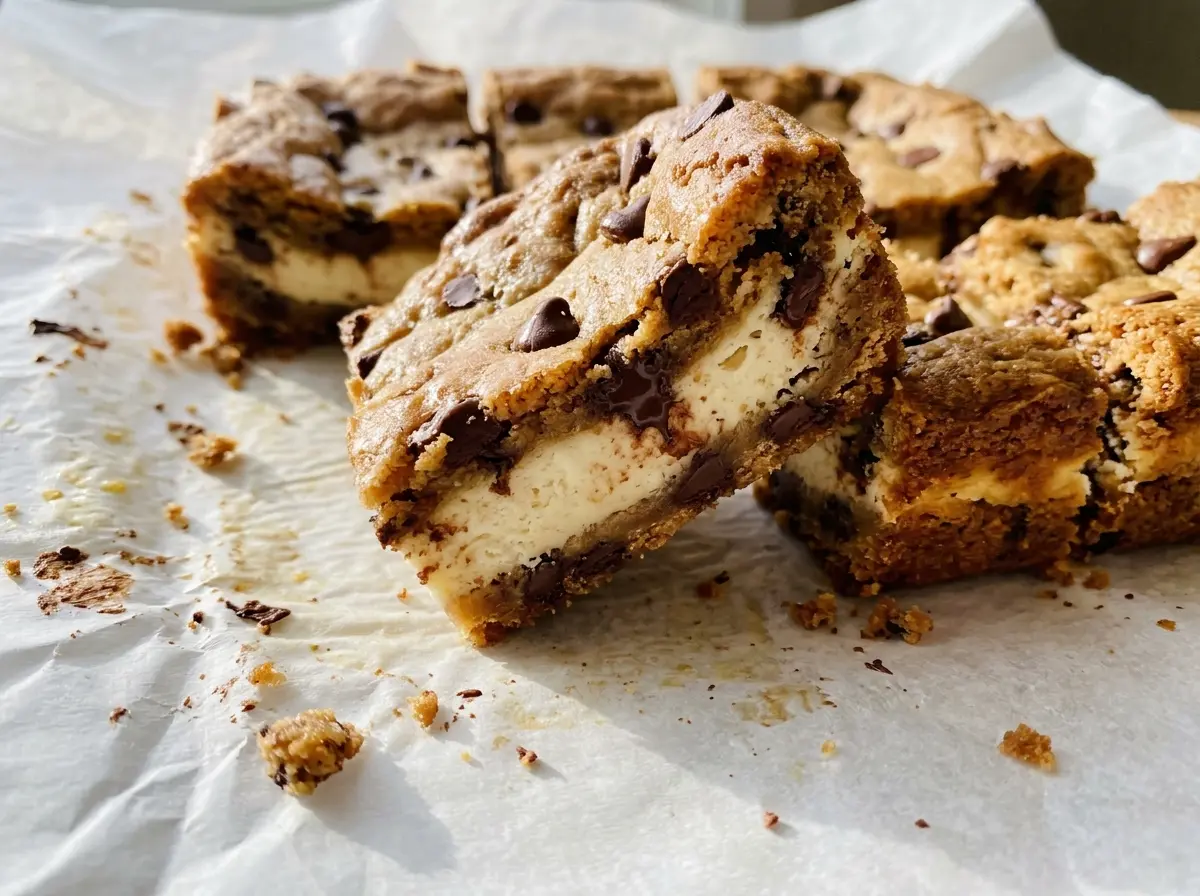
I like that the reserved dough goes on in small pieces rather than as a second solid layer. You get golden cookie bits across the top, with cheesecake showing through between them. The bars are rich, so a clean, chilled slice feels just right: soft cookie underneath, smooth filling in the middle, and chocolate chips in every bite.
Kitchen Note
Once the eggs go into the cheesecake filling, stop beating as soon as they’re combined. Extra whipping adds air, and the filling doesn’t need it to turn smooth.
Save these Chocolate Chip Cookie Cheesecake Bars for a bake with a soft cookie base, creamy center, and golden chocolate-chip topping.
Why the Cookie Base Needs Its Own Oven Time
A cookie dough base and a cheesecake filling bake at different rates. If you put the filling straight onto raw dough, the moist layer above slows the base’s baking, so the bottom can remain dense while the top is already cooked. Giving the crust its own short bake sets the surface before the filling covers it.
That first bake is deliberately brief. The crust doesn’t need to turn crisp or deeply browned; it only needs to look set and just begin to color at the edges. It will spend another 40 to 50 minutes in the oven beneath the filling, so taking it too far now can leave the bottom dry by the time the topping is golden. Spreading the dough evenly matters, too: a thin spot can bake faster than the rest, while a thick mound may stay soft. The warm crust is ready for the cheesecake as soon as it has that first set, giving you a sturdy base without baking the cookie layer twice as long as it needs.
What Each Layer Needs from Its Ingredients
- Butter and sugars — Softened butter creams smoothly with the packed light brown sugar and granulated sugar, building the cookie dough’s tender, chewy texture. The brown sugar brings more moisture and a deeper caramel note; pack it firmly when measuring. The butter doesn’t need to be melted, which would make the dough looser.
- Eggs and vanilla — The eggs bind the cookie dough and help the cheesecake filling set, while vanilla rounds out both layers. Use the eggs in their separate portions as listed; the filling’s eggs go in only after the cream cheese and sugar are smooth.
- All-purpose flour and baking soda — Flour gives the cookie layer its structure, and baking soda helps it bake up tender rather than compact. Measure the flour without packing it into the cup; too much can make the dough stiff to press into the pan.
- Semisweet chocolate chips — Their sweetness balances the cheesecake, and the chips give little pockets of chocolate without changing the dough’s consistency. A standard grocery-store bag works well; choose chips you enjoy eating on their own.
- Cream cheese — Softened cream cheese is what makes the filling smooth and rich. Let it soften before mixing; cold cream cheese tends to leave lumps that are hard to beat out once the eggs are added. There isn’t a direct substitute that keeps this same cheesecake texture.
Building the Two Layers Without Overbaking the Cookie
Mix a Soft, Even Cookie Dough
Heat the oven to 325°F, grease a 9×13-inch baking pan, and line it with parchment paper, leaving overhang on the long sides. Beat the softened butter with both sugars until creamy, then beat in the eggs and vanilla until combined. In a separate bowl, whisk the flour, baking soda, and salt; stir that mixture into the butter mixture only until no dry flour remains. Fold in the chocolate chips without working the dough more than needed.
Set the Crust Before Adding the Filling
Press half of the cookie dough evenly into the prepared pan. Crumble the remaining dough into small pieces and set them aside for the top. Bake the crust for 12 to 15 minutes, watching for a surface that looks set and edges that are just beginning to turn golden. If the center still looks raw and shiny, give it time within that baking window rather than spreading filling over loose dough.
Beat the Filling Until Smooth
In a medium bowl, beat the softened cream cheese and sugar until the mixture is smooth, scraping down the bowl if a lump clings to the side. Add the eggs and vanilla, then beat just until combined. The filling should look creamy, not foamy. Stop as soon as the egg streaks disappear so the mixture stays even and easy to spread.
Scatter the Crumbles and Bake to Temperature
Spread the cheesecake filling over the warm crust, taking it close to the edges, then scatter the reserved cookie dough crumbles evenly across the top. Bake for 40 to 50 minutes, until the cookie topping is golden and the center of the filling registers 160°F on an instant-read thermometer. A golden top alone doesn’t tell you whether the center has reached the right temperature, so check the filling itself. The bars will still need their cooling and chilling time before they’re ready to cut.
Cool, Chill, Then Lift and Slice
Set the pan on a wire rack and cool it for 1 hour. Then refrigerate the pan for at least 4 hours; that chill firms the cheesecake layer so the bars hold their shape. Use the parchment overhang to lift the slab from the pan once it’s cold. Cut it into bars with a sharp knife, wiping the blade between cuts if you want tidy edges.
Three Ways to Change the Bars Without Losing Their Layers
Use a gluten-free flour blend
Replace the all-purpose flour with a cup-for-cup gluten-free baking blend that includes xanthan gum. The cookie dough may feel a little more delicate, so press it gently and evenly into the pan; the cheesecake layer and bake remain the same.
Put more chocolate on top
Set aside a small handful of the semisweet chips before folding the rest into the dough, then scatter those reserved chips over the cookie crumbles. You’ll get more visible chocolate on the finished bars without adding another ingredient or changing the dough.
Cut neat squares for a dessert tray
After the bars are fully chilled, cut them into compact squares instead of longer rectangles. This changes the presentation, not the baking; keep the pieces chilled until you’re ready to arrange them so the cheesecake stays firm.
Storage and Reheating
- Refrigerator: Keep the bars covered for up to 4 days. The cookie topping softens a little as it sits against the cheesecake.
- Freezer: Freeze the bars in a single layer until firm, then wrap individually or store in an airtight container for up to 2 months. Thaw overnight in the refrigerator.
- Reheating: These bars are best served cold, so don’t reheat them; warmth softens the cheesecake and makes the layers harder to handle.
Questions That Come Up While Baking These Cheesecake Bars
Chocolate Chip Cookie Cheesecake Bars
Ingredients
Equipment
Method
- Heat the oven to 325°F.
- Grease a 9x13-inch baking pan.
- Line the pan with parchment paper, leaving overhang on the long sides.
- In a large bowl, beat the butter, brown sugar, and granulated sugar until creamy.
- Beat in the eggs and vanilla until combined.
- In a medium bowl, whisk together the flour, baking soda, and salt.
- Stir the flour mixture into the butter mixture just until no dry flour remains.
- Fold in the chocolate chips.
- Press half of the dough evenly into the prepared pan.
- Crumble the remaining dough into small pieces and set the crumbles aside.
- Bake the crust for 12–15 minutes, until set and just beginning to turn golden at the edges.
- In a medium bowl, beat the cream cheese and sugar until smooth.
- Beat in the eggs and vanilla just until combined.
- Spread the filling over the warm crust.
- Scatter the reserved cookie dough crumbles evenly over the top.
- Bake for 40–50 minutes, until the cookie topping is golden and the center of the filling registers 160°F on an instant-read thermometer.
- Cool in the pan on a wire rack for 1 hour.
- Refrigerate for at least 4 hours.
- Lift out by the parchment and cut into bars.