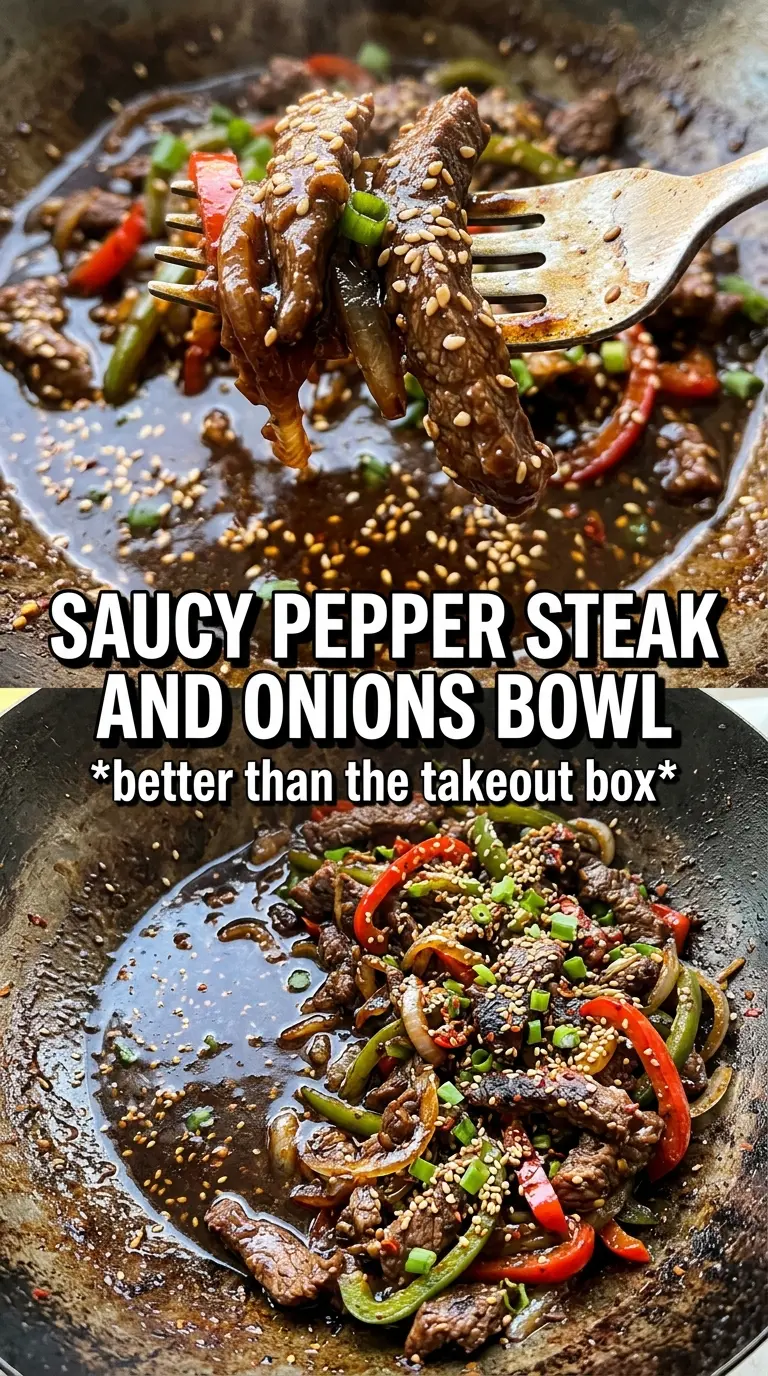
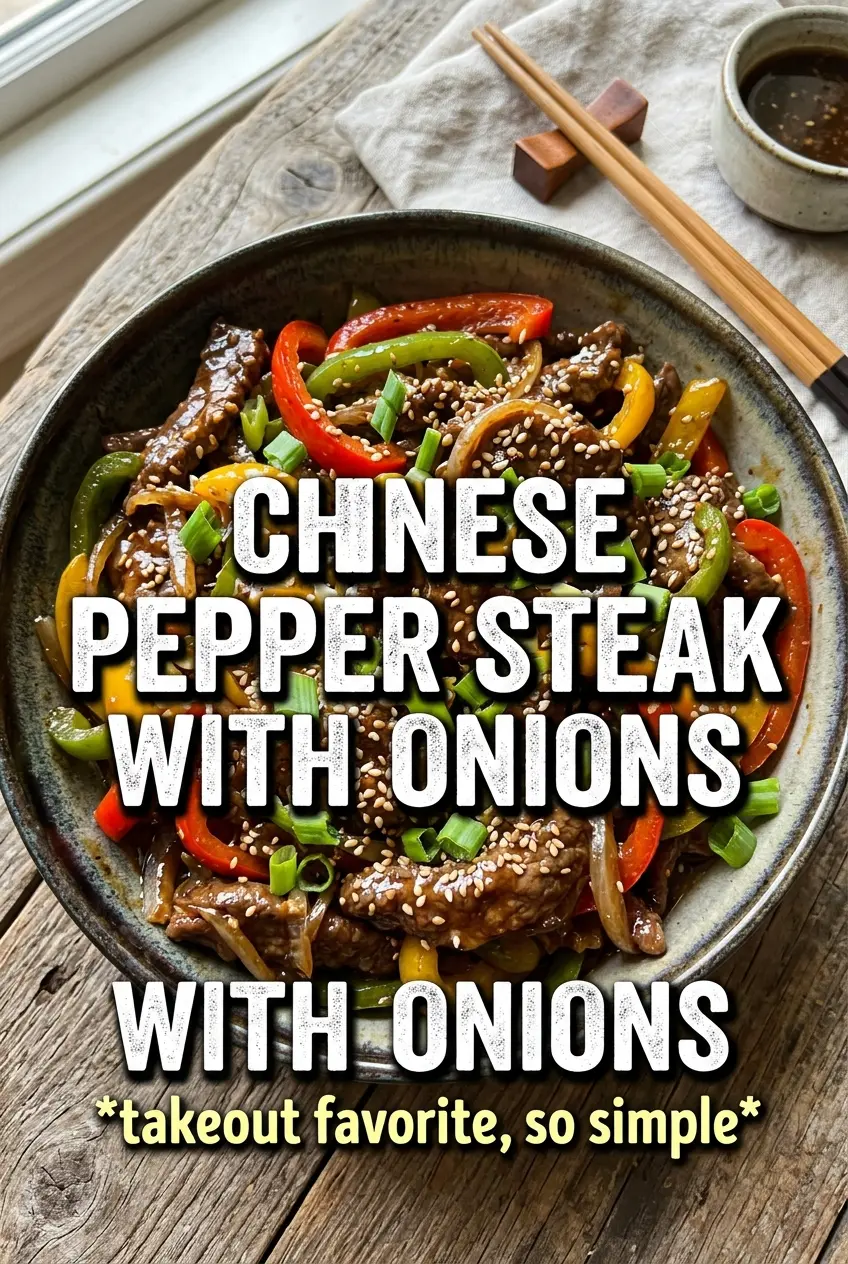
Tender beef, glossy sauce, and crisp-tender peppers make Chinese pepper steak with onions the kind of stir-fry that disappears fast once it hits the table. The beef stays juicy, the onions soften just enough to sweeten, and the sauce clings to every slice instead of pooling in the pan. It tastes like takeout in the best way, but it’s built with a few simple moves that keep the texture right.
The marinating step matters here. Cornstarch coats the beef and gives the sauce something to grab onto later, while soy sauce seasons it from the inside out. The other key is heat: you want a hot wok or skillet so the vegetables blister a little instead of steaming. That quick char gives the dish its depth.
Below, I’ve included the small details that keep the sauce glossy and the beef tender, plus a few smart swaps if you’re working with flank steak instead of ground beef. If you’ve ever had stir-fry turn watery or flat, this version fixes both problems without asking you to fuss.
The sauce thickened right in the wok and stayed glossy all the way through dinner. I used the ground beef version, and the peppers still had a little bite instead of going soft.
Save this Chinese pepper steak with onions for a fast stir-fry with glossy sauce, crisp peppers, and weeknight takeout flavor.
The Cornstarch Marinade Is What Keeps the Beef Tender
Stir-fry beef can turn chewy fast if it goes into the pan bare. The cornstarch in the marinade does two jobs at once: it lightly protects the meat from the high heat, and it helps the sauce thicken into that silky coating you want at the end. Skip that rest and the beef will still taste fine, but it won’t have the same texture or the same cling.
If you’re using flank steak instead of ground beef, slice it thinly across the grain and let it sit in the marinade for the full 20 minutes. That short soak is enough here because the cut is thin. If you’re using ground beef, the marinade still seasons it well and helps the final sauce stay cohesive instead of greasy.
What Each Ingredient Is Actually Doing in This Recipe
- Primary ingredient (the star) — Quality matters most. Choose the best you can find.
- Cooking medium (oil, butter, or broth) — This carries flavors and prevents dryness.
- Seasonings (salt, pepper, spices, herbs) — Layer flavors so nothing overpowers. Build depth gradually.
- Aromatics (garlic, onion, herbs) — Cook with fat to bloom flavors. Become the foundation.
- Supporting ingredients — Complement the main ingredient without overpowering it.
- Sauce or liquid (if applicable) — Brings flavors together. Balance richness with acid.
- Acid (lemon, vinegar, wine, or other) — Brightens and prevents flat-tasting results.
- Final finish (garnish, glaze, or sauce) — Prevents one-dimensional taste and adds visual appeal.
What Each Ingredient Is Doing in the Wok
- Ground beef or flank steak — Ground beef gives you a quicker, more casual version with lots of browned bits. Flank steak brings a more traditional pepper steak feel, but it needs thin slicing and a fast cook so it stays tender.
- Bell peppers and onion — These aren’t just filler. The peppers keep the dish bright and crisp, while the onion softens and sweetens the sauce. Red and green together give better color and a little more balance than using one pepper alone.
- Soy sauce, oyster sauce, and hoisin — Soy sauce seasons the dish, oyster sauce adds body and savory depth, and hoisin rounds everything out with a little sweetness. If you skip the oyster sauce, the sauce will taste thinner and less layered.
- Cornstarch — This is what turns the sauce glossy instead of watery. It also helps the beef brown lightly and keeps the finished stir-fry from turning soupy in the pan.
- Fresh ginger and garlic — Add these at the end of the stir-fry stage so they stay fragrant instead of burning. Burned garlic will make the whole dish bitter in a few seconds.
Why the Sauce Goes in After the Vegetables
Brown the Beef First
Get the wok or skillet hot before the beef goes in. You want browning, not steaming, so leave the meat alone long enough for it to take on color before breaking it up. If it starts looking gray and watery, the pan wasn’t hot enough or it was overcrowded. Pull the beef out once it’s browned so it doesn’t overcook while the vegetables are doing their part.
Char the Peppers and Onion Quickly
Cook the peppers and onion in the same pan for just a few minutes. They should soften at the edges and pick up a little blistering, but they should still hold their shape. That bit of char gives the dish its takeout-style flavor. If the pan gets dry, a small splash of oil is enough; too much and the vegetables fry instead of stir-frying.
Finish With the Sauce
Add the garlic and ginger for only 30 seconds, then return the beef and pour in the sauce. The sauce should bubble and thicken within about 2 minutes, turning shiny enough to coat the back of a spoon. If it looks thin, give it another minute. If it gets too thick, a spoonful of broth loosens it right back up.
Use Flank Steak for a More Classic Pepper Steak
Thinly slice flank steak against the grain and marinate it the full 20 minutes. You’ll get cleaner slices and a meatier bite than with ground beef, but the cook time stays short so it doesn’t toughen.
Make It Gluten-Free
Use a gluten-free soy sauce or tamari and check that your oyster sauce and hoisin are labeled gluten-free. The sauce will still taste rich and balanced, but you need all three sauces to be safe for the swap to work fully.
Lean It Out Without Losing the Sauce
Use extra-lean ground beef and drain off excess fat after browning. You’ll lose a little richness, so keep the oyster sauce and hoisin in the mix to carry the savory flavor and keep the stir-fry from tasting flat.
Add Heat Without Changing the Texture
Stir in a pinch of crushed red pepper or a sliced fresh chili with the garlic and ginger. That gives the dish a sharper finish without thinning the sauce or changing the method.
Storage and Reheating
- Refrigerator: Store in an airtight container for up to 4 days. The peppers soften a little more as it sits, but the flavor holds up well.
- Freezer: It freezes well for about 2 months, though the peppers will be softer after thawing. Freeze in portions for the best texture.
- Reheating: Reheat in a skillet over medium heat with a splash of water or broth. The common mistake is blasting it in the microwave until the beef gets dry and the sauce turns sticky.
Questions I Get Asked About This Recipe
Chinese Pepper Steak with Onions
Ingredients
Equipment
Method
- Mix soy sauce, cornstarch, and sesame oil with the ground beef, then let it marinate for 20 minutes at room temperature.
- Whisk soy sauce, oyster sauce, hoisin, brown sugar, beef broth, and cornstarch together until smooth, then set aside.
- Heat oil in a wok over high heat, then cook the beef until browned, breaking it apart, about 4–6 minutes, and remove it to a plate.
- Stir-fry bell peppers and onion in the same wok over high heat for 3–4 minutes until slightly charred and bright.
- Add garlic and ginger and cook for 30 seconds until fragrant.
- Return the browned beef to the wok and toss to combine with the vegetables.
- Pour the sauce over everything and cook for 2 minutes, tossing until thickened and glossy, then serve immediately over steamed rice.