Golden cheese, savory beef, and fluffy rice bake together in this casserole until the edges turn crusty and the center settles into that comforting, scoopable texture people keep going back for. It’s the kind of dinner that lands on the table with very little drama and disappears faster than it should.
What makes this version work is the layering. The rice goes in uncooked, so it soaks up the seasoned broth and mushroom soup right in the oven instead of turning soft and bland on the stovetop. Browning the beef first builds the base flavor, and stirring the cheese in only at the end keeps the topping sharp and melty instead of greasy.
Below, I’ll walk through the one part that matters most: keeping the rice from going dry or undercooked. I’ve also included the swaps I’d actually use when I’m out of one ingredient or need to stretch this into a different kind of family dinner.
The rice came out tender without getting mushy, and the cheddar on top browned just enough around the edges. I was worried the soup would make it heavy, but it held together beautifully and reheated well the next day.
Like this cheesy hamburger rice casserole? Save it to Pinterest for the nights when you want a baked, beefy one-dish dinner with crisp edges and no extra fuss.
The Rice Needs Liquid, Not Hope
This casserole works because the uncooked rice is baked in enough liquid to steam and absorb flavor at the same time. If the mixture looks thin when it goes into the oven, that’s fine; the rice needs that moisture to finish properly. The common mistake is pulling it too early, when the top looks done but the grains under the surface are still firm.
Covering the dish tightly for most of the bake traps steam and gives the rice a chance to cook evenly. Then the foil comes off for the last stretch so the cheese can brown and the edges can tighten up. That final uncovered bake is what turns this from a soft casserole into something with actual texture.
What Each Ingredient Is Actually Doing in This Recipe

- Primary ingredient (the star) — Quality matters most. Choose the best you can find.
- Cooking medium (oil, butter, or broth) — This carries flavors and prevents dryness.
- Seasonings (salt, pepper, spices, herbs) — Layer flavors so nothing overpowers. Build depth gradually.
- Aromatics (garlic, onion, herbs) — Cook with fat to bloom flavors. Become the foundation.
- Supporting ingredients — Complement the main ingredient without overpowering it.
- Sauce or liquid (if applicable) — Brings flavors together. Balance richness with acid.
- Acid (lemon, vinegar, wine, or other) — Brightens and prevents flat-tasting results.
- Final finish (garnish, glaze, or sauce) — Prevents one-dimensional taste and adds visual appeal.
What the Soup, Broth, and Cheese Are Really Doing
- Cream of mushroom soup — This gives the casserole body and a built-in sauce. It also helps keep the rice from tasting flat. If you want a cleaner mushroom flavor, use one can cream of mushroom and one can cream of chicken; the texture stays the same, but the mushroom note softens a little.
- Beef broth — Broth is the liquid that cooks the rice and carries the seasoning through the whole pan. Use a good boxed broth if you can, since this is one of those recipes where the liquid matters more than people think. Water will work in a pinch, but the casserole comes out noticeably less savory.
- Sharp cheddar — Sharp cheddar gives you a louder, less greasy finish than mild cheese. Shred it yourself if possible; pre-shredded cheese melts fine, but it won’t blanket the top as smoothly because of the coating that keeps the shreds from clumping.
- Long-grain white rice — This is the rice I’d stick with here. It holds its shape and stays fluffy after baking. Short-grain rice can turn too soft, and brown rice needs a different liquid ratio and a longer bake.
Building the Casserole So the Rice Cooks Evenly
Browning the Beef First
Cook the beef with the onion until the meat loses its pink color and the onion turns soft and translucent. You want some browned bits in the pan; that’s where the flavor lives. Drain off excess fat before seasoning, or the finished casserole can taste heavy and sit greasy on the surface.
Laying Down the Rice
Spread the uncooked rice in an even layer across the baking dish before anything else goes on top. This keeps the grains from clumping in one corner and gives the liquid a clear path through the pan. If you dump everything in a pile, the center may overcook while the edges stay underdone.
Adding the Sauce and Covering Well
Whisk the soup and broth until smooth, then pour it over the beef and rice evenly. The foil matters here more than most people expect; if it isn’t sealed tightly, steam escapes and the rice cooks unevenly. During the first bake, the dish should bubble gently around the edges, not boil hard.
Finishing with Cheese and Rest Time
After the first bake, stir gently just once so the liquid redistributes without breaking up the rice. Sprinkle the cheddar over the top and return the casserole uncovered until the cheese melts and browns in spots. Let it rest for five minutes before serving so the sauce settles instead of running all over the plate.
How to Adapt This for Different Tables and Different Pantries
Dairy-Free Version
Use a dairy-free cream soup or make a simple roux-based white sauce with unsweetened non-dairy milk, then top with a melty dairy-free cheddar-style shreds. The casserole will still be creamy, but the topping browns a little less aggressively and tastes milder.
Gluten-Free Swap
Choose a certified gluten-free condensed soup and check that your Worcestershire sauce is gluten-free. The rice itself is naturally gluten-free, so once the soup and seasoning are covered, the rest of the dish stays the same.
Use Ground Turkey Instead of Beef
Ground turkey works well, but it needs the extra seasoning to taste full-bodied. Keep the Worcestershire and onion, and don’t skip the garlic powder. The finished casserole will be a little leaner and lighter, with less of that deep beefy flavor.
Make It Ahead for a Busy Night
You can brown the beef mixture and mix the sauce a day ahead, then assemble and bake when you’re ready. I wouldn’t fully assemble it too early, because the rice starts pulling liquid before it hits the oven and the texture gets mushy at the edges.
Storage and Reheating
- Refrigerator: Store covered for up to 4 days. The rice tightens up as it chills, but the flavor gets even better by the next day.
- Freezer: This freezes well in portions for up to 2 months. Cool it completely first, then wrap it tightly or pack it into airtight containers so the rice doesn’t pick up freezer odor.
- Reheating: Reheat covered in the oven at 325°F with a splash of broth or water to loosen the rice. The common mistake is blasting it in the microwave until the cheese turns oily and the rice dries out.
Questions I Get Asked About This Recipe
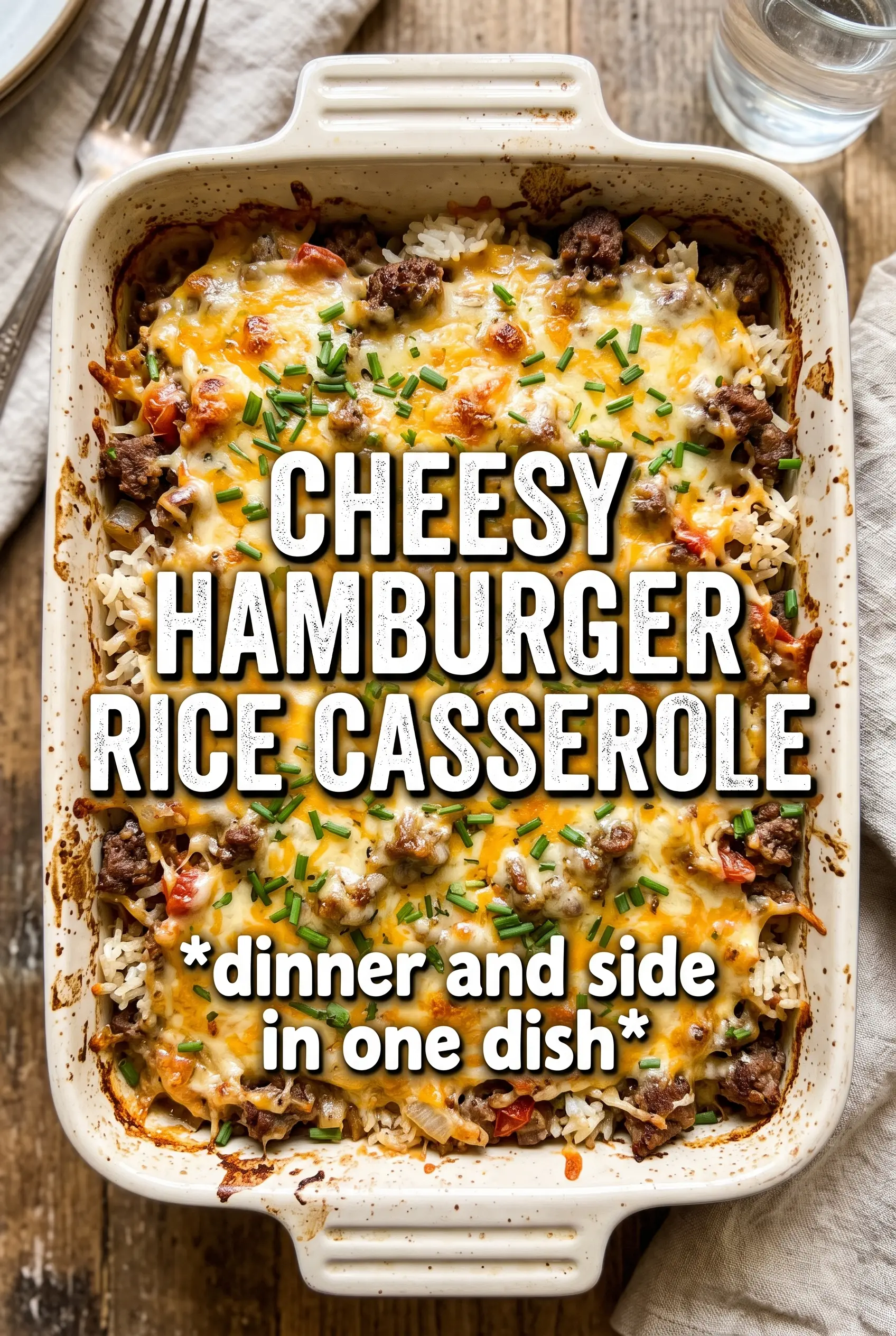
Cheesy Hamburger Rice Casserole
Ingredients
Equipment
Method
- Preheat the oven to 350°F and grease a 9x13 baking dish.
- Set up the casserole dish so it’s ready for layering once the beef is browned.
- Brown ground beef with diced onion over medium-high heat until the beef is fully cooked.
- Drain the excess fat from the pan.
- Add minced garlic and stir for about 30-60 seconds until fragrant.
- Season with garlic powder, onion powder, Worcestershire sauce, salt, and black pepper, stirring to coat evenly.
- Spread the uncooked long-grain white rice in the greased baking dish in an even layer.
- Spoon the seasoned beef mixture over the rice.
- Whisk the cream of mushroom soup with beef broth until smooth, then pour evenly over the beef and rice.
- Cover tightly with foil and bake at 350°F for 35 minutes, until the rice is partially tender and the edges are bubbling.
- Uncover, stir gently to redistribute the top layer, and sprinkle shredded cheddar over the casserole.
- Bake uncovered for 10 more minutes at 350°F until the cheese is golden and bubbly with slightly crusty edges.
- Let the casserole rest for 5 minutes before serving so the juices set slightly.