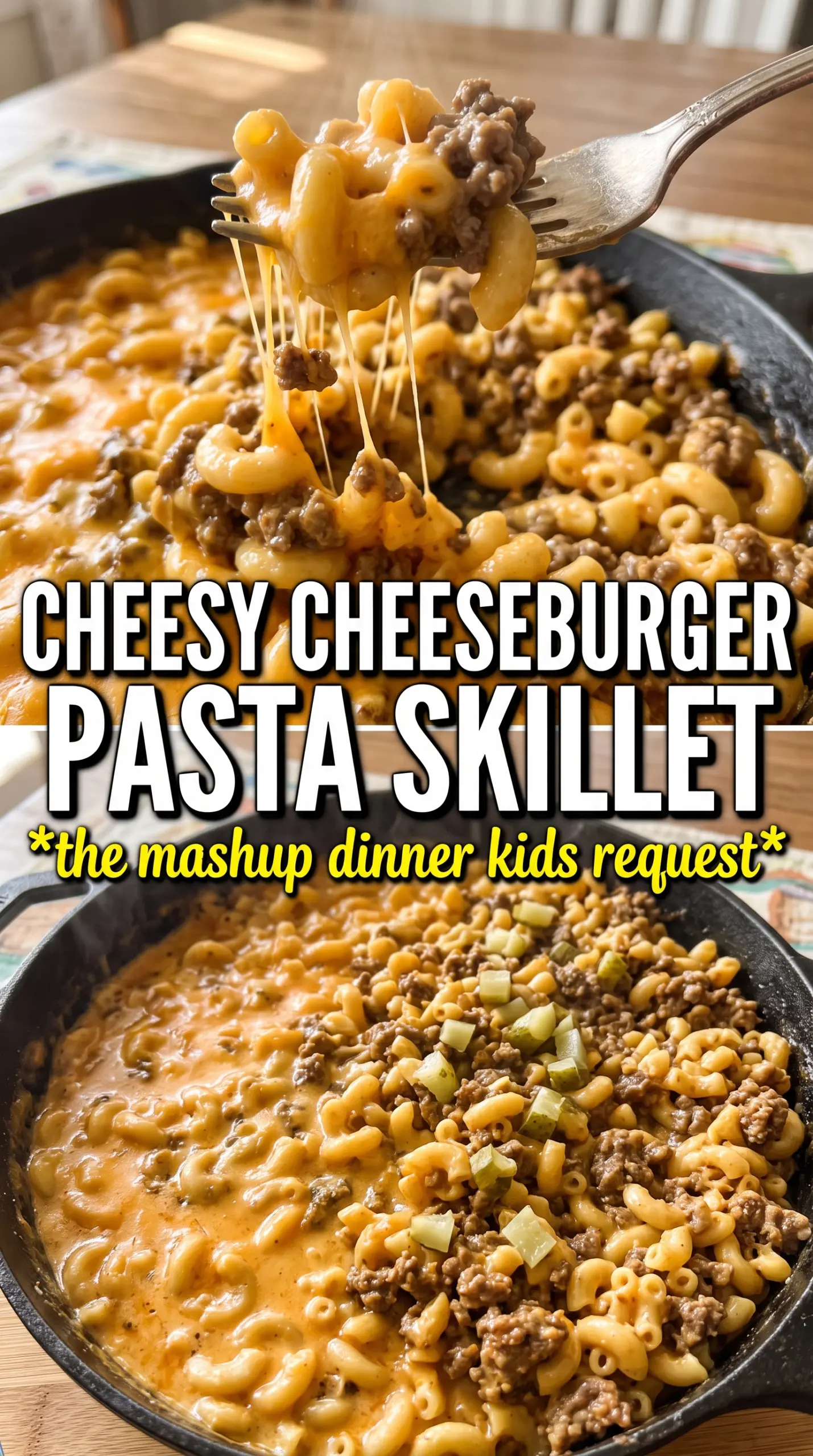
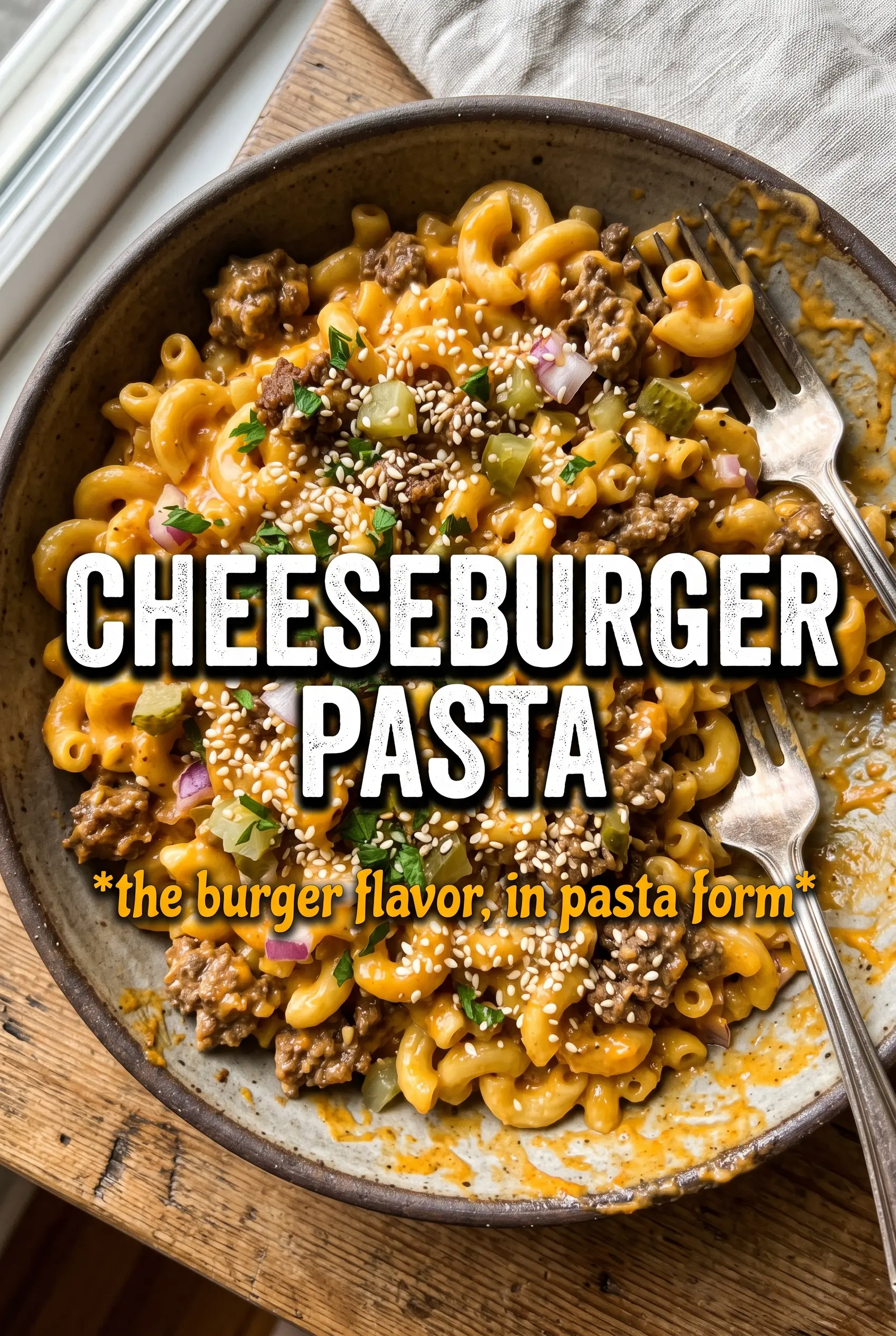
Cheeseburger pasta hits that same salty, tangy, cheesy comfort you expect from a drive-thru burger, but in a skillet that comes together fast and eats like a full dinner. The sauce clings to every piece of pasta, the beef stays hearty, and the pickle topping at the end gives it that sharp little finish that keeps each bite from feeling heavy.
What makes this version work is the way the pasta cooks right in the broth and milk, soaking up the ketchup, mustard, and Worcestershire as it softens. That means the sauce starts building from the inside out instead of sitting on top of plain noodles. The mix of sharp cheddar and American cheese matters too: cheddar brings the big cheesy flavor, while American melts into the sauce and keeps it smooth instead of grainy.
Below, I’ll walk through the part that keeps the sauce creamy, why the cheese combo matters, and a few smart ways to adapt it depending on what you have in the kitchen.
The pasta came out perfectly coated and the sauce stayed creamy instead of turning thick and sticky. My kids picked out the pickle topping at first, then kept asking for more of the tangy ketchup-mustard drizzle.
Save this cheeseburger pasta for the nights when you want burger flavor, melty cheese, and one skillet to wash.
The Trick to Keeping the Sauce Creamy Instead of Gritty
The biggest mistake in cheeseburger pasta is rushing the cheese into a pot that’s still too hot. When cheddar gets slammed with high heat, it tightens up and turns greasy or grainy. The fix is simple: take the skillet off the burner before stirring in the cheese, then add it in handfuls so it melts smoothly into the broth-and-milk base.
Cooking the pasta in the same skillet matters too. The starch that comes off the noodles helps thicken the sauce naturally, so you don’t need flour or a separate roux. If the pan looks a little loose before the cheese goes in, that’s fine; the sauce finishes as the pasta rests for a minute or two.
What Each Ingredient Is Actually Doing in This Recipe
- Primary ingredient (the star) — Quality matters most. Choose the best you can find.
- Cooking medium (oil, butter, or broth) — This carries flavors and prevents dryness.
- Seasonings (salt, pepper, spices, herbs) — Layer flavors so nothing overpowers. Build depth gradually.
- Aromatics (garlic, onion, herbs) — Cook with fat to bloom flavors. Become the foundation.
- Supporting ingredients — Complement the main ingredient without overpowering it.
- Sauce or liquid (if applicable) — Brings flavors together. Balance richness with acid.
- Acid (lemon, vinegar, wine, or other) — Brightens and prevents flat-tasting results.
- Final finish (garnish, glaze, or sauce) — Prevents one-dimensional taste and adds visual appeal.
What the Cheese and Condiments Are Doing Here
- Ground beef — This brings the burger part of the dish. Use 80/20 if you can; it has enough fat for flavor without making the skillet greasy. If your beef is leaner, a small spoonful of oil in the pan helps the onion brown instead of dry out.
- Sharp cheddar — Sharp cheddar gives the sauce its main cheesy backbone. Freshly shredded cheese melts better than the bagged kind, which often has anti-caking starches that can make the sauce less silky.
- American cheese — This is the ingredient that keeps the sauce smooth. It melts into the cheddar and helps the final texture stay creamy, even after the skillet sits for a few minutes.
- Ketchup, mustard, and Worcestershire — These three are what make the pasta taste like a cheeseburger instead of just beefy mac and cheese. Ketchup adds sweetness and tomato depth, mustard brings the sharp bite, and Worcestershire adds that savory background note you miss if it’s left out.
- Pickles for topping — Don’t skip these if you want the full burger effect. They’re not garnish for looks; that cold, briny crunch cuts through the richness and keeps the dish from tasting flat.
Building the Burger Flavor in the Skillet
Brown the Beef Until the Pan Starts Talking Back
Cook the beef with the onion over medium-high heat until the meat loses its raw color and the onion turns soft and glossy. You want some browned bits on the bottom of the pan, not a pale steam bath, because those bits carry a lot of the flavor that makes this taste like a cheeseburger. Drain off excess fat if there’s a pool in the skillet, but leave a little behind so the garlic has something to bloom in. Stir the garlic in only for the last 30 seconds; any longer and it can turn bitter.
Let the Pasta Cook in the Brothy Sauce
Once the broth, milk, ketchup, mustard, Worcestershire, salt, and pepper go in, bring the skillet to a real boil before lowering the heat. Add the pasta and cover the pan so it cooks through in the liquid instead of drying out on the edges. Stir every few minutes to keep the pasta from sticking to the bottom and to check whether the liquid is reducing too fast. If the pan looks dry before the noodles are tender, add a splash of broth or water.
Finish Off Heat for a Smooth Melt
When the pasta is tender and most of the liquid has turned creamy, pull the skillet off the burner. Stir in the cheddar first, then the American cheese, and keep mixing until the sauce turns smooth and glossy. If you keep the pan over heat here, the cheese can separate and the sauce turns oily. Top with pickle slices and a drizzle of ketchup and mustard right before serving so the finish stays bright.
How to Adapt Cheeseburger Pasta Without Losing the Point
Make it gluten-free with sturdy pasta
Use a gluten-free elbow or rotini that can hold up to simmering in liquid. Keep an eye on it near the end, because gluten-free pasta can go from tender to soft faster than wheat pasta. If the sauce thickens too much before the pasta is done, add a little extra broth.
Swap in ground turkey for a lighter skillet
Ground turkey works, but it needs help because it doesn’t bring the same beefy depth. Use a little extra Worcestershire and don’t skip the onion or pickles, since those parts carry more of the burger character when the meat itself is milder.
Turn it into a bacon cheeseburger version
Cook a few strips of bacon first, then use a spoonful of the rendered fat to brown the beef. Crumble the bacon over the finished pasta or stir some in at the end for a smoky bite that leans even harder into burger territory.
Make it dairy-free with a different finish
Use unsweetened oat or soy milk and a good melting dairy-free cheese, but expect a slightly less silky sauce. The American cheese is hard to mimic exactly, so keep the heat low and add the shreds gradually to avoid a clumpy texture.
Storage and Reheating
- Refrigerator: Keeps for 3 to 4 days in a sealed container. The pasta will absorb more sauce as it sits, so it gets thicker by day two.
- Freezer: It freezes, but the dairy sauce can separate a little when thawed. If you do freeze it, cool it completely and store it in a tight container for up to 2 months.
- Reheating: Warm it gently on the stovetop or in the microwave with a splash of milk or broth. High heat is what makes the cheese sauce break, so reheat in short bursts and stir often.
Answers to the Questions Worth Asking
Cheeseburger Pasta
Ingredients
Equipment
Method
- Heat a large skillet over medium-high heat and brown the ground beef with the diced onion. Cook until the beef is browned, drain excess fat, then stir in the minced garlic and cook for 30 seconds.
- Stir in the uncooked elbow macaroni or rotini, beef broth, whole milk, ketchup, yellow mustard, Worcestershire sauce, and salt and pepper. Bring the mixture to a boil.
- Reduce heat to medium, cover, and cook for 12–14 minutes, stirring occasionally, until the pasta is tender.
- Remove the skillet from heat and stir in the shredded sharp cheddar and cubed American cheese until fully melted and the sauce turns creamy.
- Top the cheeseburger pasta with dill pickle chips and drizzle ketchup and mustard before serving.