The milk solids in the butter turn amber before the butter itself looks much darker, and that’s the moment to pay attention. Swirl the pan often and stay close; a few minutes take it from nutty to scorched. That browned butter gives these sourdough discard chocolate chip cookies a warm, toasted flavor that plain melted butter can’t match.
I whisk the sugars into the butter while it’s warm, then let the dough chill after scooping. That order keeps the dough easy to portion and gives the cookies a chance to firm up before baking. The discard goes right into the wet ingredients, so there’s no separate feeding or fermenting step. You’ll get golden edges, soft centers, and chocolate in every bite.
Kitchen Note
Let the browned butter cool until it’s warm, not hot, before you whisk in the egg. Hot butter can start cooking the egg in the bowl, leaving little bits instead of a smooth dough.
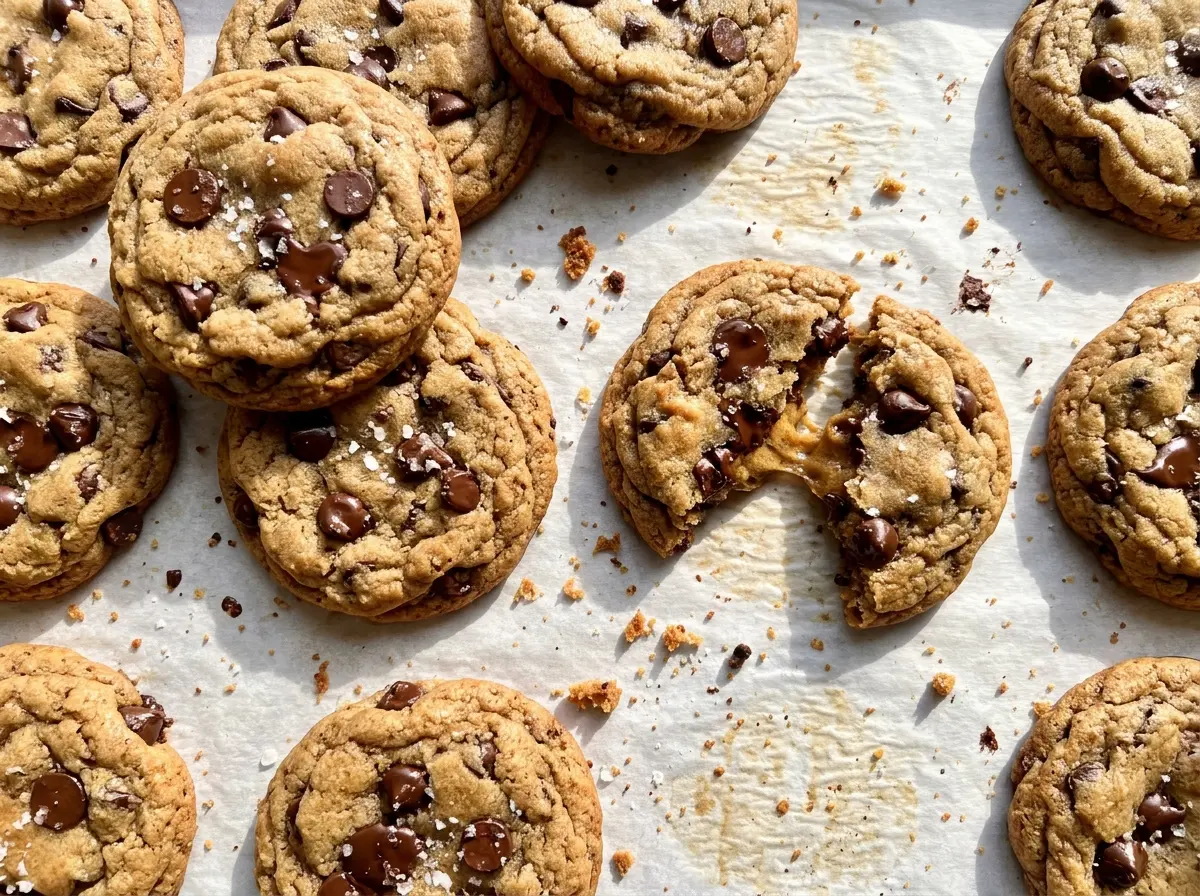
Save these brown butter sourdough discard chocolate chip cookies for a bake with nutty browned butter, tender centers, and plenty of semisweet chocolate.
Why Sourdough Discard Isn’t the Only Lift in These Cookies
Sourdough discard brings its own acidity and moisture, but this dough doesn’t rely on an active starter to rise. Baking soda is in the dry mix, and the dough goes straight from mixing to a one-hour chill rather than sitting out to ferment. That means you can use discard from your regular starter routine without waiting for it to become bubbly and strong.
The balance of the dough matters, too. Brown sugar brings a deeper sweetness, while granulated sugar keeps the dough from leaning entirely soft and dense. The whole egg and extra yolk add richness, and the flour gives the scooped portions enough structure to hold their shape. Together, those ingredients make a cookie dough, not a bread dough; don’t extend the rest to chase a more fermented flavor.
That distinction is useful if you’ve baked sourdough cookies that spread unpredictably or tasted sharply tangy. Discard consistency varies from jar to jar, so stir it before measuring and use a smooth, spoonable portion. The dough still gets its full hour in the refrigerator after you’ve scooped it. That chill is part of the cookie method, not a substitute for starter fermentation.
What the Butter, Discard, and Chocolate Each Bring

- Unsalted butter — It’s the base for the browned-butter flavor, so use real butter rather than a spread. Unsalted butter also lets the fine salt in the dough stay in control. Browning it takes a few minutes of attention, but the toasted milk solids are what give these cookies their distinctive aroma.
- Brown and granulated sugars — The brown sugar gives the dough a rounded, molasses-like sweetness; granulated sugar keeps the sweetness cleaner. Packed brown sugar matters for a consistent dough. If you use a different brown sugar, the flavor may shift slightly, but keep the two sugars in their stated proportions.
- Egg, yolk, and sourdough discard — The extra yolk adds richness alongside the whole egg, while the discard adds moisture and a mild fermented note. Stir discard before using if liquid has separated on top. A discard that’s thick and spoonable is easiest to blend smoothly into the wet ingredients.
- All-purpose flour — Spoon it into the measuring cup and level the top rather than dipping the cup into the bag; packed flour can leave the dough dry. This is the flour the dough is balanced around, so a direct swap to another flour can change how the cookies spread and set.
- Semisweet chocolate chips — Their sweetness balances the brown butter without making the dough taste sugary. Use chips you enjoy eating on their own; the chocolate remains a major part of each cookie. The chips also hold their shape more than chopped chocolate, which gives you distinct pockets throughout.
- Baking soda, vanilla, and fine salt — Baking soda provides the leavening, vanilla rounds out the butter and chocolate, and fine salt distributes evenly through the dough. Measure the soda carefully; adding extra can leave an unpleasant alkaline taste.
From Amber Butter to Chilled Cookie Portions
Brown the butter without scorching the milk solids
Set the oven to 350°F and line two large baking sheets with parchment paper before you start mixing. Melt the butter in a medium saucepan over medium heat, swirling it often for 5–8 minutes. Watch for the milk solids to turn amber and smell nutty; the color and aroma are better guides than a strict minute count. Pour the butter into a large bowl and let it cool for 15–20 minutes, until it’s warm but not hot.
Whisk the wet ingredients until smooth
Whisk both sugars into the cooled butter until combined. Add the whole egg and egg yolk, then whisk in the sourdough discard and vanilla. Keep whisking until the mixture looks smooth rather than streaky, especially where the discard meets the butter and sugar. If the butter is still hot, pause and let it cool more before adding the egg.
Fold in the flour and chocolate gently
In a medium bowl, whisk the flour, baking soda, and salt together so the leavener is spread through the flour. Fold that mixture into the wet ingredients just until no dry streaks remain. Scraping along the bottom of the bowl helps catch pockets of flour without prolonged mixing. Fold in the chocolate chips last, stopping once they’re evenly distributed.
Scoop, chill, and bake one sheet at a time
Scoop the dough into 24 portions of about 2 tablespoons each, arranging 12 on each prepared sheet with at least 2 inches between portions. Refrigerate the portioned dough on the baking sheets for at least 1 hour, until firm. Bake one sheet at a time for 10–12 minutes, looking for golden edges and centers that look just set. Leave the cookies on the baking sheets for 5 minutes before moving them to a wire rack; they’re fragile while hot.
Two Chocolate Swaps That Change the Cookie
Use bittersweet chips for a less-sweet bite
Replace the semisweet chips with the same amount of bittersweet chocolate chips. The cookie will taste more cocoa-forward and less sweet, while the chips still keep their shape in the dough.
Trade chips for chopped semisweet chocolate
Use the same weight of chopped semisweet chocolate in place of the chips. The chopped pieces make less uniform pockets, with some smaller flecks and larger melted spots, so the chocolate is distributed less evenly from cookie to cookie.
Storage and Reheating
- Refrigerator: Store fully cooled cookies in an airtight container for up to 1 week; they’ll become firmer than cookies kept at room temperature.
- Freezer: Freeze fully cooled cookies in an airtight freezer-safe container for up to 2 months. Separate layers with parchment, then thaw at room temperature.
- Reheating: Microwave a cookie for about 8–10 seconds to soften it. Longer heating can make the chocolate very hot and the cookie tough around the edges.
Questions That Come Up While Baking These Cookies
Brown Butter Sourdough Discard Chocolate Chip Cookies
Ingredients
Equipment
Method
- Preheat the oven to 350°F.
- Line two large baking sheets with parchment paper.
- Melt the butter in a medium saucepan over medium heat, swirling often, for 5–8 minutes, until the milk solids turn amber and smell nutty.
- Pour the browned butter into a large bowl.
- Cool the browned butter for 15–20 minutes, until warm but not hot.
- Whisk the brown sugar and granulated sugar into the butter until combined.
- Whisk in the egg and egg yolk.
- Whisk in the sourdough discard and vanilla until smooth.
- In a medium bowl, whisk together the flour, baking soda, and salt.
- Fold the flour mixture into the butter mixture just until no dry streaks remain.
- Fold in the chocolate chips until evenly distributed.
- Scoop the dough into 24 portions of about 2 tablespoons each.
- Arrange 12 portions at least 2 inches apart on each prepared baking sheet.
- Refrigerate the portioned dough on the baking sheets for at least 1 hour, until firm.
- Bake one sheet at a time for 10–12 minutes, until the edges are golden and the centers look just set.
- Cool the cookies on the baking sheets for 5 minutes.
- Transfer the cookies to a wire rack to cool.