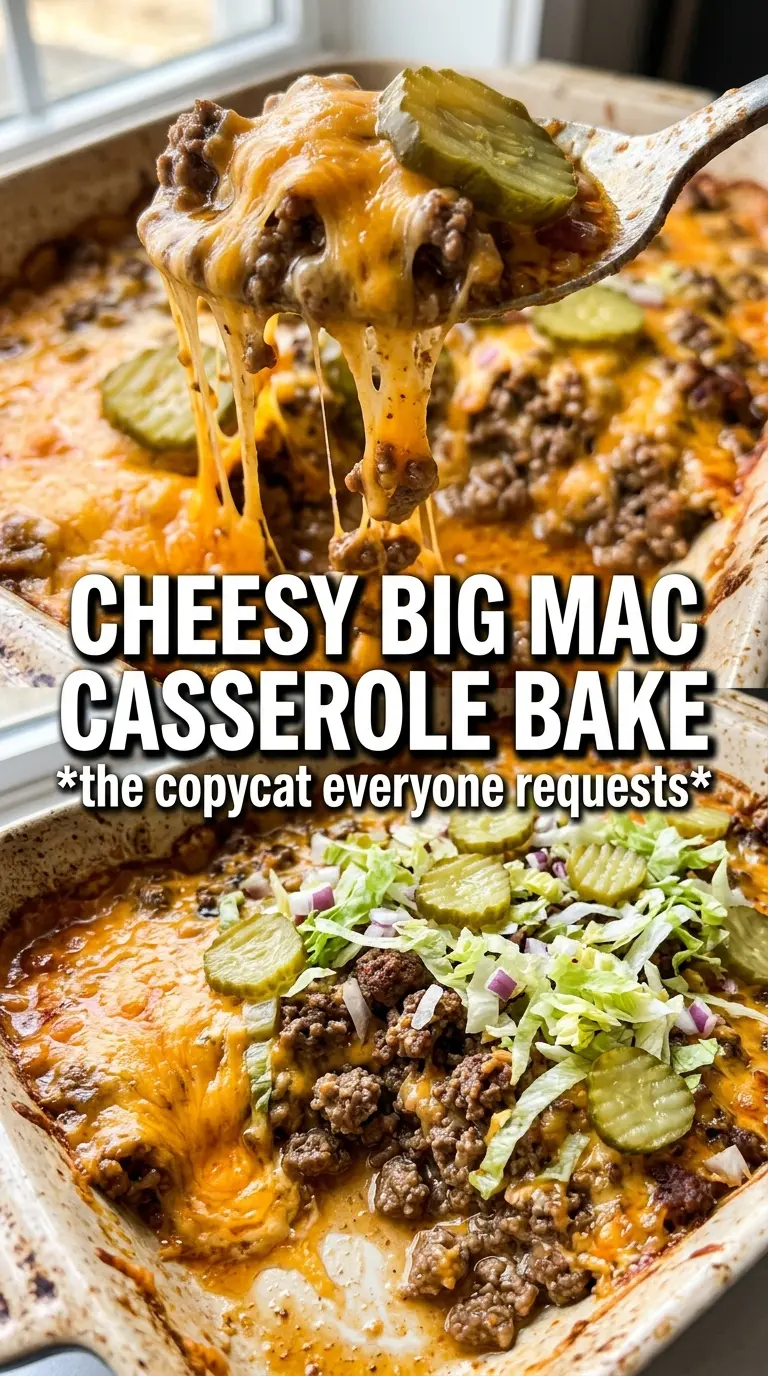
Bubbly, cheesy, and piled with the same salty-tangy toppings people love on a drive-thru burger, Big Mac Casserole hits that fast-food craving without the wrapper. The crescent roll base bakes into a soft, buttery crust that holds the beef and cheese together, and the sauce on top gives every bite that familiar sweet-sour punch.
What makes this version work is the layering. The cheese goes under and over the beef, which helps keep the crust from turning soggy, and the sauce gets mixed separately so it stays bright instead of disappearing into the pan. The lettuce, tomato, and pickles go on at the end for contrast, not during baking, so you keep the fresh crunch that makes the casserole taste like a burger instead of just a baked beef dish.
Below, I’ll walk through the part that matters most: how to keep the crescent crust cooked through without overbaking the top, plus the small topping order that makes this taste like a proper Big Mac clone.
The crescent crust cooked all the way through and the sauce tasted just like a Big Mac. My husband went back for seconds before I’d even sat down.
Like this Big Mac Casserole? Save it for the nights when you want cheeseburger flavor, a golden crescent crust, and that tangy special sauce in one pan.
The Crescent Crust Needs a Head Start, Not a Guess
The biggest mistake with a casserole like this is treating the dough like a garnish. Crescent roll dough needs enough time in direct contact with the hot pan and the hot filling to cook through, or you end up with a pale, gummy layer under all that cheese. Pressing the seams together well matters more than people think, because any gaps turn into weak spots that can split once the beef goes on top.
Draining the beef matters here too. You want a rich, meaty filling, not a layer of grease sitting on the crust. If the pan looks shiny with fat after browning, spoon it off before building the casserole. That one step keeps the base from turning soggy and helps the bottom brown instead of steam.
What Each Ingredient Is Actually Doing in This Recipe
- Primary ingredient (the star) — Quality matters most. Choose the best you can find.
- Cooking medium (oil, butter, or broth) — This carries flavors and prevents dryness.
- Seasonings (salt, pepper, spices, herbs) — Layer flavors so nothing overpowers. Build depth gradually.
- Aromatics (garlic, onion, herbs) — Cook with fat to bloom flavors. Become the foundation.
- Supporting ingredients — Complement the main ingredient without overpowering it.
- Sauce or liquid (if applicable) — Brings flavors together. Balance richness with acid.
- Acid (lemon, vinegar, wine, or other) — Brightens and prevents flat-tasting results.
- Final finish (garnish, glaze, or sauce) — Prevents one-dimensional taste and adds visual appeal.
What the Sauce Is Doing Beside the Beef
Ground beef: Use an 80/20 blend if you can. It has enough fat for flavor, but still drains well. Leaner beef works, though it tastes a little flatter unless you season it generously.
Sharp cheddar: Sharp cheddar gives you the salty bite that stands up to the sauce. Mild cheddar melts fine, but it loses some of the burger-shop flavor. Pre-shredded cheese works in a pinch, though freshly shredded melts smoother and gives you better coverage.
Crescent roll dough: This is the shortcut that makes the casserole feel like a burger on a soft bun base. Keep it cold until you use it, and press the seams together firmly so the filling doesn’t leak through.
Pickles and relish: These two bring the tang. Sweet relish goes into the sauce, while dill pickles on top give the finished dish a sharper crunch. If you only have dill relish, use it and reduce the vinegar a little.
French dressing, ketchup, vinegar, and sugar: This mix is what gives the sauce its Big Mac style sweetness and tang. Mayo alone won’t taste right here. If you substitute a different dressing, the sauce will still be good, but it won’t have that same familiar burger-joint balance.
Building the Layers So the Bottom Stays Soft, Not Soggy
Cooking the Beef Cleanly
Cook the onion with the beef until the meat is no longer pink and the onion looks softened and a little translucent. You want the crumbles fairly small so the casserole slices neatly. If there’s too much liquid in the pan, keep cooking for another minute or two until it evaporates; wet filling is the fastest way to weaken the crust.
Pressing in the Dough
Lay the crescent dough in the greased dish and press the seams together with your fingertips until you have one even layer. Go all the way to the corners so the edges aren’t too thin. A thin edge cooks faster than the center and can turn dark before the middle is set, so keep the layer even.
Layering for Melt and Structure
Scatter half the cheese over the dough first, then spread the beef over that, then finish with the rest of the cheese. That first layer of cheese acts like a little barrier between the dough and the meat. It’s not foolproof, but it helps protect the crust and gives you that gooey middle that stretches when you serve it.
Adding the Fresh Finish
Mix the sauce while the casserole cools for a few minutes, then spoon or drizzle it over the top right before serving. Add the lettuce, tomato, pickles, and sesame seeds last so they stay crisp and bright. If you put them on early, the heat wilts the lettuce and the tomatoes leak into the sauce.
How to Tweak It Without Losing the Burger Feel
Dairy-Free Version
Use a dairy-free shredded cheddar-style cheese and check that your crescent dough is dairy-free, since some brands include milk ingredients. The topping still melts enough to hold the casserole together, though it won’t have quite the same sharp finish as real cheddar.
Make It a Little Leaner
Use extra-lean ground beef and drain it well, then add an extra pinch of salt and pepper so the filling doesn’t taste flat. You lose a little richness, but the sauce and cheese bring enough back that the casserole still tastes like a burger, not diet food.
Turn Up the Pickle Factor
Add extra diced dill pickles inside the beef layer or stir a tablespoon of pickle juice into the sauce. That gives you a sharper bite and pushes it even closer to a fast-food burger flavor, but too much juice can thin the sauce, so add it sparingly.
Storage and Reheating
- Refrigerator: Store the baked casserole without the fresh toppings for up to 4 days. The crust softens a bit, but the flavor holds up well.
- Freezer: Freeze the baked casserole without lettuce, tomato, or pickles for up to 2 months. Wrap it tightly and thaw in the refrigerator before reheating for the best texture.
- Reheating: Warm slices in a 350°F oven until hot in the center, about 15 to 20 minutes. The microwave works for speed, but it makes the crust softer, so cover loosely and use short bursts if that’s the route you take.
Answers to the Questions Worth Asking
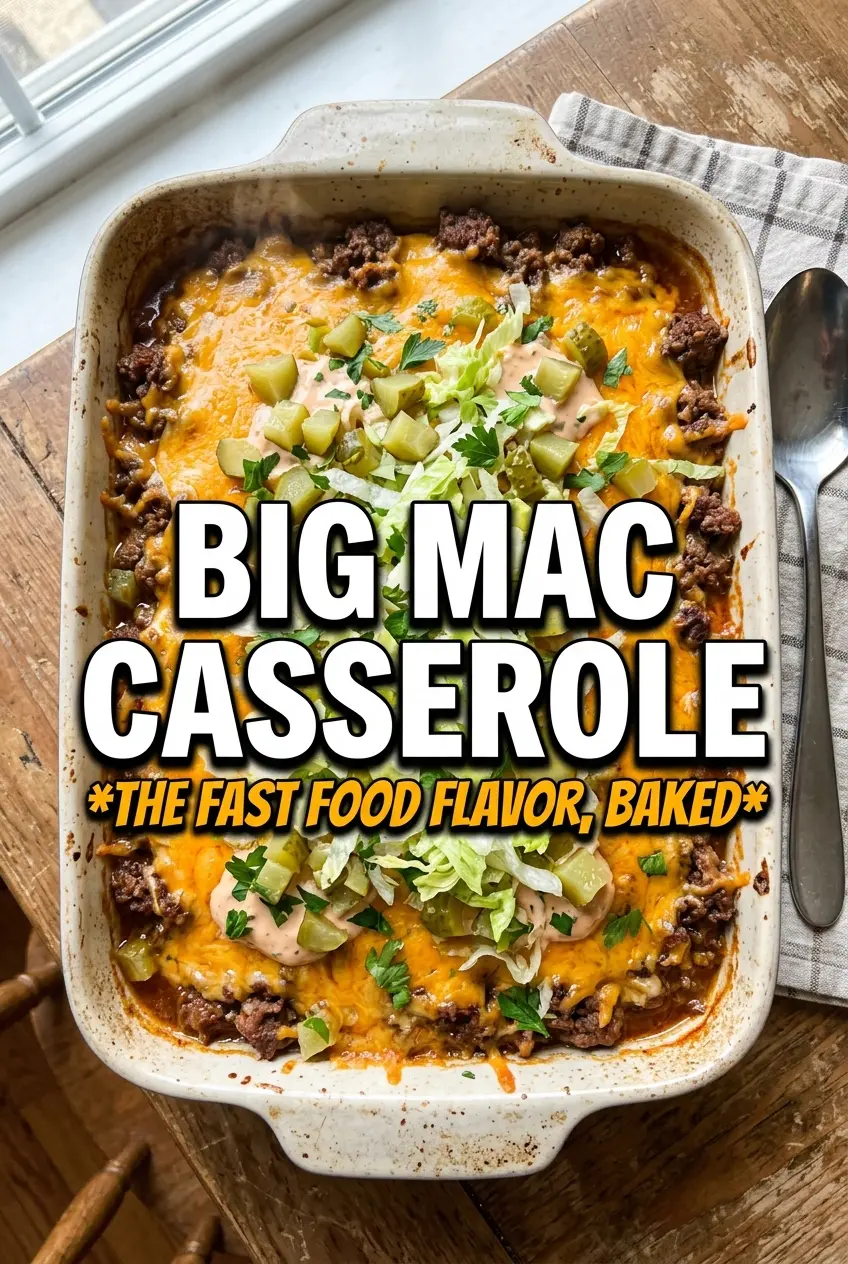
Big Mac Casserole
Ingredients
Equipment
Method
- Preheat the oven to 375°F and grease a 9x13 baking dish so the crescent crust won’t stick.
- Brown the ground beef with the diced onion in a Dutch oven, then drain excess fat and season with salt and pepper.
- Press the crescent roll dough into the bottom of the baking dish to form a crust, pinching seams together.
- Sprinkle 1 cup of the shredded sharp cheddar cheese over the crust, then spread the beef mixture evenly and top with the remaining cheddar.
- Bake for 20–25 minutes at 375°F until the dough is cooked through and the cheese is golden, then let the casserole cool for 5 minutes.
- Mix the Big Mac sauce ingredients until smooth, then drizzle it evenly over the hot casserole.
- Top with shredded lettuce, diced tomato, and dill pickle slices, then finish with sesame seeds before serving.