Beef and rotini in garlic parmesan sauce lands in that sweet spot between comforting and practical: a pan full of tender pasta, savory beef, and a sauce that clings to every spiral instead of pooling at the bottom of the bowl. The rotini matters here. Those twists catch the cream, the parmesan, and the browned bits from the beef, which gives every bite more going on than a straight noodle ever could.
What makes this version work is the way the pasta cooks right in the broth and cream. That means the rotini seasons itself as it softens, and the starch it releases helps the sauce thicken without a separate roux. The garlic goes in after the beef has browned, so it perfumes the pan without turning bitter, and the parmesan finishes the sauce off the heat where it melts smooth instead of clumping.
Below, I’ve laid out the part that matters most: how to keep the sauce creamy, how to avoid overcooking the pasta, and which swaps still hold up if you need to work with what’s in the fridge.
The sauce thickened up perfectly, and the rotini held onto every bit of that garlic parmesan flavor. I used a little extra black pepper on top and my husband went back for seconds before I even sat down.
Save this beef and rotini in garlic parmesan sauce for the nights when you want a creamy pasta that comes together in one skillet.
The Trick to Keeping the Sauce Creamy Instead of Grainy
The biggest mistake in a pasta like this is boiling the cream hard after the parmesan goes in. That’s when the sauce can turn gritty or separate. The better move is to let the rotini cook in a steady simmer, then stir in the butter and parmesan after the pasta is tender and the pan is off the hottest part of the burner.
The starch from the pasta and the fat from the cream need time to work together. If the sauce looks loose at first, give it a minute. It thickens as it stands, and the parmesan finishes the texture better than extra heat ever will. If it gets too tight, a splash of broth loosens it back up without watering down the flavor.
What Each Ingredient Is Doing in the Pan
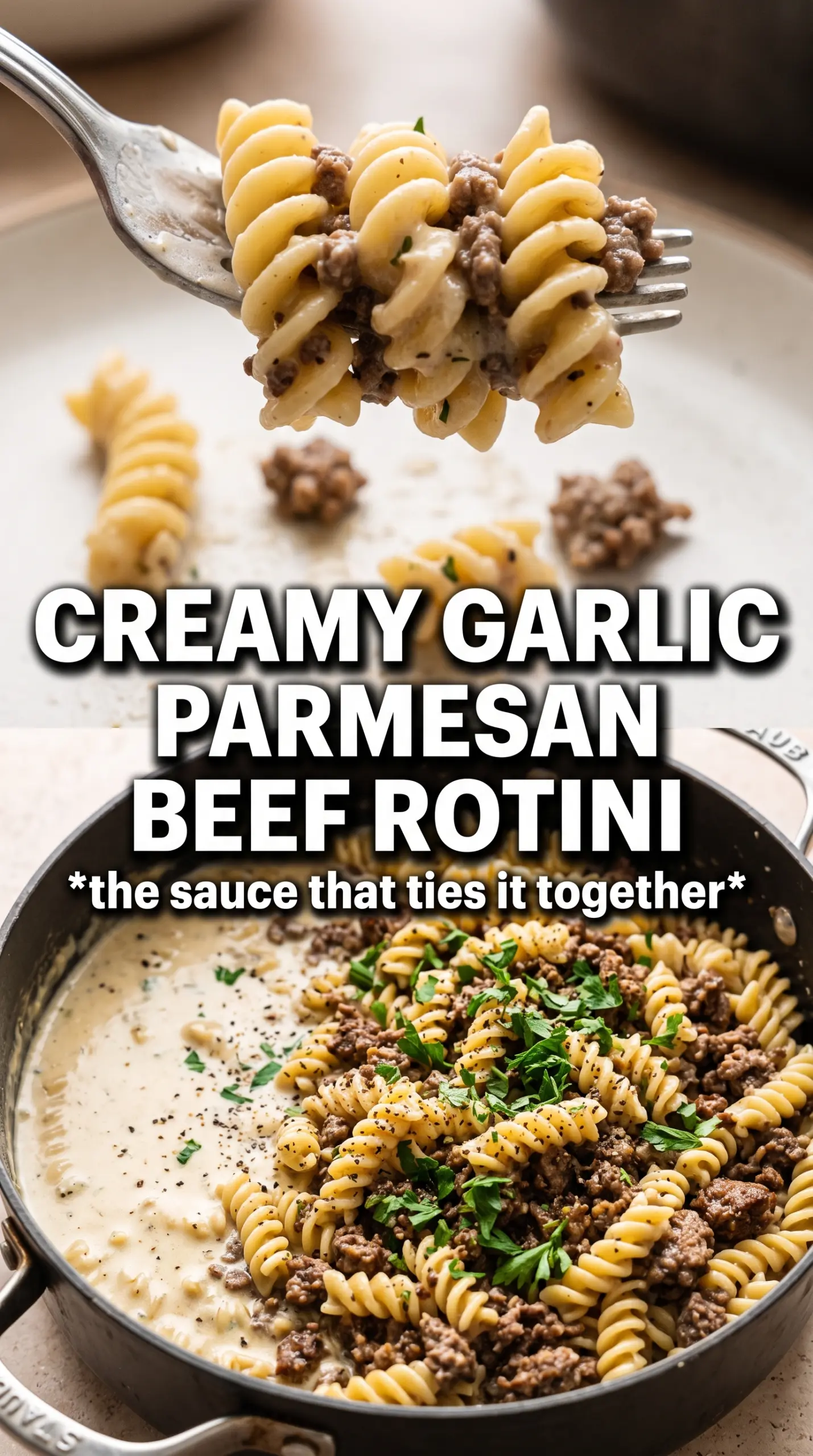
- Ground beef — This gives the dish its savory backbone. Use an 80/20 blend if you want the richest result; lean beef works too, but you may need to add a touch more butter at the end because there’s less fat carrying the flavor.
- Rotini — The spiral shape is not just cute here. It grabs the sauce in a way that flat pasta can’t, and because it cooks directly in the broth, it picks up seasoning from the inside out.
- Beef broth — This is the liquid that seasons the pasta as it cooks. Stock works, but broth usually has a little more body. If you use a low-sodium version, taste before serving and salt at the end.
- Heavy cream — This is what makes the sauce plush and coats the pasta. Half-and-half can work in a pinch, but the sauce will be thinner and less stable, so keep the heat lower and expect a softer finish.
- Parmesan cheese — Freshly grated parmesan melts cleaner than the bagged stuff. Pre-shredded cheese often has anti-caking starches that can make the sauce a little grainy, so grate it yourself if you can.
- Garlic and garlic powder — The fresh garlic brings the real punch, while the garlic powder carries that flavor through the sauce. Together they give the dish a deeper garlic note without needing a lot of extra seasoning.
- Butter — This is the finishing gloss. It rounds out the sauce and helps the parmesan melt into a smoother coating instead of separating into tiny oily bits.
Building the Sauce in the Right Order
Browning the Beef First
Start by cooking the ground beef over medium-high heat until it’s fully browned and you see some caramelized bits on the bottom of the skillet. Those browned spots matter; they become part of the sauce once the broth goes in. Drain off the excess fat, but leave a little behind if the pan looks dry. If the beef steams instead of browns, the sauce loses that deep, savory base.
Letting the Garlic Wake Up
Add the minced garlic after the beef is drained and give it just one minute in the hot pan. It should smell fragrant, not harsh. Any longer than that and it can go bitter, especially once the cream is added. This is the point where the pan shifts from meat sauce to pasta sauce, so keep the garlic moving and don’t let it toast too dark.
Cooking the Rotini in the Sauce
Stir in the uncooked rotini, broth, cream, Italian seasoning, and garlic powder, then bring everything to a boil before lowering the heat to medium. Cover the pan and cook until the pasta is tender, stirring occasionally so nothing sticks to the bottom. The sauce will look thinner at the start and much creamier at the end, because the pasta releases starch as it cooks. If the liquid disappears before the rotini is done, add a splash of broth and keep going.
Finishing with Butter and Parmesan
Once the pasta is tender, stir in the butter and parmesan until the sauce turns silky and clings to every piece. Pull the pan back from the heat if needed; parmesan melts best when the pan is hot, not raging. Taste for salt and pepper at the end, since the broth and cheese already bring plenty of saltiness. Finish with parsley and extra parmesan while the sauce is still glossy.
Three Ways to Adjust This Skillet Pasta Without Losing the Point
Make it lighter with ground turkey
Ground turkey works well if you want a leaner skillet dinner, but it needs a little help because it has less built-in flavor than beef. Add an extra pinch of salt and a small knob of butter at the end to keep the sauce from tasting flat. The texture stays creamy, just with a milder, cleaner finish.
Use gluten-free rotini
Gluten-free rotini works here, but it can go from firm to soft fast, so start checking a minute or two early. Keep the simmer gentle and stir more often than you would with regular pasta, since some gluten-free shapes break down if they sit on the bottom too long. The sauce still turns creamy, but the pasta will be a little more delicate.
Add mushrooms or spinach for a fuller skillet meal
Sliced mushrooms can go in with the beef so they brown along with it, and a handful of spinach can be stirred in at the very end until it just wilts. The mushrooms deepen the savory flavor, while the spinach adds color and a little freshness without changing the core sauce. This is the easiest way to stretch the dish without losing what makes it work.
Swap in half-and-half if that’s what you have
Half-and-half can replace the cream, but the sauce will be thinner and a little less rich. Keep the heat lower once it starts simmering, and don’t let it boil hard after the dairy goes in. The parmesan still helps it thicken, but the finished dish will feel lighter on the spoon.
Storage and Reheating
- Refrigerator: Store leftovers in an airtight container for up to 4 days. The sauce will thicken as it chills, and the pasta will keep absorbing liquid.
- Freezer: It freezes, but the cream sauce can turn a little grainy after thawing. If you do freeze it, cool it completely first and use it within 2 months for the best texture.
- Reheating: Warm it gently on the stove or in the microwave with a splash of broth or cream. High heat is the quickest way to break the sauce, so reheat slowly and stir often until it loosens and turns glossy again.
Questions I Get Asked About This Recipe
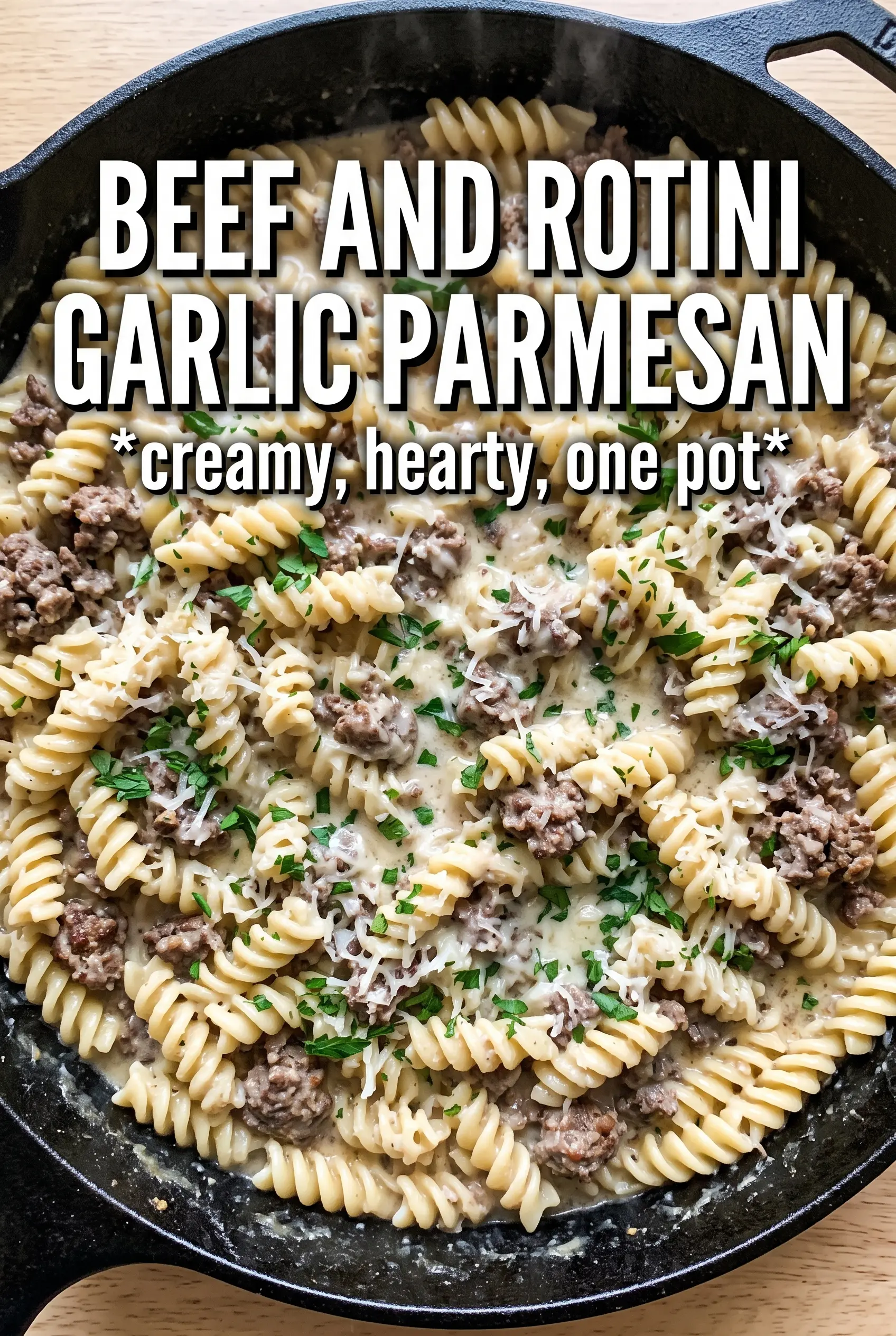
Beef and Rotini in Garlic Parmesan Sauce
Ingredients
Equipment
Method
- Heat a large skillet over medium-high heat, then brown the ground beef, breaking it apart, until no longer pink. Drain fat.
- Add minced garlic to the skillet and cook for 1 minute, stirring so it doesn’t burn. Add rotini pasta, beef broth, heavy cream, Italian seasoning, and garlic powder.
- Bring the mixture to a boil, then reduce heat to medium. Cover and cook for 12–14 minutes, stirring occasionally, until the pasta is tender.
- Stir in the butter and parmesan until the sauce is silky and coats the pasta evenly. Adjust salt and black pepper to taste.
- Garnish with fresh parsley and serve immediately with extra parmesan on top. Add cracked black pepper if desired.