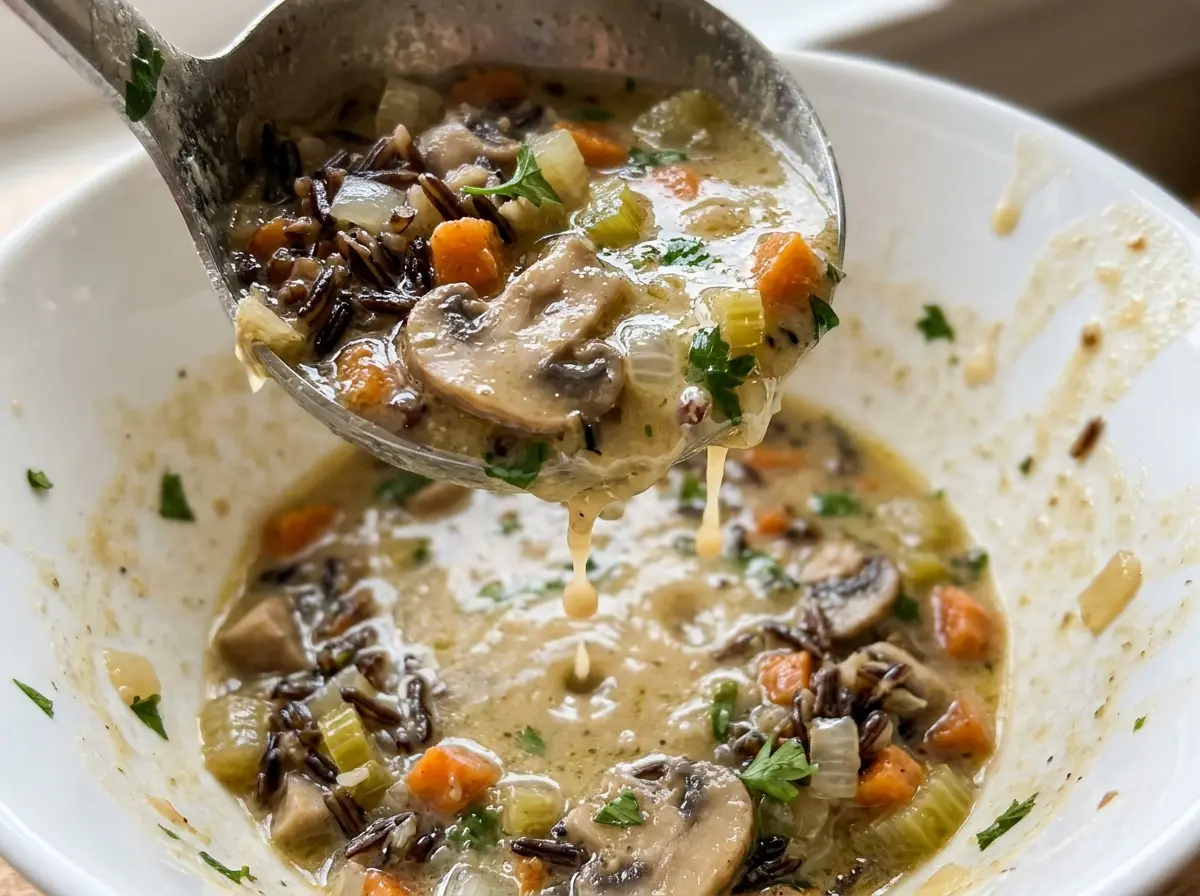
The mushrooms give up their liquid in the Dutch oven, then the vegetables soften into a savory base that smells like dinner before the rice even goes in. I like that this Autumn Wild Rice Soup gets its depth from the mushrooms and chicken broth, not from a complicated pile of seasonings.
Wild rice takes its time, and that’s part of what gives the soup its satisfying texture. I let it simmer until the kernels are tender and most have split, then stir in the cooked chicken and thicken the broth with flour whisked into cold milk. A little heavy cream goes in at the end, leaving each spoonful creamy without burying the earthy rice or vegetables.
Kitchen Note
After you remove the bay leaf, give the soup its full five-minute rest before serving. That short pause lets the broth settle into a spoon-coating consistency without cooking it down further.
Save Autumn Wild Rice Soup for a cozy dinner plan: tender wild rice, mushrooms, and a creamy chicken broth all in one pot.
Why Wild Rice, Not the Clock, Decides When This Soup Is Ready
Wild rice doesn’t cook to the same soft, fluffy texture as white rice. The kernels stay pleasantly chewy, and as they cook, many split open to show their pale centers. That change is what you’re looking for here: tender kernels with most of them split, not a pot where every grain has fallen apart.
The cooking window is deliberately broad because wild rice can take different amounts of time to soften. Keep the soup at a gentle simmer and check the rice as it approaches the longer end of the window. A hard boil won’t hurry the centers along evenly; it can reduce the broth before the kernels are tender. The partly covered pot gives steam a way to escape while keeping enough liquid around the rice for its long cook. Once the kernels reach the right texture, the rest of the soup comes together quickly. This chewy rice is what makes the finished bowl feel substantial without needing a separate starch on the side.
The Ingredients That Give This Soup Its Earthy, Creamy Balance

- Plain wild rice — This is the source of the soup’s distinctive chew and long simmer. Choose uncooked wild rice rather than a blend, since blends often include grains with different cooking times. Rinsing and draining it before it goes into the pot is a useful bit of prep; a less expensive bag works well as long as the kernels are intact and it’s actually wild rice.
- Cremini mushrooms — They bring a deep, woodsy savoriness that balances the cream. Look for firm mushrooms with dry surfaces; there’s no need to pay extra for especially large ones because they’ll be sliced. White button mushrooms are a workable swap, though the soup will taste milder.
- Low-sodium chicken broth — It carries the rice and vegetables through their long cook while leaving room for the kosher salt in the pot. A store-brand low-sodium broth is fine here; the rice and mushrooms provide plenty of their own character.
- Cooked shredded chicken — Already-cooked chicken keeps the final stage short and makes it easy to use leftovers. Breast or thigh meat both work, and rotisserie chicken is convenient; shred it into bite-size pieces so it warms evenly in the soup.
- Flour, whole milk, and heavy cream — The flour thickens the broth, whole milk carries it into the pot smoothly, and cream gives the finish a fuller texture. Whisk the flour into cold milk rather than adding dry flour directly to hot soup. Whole milk and heavy cream matter more for the body than for a delicate flavor, so ordinary grocery-store dairy is a good choice.
Build the Soup in Stages, Then Finish It Gently
Soften the Vegetables and Let the Mushrooms Release Their Liquid
Melt the butter in a 6-quart Dutch oven over medium heat, then add the diced onion, carrots, celery, and sliced mushrooms. Cook for 8–10 minutes, stirring occasionally, until the vegetables soften and the mushrooms release their liquid. The mushrooms should look glossy and softened rather than raw and dry. Give them time in the pot before adding the garlic; rushing this stage leaves the vegetables firmer and the mushroom flavor less developed.
Wake Up the Garlic, Then Simmer the Rice
Stir in the minced garlic and cook for 30 seconds, just until fragrant. Add the rinsed, drained wild rice, chicken broth, dried thyme, bay leaf, kosher salt, and black pepper, then bring everything to a boil over high heat. Reduce the heat to maintain a gentle simmer, partially cover the pot, and cook for 45–60 minutes, stirring occasionally. If the surface is bubbling hard, lower the heat; you want steady, quiet movement rather than a rolling boil.
Warm the Chicken and Whisk a Smooth Thickener
When the rice is tender and most kernels have split, stir in the cooked shredded chicken and simmer for 3–5 minutes, until it’s heated through. In a separate bowl, whisk the flour into the cold whole milk until no dry pockets or lumps remain. Stir that mixture into the soup and simmer for 5–7 minutes, stirring often, while the broth thickens. Keep the spoon moving across the bottom of the Dutch oven so the flour doesn’t settle and catch.
Finish with Cream and Let the Pot Rest
Stir in the heavy cream and heat the soup gently for 2–3 minutes without letting it boil. Boiling at this point can make a creamy soup look less smooth, so keep the heat low and stir as it warms. Remove the bay leaf, then take the pot off the heat and let the soup stand for 5 minutes before serving. The broth should cling lightly to the rice and vegetables, not feel pasty.
Three Easy Ways to Change the Soup Without Losing Its Character
Make a vegetarian pot with white beans
Use vegetable broth instead of chicken broth and replace the cooked chicken with drained, rinsed cannellini beans. Stir the beans in at the same point you’d add the chicken, giving them just enough time to warm through. The soup keeps its hearty texture, with a softer, mild bean flavor instead of chicken.
Make it dairy-free with oat milk and coconut milk
Swap the butter for olive oil, use unsweetened oat milk in the flour slurry, and stir in full-fat canned coconut milk in place of the heavy cream. The flour still thickens the broth, while coconut milk adds a subtle coconut note and a creamy finish. Choose unsweetened oat milk so the soup stays savory.
Trade cremini mushrooms for shiitakes
Use an equal amount of sliced shiitake mushrooms in place of the cremini. Their flavor is more pronounced and savory, so the soup tastes a little deeper; remove any tough shiitake stems before slicing. Cook them with the vegetables as you would the cremini.
Storage and Reheating
- Refrigerator: Store in a covered container for 3–4 days. The rice continues to absorb broth, so the soup will thicken as it sits.
- Freezer: Freeze airtight portions for up to 2 months for best quality. The rice will soften and the cream may separate a little after thawing; stir as it warms to bring the soup back together.
- Reheating: Warm it gently on the stovetop, stirring often, until it reaches 165°F. Avoid a hard boil, which can make the creamy broth less smooth.
Questions That Come Up When Making Autumn Wild Rice Soup
Autumn Wild Rice Soup
Ingredients
Equipment
Method
- Melt the butter in a 6-quart Dutch oven over medium heat.
- Add the onion, carrots, celery, and mushrooms; cook, stirring occasionally, for 8–10 minutes, until the vegetables soften and the mushrooms release their liquid.
- Stir in the garlic and cook for 30 seconds.
- Add the wild rice, chicken broth, thyme, bay leaf, salt, and pepper.
- Bring the mixture to a boil over high heat.
- Reduce the heat to maintain a gentle simmer, partially cover, and cook for 45–60 minutes, stirring occasionally, until the rice is tender and most kernels have split.
- Stir in the cooked chicken and simmer for 3–5 minutes, until heated through.
- In a bowl, whisk the flour into the cold milk until smooth.
- Stir the mixture into the soup and simmer for 5–7 minutes, stirring often, until thickened.
- Stir in the heavy cream.
- Heat gently for 2–3 minutes without boiling.
- Remove the bay leaf.
- Let the soup stand for 5 minutes before serving.