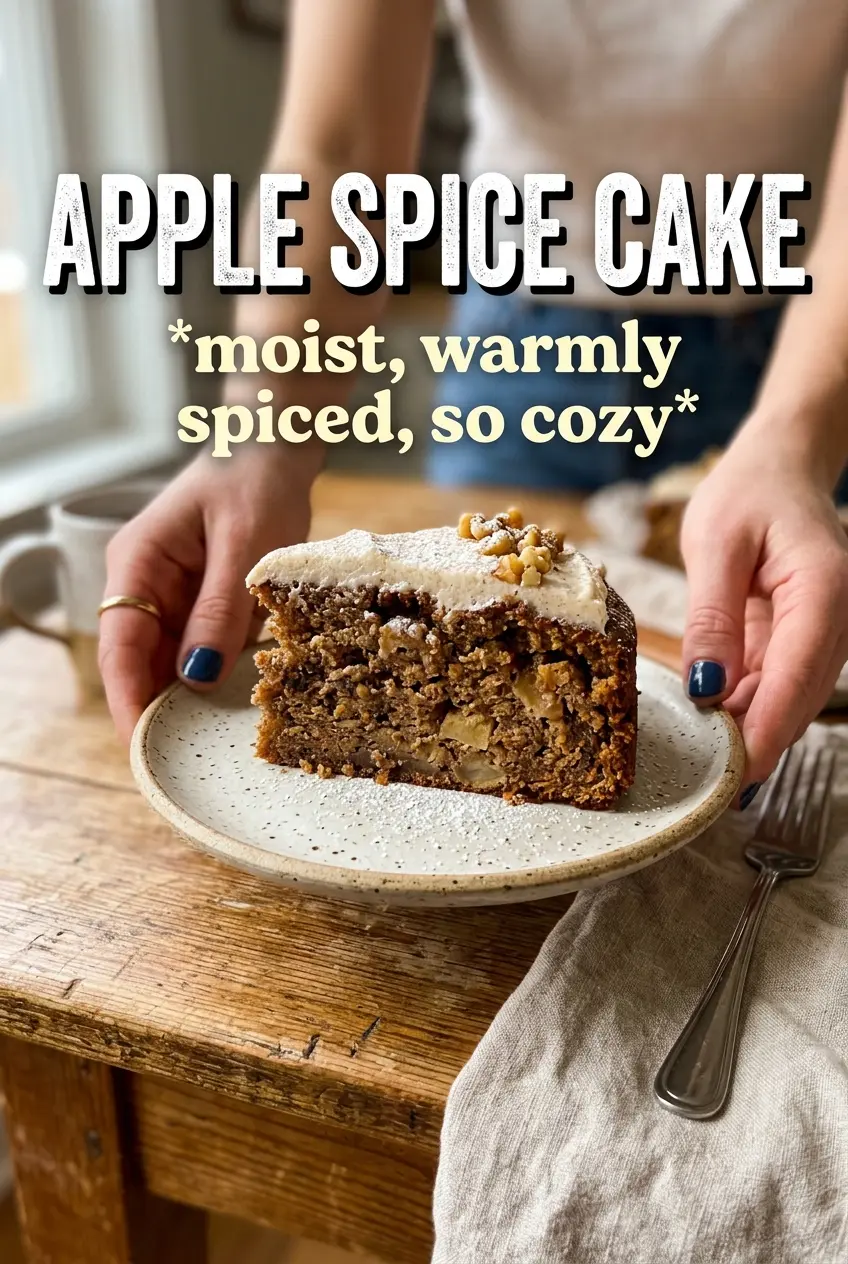
Apple spice cake lands with that soft, dense crumb people go back for before the first slice is even gone. The apples melt into the batter as it bakes, leaving little pockets of moisture and a tender texture that stays good for days instead of drying out by the next afternoon. The brown butter cream cheese frosting adds just enough tang and toastiness to keep the cake from tasting one-note.
This version works because the batter is built for moisture, not lightness. Oil keeps the crumb soft, sour cream adds richness and a little lift, and the apples bring their own juice as they bake. I like to grate the apples when I want them to disappear into the cake, or dice them finely when I want small bursts of fruit in every bite. The spice blend is warm without being muddy, which is where a lot of apple cakes go wrong.
Below, I’ll show you how to keep the cake from turning gummy, how to brown the butter for the frosting without burning it, and the little timing detail that makes this cake slice cleanly after cooling.
The cake baked up moist all the way through, and the brown butter frosting made it taste bakery-level. I used grated apples, and the crumb stayed tight and tender without getting soggy.
Save this apple spice cake for the kind of dessert that stays extra moist and gets better with that brown butter cream cheese frosting.
The Part That Keeps Apple Cake from Turning Heavy
Most apple spice cakes get weighed down because the batter is overmixed after the flour goes in or because the apples release too much liquid in one spot. This recipe avoids both problems by using a quick whisk-and-fold method and by folding the apples in at the very end. The batter should look thick and a little rough, not perfectly smooth. That’s a good sign.
The other thing that matters is the spice balance. Cinnamon carries the cake, but ginger, cloves, allspice, and nutmeg are what make it taste like apple spice cake instead of plain apple snack cake. The trick is keeping those spices warm and rounded, not sharp. If you’ve ever had an apple cake that tasted dusty, the spices probably overwhelmed the fruit instead of supporting it.
- Oil — This is what keeps the crumb soft for days. Butter tastes great, but it firms up as the cake cools. Oil gives you that tender, stay-moist texture people expect from a good spice cake.
- Sour cream — This adds richness and a little acidity, which helps the cake stay plush. Full-fat plain Greek yogurt works in a pinch, but the texture will be slightly less velvety.
- Grated or finely diced apples — Grated apples melt almost completely into the crumb, while diced apples give you more visible fruit and a little bite. Use a firm baking apple if you want the pieces to hold their shape.
- Brown butter — Browning the butter for the frosting gives it a nutty, toasted edge that plain softened butter can’t match. Pull it off the heat as soon as it smells like hazelnuts and the milk solids turn amber.
Building the Batter and Frosting Without Losing the Texture
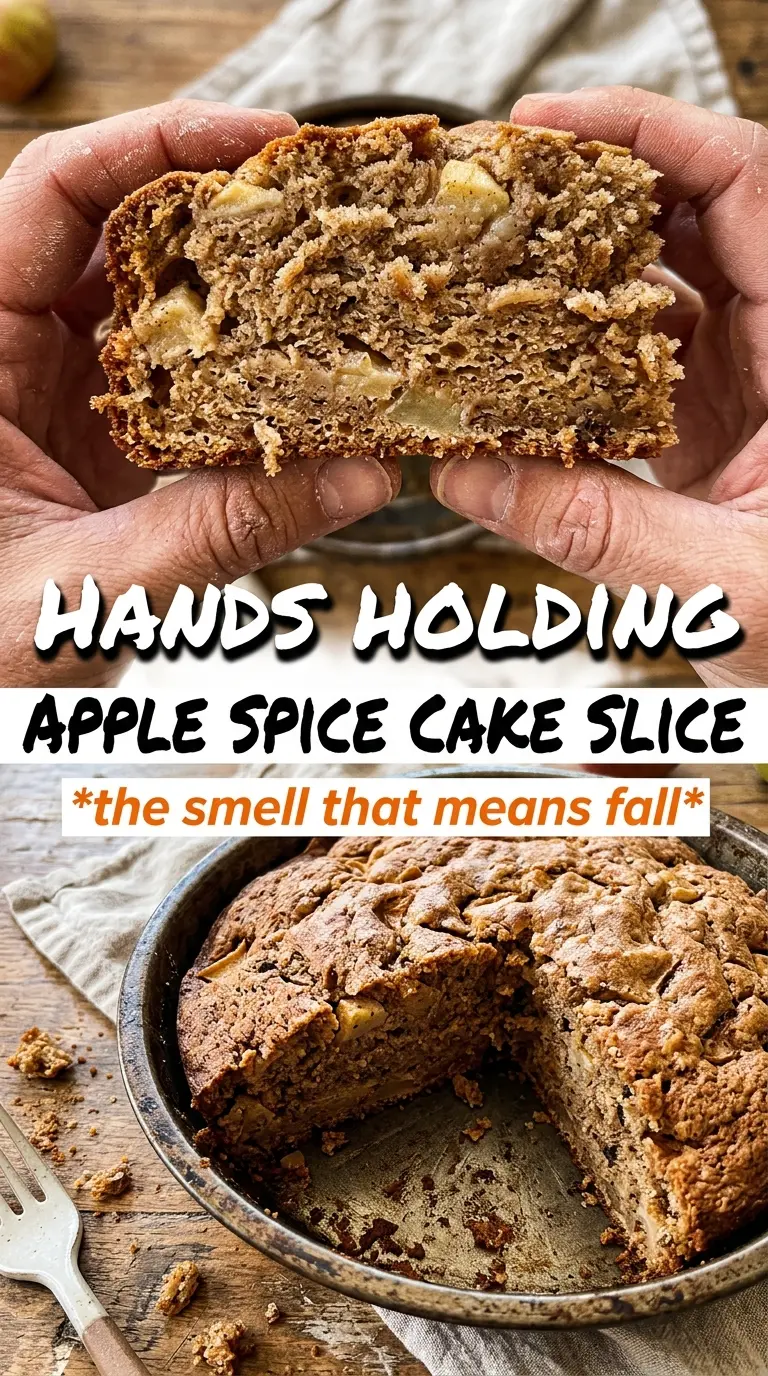
- Apple Spice Cake — tender spiced crumb, brown butter frosting, moist apple-studded texture
- Flour, baking soda, and spices — Whisk these together first so the leavening and spices are evenly distributed. If the baking soda sits in one pocket, you can get a bitter bite or uneven rise.
- Oil, sugars, eggs, vanilla, and sour cream — Beat these just until combined. You’re not trying to whip air into the batter here. The goal is a smooth base that looks glossy and cohesive before the flour goes in.
- Apples — Fold them in last so they don’t sink while you’re stirring. If your apples seem very juicy, pat them lightly with a paper towel after grating or dicing; too much surface moisture can make the center dense.
- Brown butter cream cheese frosting — Let the browned butter cool until it’s still soft but no longer hot, then beat it with the cream cheese before adding the powdered sugar. If the butter is hot, the frosting turns loose and greasy instead of fluffy.
The Mixing and Baking Details That Matter Most
Whisk the Dry Ingredients First
Start with the flour, baking soda, salt, and all the spices in one bowl and whisk them until the color looks even. You want the cinnamon and cloves fully dispersed, not streaked through the batter in dark pockets. That step also breaks up any clumps of baking soda, which is one of the easiest ways to avoid a bitter edge.
Bring the Wet Base Together
In a separate bowl, mix the oil, both sugars, eggs, vanilla, and sour cream until the batter looks smooth and slightly thick. Don’t keep beating after that point or you’ll start to build structure you don’t need. This cake is meant to be tender, so the wet ingredients should look unified, not airy.
Fold, Don’t Whip, the Apples In
Add the dry ingredients and stir only until the flour disappears, then fold in the apples. Stop as soon as you no longer see dry streaks. If you keep mixing after the flour is hydrated, the cake can turn tight and a little gummy around the edges.
Bake Until the Center Springs Back
Pour the batter into a greased 9×13 pan or divide it between two 9-inch rounds. Bake until a toothpick comes out clean and the center springs back when you touch it lightly. If you’re using the round pans, start checking early because they finish faster and overbake more easily than the sheet pan version.
Cool Completely Before Frosting
Let the cake cool all the way down before you frost it. Warm cake will melt the cream cheese frosting and slide right off the sides. If you want clean slices, chill the frosted cake for a short time after assembling so the frosting sets up enough to cut neatly.
How to Change It Without Losing the Cake’s Best Texture
Make it dairy-free
Swap the sour cream for a thick dairy-free plain yogurt and replace the cream cheese frosting with a dairy-free cream cheese version. The cake itself adapts well; the frosting is the part that needs the most careful handling because softer plant-based cream cheese can loosen quickly if the butter is still warm.
Use apples with more structure
Granny Smith, Honeycrisp, or Pink Lady all work well here. Tart apples keep the cake from tasting too sweet, while firmer apples hold their shape better if you want visible fruit instead of apples that melt into the crumb.
Turn it into cupcakes
Portion the batter into lined muffin cups and bake until the tops spring back and a tester comes out clean. You’ll lose a little of the deep, sliceable cake texture, but you gain a faster bake time and an easier way to serve a crowd.
Storage and Reheating
- Refrigerator: Store covered for 4 to 5 days. The frosting firms up in the fridge, but the cake stays moist.
- Freezer: Freeze unfrosted cake layers tightly wrapped for up to 2 months. The frosting can be made fresh after thawing for the best texture.
- Reheating: Let slices come to room temperature before serving, or warm them very briefly if you want a softer crumb. Don’t microwave frosted slices for long stretches or the frosting will melt and separate.