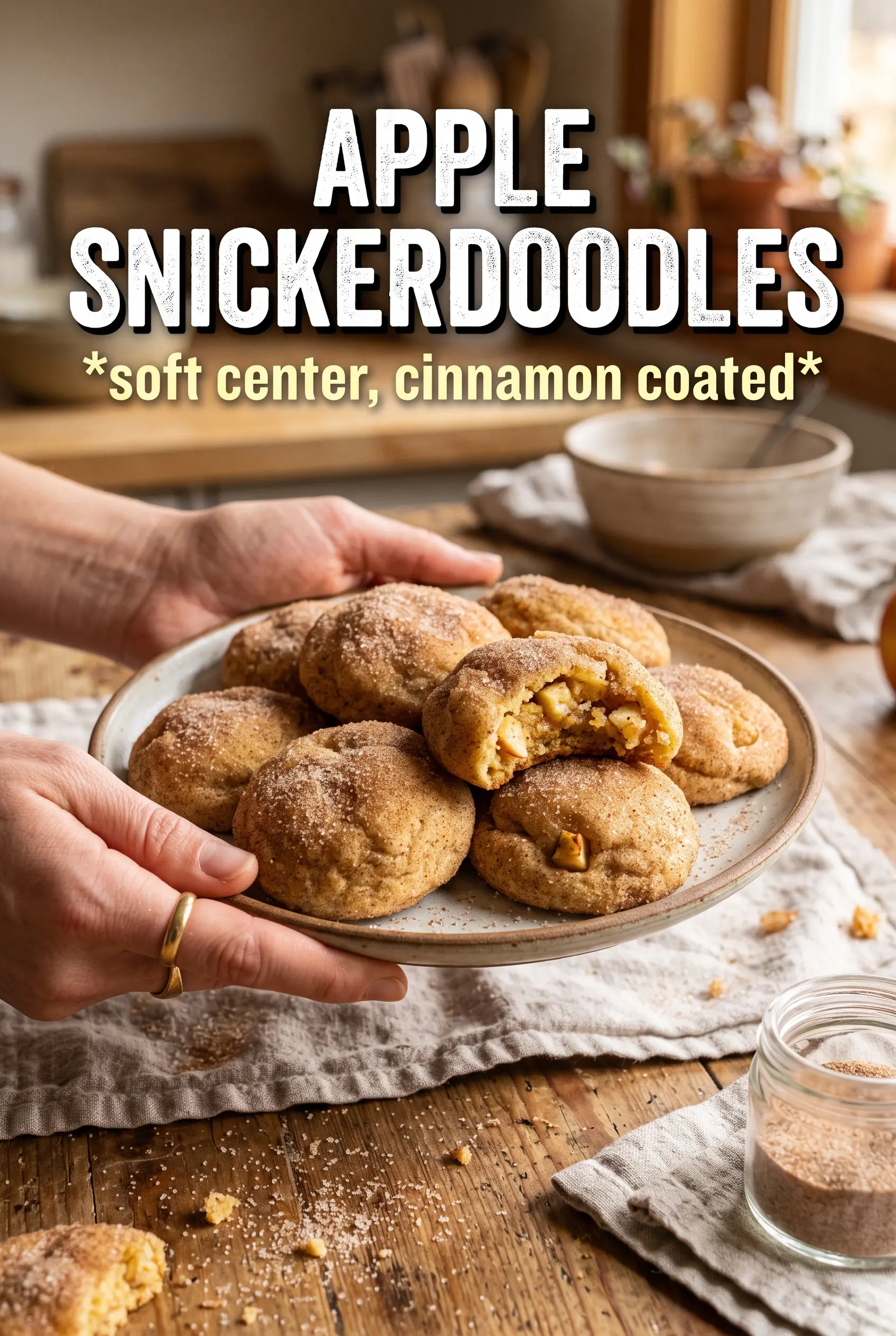
Apple snickerdoodles bake up with soft, chewy centers, crinkled tops, and those familiar cinnamon-sugar edges that make people reach for a second cookie before they’ve finished the first. The chopped dried apple gives each bite a little chew and a clean apple note without turning the dough wet or cakey, which is exactly why this version works so well. You still get the classic snickerdoodle tang and sparkle, but there’s just enough apple to make the whole batch feel a little more interesting.
The key is using dried apple pieces instead of fresh apple. Fresh fruit brings extra moisture, and that usually softens the dough too much and blurs the edges. Dried apples stay concentrated, so the cookies keep their shape and bake with those tender middles and lightly crisped edges that snickerdoodles are known for. Cream of tartar is doing its usual job here too, giving the dough that subtle tang and helping the texture stay soft instead of dense.
Below, I’m walking through the part that matters most for these cookies: how to keep the centers soft without underbaking them, plus a few smart swaps if you want to adjust the spice or make use of what’s already in your pantry.
The cookies stayed soft for days and the little bits of dried apple gave them the best chew. I was worried they’d spread too much, but they held their shape and crinkled up beautifully.
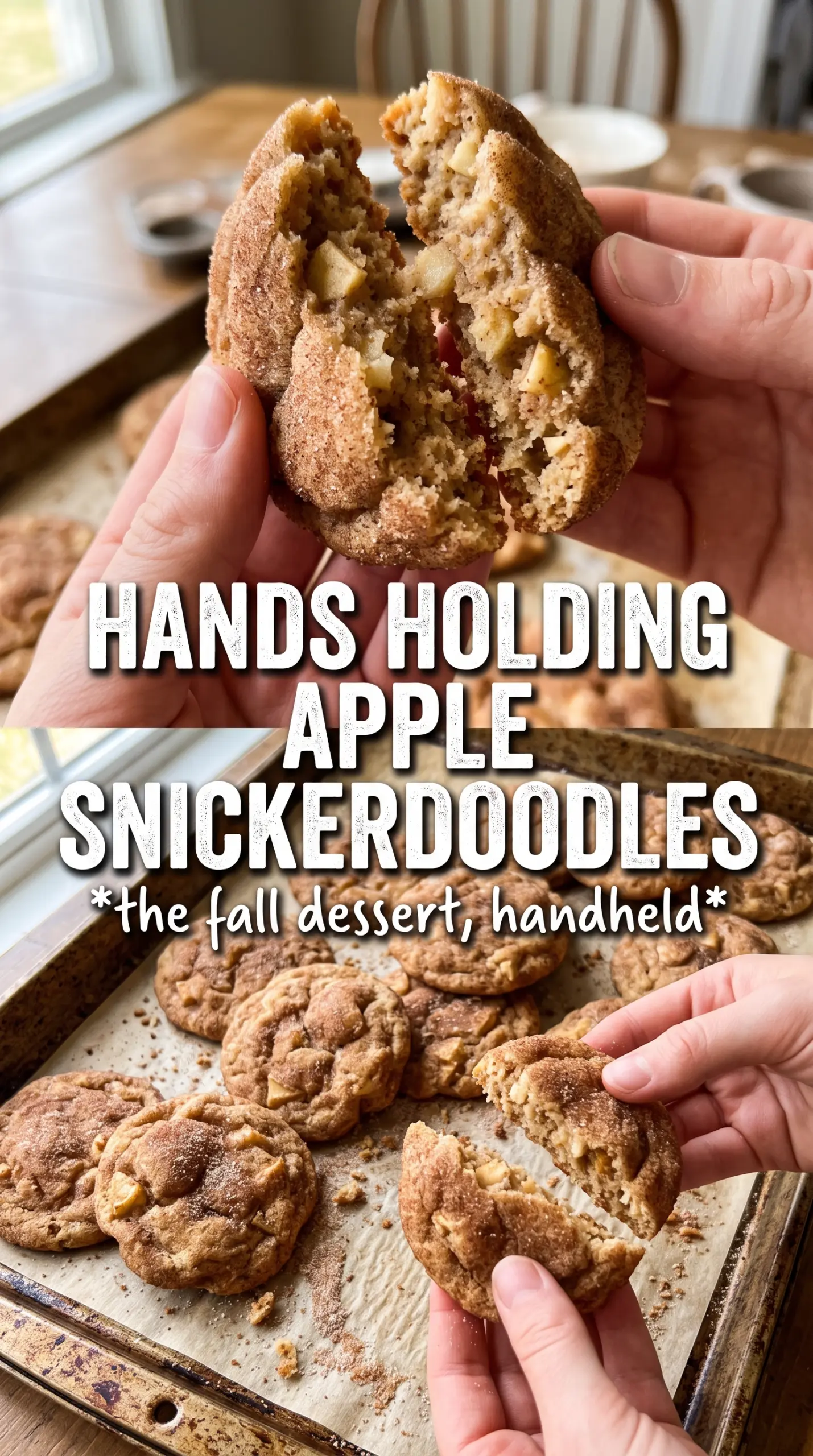
Apple snickerdoodles with soft centers, crinkled cinnamon sugar tops, and that little bit of dried apple chew
The Part That Keeps Apple Snickerdoodles Soft Instead of Puffy and Dry
These cookies live or die by how far you take the bake. Pull them when the edges are set and the centers still look slightly underdone. They finish setting on the hot pan, and that short rest is what gives you the soft middle without turning the cookies into doughy rounds that never quite hold their shape.
The other thing that matters is the balance between cream of tartar and sugar. Cream of tartar gives snickerdoodles their signature tang and helps create that classic crinkled surface as the cookies expand in the oven. If you swap it out for a different leavener, you’ll lose part of that texture and the cookies start tasting more like plain sugar cookies with cinnamon on top.
- Chopped dried apple pieces — These give the cookies their apple note without adding extra water. Chop them finely so they disperse through the dough instead of clumping and tearing the cookies when you scoop them.
- Cream of tartar — This is the ingredient that makes them taste like snickerdoodles, not just cinnamon cookies. Don’t skip it unless you’re fine with a different cookie altogether.
- Cinnamon in the dough plus the rolling mixture — The dough gets a warm base, but the outside needs the heavier cinnamon sugar coating for that crackly, aromatic finish.
- Softened butter — The butter should bend under a finger without looking greasy. If it’s too warm, the dough spreads faster and the cookies lose that thick, tender center.
What Each Ingredient Is Actually Doing in the Dough
- All-purpose flour — This gives the cookies enough structure to hold the apple pieces and stay thick. If you pack it into the cup, the dough turns dry, so spoon and level it if you’re measuring by volume.
- Eggs — They bind the dough and help the centers set with a soft, cake-like chew. Add them one at a time if your butter mixture looks a little curdled; it comes together once the flour goes in.
- Vanilla extract — Vanilla rounds out the cinnamon and apple so the cookies taste fuller. A good vanilla matters here more than in a heavily spiced cookie because the dough itself is simple.
- Apple pie spice in the coating — This is a smart small upgrade. It deepens the outer coating without overpowering the classic snickerdoodle base, and if you don’t have it, a pinch of extra cinnamon works fine.
The Mixing Order That Gives You Those Crinkled Tops
Build the Base Before the Flour Goes In
Beat the butter and sugar until the mixture turns pale and fluffy. That step traps air and gives the cookies lift, which helps create the classic cracked top once they bake. If the butter is still cool and lumpy, keep going; if it’s glossy and greasy, it was too soft and the cookies will spread more than they should.
Fold in the Dry Ingredients Just Until the Flour Disappears
Once the flour mixture goes in, stir only until you stop seeing dry streaks. Overmixing tightens the dough and makes the cookies tougher, and that’s especially noticeable in a cookie that’s supposed to stay soft. Fold in the dried apples at the end so they stay evenly distributed instead of getting broken down by the mixer.
Roll, Space, and Bake for the Right Finish
Roll each scoop in the cinnamon sugar mixture until it’s fully coated, then set the dough balls on parchment-lined sheets with a little room between them. They should look tall when they go into the oven. Bake just until the edges set and the centers still look soft; if you wait for the middles to look fully done, they’ll bake past the point where the centers stay chewy.
Make Them More Apple-Forward
Increase the dried apple pieces by a few tablespoons and chop them very fine. You’ll get more apple in each bite, but the cookies can start to feel a little denser if you add too much, so keep the total mix-ins modest.
Gluten-Free Version
Use a cup-for-cup gluten-free flour blend that includes xanthan gum. The cookies may spread a touch less and the texture will be a little more delicate, but the cinnamon-sugar crust and soft centers still work.
Dairy-Free Swap
Replace the butter with a plant-based stick butter, not a soft tub spread. Tub spreads carry too much water and can make the dough flatter, while a stick-style substitute behaves much more like real butter in the oven.
Storage and Reheating
- Refrigerator: Store in an airtight container for up to 5 days. They stay soft, though the cinnamon sugar coating softens a bit after the first day.
- Freezer: These freeze well baked or as scooped dough balls. Freeze the dough on a tray first, then move it to a bag so you can bake a few at a time straight from frozen.
- Reheating: Warm baked cookies for 5 to 8 seconds in the microwave or a few minutes in a low oven. Don’t overheat them or the centers dry out fast.
Questions I Get Asked About This Recipe
Apple Snickerdoodles
Ingredients
Equipment
Method
- Preheat the oven to 375F and line baking sheets with parchment for easy release and clean bottoms.
- Whisk together all-purpose flour, cream of tartar, baking soda, cinnamon, nutmeg, and salt until evenly combined.
- Beat softened unsalted butter with granulated sugar until very light and fluffy, then beat in the eggs and vanilla extract until smooth.
- Stir in the flour mixture until just combined, then fold in the finely chopped dried apple pieces.
- Mix the sugar, cinnamon, and apple pie spice in a shallow bowl until the coating is uniform.
- Scoop dough into 1-1/2 tablespoon balls, roll each ball in the cinnamon-sugar coating until well covered, and place on the prepared baking sheets.
- Bake at 375F for 10-12 minutes, until the edges are set and the centers are still slightly soft.
- Cool on the pan for 3 minutes; the cookies will crinkle as they set at the edges.