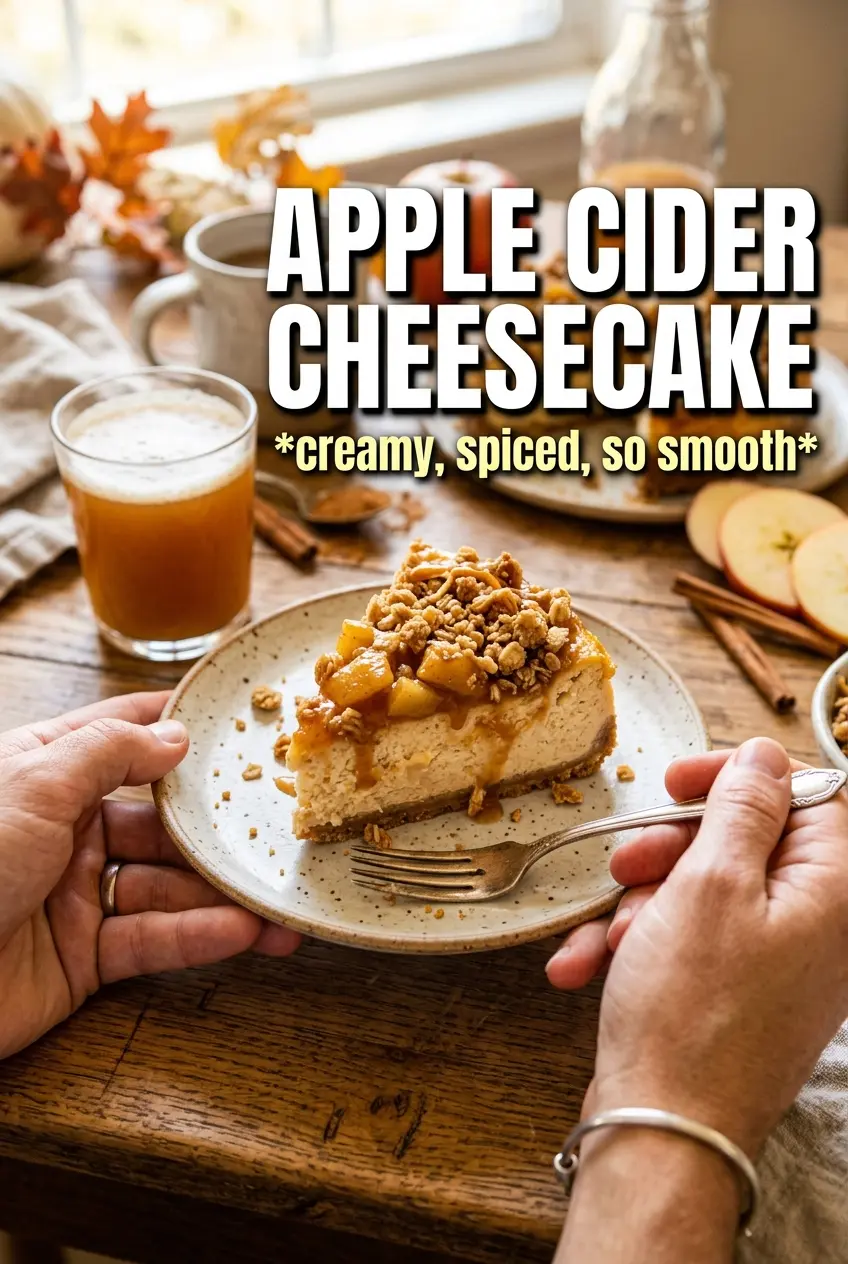
Apple cider cheesecake lands with a creamy, tangy filling and a spiced cider finish that tastes like a bakery dessert with a little more character. The filling stays dense and smooth, the crust brings just enough crunch, and that cider syrup on top keeps each slice from feeling heavy. It’s the kind of dessert people remember because it doesn’t just taste like cheesecake with something drizzled over it — the cider gets built into the batter and then echoed again on top, so the flavor runs all the way through.
The key is reducing the cider before it goes into the filling. Raw cider adds too much water and can blur the flavor, but when you cook it down first, you get a concentrated apple note that stands up to the cream cheese. The water bath matters too. It keeps the edges from overbaking before the center has a chance to set, which is the difference between a silky cheesecake and one with a cracked top or a dry ring around the edge.
Below, I’ll walk through the step that keeps the texture smooth, the ingredient choices that matter most, and the way I like to finish the slices so the topping stays glossy instead of sliding off.
The cider flavor came through beautifully, and the filling set up perfectly after chilling overnight. The crust stayed crisp even with the topping, which is exactly what I was hoping for.
Pin this apple cider cheesecake for a make-ahead dessert with smooth filling, crisp crust, and a glossy cider drizzle.
The Water Bath Is What Keeps the Filling Velvety
Cheesecake cracks for two main reasons: it bakes too hot, or it bakes unevenly. The water bath solves both. It keeps the oven environment humid and gentle, which means the edges don’t race ahead of the center, and it helps the custard-like filling set with a smooth, even texture instead of a dry rim and a jiggly middle that turns grainy later.
The center should still wobble slightly when you pull it out. That wobble is the point. If the whole cheesecake looks firm in the oven, it’s already overbaked and will finish drying out as it cools. I also like to cool it slowly, then chill it all the way through before slicing, because a cheesecake that hasn’t rested long enough will always taste softer and less cleanly sliced than one that’s had time to set.
What the Cider and Dairy Are Really Doing Here
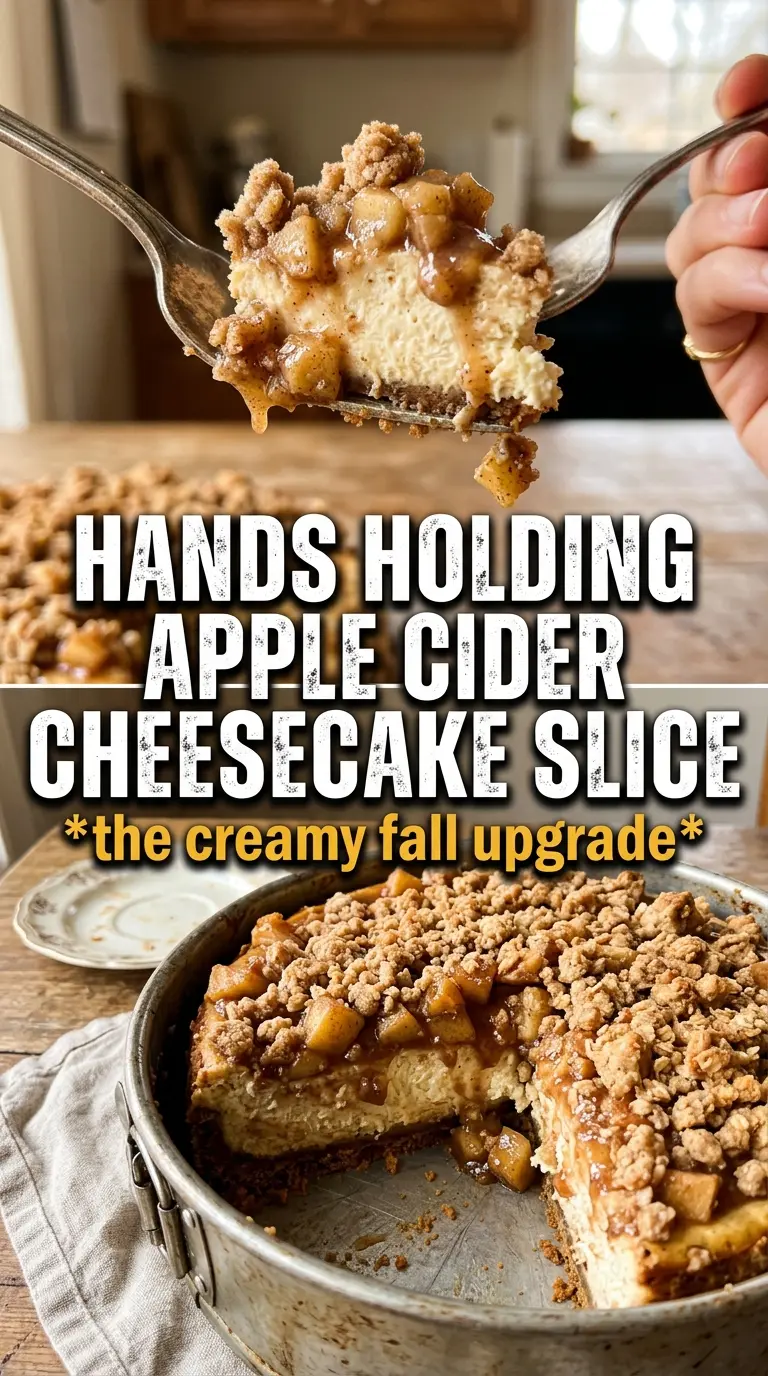
- Apple cider — Reducing the cider concentrates the apple flavor and cooks off extra water before it hits the batter. If you skip that step, the filling can taste diluted and the texture can loosen more than you want. Apple juice works in a pinch, but cider gives a deeper, rounder flavor.
- Cream cheese — Full-fat block cream cheese gives the cheesecake its body and tang. Softening it all the way matters more than brand name here; cold cream cheese leaves tiny lumps that never fully beat out. Tub-style spread doesn’t behave the same way and can make the filling too loose.
- Sour cream — This keeps the filling from tasting one-note and gives it a softer finish. If you need a swap, plain full-fat Greek yogurt works, but the cheesecake will be a little tangier and slightly less rich.
- Brown sugar — It brings a molasses note that fits the cider and spices better than white sugar. In the filling and topping, it adds warmth, not just sweetness.
- Graham cracker crumbs — The crust needs the butter just enough to hold together without turning greasy. When you press it into the pan, pack it firmly so the slices come out clean instead of crumbling at the base.
Building the Batter Without Overmixing It
Pressing the Crust First
Mix the graham crumbs, sugar, cinnamon, and melted butter until the crumbs look evenly damp, then press them firmly into the bottom of the springform pan. Use the flat bottom of a measuring cup to pack it tight and even. A loose crust breaks apart when you slice the cheesecake, while a well-packed crust stays in one neat layer under the filling.
Reducing the Cider
Simmer the cider until it turns syrupy and measures about half its original amount. You’re looking for a lightly thickened liquid that coats a spoon, not a hard candy stage. Let it cool before adding it to the batter; if it’s hot, it can soften the cream cheese too much and throw off the texture.
Mixing the Filling Smoothly
Beat the cream cheese and brown sugar first until the mixture looks completely smooth and a little fluffy. That’s the stage where most lumps get prevented, because once the eggs go in, you don’t want to work the batter hard. Add the eggs one at a time and mix just until they disappear. Overmixing adds air, and that air becomes bubbles and cracks in the oven.
Baking Until the Center Just Moves
Pour the batter over the crust and bake in the water bath until the edges are set and the middle still has a slight wobble when you nudge the pan. Don’t wait for the center to look firm from edge to edge. Cheesecake finishes as it cools, and an extra ten minutes in the oven is usually the difference between silky and dry.
Finishing With the Cider Drizzle
Simmer the remaining cider with brown sugar and cinnamon until it turns glossy and spoonable. Let it cool a little before drizzling so it clings to the top instead of running straight down the slice. Add it right before serving for the cleanest look and the brightest cider flavor.
How to Adjust It Without Losing the Cheesecake Texture
Gluten-Free Crust
Use gluten-free graham crackers in the crust and keep the rest of the recipe the same. The texture stays nearly identical as long as the crumbs are fine and the butter ratio doesn’t change. Press it firmly, because a crumbly GF crust can fall apart faster if it isn’t compacted well.
Dairy-Free Version
Use a dairy-free cream cheese and a thick dairy-free sour cream alternative with a neutral flavor. The filling will be a little softer and tangier, so chill it overnight before slicing. This version works best when you serve it cold with the cider topping fully cooled, not warm.
Spice It More or Less
If you want a stronger cider-pie feel, add a pinch of cloves or allspice to the filling. If you prefer a cleaner apple flavor, keep the cinnamon and nutmeg exactly as written and let the reduced cider do the talking. The recipe has enough structure to handle either direction.
Storage and Reheating
- Refrigerator: Store covered for up to 5 days. The crust softens a little over time, but the flavor stays excellent.
- Freezer: Freeze individual slices or the whole cheesecake without the topping for up to 2 months. Wrap tightly in plastic and foil, then thaw in the refrigerator overnight.
- Reheating: Don’t reheat the cheesecake itself. Serve it chilled or just slightly cool, and warm only the cider drizzle if you want a looser topping. Heat the sauce gently so it stays glossy instead of turning sticky.
Answers to the Questions Worth Asking
Apple Cider Cheesecake
Ingredients
Equipment
Method
- Preheat the oven to 325F. Combine the graham cracker crumbs, sugar, cinnamon, and melted unsalted butter, then press firmly into a 9-inch springform pan.
- In a small saucepan over medium heat, reduce 1/2 cup apple cider until syrupy, then cool. The mixture should look thicker and coat the back of a spoon before cooling.
- Beat the cream cheese and packed brown sugar until completely smooth. Pause and scrape down as needed so no lumps remain.
- Mix in the reduced cider. Stop when the batter turns evenly golden and glossy.
- Add the eggs one at a time and mix gently after each addition. The batter should stay smooth without adding lots of air.
- Mix in the sour cream, cinnamon, nutmeg, and vanilla extract. Stop mixing once the spices are fully incorporated.
- Pour the cheesecake filling over the crust. Tap the pan lightly so the surface looks level with minimal bubbles.
- Bake in a water bath at 325F for 55-60 minutes. The center should be just set with a slight wobble when the pan is gently nudged.
- Cool the cheesecake completely at room temperature. Let it cool until the pan feels cool to the touch.
- Refrigerate for 6 hours or overnight. Chill until the filling is fully firm and slices cleanly.
- Simmer the remaining apple cider with brown sugar and cinnamon until syrupy, then cool slightly. The topping should look glossy and thick enough to drizzle.
- Drizzle the spiced cider syrup over slices when serving. Use a spoon to create thin ribbons across the surface.