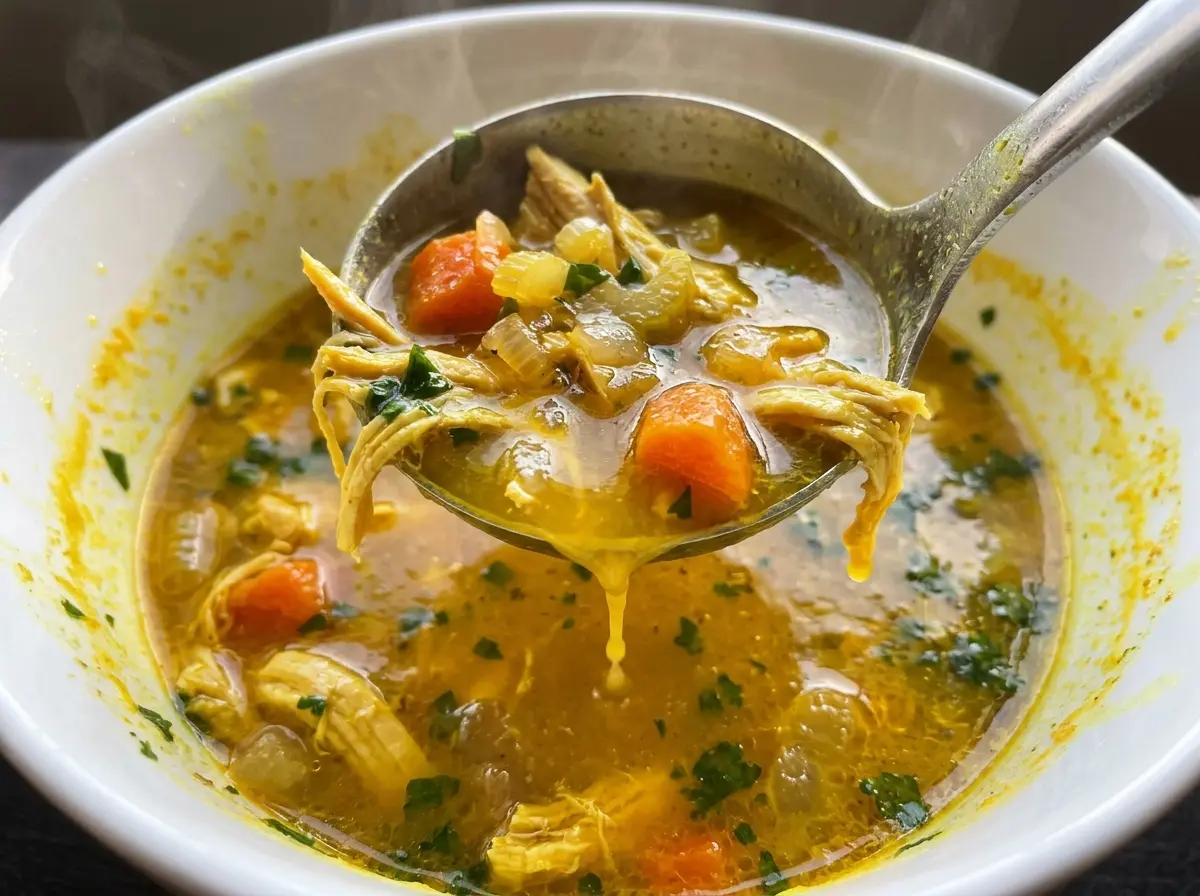
When the onion, carrots, and celery start to soften, the whole pot begins to smell like the start of chicken soup. Then ginger and turmeric go in, and the broth takes on its warm golden color before the chicken even hits the pot. I make this Anti-Inflammatory Turmeric Chicken Soup when I want a full, comforting bowl built from familiar ingredients without a long list of extra steps.
The order matters: the chicken simmers first, then comes out while the rice cooks in the broth. That gives the thighs time to turn tender without leaving them in the pot while the rice softens. Kale goes in at the end, just long enough to wilt, and lemon juice brightens the broth right before serving. Each spoonful has tender chicken, soft rice, and greens in a ginger-scented golden broth.
Kitchen Note
Rinse the rice and let it drain before it goes into the pot. That quick prep washes away loose surface starch and helps the grains cook up more distinctly in the broth.
Save this Anti-Inflammatory Turmeric Chicken Soup for a cozy dinner with tender chicken, long-grain rice, and a bright golden broth.
Why Turmeric Needs a Minute in the Oil Before the Broth
Ground turmeric can taste dusty when it is stirred straight into a large pot of liquid. Here, it cooks briefly with the softened vegetables, garlic, ginger, and black pepper, so its earthy flavor has a chance to mingle with the oil and coat the vegetables before the broth dilutes everything. That short minute gives the soup a more even turmeric flavor from the first spoonful to the last.
Keep the aromatics moving as they cook. Garlic is quick to brown, and you want it fragrant, not dark or scorched. Once the spices have had their minute, add the broth and chicken; there’s no need to toast the turmeric separately or cook it for longer. The broth carries those flavors through the chicken and rice, while lemon juice added at the finish keeps the earthy base from tasting heavy.
What Ginger, Lemon, and Kale Add to This Golden Chicken Soup

- Chicken thighs — Boneless, skinless thighs stay tender through their simmer and shred easily with two forks. Their richer texture suits a broth-based soup better than leaner meat cooked for the same length of time.
- Fresh ginger and garlic — These bring the sharp, savory aroma that balances turmeric’s earthy notes. Mince the garlic and grate the ginger before they go into the pot so they cook evenly during their short time in the oil.
- Ground turmeric and black pepper — Turmeric gives the broth its distinctive color and earthy character; pepper adds a little bite. Ground turmeric is the right form here because it disperses through the oil and broth without needing to be peeled or grated.
- Low-sodium chicken broth — A low-sodium broth leaves room to season the soup with the measured kosher salt without the finished pot becoming too salty. Broths vary by brand, so taste the soup at the end before serving.
- Long-grain white rice — Long-grain rice cooks tender while keeping more definition than a short, sticky grain. Rinse and drain it before adding it to the pot.
- Kale — Chopped kale gives the soup its green finish and holds up to a brief simmer. Remove the tough stems and chop the leaves so they wilt evenly.
- Lemon juice — Added after the kale wilts, lemon juice lifts the broth’s savory, earthy flavors. Stir it in at the end rather than cooking it with the aromatics.
- Onion, carrots, and celery — These make a familiar, savory base. Slice the carrots and celery to a similar thickness so they soften at about the same pace.
The Order That Keeps the Chicken Tender While the Rice Cooks
Soften the vegetables before adding the aromatics
Warm the olive oil in a 6-quart Dutch oven over medium heat. Add the diced onion, sliced carrots, and sliced celery, then cook for 6 to 8 minutes, stirring occasionally, until softened. You’re looking for vegetables that have relaxed and begun to turn tender, not deeply browned edges. Add the garlic, grated ginger, turmeric, black pepper, and salt, and stir for 1 minute.
Simmer the thighs gently in the broth
Pour in the low-sodium chicken broth and add the chicken thighs. Bring the pot to a gentle boil, then lower the heat to maintain a simmer and cook uncovered for 20 to 25 minutes. Check the thickest part of a thigh with an instant-read thermometer; it needs to reach 165°F. If the liquid is bubbling hard, lower the heat so the chicken cooks at a steady simmer rather than a rolling boil.
Give the rice its own covered simmer
Transfer the cooked chicken to a plate before stirring the rinsed, drained rice into the pot. Cover the Dutch oven and simmer for 15 to 18 minutes, until the rice is tender. Keep the lid on while it cooks; frequent uncovering lets heat escape and can stretch out the cooking time. Check a few grains near the end of the range, since the texture—not the clock alone—tells you when the rice is ready.
Shred, wilt, and brighten the finished pot
Use two forks to shred the chicken, then return it to the soup. Stir in the chopped kale and simmer for 2 to 3 minutes, just until the leaves wilt. If the kale still looks firm and bulky, give it the full simmer rather than adding the lemon juice early. Stir in the lemon juice last, then serve the soup while the chicken is tender and the greens are bright.
Two Ways to Change the Bowl Without Rebuilding the Soup
Keep the chicken in tender pieces
For a chunkier bowl, cut the cooked thighs into bite-size pieces instead of shredding them with two forks. Return the pieces to the pot at the same point, then wilt in the kale and finish with lemon juice. You’ll get a more substantial bite of chicken while keeping the same broth, rice, and cooking sequence.
Leave out the rice for a brothier soup
Skip the rice if you want a lighter, rice-free bowl. Once the chicken is cooked, shred it and return it to the broth with the kale, then simmer until the leaves wilt and stir in the lemon juice. The result will be less filling and less starchy, with the chicken and vegetables taking the lead.
Storage and Reheating
- Refrigerator: Refrigerate leftovers within 2 hours and keep them for 3 to 4 days. The rice will continue to absorb broth, so the soup will be thicker after chilling.
- Freezer: Freeze in airtight containers for up to 2 to 3 months for best quality. The rice and kale soften after thawing, but the soup remains fine to eat; thaw overnight in the refrigerator.
- Reheating: Warm on the stovetop over medium-low heat, stirring occasionally, until the soup reaches 165°F. Avoid a hard boil, which can break down the rice and make the chicken less tender.
Questions That Come Up When Making Turmeric Chicken Soup
Anti-Inflammatory Turmeric Chicken Soup
Ingredients
Equipment
Method
- Heat the olive oil in a 6-quart Dutch oven over medium heat.
- Add the onion, carrots, and celery and cook for 6 to 8 minutes, stirring occasionally, until softened.
- Stir in the garlic, ginger, turmeric, black pepper, and salt.
- Cook for 1 minute.
- Pour in the chicken broth and add the chicken thighs.
- Bring to a gentle boil.
- Reduce the heat to maintain a simmer and cook uncovered for 20 to 25 minutes, until the chicken reaches 165°F in the thickest part.
- Transfer the chicken to a plate.
- Stir the rice into the pot.
- Cover and simmer for 15 to 18 minutes, until the rice is tender.
- Shred the chicken with two forks.
- Return the chicken to the pot and stir in the kale.
- Simmer for 2 to 3 minutes, until the kale is wilted.
- Stir in the lemon juice and serve.