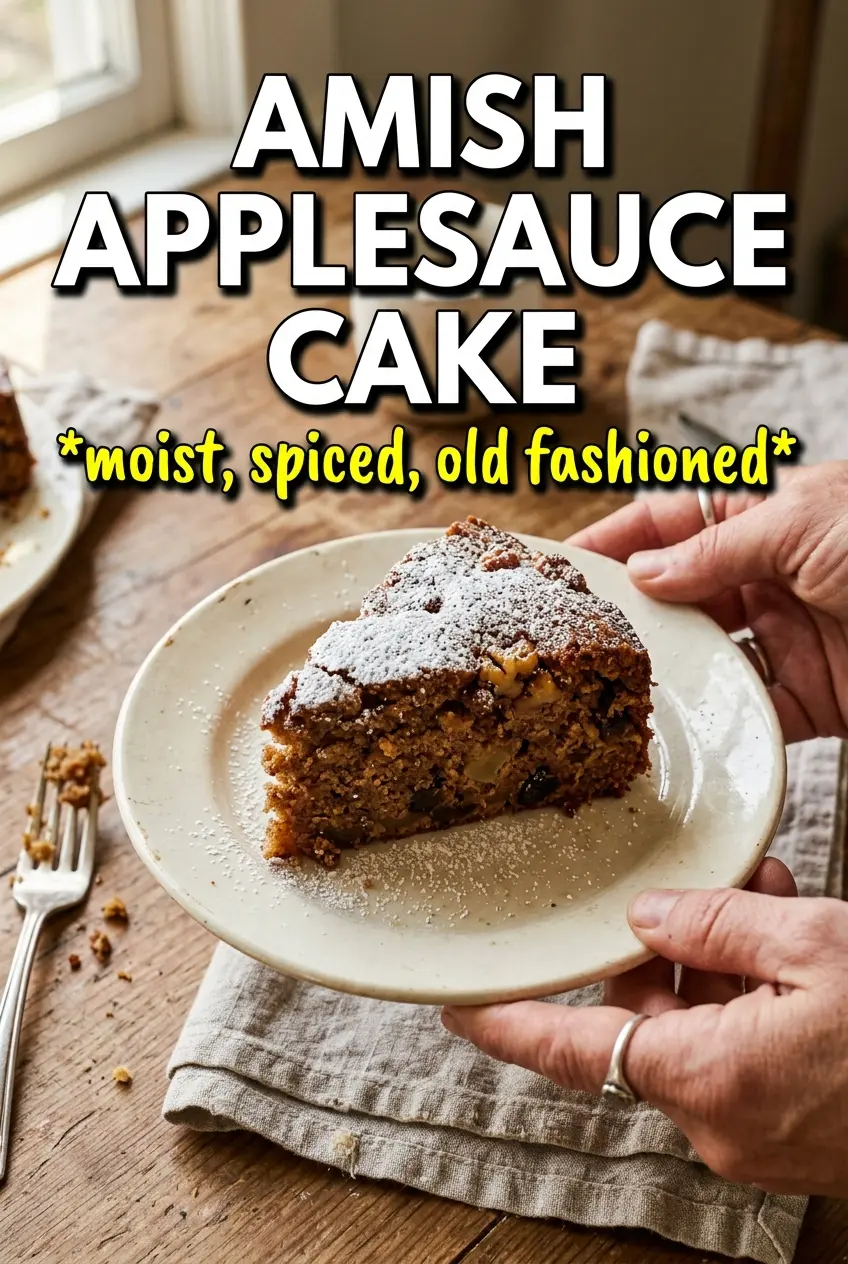
Amish applesauce cake bakes up with a dense, tender crumb, warm spice, and just enough sweetness to stay interesting after the first slice. The applesauce keeps it moist for days, while raisins and walnuts add little pockets of chew and crunch that make every bite feel old-fashioned in the best way. A light dusting of powdered sugar finishes it off without covering up the cake’s simple, homespun charm.
What makes this version work is the balance. There’s enough baking soda to lift the cake, but not so much that it turns airy or tastes harsh. The butter and sugars are beaten first for a little structure, then the applesauce goes in to keep the crumb soft and plush. The spices are measured to support the applesauce instead of competing with it, which is what gives this cake that deep, cozy flavor without tipping into spice-cake territory.
If you’ve ever had applesauce cake that baked up gummy in the middle or bland at the edges, the notes below will help. I’ve included the one texture cue I watch for in the oven, plus a couple of smart swaps if you need to work with what’s already in your pantry.
The cake stayed moist for days and the raisins plumped up beautifully. I baked it in a 9×13 pan and it came out with that perfect dense crumb, not dry at all.
Save this Amish Applesauce Cake for when you want a moist, spiced dessert with raisins, walnuts, and a simple powdered sugar finish.
The Reason This Cake Stays Moist Without Turning Heavy
Applesauce cakes can go wrong in two directions: too dry, or so soft they feel underbaked even when they’re done. The trick here is that applesauce brings moisture without adding extra fat, while the butter gives the cake enough richness to keep the crumb from getting rubbery. That combination matters in a 9×13 pan, where the batter has enough depth to need a steady bake rather than a quick blast of heat.
The other thing that matters is the spice blend. Cinnamon gives the familiar backbone, but cloves, allspice, and nutmeg fill in the darker notes that make the cake taste like more than apples and sugar. If you reduce those too much, the cake tastes flat. If you overdo them, the applesauce disappears. The balance here is what gives the cake its old-fashioned character.
What Each Ingredient Is Actually Doing in This Cake
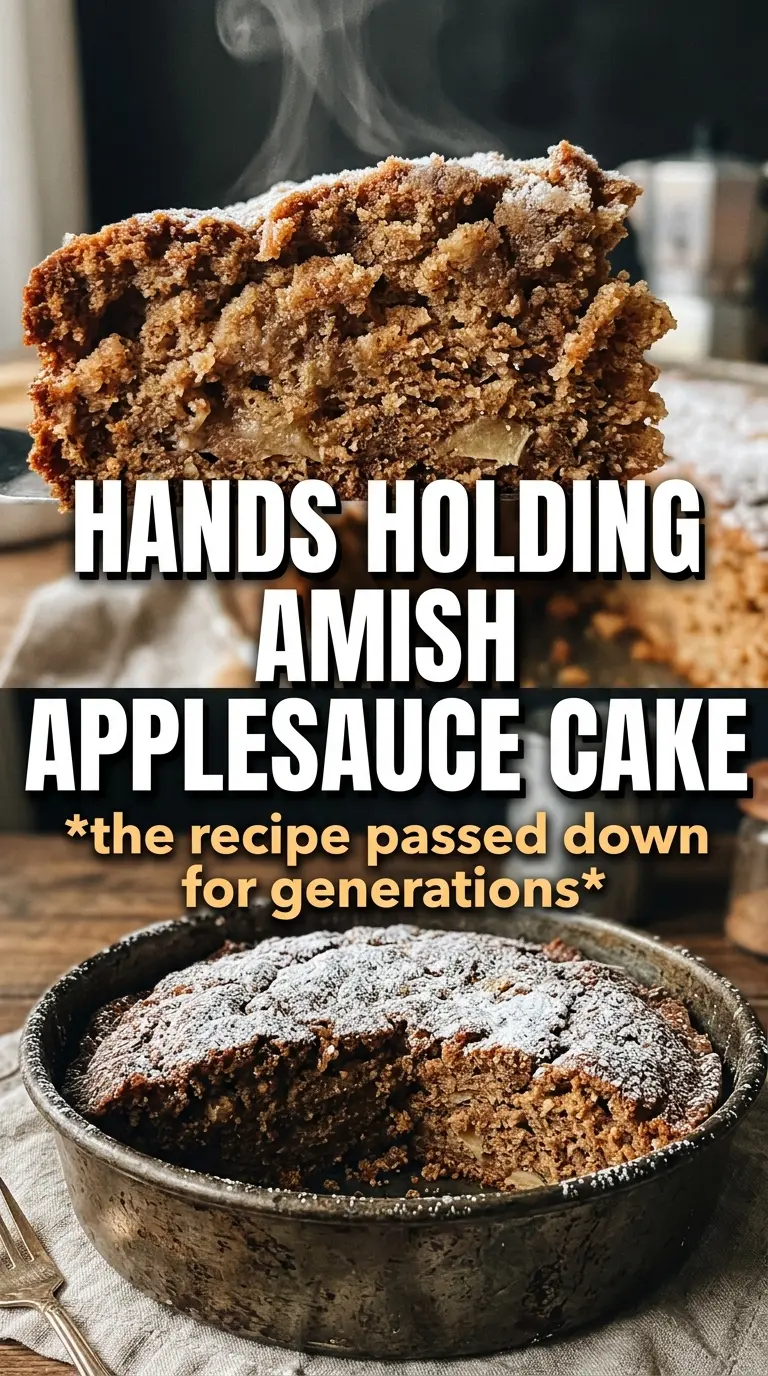
- Unsweetened applesauce — This is the moisture engine. Sweetened applesauce can work in a pinch, but it pushes the cake sweeter and can blur the spice balance, so unsweetened is the better choice if you want the cake to taste clean and old-fashioned.
- Butter — Butter gives the cake its richer crumb and keeps it from tasting one-note. Oil would make it softer, but you’d lose some of the flavor and the slightly more structured slice that makes this cake easy to serve.
- Brown sugar and granulated sugar — The brown sugar brings depth and a little chew, while the white sugar helps the cake bake with a lighter texture. Using only brown sugar makes the crumb denser; using only white sugar makes it taste thinner.
- Raisins — They add sweetness and little bursts of chew that fit the cake’s texture. If your raisins are dry, soak them in hot water for 10 minutes and drain well before folding them in. They’ll stay plumper in the baked cake.
- Walnuts or pecans — Walnuts give a stronger, slightly bitter contrast; pecans taste rounder and sweeter. Both work, but chop them roughly so the cake still slices neatly without huge nut chunks tearing the crumb.
- Baking soda — This is what helps the batter rise against all that moisture. If your baking soda is old, the cake can bake up flat and heavy, so use fresh soda for the best lift.
Building the Batter So the Crumb Stays Tender
Whipping the Butter and Sugars First
Start with butter that’s soft enough to press with a finger, not melted. Beat it with both sugars until the mixture looks lighter and a little fluffy, because that step traps air and gives the cake some lift before the applesauce goes in. If you skip this and just stir everything together, the cake still bakes, but the texture lands closer to pudding than cake.
Adding the Applesauce Without Breaking the Batter
Once the eggs and vanilla are in, stir in the applesauce and expect the batter to loosen. That’s normal. The batter will look almost too wet at this stage, but the flour pulls it back into a thick, scoopable mixture. If you add the flour too early, it clumps and overmixes as you try to smooth it out, which is where a tough crumb starts.
Folding in the Dry Ingredients and Mix-Ins
Add the flour mixture in two additions and stop mixing as soon as the streaks disappear. A few flour wisps are better than overworking the batter, especially once the raisins and nuts go in. Fold those in by hand at the end so they stay evenly distributed instead of sinking to the bottom of the pan.
Knowing When the Bake Is Done
At 40 minutes, start checking the center with a toothpick. You want moist crumbs, not wet batter. If the top is deeply colored but the center still looks loose, tent the pan loosely with foil and keep baking. Letting the cake cool all the way before dusting it with powdered sugar matters too, or the sugar melts straight into the top instead of staying snowy and clean.
How to Adapt This Amish Applesauce Cake Without Losing Its Character
Gluten-Free Version With a Better Crumb
Use a good 1:1 gluten-free baking blend that includes xanthan gum. The cake will still be moist, but the crumb may be a little more delicate, so let it cool completely before slicing. If your blend tends to be gritty, let the batter rest for 10 minutes before baking so the flour hydrates.
Dairy-Free Swaps That Still Bake Up Tender
Replace the butter with a plant-based baking stick, not a tub spread. Baking sticks behave more like butter in the oven and give you a better structure. The flavor shifts a little, but the cake stays moist and slices cleanly.
Leaving Out the Nuts Without Losing Texture
If you need a nut-free cake, just leave the walnuts or pecans out. The cake still works because the applesauce and raisins carry the texture, but the slices will be a little softer and more uniform. For a bit of crunch without nuts, try a sprinkle of coarse sugar on top before baking.
Making It Ahead for Better Flavor
This cake tastes even better the next day because the spices settle into the crumb. Bake it, cool it completely, and keep it covered at room temperature overnight if your kitchen isn’t warm. The powdered sugar is best added just before serving so it stays fresh on top.
Storage and Reheating
- Refrigerator: Store covered for up to 5 days. The crumb stays moist, and the spice flavor deepens a little after the first day.
- Freezer: This cake freezes well. Wrap individual slices tightly and freeze for up to 2 months. Thaw at room temperature while still wrapped so the cake doesn’t dry out.
- Reheating: Warm a slice in the microwave for 10 to 15 seconds if you want it soft and just a little steamy. Don’t overheat it or the raisins get tough and the crumb turns dry around the edges.