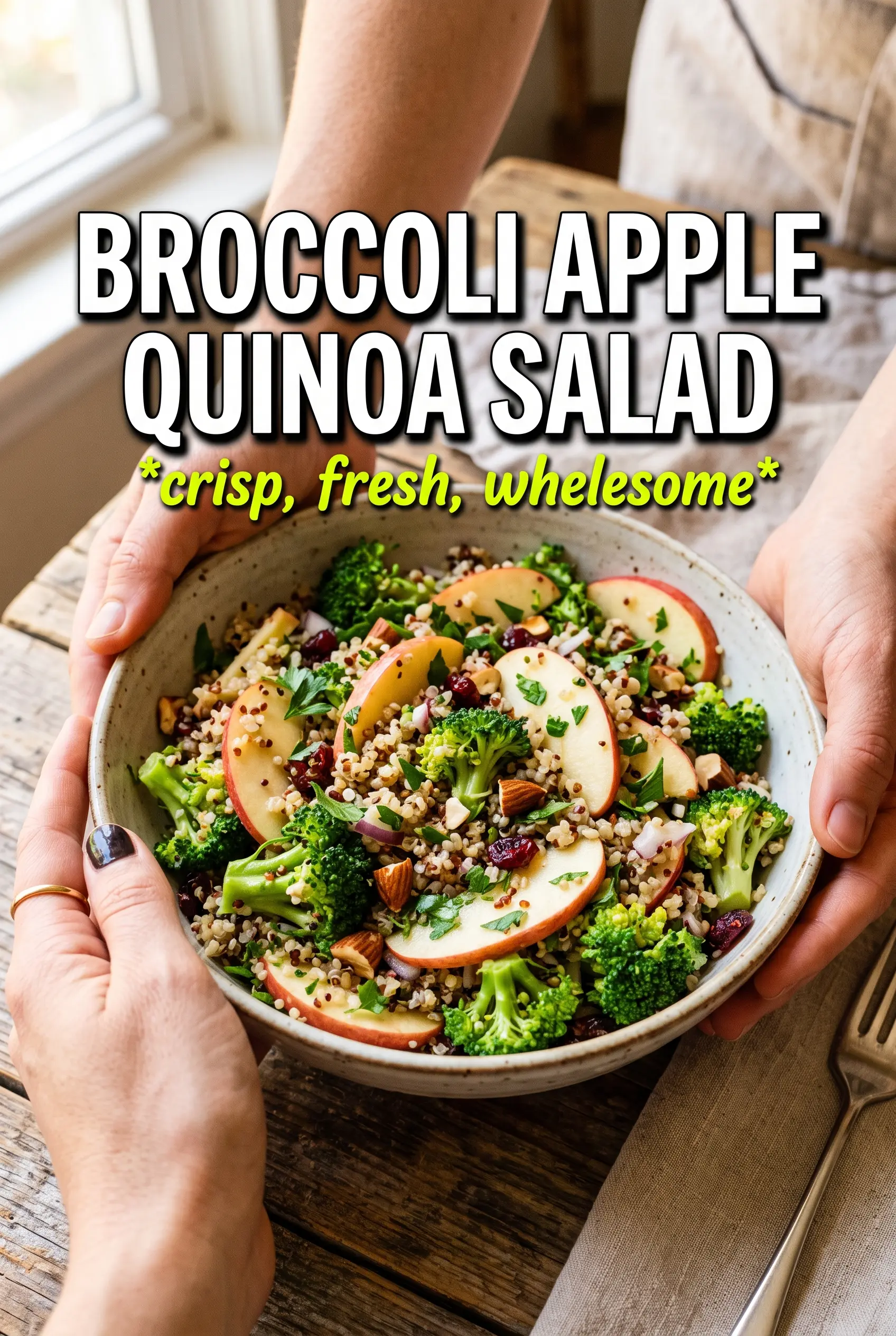
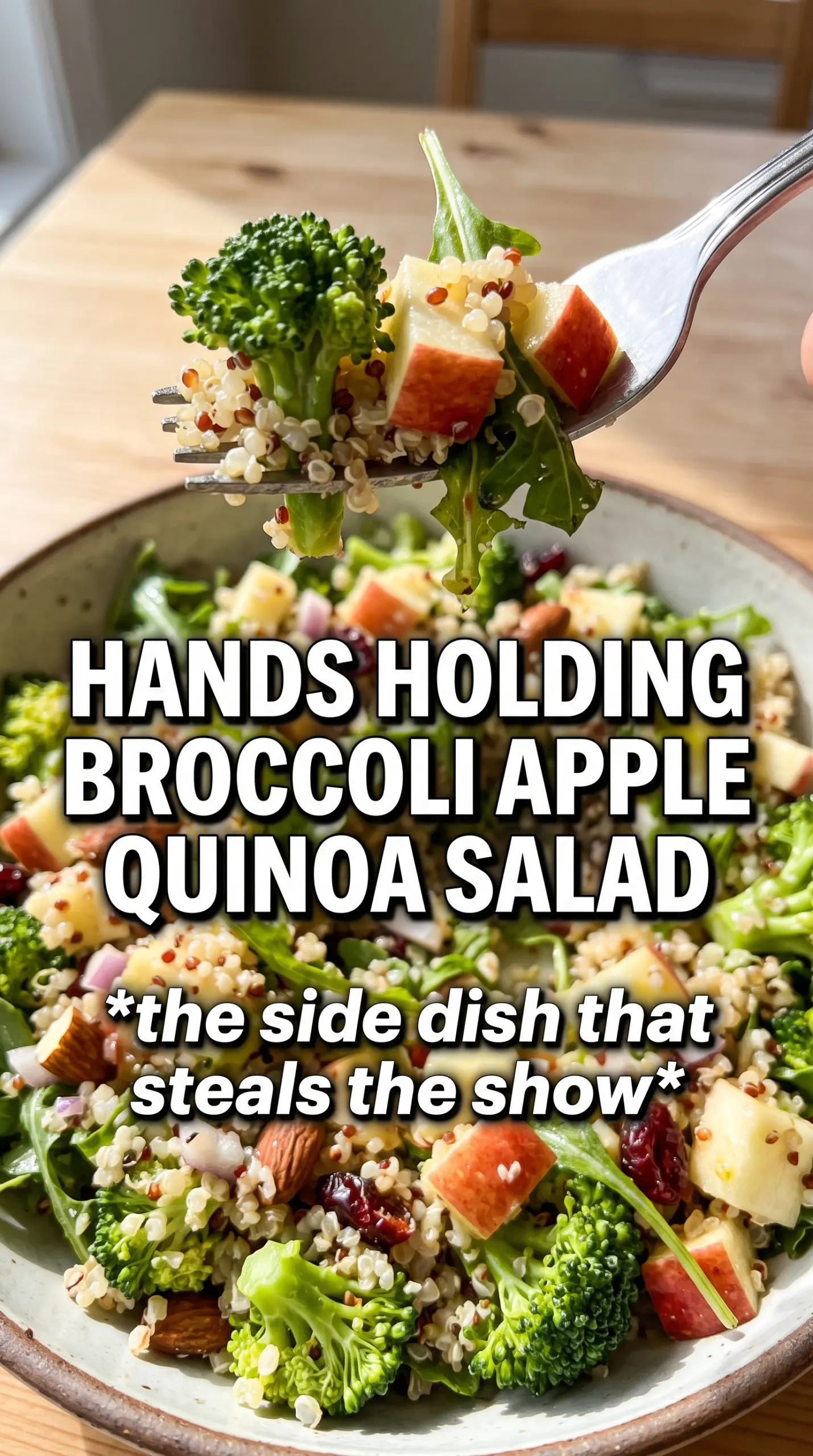
Broccoli apple quinoa salad hits the sweet spot between crisp, creamy, and hearty. The quinoa stays fluffy, the broccoli keeps its bite, and the apples bring a fresh snap that keeps every forkful lively instead of heavy. It’s the kind of side dish that disappears fast at lunch and somehow tastes even better after a short chill in the fridge.
What makes this version work is the balance of textures and the way each ingredient is handled before it goes into the bowl. The quinoa needs to cool completely so it doesn’t steam the broccoli or dull the apples, and the broccoli gets a quick blanch so it loses that raw edge without turning soft. The vinaigrette is built with Dijon and honey, which gives it enough body to cling to everything instead of pooling at the bottom.
Below, I’ve included the small details that matter most: how to keep the apples from browning, why the broccoli should be cut small, and how to adjust the salad if you want it a little more tart, a little more savory, or fully dairy-free without losing the good texture.
The broccoli stayed crisp, the quinoa was fluffy instead of mushy, and the dressing coated everything without making the apples soggy. I brought it to a potluck and people kept going back for the crunchy pumpkin seeds.
Save this broccoli apple quinoa salad for the days when you want a crisp, make-ahead side with a bright apple cider vinaigrette.
The Step People Skip That Makes This Salad Go Soft
The biggest mistake with a quinoa salad like this is mixing everything while the quinoa is still warm. Warm quinoa wilts the broccoli, softens the apples, and thins the dressing so it stops clinging. Cooling the quinoa all the way through keeps the texture separate and lets the vinaigrette coat the grains instead of disappearing into them.
The second place this goes wrong is the broccoli. Raw broccoli can be a little too tough and grassy for a salad like this, but blanching it for just two minutes takes the edge off without turning it dull. Shock it in ice water right away, drain it well, and the florets stay bright green and snappy.
- Quinoa — Rinse it before cooking or you’ll taste that bitter outer coating. Broth gives it a little more depth, but water is fine if the vinaigrette is doing the heavy lifting.
- Broccoli — Cut the florets small so they match the quinoa instead of overwhelming it. Bigger pieces stay too firm here and make the salad awkward to eat.
- Apples — Use a crisp variety like Honeycrisp, Pink Lady, or Fuji. Soft apples turn mealy fast and won’t give you the sharp crunch this salad needs.
- Pumpkin seeds or sunflower seeds — One of the best texture moves in the bowl. Toasted seeds are even better if you have the extra minute, because they bring a deeper, nuttier finish.
- Apple cider vinegar and Dijon — This is what makes the dressing taste structured instead of flat. The mustard helps the vinaigrette emulsify, so it coats the salad instead of sliding off.
What Each Ingredient Is Actually Doing in This Recipe
- Primary ingredient (the star) — Quality matters most. Choose the best you can find.
- Cooking medium (oil, butter, or broth) — This carries flavors and prevents dryness.
- Seasonings (salt, pepper, spices, herbs) — Layer flavors so nothing overpowers. Build depth gradually.
- Aromatics (garlic, onion, herbs) — Cook with fat to bloom flavors. Become the foundation.
- Supporting ingredients — Complement the main ingredient without overpowering it.
- Sauce or liquid (if applicable) — Brings flavors together. Balance richness with acid.
- Acid (lemon, vinegar, wine, or other) — Brightens and prevents flat-tasting results.
- Final finish (garnish, glaze, or sauce) — Prevents one-dimensional taste and adds visual appeal.
Building the Bowl So Every Bite Stays Crisp
Cooking and Cooling the Quinoa
Bring the quinoa and liquid to a boil, then cover and simmer until the grains are tender and the little tails have released. When it’s done, fluff it with a fork and spread it out so the steam can escape fast. If you leave it in a deep pile, the center stays damp and the salad gets clumpy instead of light.
Blanching the Broccoli Just Enough
Drop the florets into boiling water for about two minutes, just until the color turns bright green and the stems lose that raw crunch. Move them straight into ice water so the cooking stops immediately, then drain them well. Water trapped in the broccoli is what waters down the dressing later, so let it sit in a colander for a minute or two if needed.
Whisking the Dressing Until It Clings
Whisk the vinegar, olive oil, honey, Dijon, garlic powder, salt, and pepper until the mixture looks smooth and slightly thickened. If the oil separates right away, keep whisking for another few seconds — the mustard needs a little time to pull everything together. Taste it before you dress the salad; this is where you decide whether it needs a little more salt for balance or a touch more honey to round out the vinegar.
Tossing and Resting Before Serving
Combine the cooled quinoa, broccoli, apples, cranberries, seeds, green onions, and red onion, then pour the dressing over the top and toss until everything looks lightly coated. Chill the salad for 15 minutes so the quinoa absorbs some of the dressing and the flavors settle in. Toss it again right before serving, because the dressing always sinks to the bottom a bit as it rests.
How to Change the Crunch Without Losing the Balance
Make It Gluten-Free and Dairy-Free
This salad already works naturally for both, as long as you use broth that’s certified gluten-free if needed. Nothing in the dressing depends on dairy, which keeps the texture clean and bright instead of creamy-heavy.
Swap the Fruit for a Sharper Finish
Pear works if you want a softer, sweeter salad, but it won’t hold the same crisp bite as apple. If you want more tartness, use a Granny Smith apple and add an extra teaspoon of honey to keep the dressing balanced.
Turn It Into a Lunch Salad
Add chickpeas, shredded chicken, or crumbled feta if you want the bowl to eat more like a meal than a side. Chickpeas keep it vegetarian and add a creamy bite; feta brings salt and tang, but it also changes the clean apple-vinegar balance a bit.
Storage and Reheating
- Refrigerator: Keeps for 3 days in a sealed container. The apples soften a little, but the salad stays good and the quinoa holds up well.
- Freezer: Not a good freezer salad. The apples and broccoli lose their texture after thawing, and the dressing separates.
- Reheating: This salad is meant to be served cold or cool. If it comes straight from the fridge, let it sit at room temperature for 10 minutes and toss again so the dressing loosens up. Don’t heat it or the apples and broccoli will go limp.