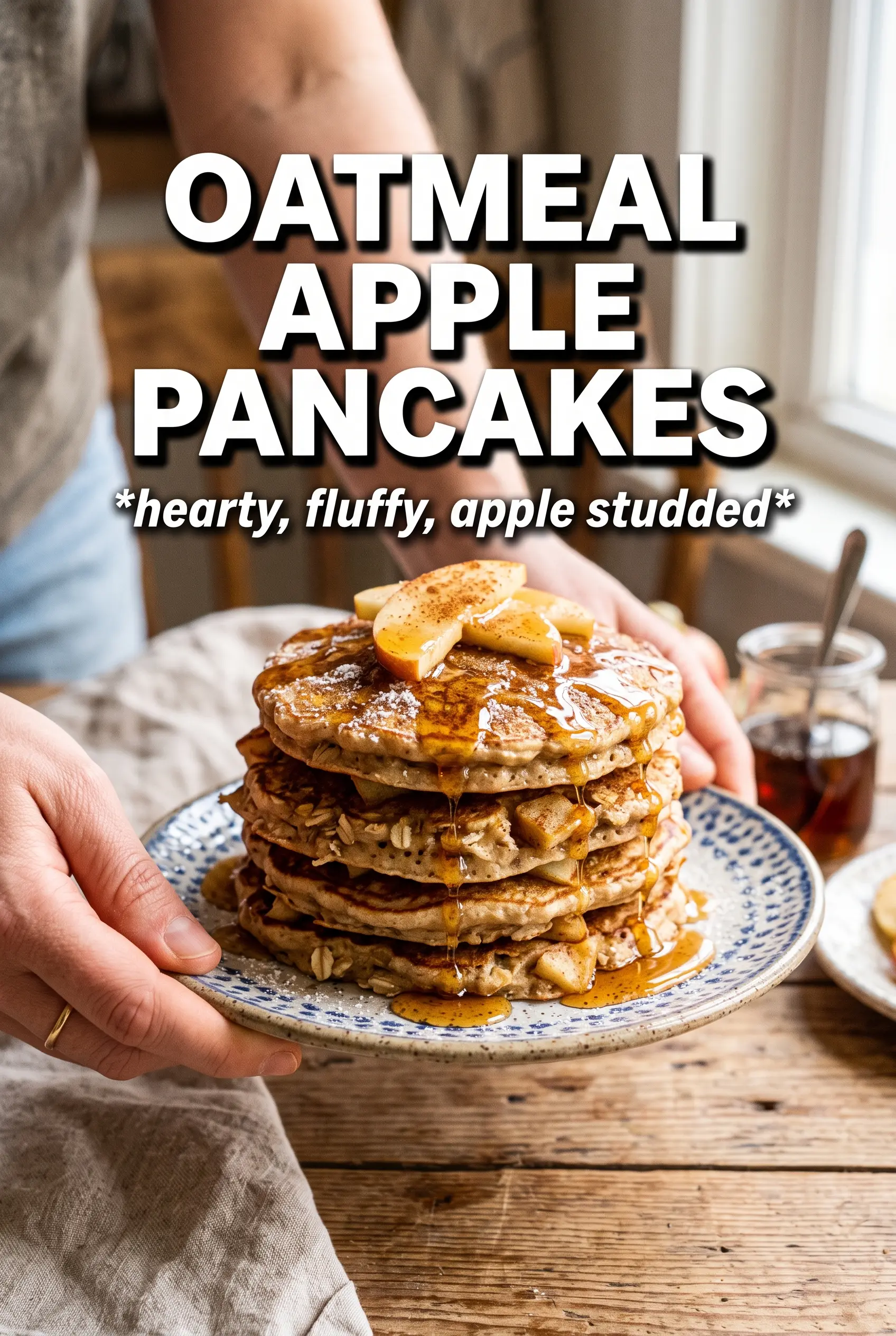
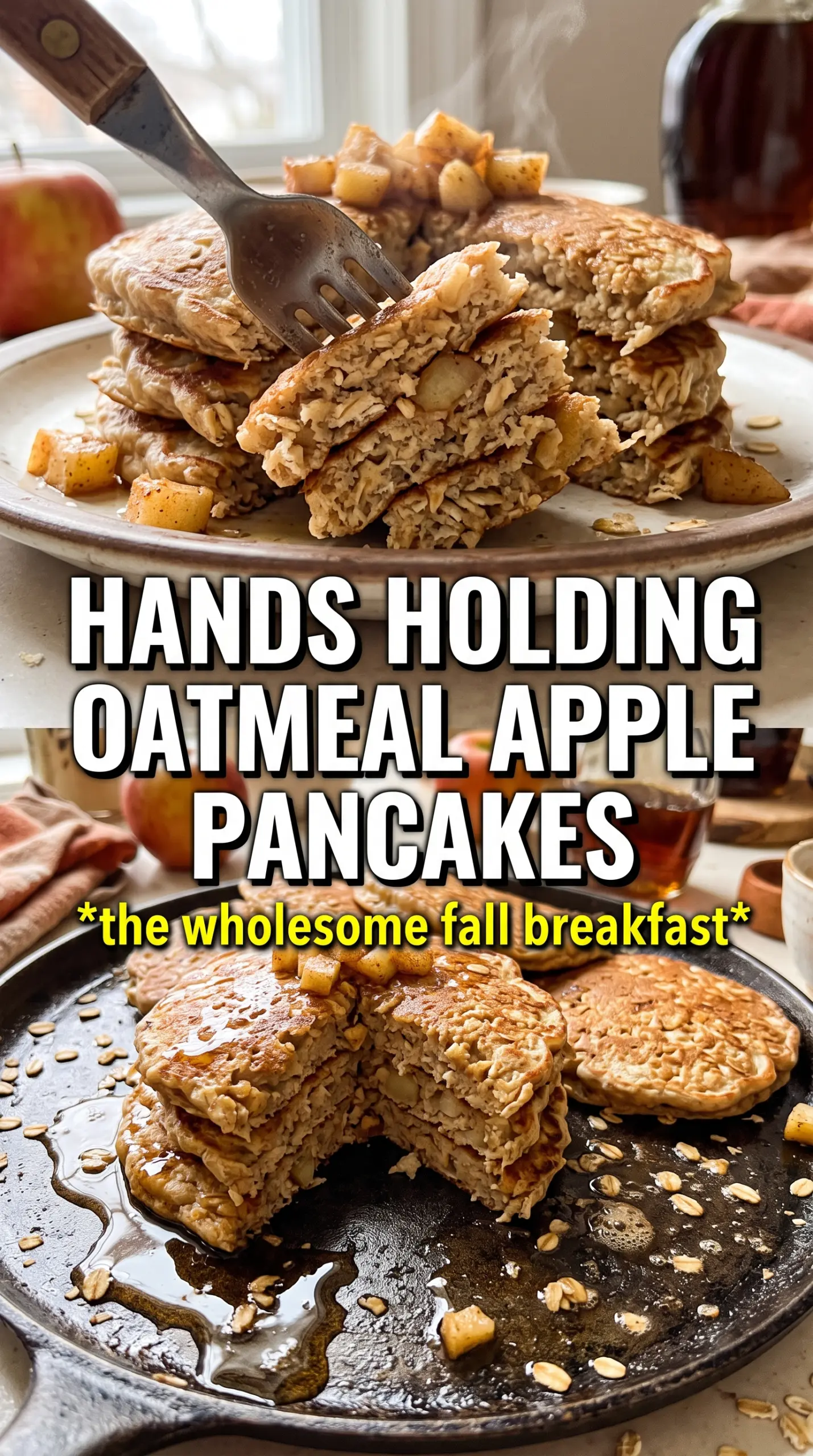
Oatmeal apple pancakes land with a hearty, tender crumb and little pockets of soft apple in every bite. The oats give them a more substantial texture than standard pancakes, but they still cook up light enough to stack high and soak up maple syrup without turning heavy. The edges go golden and a little crisp, which is exactly what you want when the batter has fruit tucked inside it.
What makes this version work is the balance between the oats, buttermilk, and apple. Grinding the oats just enough keeps them from tasting dusty or coarse, while the buttermilk and baking soda give the batter lift and a mild tang that plays nicely with cinnamon and nutmeg. The apple goes in last so it stays distributed through the batter instead of sinking, and a short rest gives the oats time to hydrate before the first pancake hits the pan.
Below, I’ve included the small details that matter here: how finely to grind the oats, why grated apple behaves differently than diced apple, and what to watch for on the griddle so you get cooked centers instead of pale, gummy pancakes.
The pancakes were fluffy with just enough chew from the oats, and the grated apple kept them moist without making the batter soggy. I usually struggle with fruit pancakes cooking through, but these flipped cleanly and browned beautifully.
Save these oatmeal apple pancakes for a breakfast with crisp edges, tender oats, and maple syrup in every bite.
The Trick to Keeping Apple Pancakes Tender Instead of Dense
Fruit pancakes often go wrong in one of two ways: the batter gets overmixed and tight, or the fruit throws off the texture so the middle stays wet while the outside browns too fast. The fix here is a light hand after the wet ingredients go in and a brief rest before cooking. That rest isn’t idle time; it lets the oats drink in some of the buttermilk so the batter thickens just enough to hold the apple pieces.
Using both baking powder and baking soda gives these pancakes lift without making them taste flat or one-note. The baking soda reacts with the buttermilk, while the baking powder gives a little insurance in the pan. If your pancakes spread too much, the batter was probably too thin or the skillet was too cool. If they brown before the centers set, the heat was too high and the sugars in the apple cooked faster than the batter could firm up.
What the Oats, Buttermilk, and Apple Each Bring to the Pan
- Rolled oats — These add the hearty chew that makes the pancakes feel substantial. Pulse them just a few times so they stay coarse; if you take them all the way to flour, you lose the textured bite that makes this recipe stand out.
- Buttermilk — This is the ingredient that gives the batter its soft tang and helps the pancakes rise with a tender crumb. Regular milk will work in a pinch, but the pancakes won’t be as plush. If you need a substitute, stir 1 tablespoon of lemon juice or vinegar into 1 1/2 cups milk and let it sit 5 minutes before using.
- Apples — Finely diced apples give little bits of texture; grated apples melt more into the batter and make the pancakes moister. If your apples are very juicy, squeeze them lightly in a clean towel after grating so the batter doesn’t turn loose.
- Cinnamon and nutmeg — These don’t just season the pancakes; they make the apple taste louder. Don’t overdo the nutmeg. It should sit in the background and warm the whole batter, not take over.
- Brown sugar — This adds a subtle molasses note and helps the pancakes brown nicely at the edges. White sugar will sweeten them, but it won’t give the same depth.
Getting the Batter and Griddle to Work Together
Grinding the Oats Just Enough
Pulse the oats 5 to 6 times and stop while they still look coarse. You want broken-down oats, not oat flour. If you grind them too fine, the pancakes lose their rustic texture and can turn a little gummy once the batter hydrates.
Mixing Without Beating the Batter
Whisk the wet ingredients separately, then fold them into the dry ingredients until you no longer see streaks of flour. A few small lumps are fine. Overmixing develops the flour and makes the pancakes chewy instead of tender, especially once the oats start absorbing liquid.
Cooking Until the Centers Catch Up
Heat the skillet over medium, not high. Lightly greased, the pan should let the batter sizzle softly when it lands, not hiss aggressively. Cook until the bubbles on top start to pop and the edges look set, then flip once; if you flip too early, the center will collapse and smear in the pan. The second side usually needs less time than the first, so watch the color instead of the clock.
Grated Apple for a Softer Pancake
Use grated apple if you want the fruit to disappear more into the batter and add moisture throughout. The pancakes come out softer and a little more uniform, which is great if you’re serving kids or anyone who doesn’t want big fruit chunks.
Diced Apple for More Bite
Use finely diced apple if you want visible pieces and a little more texture in every forkful. Keep the dice small so they cook through before the pancake browns. Large chunks tend to fall out or leave wet pockets in the center.
Gluten-Free Version
Swap the all-purpose flour for a 1:1 gluten-free baking blend that includes xanthan gum. The oats are already doing some of the work here, so the texture stays pleasant, but the batter may need a minute or two longer to thicken after resting.
Storage and Reheating
- Refrigerator: Store cooked pancakes in an airtight container for up to 3 days. They soften a bit as they sit, but the flavor holds well.
- Freezer: Freeze in a single layer, then stack with parchment between the pancakes. They freeze well for up to 2 months and reheat from frozen without much loss in texture.
- Reheating: Warm in a toaster, toaster oven, or a skillet over low heat until heated through. The common mistake is microwaving them too long, which makes the oats turn rubbery and the apples watery.