When the garlic comes out of the oven, its cloves have turned soft enough to squeeze straight from their skins, while the potatoes need a little longer. That staggered timing is one of the small details that makes these creamy garlic twice baked potatoes worth making: the garlic becomes mellow and sweet, and the russets finish baking until their centers give easily to a knife. There’s no need to roast the garlic separately or dirty another pan.
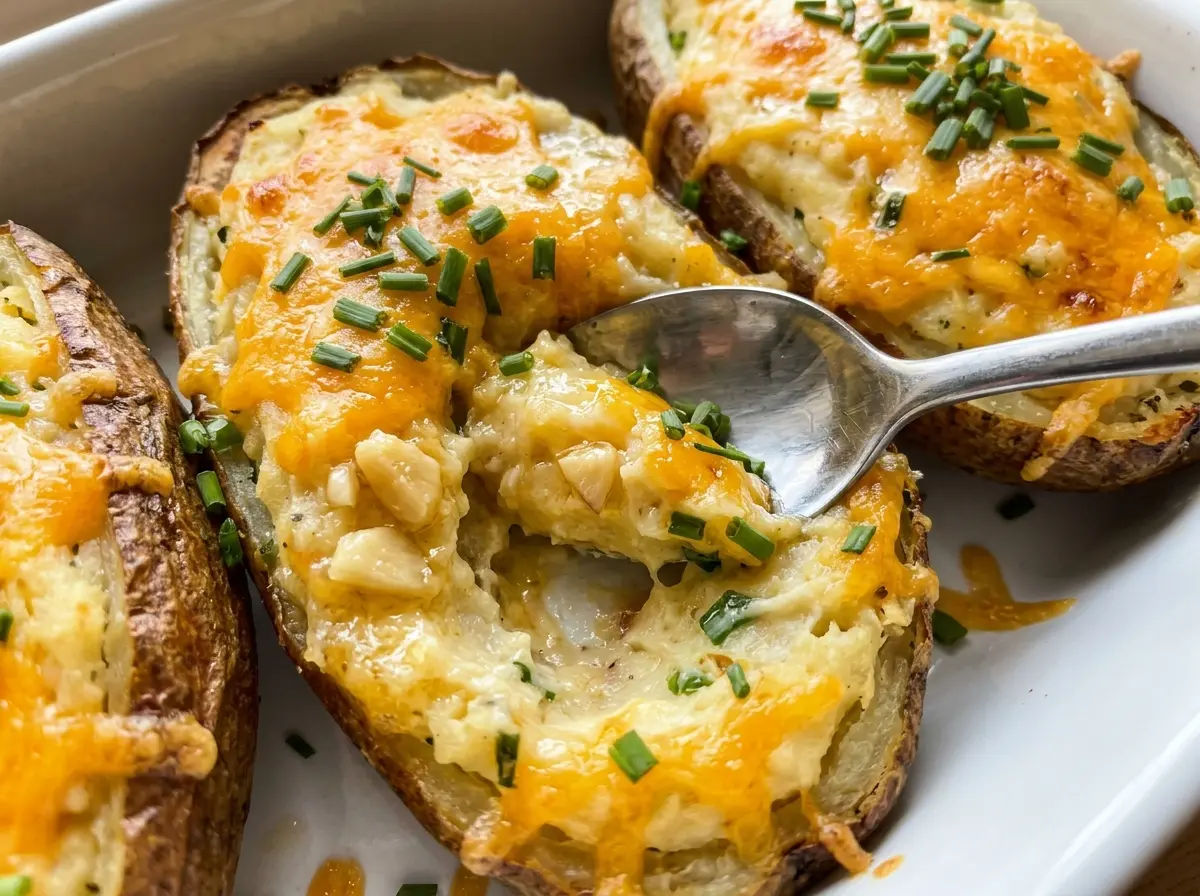
I like how the first bake does the quiet work: it cooks the potato through before the skins are filled again with buttery, tangy mash. A little cheddar melts into the filling, then another handful browns on top during the second bake. The result is a crisp-edged potato shell holding a soft, creamy center, with roasted garlic in every bite and fresh chives to finish.
Kitchen Note
I set the butter out before the potatoes go into the oven. Soft butter blends into the hot potato as you mash, while cold butter can leave little lumps and tempt you to work the filling harder than it needs.
Save these creamy garlic twice baked potatoes for a cozy side dish with fluffy centers, roasted garlic, and golden cheddar on top.
Why Russets Hold Up After You Scoop and Refill Them
Russets are a good fit here because their starchy flesh bakes up fluffy rather than dense. Once you scoop it out, that texture mashes into a soft filling without needing a blender or extra ingredients. The skins also give you a sturdy little vessel for the second trip through the oven, as long as you don’t scrape them paper-thin.
That balance matters more than making every shell perfectly smooth. Leave a layer of potato attached to the skin so each half can hold its shape when you spoon the filling back in. Waxy potatoes, such as red potatoes, tend to have a firmer, moister texture; they’re fine for other potato dishes, but they won’t give you the same fluffy filling and easy-to-fill shells. Medium russets also make portions that are substantial without needing to split or reshape the potatoes.
The Ingredients That Give These Potatoes Their Creamy Center

- Russet potatoes — Their fluffy baked flesh is easy to mash, and their size gives you a useful shell to refill. Choose potatoes that feel firm and have no soft spots; scrub and dry them before rubbing with oil.
- Whole garlic — Roasting the head softens the cloves and rounds off their sharp bite. Look for a firm head with tight, unblemished cloves. Slice off just enough of the top to expose them so the oil reaches the cut surfaces.
- Sour cream and milk — Sour cream brings tang and body, while milk loosens the mash. Full-fat sour cream gives the filling a richer texture; plain Greek yogurt can stand in for the sour cream, though it tastes tangier and makes the mixture a little thicker.
- Unsalted butter — Butter adds richness without making the filling taste sour or sharp. Softening it ahead of time helps it blend into the potato evenly.
- Sharp cheddar — Sharp cheddar gives the filling a more pronounced cheese flavor than mild cheddar, and it melts into the mash. Freshly shredded cheese tends to melt more smoothly; pre-shredded cheddar works, though its coating can leave the filling a little less silky.
- Fresh chives — Their mild onion flavor brightens the rich filling at the end. Chop them shortly before serving for the freshest flavor and color.
Roast the Garlic, Build the Filling, and Brown the Tops
Roast the potatoes and garlic side by side
Heat the oven to 400°F and line a rimmed baking sheet with foil. Rub the scrubbed, dried potatoes with 2 teaspoons of olive oil and set them on the sheet; slice the top from the garlic head, drizzle the cut side with the remaining teaspoon, wrap it in foil, and place it beside the potatoes. The garlic should be soft after about 35 to 45 minutes, so take out its packet then and let the potatoes keep baking. Give the potatoes about 50 to 65 minutes total, until a knife slides easily into the centers.
Make shells that can hold their filling
Let the potatoes cool until they’re safe to handle, about 10 minutes. Cut each one in half lengthwise, then scoop the flesh into a medium bowl while leaving about 1/4 inch attached to the skins. If you dig too close to the skin, the shells are more likely to split when you fill them. Set the shells cut side up on the baking sheet.
Mash in the roasted garlic and dairy
Squeeze the softened garlic cloves from their papery skins into the bowl of potato. Add the butter, sour cream, milk, 3/4 cup of cheddar, kosher salt, and black pepper, then mash until creamy. Stop once the mixture is evenly combined; beating it aggressively can make russet potatoes gummy. Taste for seasoning before you spoon it back into the shells.
Fill and bake until the cheese browns
Spoon the filling evenly into the potato shells and scatter the remaining cheddar over the tops. Return the baking sheet to the oven and bake for 15 to 20 minutes, until the filling is hot and the cheese has melted and picked up light brown spots. If the tops are still pale at the end of that window, use the visual cue—melted, lightly browned cheese—rather than waiting for a dark crust. Sprinkle with chopped chives just before serving.
Easy Swaps for a Different Take on These Stuffed Potatoes
Give the cheddar a little heat
Swap pepper Jack for the sharp cheddar, keeping the same division between the filling and topping. It melts well and brings a gentle chile kick, though you’ll lose some of sharp cheddar’s tang.
Make them dairy-free
Use dairy-free butter, unsweetened plain plant milk, dairy-free sour cream, and dairy-free cheddar in place of the dairy ingredients. Keep the same quantities and method; the filling will still be creamy, though the cheese may melt and brown differently from cheddar.
Trade chives for scallions
Use chopped green scallion tops instead of chives for a more pronounced onion flavor. Add them at the same point, just before serving, so their fresh bite stays distinct against the rich potato filling.
Storage and Reheating
- Refrigerator: Cool promptly and refrigerate in a covered container within 2 hours. Keep for 3 to 4 days; the potato shells soften as they sit.
- Freezer: These freeze well after baking. Wrap cooled potatoes individually and freeze for up to 2 months; thaw overnight in the refrigerator for more even reheating.
- Reheating: Warm thawed potatoes in a 350°F oven until the centers reach 165°F. Avoid reheating them until the cheese is deeply browned, since the topping can dry out before the middle is hot.
Questions That Come Up When Making Twice Baked Potatoes
Creamy Garlic Twice Baked Potatoes
Ingredients
Equipment
Method
- Heat the oven to 400°F.
- Line a rimmed baking sheet with foil.
- Scrub and dry the potatoes, then rub them with 2 teaspoons of the olive oil and place them on the baking sheet.
- Slice the top off the garlic head to expose the cloves.
- Drizzle the cut side with the remaining 1 teaspoon oil, wrap it in foil, and place it beside the potatoes.
- Bake until the garlic cloves are soft, about 35 to 45 minutes, removing the garlic packet when ready.
- Continue baking the potatoes until a knife easily pierces the centers, about 50 to 65 minutes total.
- Let the potatoes cool until they are safe to handle, about 10 minutes.
- Cut each potato in half lengthwise and scoop the flesh into a medium bowl, leaving about 1/4 inch of potato attached to the skins.
- Arrange the potato shells cut side up on the baking sheet.
- Squeeze the roasted garlic cloves from their skins into the bowl and add the butter, sour cream, milk, 3/4 cup of the cheddar, salt, and pepper.
- Mash until creamy.
- Spoon the mixture evenly into the potato shells and sprinkle with the remaining 1/4 cup cheddar.
- Bake until the filling is hot and the cheese is melted and lightly browned, 15 to 20 minutes.
- Sprinkle with the chives before serving.


