A knife tells you more about a baked potato than its cooking time ever will. I check the center of each one, because even potatoes that look alike can finish at different moments. These baked potatoes in foil are made with russets, olive oil, and kosher salt, then baked until the knife slides easily through the middle.
Wrapping each potato snugly in foil holds in moisture, giving the inside a soft, fluffy texture and the skin a tender feel. The oil helps the salt cling to the outside, so each bite has a little seasoning instead of a bare, dry skin. It’s a straightforward method, but it helps to know what kind of skin you’re signing up for.
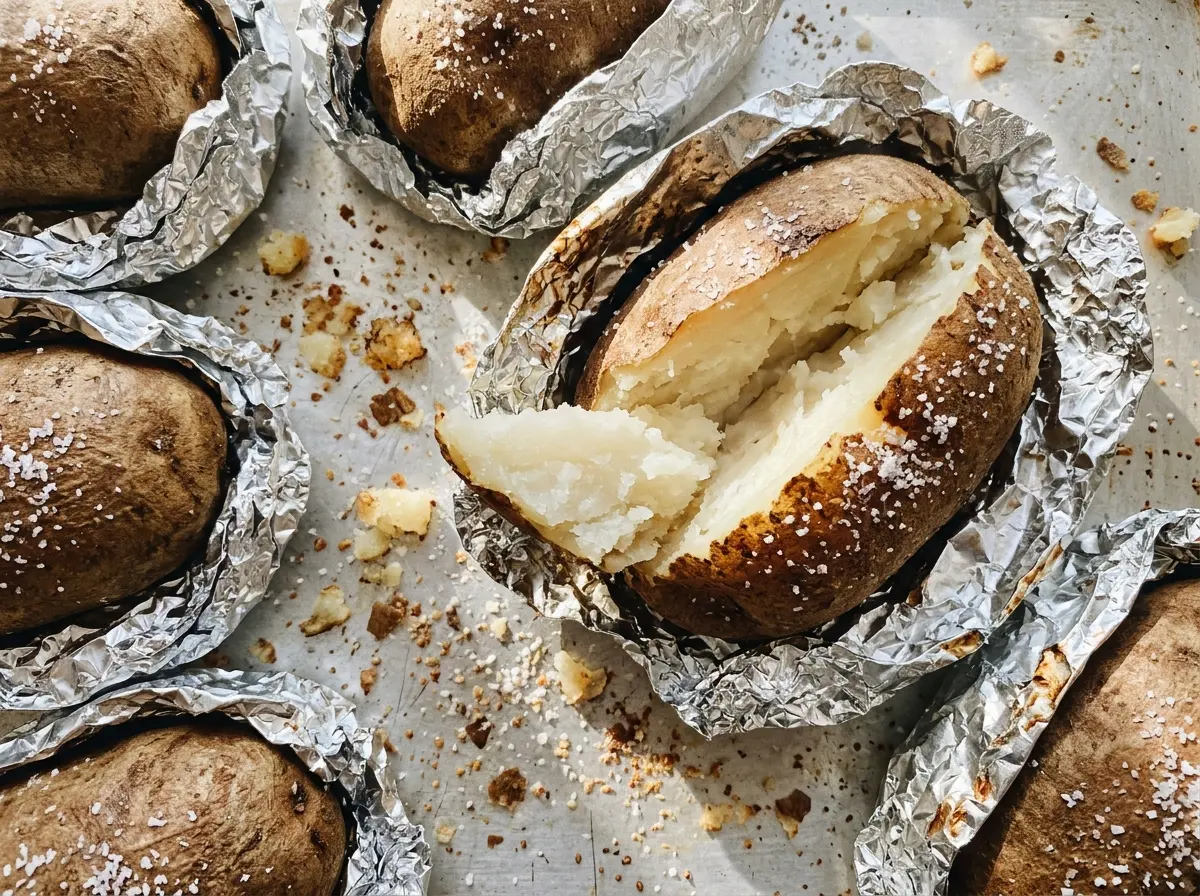
Once the potatoes are tender all the way through, open one up and let the steam roll out. The inside should be soft enough to break apart with a fork, with no firm patch hiding in the center.
Kitchen Note
I prick each potato before the oil goes on, so I’m not trying to handle a slippery potato with a fork. A few firm punctures through the skin are enough; then I move straight to the oil and salt.
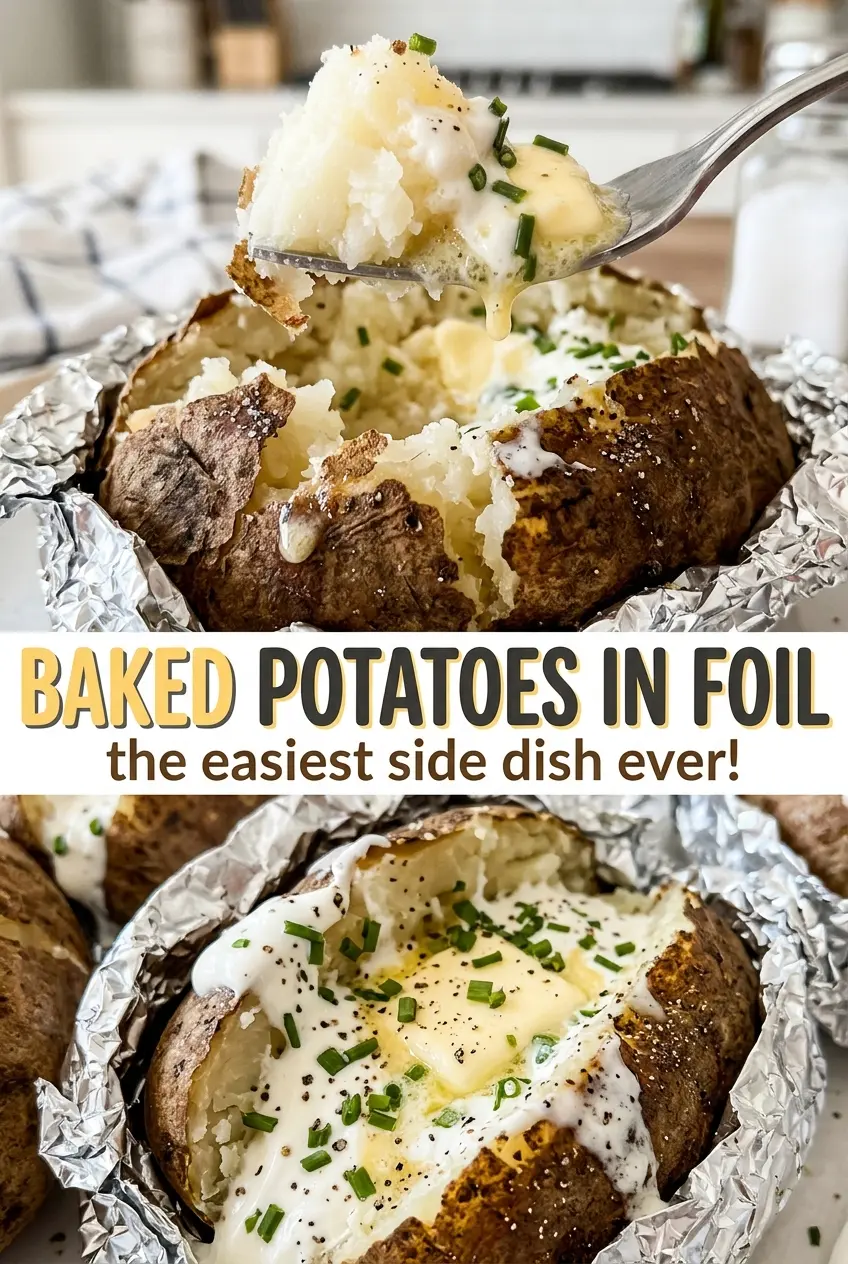
Save these baked potatoes in foil for a hands-off side with fluffy russet centers and tender, salted skins.
The Foil Gives You a Soft Skin, Not a Crisp One
Foil changes the texture of the outside. As the potatoes bake inside their snug packets, moisture stays close to the skin instead of drying it out. You’ll get a tender skin and a soft center, not the dry, crisp jacket you’d expect from an unwrapped potato. Neither texture is wrong; they’re just different ways to bake one.
That distinction matters if you’ve ever opened a foil packet expecting a crisp skin and wondered what went wrong. Nothing went wrong—the foil is doing its job. Choose this method when you want the potato cooked gently in its own packet and don’t mind a softer exterior. If a crisp skin is what you’re after, use the unwrapped variation below rather than loosening the foil partway through and hoping for both textures.
There’s also a reason to wrap each potato separately rather than bundle them together. Individual packets keep the potatoes in contact with the oven’s heat on the baking sheet and make it simple to check each one on its own. That’s useful when one potato is larger or finishes later than its neighbors.
What Russets, Oil, and Kosher Salt Each Bring to the Packet
- Russet potatoes — Russets have a starchy interior that turns fluffy when baked, which is the texture this method is built around. Choose firm potatoes without soft spots, and scrub them well before drying. Yukon Gold potatoes work as a one-for-one alternative, but their centers are creamier and denser rather than as fluffy.
- Olive oil — A thin coating helps the salt stay on the skin and keeps the outside from feeling dry. Everyday olive oil is perfectly suitable; there’s no need to use a special finishing oil here. A neutral cooking oil works in the same measured amount if you’d rather not taste olive oil.
- Kosher salt — The larger crystals are easy to scatter evenly over the oiled skin. Fine table salt is a workable substitute, but it packs more tightly by volume, so use about half as much to start rather than swapping it spoon-for-spoon. The salt is on the outside, so an even sprinkle matters more than piling it on.
Wrap First, Then Let the Knife Call the Finish
Heat the Oven and Dry the Potatoes
Preheat the oven to 425°F so it’s ready before the potatoes go in. Scrub each russet under running water, then dry it thoroughly; a dry surface is easier to coat evenly with oil. Keep the potatoes whole for this method. If they’re still wet, take a moment to dry them rather than wrapping water against the skin.
Prick, Oil, Salt, and Wrap
Prick each potato several times with a fork, then rub it with olive oil and sprinkle it evenly with kosher salt. The order is useful: the oil gives the salt a surface to cling to. Wrap each potato snugly in aluminum foil, closing the packet around it. Set the individual packets on a baking sheet, with a little space between them.
Bake Until the Center Gives Easily
Bake for 55 to 70 minutes, then test each potato by sliding a knife into its center. A finished potato lets the blade pass easily; if you feel a firm spot or resistance, it needs more time. Larger potatoes may take longer, so don’t pull every packet just because one is ready. Test them one at a time and return any firm ones to the oven.
Two Ways to Change the Potato Without Losing the Simple Method
Bake them without foil for a drier skin
Use the same olive oil and kosher salt, but set the potatoes directly on the baking sheet instead of wrapping them. Bake at 425°F and check the center with a knife; without the foil packet, the skin dries more and the timing may differ. The tradeoff is a less tender exterior in exchange for a skin with more structure.
Swap in sweet potatoes
Use medium sweet potatoes in place of the russets and keep the oil, salt, foil, and baking-sheet approach. Their flesh will be sweeter and softer, with a smooth texture rather than the dry, fluffy quality of a russet. Check each center with a knife instead of expecting the same timing as the russet version.
Storage and Reheating
- Refrigerator: Remove the foil and refrigerate leftovers within 2 hours in a covered container. They keep for 3 to 4 days; the skin softens more as they sit.
- Freezer: Freeze cooled potatoes individually in a freezer-safe bag for up to 1 month for best texture. The center may be a little grainier after thawing.
- Reheating: Warm unwrapped potatoes in a 350°F oven until the center reaches 165°F. A microwave is quicker, but it softens the skin further.
Questions That Come Up Before the Potatoes Go in the Oven
Baked Potatoes in Foil
Ingredients
Equipment
Method
- Preheat the oven to 425°F.
- Prick each potato several times with a fork.
- Rub the potatoes with olive oil.
- Sprinkle the potatoes evenly with kosher salt.
- Wrap each potato snugly in aluminum foil.
- Place the foil-wrapped potatoes on a baking sheet.
- Bake for 55 to 70 minutes, until a knife slides easily through the center of each potato; larger potatoes may take longer.


