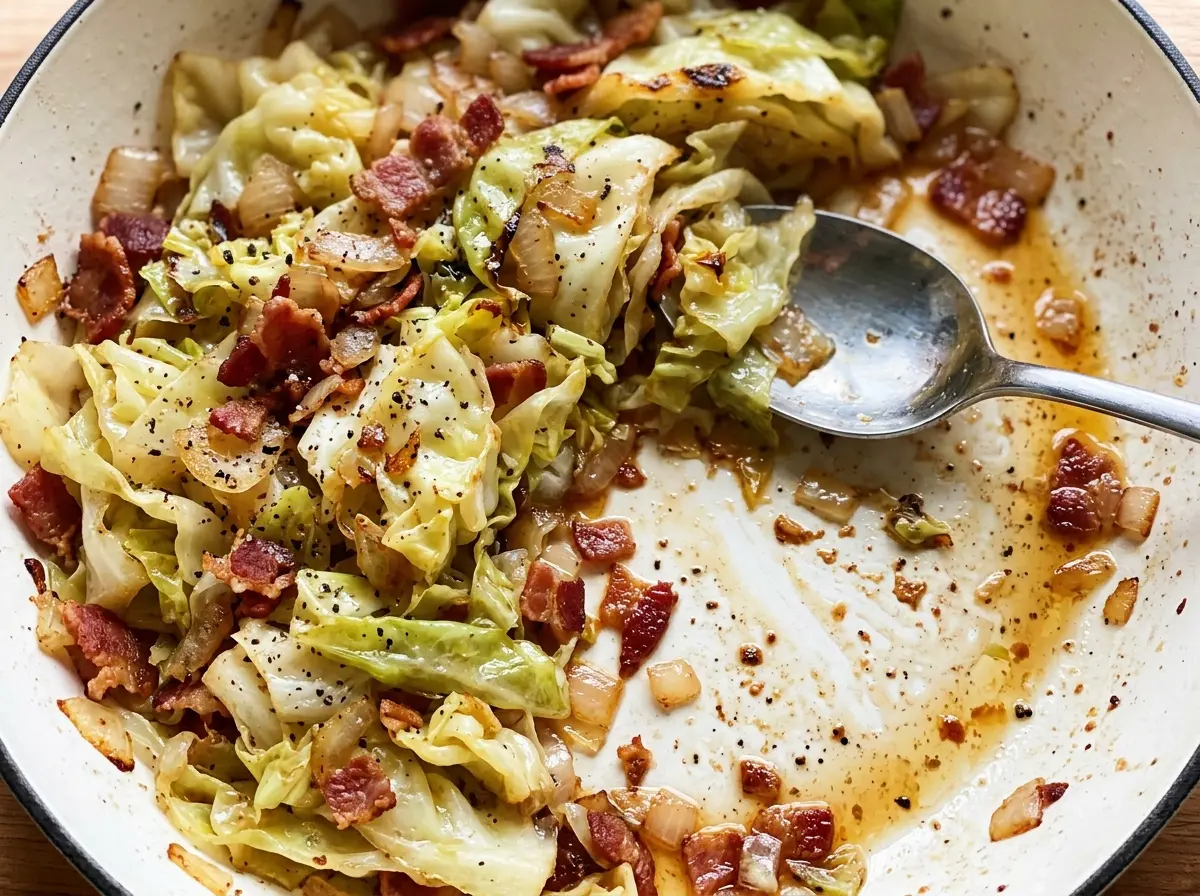
The cabbage starts out piled higher than the skillet, then steadily settles as the heat softens it. I add it by handfuls instead of trying to force the whole head in at once; that gives me room to stir and helps every ribbon pick up a little bacon fat. This Southern Fried Cabbage is a simple stovetop side, but that big pile needs a little patience at the beginning.
Cooking the cabbage covered with a small amount of water lets it turn tender without needing a long stretch of frying in the skillet. The bacon and onion bring the savory flavor, while a few browned edges keep the cabbage from tasting flat. I use a deep 12-inch skillet so the cabbage can wilt into the pan without spilling over, and I keep the heat at medium-low once the lid goes on. The finished cabbage is soft but still distinct, with crisp bacon folded through it and a little color around the edges.
Kitchen Note
Don’t pour off all the bacon drippings. Leave about two tablespoons in the skillet after the bacon comes out; that thin coating carries the bacon flavor into the onion and cabbage without leaving the dish greasy.
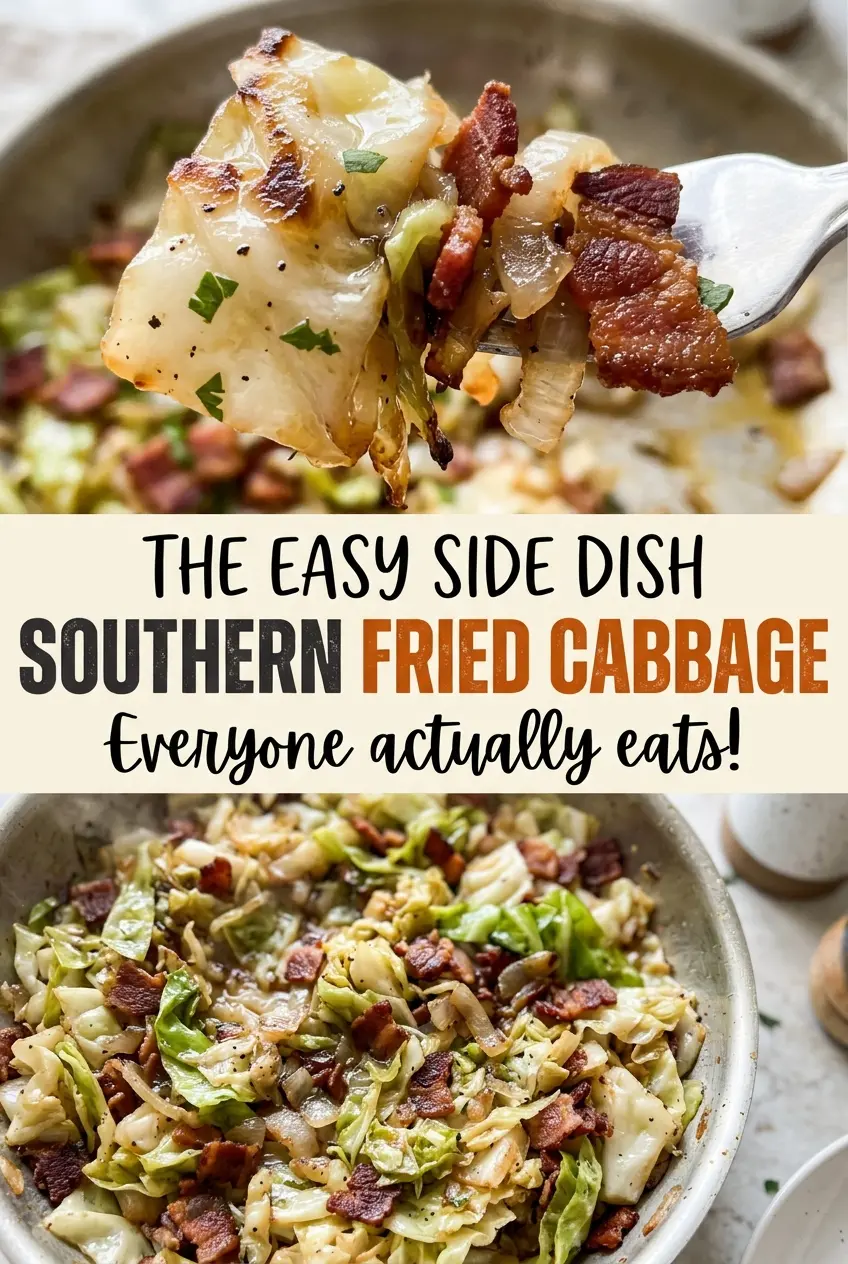
Save Southern Fried Cabbage for a cozy side dish with tender cabbage, browned edges, and crisp bacon folded through.
Why This Cabbage Gets Tender Without Turning Watery
Cabbage releases moisture as it cooks, so a covered skillet doesn’t need much extra liquid. The measured water gives the leaves a little steam to get started, while the lid keeps that moisture in the pan. If the skillet is crowded at first, don’t worry: the cabbage wilts in stages, which is why adding it by handfuls matters more than trying to stir the whole pile at once.
Keeping the heat at medium-low after covering the pan gives the cabbage time to soften before the bottom catches. Stirring once or twice redistributes the leaves and the liquid, but constant stirring isn’t necessary. The goal isn’t to brown every piece evenly. You’re looking for tender cabbage with a few browned edges, so the softened leaves still have some character and the bacon flavor doesn’t get lost in a pool of liquid.
A deep skillet helps with that transition. A shallow or smaller pan leaves less room for the raw cabbage and makes it harder to stir comfortably as it wilts. Once the leaves have settled, the cover does most of the work; lift it only to stir, then put it back so the cabbage continues cooking gently.
The Bacon, Onion, and Cabbage Each Have a Job
- Bacon — Chopped bacon cooks quickly and gives the skillet both crisp pieces and flavorful drippings. The bacon doesn’t need to be a specialty brand; choose a package you enjoy eating, and cook it until crisp before transferring it out. Keeping the cooked pieces aside until the finish protects their texture.
- Green cabbage — A medium head of green cabbage is the right fit for this pan and cooking time. Look for a head that feels firm and heavy, with compact leaves. Core it and slice it thinly so it wilts at a similar pace; thick chunks take longer to soften and won’t cook as evenly alongside the onion.
- Yellow onion — Thin slices soften quickly in the bacon drippings and tuck into the cabbage rather than staying in large, firm pieces. A firm, unblemished onion is all you need here; there’s no reason to seek out a specialty variety. The yellow onion’s mild savory sweetness suits the bacon without taking over.
- Water, kosher salt, and black pepper — The water creates the covered-cook steam, rather than acting as a sauce. Kosher salt and black pepper season the cabbage simply, letting the bacon and onion remain easy to taste. Use kosher salt for the amount in the recipe; fine table salt measures differently by volume, so it isn’t a direct one-for-one swap.
How to Cook the Cabbage Until Tender With Browned Edges
Render the bacon until crisp
Set a deep 12-inch skillet over medium heat and cook the chopped bacon for 8 to 10 minutes, stirring occasionally. You’re looking for crisp pieces and rendered fat in the bottom of the skillet. If the bacon is still soft, give it more of the listed cooking time rather than transferring it early. Move the bacon to a plate, leave about two tablespoons of drippings in the skillet, and pour off the excess.
Soften the onion in the skillet
Add the thinly sliced onion to the bacon drippings and cook for 3 to 4 minutes, stirring. The slices should soften and look slightly translucent, not dark or crisp. Keep them moving so they cook evenly in the skillet. This short cook gives the onion time to mellow before the cabbage joins it.
Wilt the cabbage in handfuls
Add the thinly sliced cabbage a handful at a time, stirring as each addition wilts enough to make room for the next. The pan will look full at first, but the cabbage settles as it softens. Avoid packing it down hard, which makes it difficult to stir and distribute the onion. Continue until all the cabbage fits in the skillet.
Cover, cook gently, and finish with bacon
Stir in the water, kosher salt, and black pepper, then cover the skillet and cook over medium-low heat for 10 to 15 minutes. Stir once or twice; the cabbage should become tender, with some browned edges rather than a uniformly pale, wet look. If it still feels firm, continue within that cooking window until the texture is right. Stir the cooked bacon back into the cabbage and serve hot.
Small Changes That Keep the Cabbage-and-Bacon Balance
Keep some bacon crisp on top
For a more noticeable crisp bite, set aside a small portion of the cooked bacon and stir the rest into the cabbage. Scatter the reserved pieces over the top just before serving. The amount of bacon stays the same, but the pieces on top keep more of their crisp texture than bacon stirred through the hot cabbage.
Make the cabbage ribbons a little wider
Slice the cabbage into slightly wider ribbons while keeping them thin enough to wilt in the skillet. The finished dish will have more distinct pieces and a slightly heartier bite than very fine slices. Keep the onion thinly sliced so it softens on schedule alongside the cabbage.
Storage and Reheating
- Refrigerator: Refrigerate leftovers in a covered container for 3 to 4 days. The cabbage softens further as it sits, while the bacon loses some of its crispness.
- Freezer: Freeze in an airtight container for up to 2 to 3 months for best quality. Thawed cabbage will be softer, so freezing is best when texture matters less than saving leftovers.
- Reheating: Warm gently in a skillet over medium-low heat with a small splash of water, stirring until steaming hot; the microwave also works in short bursts, with a stir between them. High heat can scorch the cabbage before the center warms through.
Questions That Come Up When Cooking Southern Fried Cabbage
Southern Fried Cabbage
Ingredients
Equipment
Method
- In a deep 12-inch skillet over medium heat, cook the chopped bacon for 8 to 10 minutes, stirring occasionally, until crisp.
- Transfer the bacon to a plate, leave about 2 tablespoons of drippings in the skillet, and pour off any excess.
- Add the thinly sliced onion and cook for 3 to 4 minutes, stirring, until softened.
- Add the thinly sliced cabbage in handfuls, stirring as it wilts until all of it fits in the skillet.
- Stir in the water, kosher salt, and black pepper.
- Cover and cook over medium-low heat for 10 to 15 minutes, stirring once or twice, until the cabbage is tender with some browned edges.
- Stir the cooked bacon into the cabbage and serve hot.


