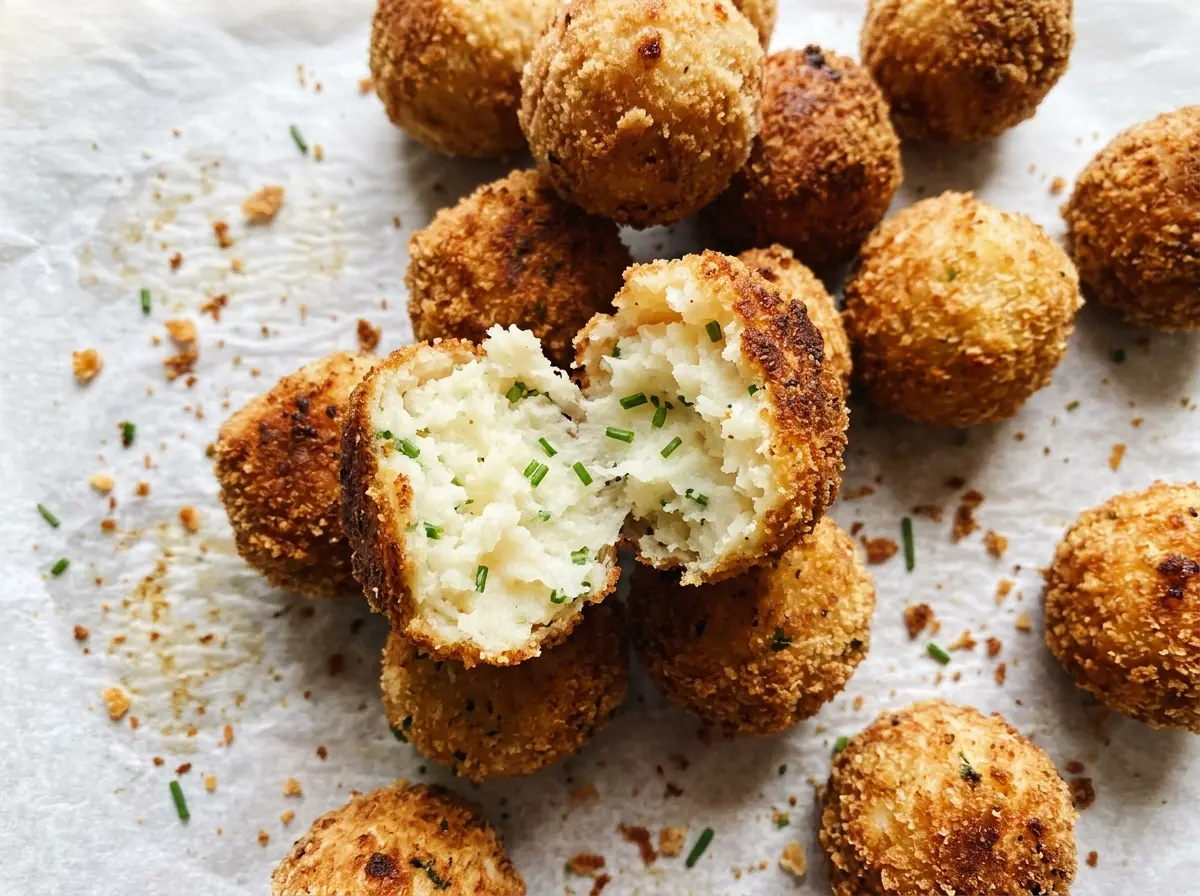
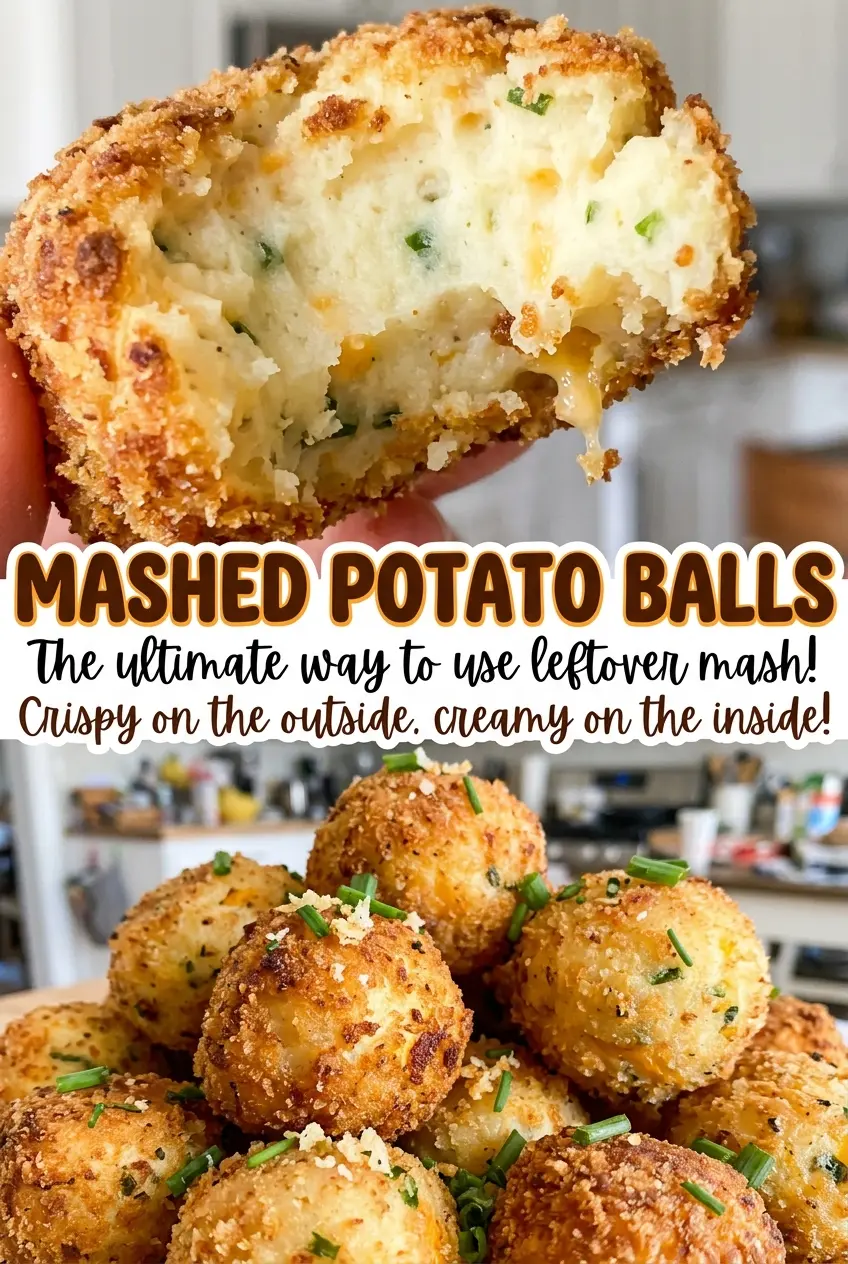
The first thing you notice is the contrast: a crunchy panko shell gives way to soft, buttery potato. Mashed Potato Balls turn a familiar mash into a golden, bite-size side that feels right at home beside a weeknight dinner or on a snack table. The coating is crisp without hiding the potato, and the pepper keeps each bite from tasting flat.
I make the mash with russet potatoes because their fluffy texture gives the balls a soft center. Once they’re fried, the rough panko coating catches the light and crackles as you bite through it. Give the potatoes room to cook evenly, and let the finished balls drain before serving; that’s how you get a tender middle with a crust that stays crisp.
Kitchen Note
The potato mixture needs a proper chill before you try to roll it. When it’s firm, portions hold their shape in your hands instead of smearing, which makes the breading much easier to keep even.
Save these Mashed Potato Balls for a crisp, golden coating and soft potato center that make a simple side feel special.
Why the Flour Layer Matters More Than a Thick Pile of Panko
It’s easy to think the panko does all the work, but the coating succeeds because the layers have separate jobs. Flour gives the potato a dry surface for the beaten egg to cling to. The egg then acts like glue for the crumbs. Skip that first dusting, and the egg can slide over the soft potato instead of holding the panko in place.
A light, even coat is what you’re after. Too much flour can leave a pasty patch beneath the crumbs, while bare spots let the potato show through and give the crust an uneven finish. Panko’s larger flakes create a craggy shell with plenty of crunch; pressing them gently around the ball helps them stay put without crushing the coating into a dense layer. This order also gives you a useful visual check: once breaded, each ball should be covered all the way around, with no obvious bare potato.
What Russets, Panko, and the Frying Oil Each Bring
- Russet potatoes — Their starchy, fluffy flesh mashes smoothly and gives the centers a light texture. Yukon Gold potatoes can stand in at the same weight, but their creamier mash is less fluffy and the finished balls may feel a little denser.
- Butter and milk — Butter brings richness, while milk loosens the mash enough to make it smooth. Use unsalted butter so the seasoning stays controlled; the dairy-free swap is described below.
- All-purpose flour and eggs — Flour dries the outside of each portion, and beaten egg helps the crumbs adhere. The eggs are important to this three-part coating; there isn’t a direct replacement that gives the same reliable grip.
- Panko breadcrumbs — Their coarse flakes make a crisp, uneven crust. Plain breadcrumbs work in the same volume, but their finer texture makes a tighter, less craggy coating.
- Vegetable oil — You need a neutral frying oil that can handle this high-heat cook. Canola oil works as a direct substitute in the same amount; there’s no need to choose an expensive brand.
From Fluffy Mash to a Crisp, Even Fry
Cook the Potatoes Until Fork-Tender
Put the peeled, cut russets in a 5-quart pot with the cold water and bring it to a boil over high heat. Reduce the heat and simmer for 15 to 20 minutes, until a fork slides into the pieces easily. If the centers still feel firm, give them more time rather than mashing them partly raw. Drain the potatoes well, then return them to the pot.
Mash, Cool, and Portion
Mash the hot potatoes with the butter, milk, kosher salt, and black pepper until smooth. Let the mixture cool for 15 minutes, then cover and refrigerate it for at least 1 hour, until firm. Scoop it into 18 to 20 portions and roll each into a ball about 1 1/2 inches wide. Keep the portions close in size so they fry at a similar pace.
Build the Three-Part Crust
Set out three shallow bowls: flour in the first, beaten eggs in the second, and panko in the third. Roll each chilled ball in flour, dip it in egg, then coat it evenly with panko. Turn the ball gently as you cover it so you don’t flatten the shape. Check all sides before frying; a missed patch won’t have the same crisp shell as the rest.
Fry Until Golden, Then Drain
Heat the vegetable oil in a 5-quart Dutch oven over medium heat to 350°F, checking with a thermometer. Fry in batches without crowding the pot, turning the balls as needed, for 3 to 4 minutes until golden brown. Keep the oil between 325°F and 350°F; a thermometer helps you catch a temperature drop before the crust turns greasy. Transfer each batch to a paper towel-lined plate and let it drain for 2 minutes before serving.
Two Simple Ways to Adapt the Potato Balls
Make the Mash Dairy-Free
Replace the butter with the same amount of plant-based butter and the milk with the same amount of unsweetened, unflavored plant milk. The potato mixture stays smooth and rich, though the exact flavor depends on the plant-based butter you choose. The eggs remain in the coating, so this version is dairy-free but not egg-free.
Give the Centers a Pepperier Bite
Use 1/2 teaspoon black pepper in the mash instead of 1/4 teaspoon. The extra pepper adds a sharper, more noticeable bite beneath the crunchy coating without changing the breading or frying method.
Storage and Reheating
- Refrigerator: Store cooled potato balls in a shallow, airtight container for 3 to 4 days. The crust softens as it sits.
- Freezer: Cool completely, freeze in a single layer until firm, then transfer to an airtight freezer container for up to 2 months for best quality.
- Reheating: Thaw overnight in the refrigerator, then heat in a 375°F oven until the centers reach 165°F. A microwave warms them quickly but softens the panko, so use the oven when you want the crust back.
Questions That Come Up When Making Mashed Potato Balls
Mashed Potato Balls
Ingredients
Equipment
Method
- Put the potatoes and cold water in a 5-quart pot and bring to a boil over high heat; reduce the heat and simmer for 15 to 20 minutes, until the potatoes are easily pierced with a fork.
- Drain the potatoes well and return them to the pot.
- Mash the potatoes with the butter, milk, salt, and pepper until smooth.
- Cool for 15 minutes, then cover and refrigerate for at least 1 hour, until firm.
- Scoop the chilled mixture into 18 to 20 portions and roll each into a ball about 1 1/2 inches wide.
- Put the flour in a shallow bowl, beat the eggs in a second shallow bowl, and put the panko in a third shallow bowl.
- Roll each potato ball in flour, dip it in the beaten eggs, then coat it evenly with panko.
- Heat the vegetable oil in a 5-quart Dutch oven over medium heat to 350°F, checking the temperature with a thermometer.
- Fry the balls in batches without crowding the pot, turning as needed, for 3 to 4 minutes, until golden brown; keep the oil between 325°F and 350°F.
- Transfer the balls to a paper towel-lined plate and let them drain for 2 minutes before serving.


