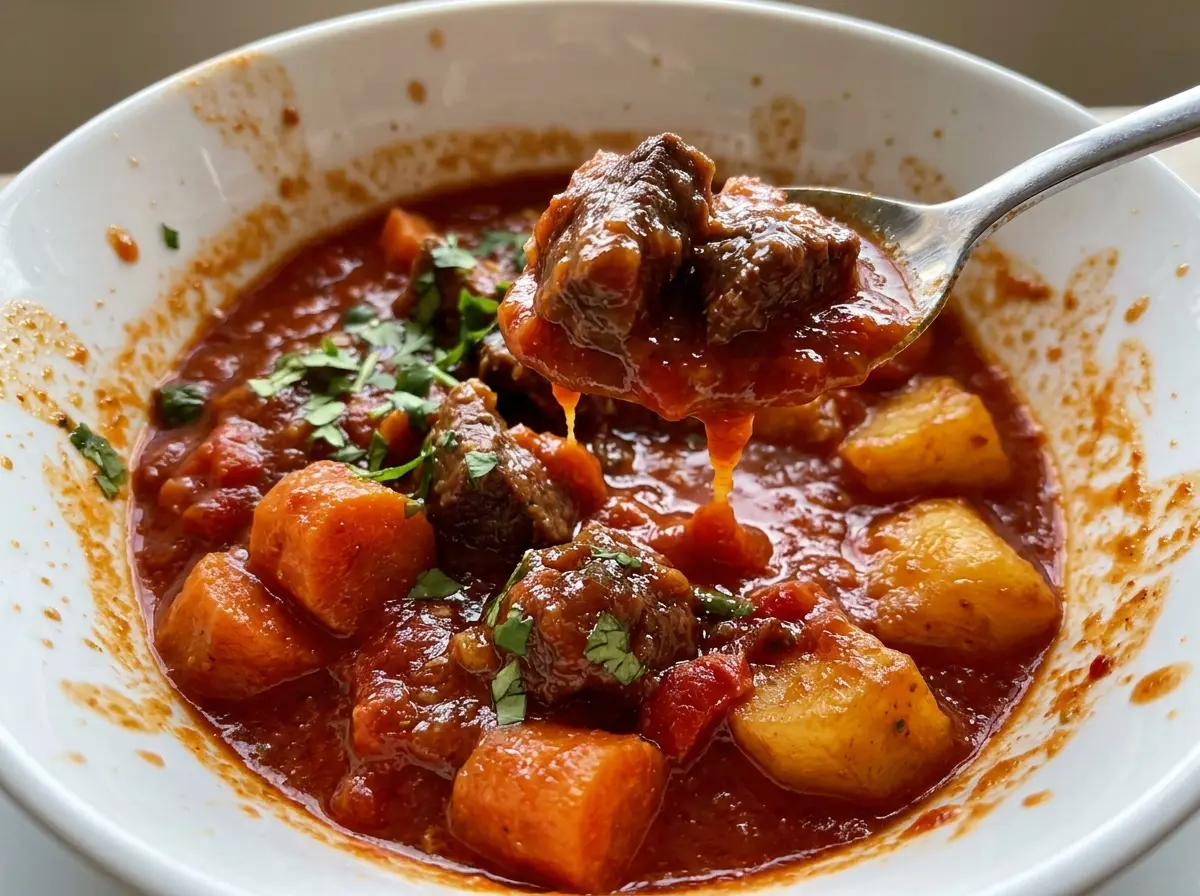
When the beef hits the Dutch oven, it needs room to brown; meanwhile, the tomato mixture needs its own time in the pot before the meat goes back in. That order gives African Beef Stew a thick, savory base instead of a loose tomato broth. I season the chuck first, blend the vegetables smooth, and set the browned pieces aside while the sauce cooks down.
Garlic and fresh ginger go into the pot for just 30 seconds, enough to smell fragrant without letting the garlic turn bitter. Curry powder and thyme then season the reduced tomatoes, and the beef slowly simmers in that concentrated mixture with broth and a bay leaf. The chuck turns tender as the sauce settles around each piece, rich with tomato and a measured warmth from the habanero.
Kitchen Note
Brown the chuck in batches, and let each side stay against the pot for the full 3 to 4 minutes. Moving the pieces too soon keeps those deep brown patches from forming.
Save African Beef Stew for a slow-simmered dinner with fork-tender chuck and a thick, warmly spiced tomato sauce.
Why the Tomato Base Gets Its Own Head Start
The tomatoes, onion, bell pepper, and habanero are blended before they ever meet the beef. Cooking that smooth mixture uncovered first gives its extra moisture a chance to evaporate. The sauce becomes thicker and more concentrated before broth enters the pot, so it can cling to the beef instead of staying thin.
That reduction is also where the seasonings settle in. Curry powder and dried thyme cook with the tomatoes for the full reduction, rather than being added at the end as a surface seasoning. Stir often and pay attention as the mixture thickens; a loose, watery sauce needs more time in the pot before you add the beef and broth. This separate stage makes the long braise work in your favor: the chuck gets tender in a base that already tastes rounded and full.
What the Beef, Tomatoes, and Habanero Bring to the Pot

- Beef chuck — Chuck has enough connective tissue to become tender during the covered simmer, while leaner cuts are more likely to turn dry before they soften. Cut the beef into similarly sized cubes so they cook at about the same pace. Beef shoulder is a close braising substitute if chuck isn’t available.
- Whole peeled tomatoes — The tomatoes and their juices make the body of the sauce, and blending them with the vegetables gives it a smooth texture. Canned whole peeled tomatoes are an easy, dependable choice; crushed tomatoes work too, though they start with a more uniform texture.
- Red bell pepper and yellow onion — These blend into the tomato base and round out its sharper acidity. A fresh, firm pepper is worth choosing because it contributes both flavor and body; a white onion can stand in for yellow, with a slightly sharper edge.
- Habanero — Removing the stem and seeds keeps the pepper’s fruity heat in the stew without using its seeds. Scotch bonnet is the closest flavor-and-heat swap, while leaving the pepper out makes a noticeably milder pot.
- Fresh garlic and ginger — Freshly minced garlic and finely grated ginger bring a bright, aromatic lift to the long-cooked sauce. Fresh ginger has a cleaner bite than dried ground ginger, and grating it finely helps it disappear into the base.
- Curry powder and dried thyme — Curry powder varies from brand to brand, so use one whose aroma you enjoy; the blend is a central seasoning here. Dried thyme is convenient and holds up well through the long simmer, so there’s no need to seek out a specialty version.
- Beef broth — Broth loosens the reduced tomato mixture enough to braise the chuck gently and adds a savory note. A gluten-free beef broth is the direct replacement if you’re cooking for someone who needs to avoid gluten.
From Browning the Chuck to a Slow, Gentle Braise
Season the Beef and Blend the Vegetables
Season the beef cubes with kosher salt and black pepper. Blend the whole peeled tomatoes with their juices, quartered onion, quartered red bell pepper, and stemmed, seeded habanero until smooth. A few seconds longer in the blender is better than leaving large pieces of pepper or onion behind. Keep the blended mixture ready while you brown the beef.
Brown the Chuck in Batches
Heat 2 tablespoons of vegetable oil in a 6-quart Dutch oven over medium-high heat. Brown the beef in batches, turning as needed, for about 3 to 4 minutes per side, then transfer it to a plate. Look for browned surfaces rather than a gray, steamed appearance. Add the remaining tablespoon of oil after the last batch is out.
Cook the Aromatics and Reduce the Tomato Mixture
Lower the heat to medium, add the minced garlic and grated ginger, and stir for 30 seconds. Stir in the blended vegetables, curry powder, and dried thyme. Cook uncovered for 20 to 25 minutes, stirring often, until the mixture is thick and reduced. If the bottom starts to catch, stir well before it scorches and keep a close eye on the pot.
Simmer Until the Beef Turns Fork-Tender
Return the beef and any juices from the plate to the Dutch oven, then stir in the beef broth and bay leaf. Bring everything to a gentle simmer, cover, and cook over low heat for 1 1/2 to 2 hours, stirring every 30 minutes. Keep the heat low enough for a gentle simmer rather than a hard boil; the beef is ready when a fork slides in easily. Remove and discard the bay leaf before serving.
How to Adjust the Heat and Make a Gluten-Free Pot
A Milder Habanero-Free Stew
Leave out the habanero when you blend the vegetables. The sauce keeps its tomato, onion, and bell pepper base but loses the pepper’s fruity heat, making this the simplest way to serve a gentler version.
A Hotter, More Direct Chile Kick
For more heat, blend the habanero without removing its seeds. The pepper’s spice comes through more strongly, so this version is best for people who already enjoy a pronounced chile burn.
A Gluten-Free Version
Replace the beef broth with the same amount of gluten-free beef broth. It keeps the stew’s savory braising liquid intact without changing the method or the tomato-and-spice flavor.
Storage and Reheating
- Refrigerator: Store the cooled stew in a covered container for 3 to 4 days. The sauce thickens as it chills, and the beef may feel firmer straight from the refrigerator.
- Freezer: Freeze cooled portions in airtight, freezer-safe containers for up to 2 to 3 months for best quality. Leave a little room at the top, since the sauce expands as it freezes.
- Reheating: Warm it gently on the stovetop, stirring, until it reaches 165°F; add a small splash of beef broth if the chilled sauce is too thick. Avoid a hard boil, which can make the beef feel stringy.
Questions That Come Up While This Stew Simmeres
African Beef Stew
Ingredients
Equipment
Method
- Season the beef with the salt and the black pepper.
- Blend the tomatoes with their juices, onion, bell pepper, and habanero until smooth.
- Heat 2 tablespoons of the oil in a 6-quart Dutch oven over medium-high heat. Brown the beef in batches, turning as needed, about 3 to 4 minutes per side; transfer the browned beef to a plate.
- Add the remaining 1 tablespoon oil to the pot, lower the heat to medium, and cook the garlic and ginger for 30 seconds, stirring.
- Stir in the tomato mixture, curry powder, and thyme. Cook uncovered, stirring often, for 20 to 25 minutes, until the mixture is thick and reduced.
- Stir in the beef and any juices, broth, and bay leaf; bring to a gentle simmer. Cover and simmer over low heat for 1 1/2 to 2 hours, stirring every 30 minutes, until the beef is fork-tender.
- Remove and discard the bay leaf before serving.


