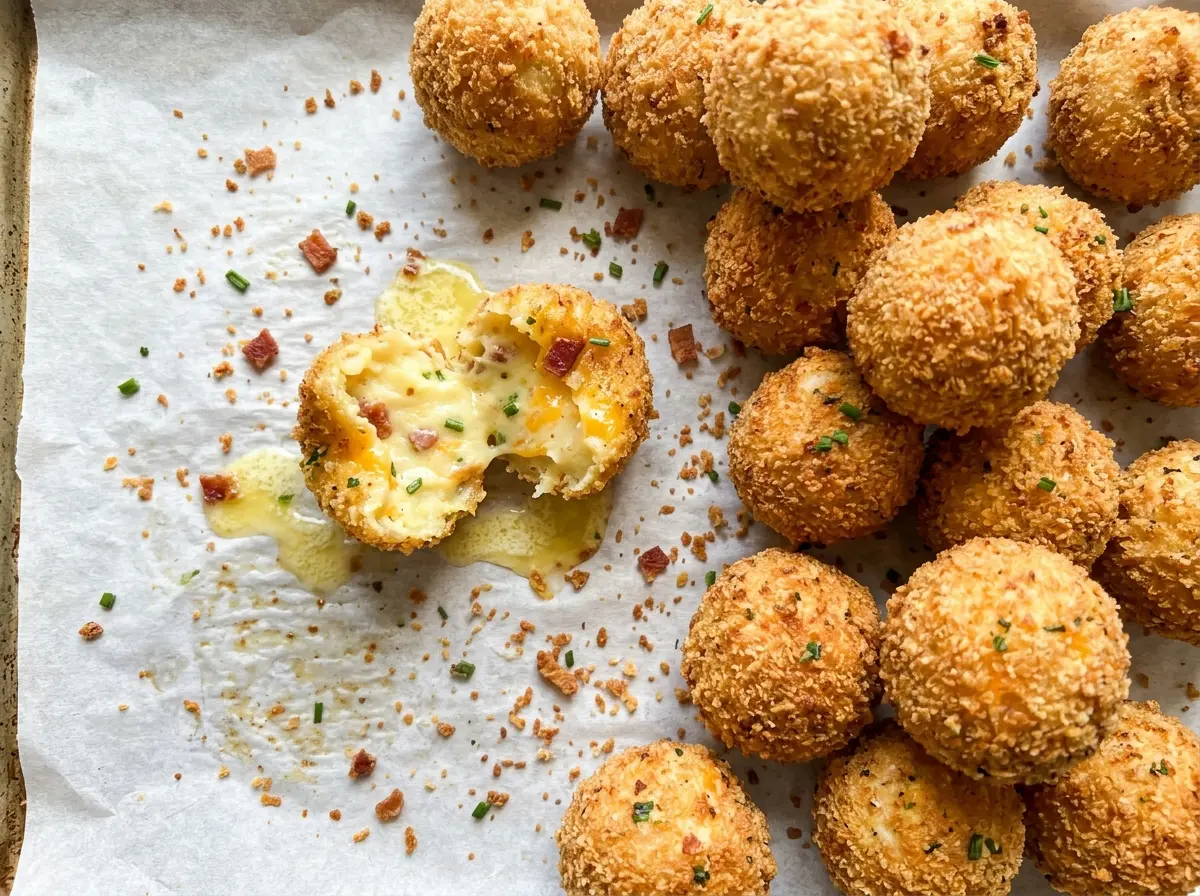
When a fork sinks easily into a baked russet, the inside is soft enough to mash but still dry enough to hold its shape. That balance is what makes these twice baked potato butter balls work: they’re creamy in the middle, wrapped in crisp panko, and easy to pick up once they’ve rested. I like them for the way they turn familiar twice-baked potato flavors into little golden bites.
The potatoes bake first, then get mashed with butter, sour cream, cheddar, and scallions. After the mixture cools, an egg helps bind it, and a short chill firms it up before rolling. That cooling time gives you a mixture that’s much easier to handle than warm mashed potatoes. Each ball gets dipped in egg, coated in panko, and brushed with melted butter before it goes into a hot oven. Look for a browned, crunchy outside and a tender center.
Kitchen Note
Give the potato mixture its full chill before rolling. It should feel firm when you scoop it, not slump off the spoon; that makes shaping all 24 balls much less messy.
Save these twice baked potato butter balls for a party platter or a snack with a crunchy panko shell and a cheesy potato center.
Why Baked Russets Make Better Potato Balls Than Boiled Ones
These bites need a mashed potato base that’s soft enough to mix but not waterlogged. Baking the russets keeps extra cooking water out of the flesh. That matters once the sour cream, butter, cheese, and egg go in: a wetter mixture is harder to shape and more likely to lose its rounded form as it bakes.
Russets are also a good fit because their fluffy, starchy interiors mash easily. You want the potato mixture combined, not whipped smooth. Overworking it releases more starch and can turn a light filling gluey. The finished mixture should still look like mashed potatoes, with the cheddar and scallions distributed through it, rather than a stretchy paste. Using the oven for the potatoes takes longer than boiling, but it gives you a steadier starting point for shaping neat, crisp-coated bites.
Why Russets, Sharp Cheddar, and Panko Each Matter Here

- Russet potatoes — Their dry, fluffy flesh makes a sturdy base for shaping. Choose potatoes that feel firm and aren’t shriveled; there’s no need to seek out specialty produce. Scrub and dry them before baking, and discard the skins after scooping so the filling stays smooth enough to roll.
- Unsalted butter and sour cream — Butter adds richness, while sour cream gives the filling its tang and creamy texture. Regular full-fat sour cream works well here; plain full-fat Greek yogurt is a practical swap, though it tastes tangier and makes the mixture a little thicker. Unsalted butter lets the kosher salt season the potatoes without guessing how salty a salted-butter brand might be.
- Sharp cheddar — Sharp cheddar brings a clear cheese flavor that doesn’t disappear into the potatoes. A block you shred yourself melts readily, but packaged shredded cheddar is convenient and works in this mixture. Monterey Jack can replace it for a milder, softer cheese note.
- Scallions — Thin slices spread their mild onion flavor through the filling without needing to cook them first. Pick firm scallions with fresh-looking green tops and slice them thinly so no large pieces interfere with rolling.
- Eggs and panko — The egg stirred into the potato mixture helps hold the filling together, while the second beaten egg gives the crumbs something to cling to. Panko makes a lighter, craggier shell than fine breadcrumbs. For a gluten-free batch, use gluten-free panko in the same way; the crust may be a little different in texture.
From Baked Potato to Crisp, Golden Bites
Bake the russets until completely tender
Heat the oven to 400°F. Pierce the scrubbed, dried potatoes several times with a fork, set them on an 18×13-inch rimmed baking sheet, and bake for 55 to 70 minutes. A knife should slide easily into the centers; if it meets resistance, the potatoes need more time. Let them cool until easy to handle, about 15 minutes, then halve them lengthwise and scoop the flesh into a 3-quart mixing bowl. Discard the skins.
Mash gently and let the mixture cool
Add 4 tablespoons of butter, the sour cream, cheddar, scallions, kosher salt, and black pepper to the potato flesh. Mash just until everything is combined and stop before the mixture turns gluey. Let it cool to room temperature, about 15 minutes, before adding the egg. That pause keeps the egg from going into hot potatoes.
Bind the filling and chill it firm
Stir one egg into the cooled potato mixture until it’s evenly combined. Cover the bowl and refrigerate the filling for 30 minutes. It should be firm enough to scoop and roll without sticking heavily to your hands. Chilling the mixture gives you a cleaner shape and makes coating each ball easier.
Coat each ball and bake until golden
Heat the oven to 425°F and line the same baking sheet with parchment paper. Beat the remaining egg in one shallow bowl and put the panko in another. Scoop the mixture into 24 portions of about 2 tablespoons each, roll them into balls, dip each one in egg, then roll it in panko, pressing gently so the crumbs adhere. Melt the remaining 2 tablespoons of butter and lightly brush it over the coated balls. Bake for 18 to 24 minutes, until golden brown and the centers reach 160°F, then let them rest on the baking sheet for 5 minutes before serving.
Easy Swaps for a Different Batch
Make the coating gluten-free
Replace the regular panko with gluten-free panko, keeping the same coating method. You’ll still get a crisp shell, though the crumb size and browning can vary by brand.
Go milder with Monterey Jack
Use Monterey Jack in place of the sharp cheddar for a gentler cheese flavor and a softer, creamier feel in the filling. The potato balls will lose some of cheddar’s bite, but the swap works with the same mixing and baking method.
Storage and Reheating
- Refrigerator: Store baked potato balls in an airtight container for up to 3 to 4 days. The panko softens in the fridge, but the centers stay creamy.
- Freezer: Once cooled, freeze them in a single layer until firm, then transfer to an airtight freezer container for up to 2 months for best quality.
- Reheating: Warm them in a 350°F oven until the centers reach 165°F. The oven helps crisp the coating again; microwaving is quicker but leaves the panko soft.
Questions About Twice Baked Potato Butter Balls
Twice Baked Potato Butter Balls
Ingredients
Equipment
Method
- Heat the oven to 400°F.
- Pierce the potatoes several times with a fork and place them on an 18x13-inch rimmed baking sheet.
- Bake for 55 to 70 minutes, until a knife slides easily into the centers.
- Let the potatoes cool until easy to handle, about 15 minutes.
- Halve the potatoes lengthwise and scoop the flesh into a 3-quart mixing bowl; discard the skins.
- Add 4 tablespoons of the butter, the sour cream, sharp cheddar cheese, scallions, kosher salt, and black pepper to the potatoes.
- Mash until combined but not gluey.
- Let the mixture cool to room temperature, about 15 minutes.
- Stir in 1 egg until evenly combined.
- Cover and refrigerate for 30 minutes, until firm.
- Heat the oven to 425°F and line the same baking sheet with parchment paper.
- Beat the remaining egg in a shallow bowl.
- Put the panko in a second shallow bowl.
- Scoop the potato mixture into 24 portions, about 2 tablespoons each, and roll into balls.
- Dip each ball in the beaten egg, then roll in the panko, pressing gently so the crumbs adhere; arrange on the baking sheet.
- Melt the remaining 2 tablespoons butter and lightly brush it over the coated balls.
- Bake for 18 to 24 minutes, until golden brown and the centers reach 160°F.
- Let the potato balls rest on the baking sheet for 5 minutes before serving.


