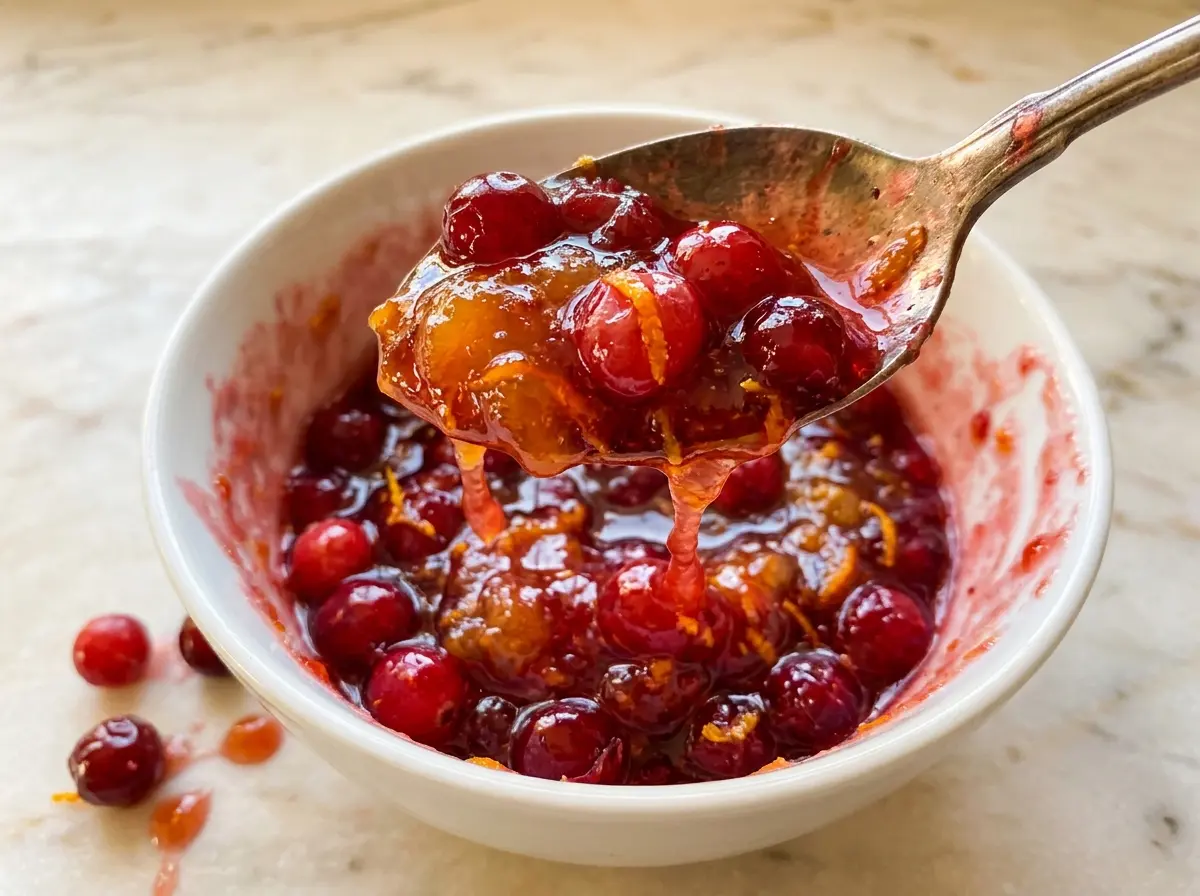
When the first cranberries split, the liquid in the pan turns ruby red, but it still looks too loose to be sauce. I used to keep simmering while I waited for a jammy texture; the berries can go too far before that happens. Now I stop when most have burst and the mixture has thickened, then let cooling finish the job. This cranberry sauce with orange marmalade has a bright, tart base and little pieces of citrus peel in every spoonful.
The marmalade goes in after the saucepan comes off the heat, so its orange flavor stays distinct instead of blending into the cranberry base. There’s no need for a fancy jar; a standard orange marmalade gives you the sweetness and peel this sauce needs. After a short rest, it’s glossy, spoonable, and ready for the table.
Kitchen Note
I set the marmalade out before the cranberries go into the pan. Once the saucepan comes off the heat, the marmalade stirs in quickly; adding it while the mixture is bubbling can dull its fresh orange lift.
Save this cranberry sauce with orange marmalade for a bright, tart side with a citrusy finish and a soft, spoonable texture.
Why Cranberry Sauce Looks Loose Before It Cools
A pot of cranberry sauce can look thinner than you expect right at the end of cooking. That’s not a reason to keep reducing it until it resembles jam. Cranberries release juice as they burst, and their natural pectin helps the mixture thicken as it cooks and cools. The finished sauce will be looser in the hot saucepan than it is after resting.
Use the simmering stage to develop the sauce, not to force it to its final chilled texture. Most of the berries should have popped, and the liquid should look thicker than it did at the start. A few whole cranberries are fine; they add little pockets of tartness and make the sauce feel homemade. If you cook until every berry disappears, you lose that contrast and risk ending up with a denser sauce. Let the pan cool for at least 30 minutes before serving, and judge the consistency then.
The Cranberries and Marmalade Set the Sweet-Tart Balance
- Fresh cranberries — Pick through them for soft or damaged berries, then rinse them before they go into the saucepan. A standard bag works well; there’s no advantage to paying extra for uniform-looking berries. Frozen cranberries are a practical substitute: use the same weight straight from the freezer rather than thawing them first. They may need a little extra time to soften, so follow the burst-and-thickened cues.
- Granulated sugar — Plain granulated sugar dissolves cleanly and sweetens the sharp berries without competing with the orange. A store-brand bag is perfectly suited here. Light brown sugar is another workable option if you want a warmer, molasses-like note; the variation below explains the swap.
- Orange marmalade — Marmalade brings both orange flavor and pieces of peel, which keep the finished sauce from tasting like cranberry alone. A regular grocery-store jar is fine; choose one with peel you enjoy eating. Seville-style orange marmalade can replace it measure for measure for a more bitter, pronounced citrus finish.
From the First Berry Pop to the Marmalade Finish
Combine the Cranberries and Sweetener
Put the rinsed cranberries, water, sugar, and salt in a 2-quart saucepan. Set it over medium-high heat and bring the mixture to a boil. The cranberries will begin to swell and pop as the liquid heats. Stay nearby so you can lower the heat as soon as it reaches a boil.
Simmer Until Most Berries Burst
Reduce the heat and simmer for 10 to 12 minutes, stirring occasionally. You’ll hear the berries pop and see the liquid turn a deep, glossy red. Stop when most of the cranberries have burst and the sauce has thickened; a few whole berries are expected. If the mixture still looks thin, use the visual cues rather than boiling it hard.
Stir in the Orange and Let It Rest
Take the saucepan off the heat before stirring in the orange marmalade. Stir until the marmalade is evenly distributed, including the pieces of peel. Leave the sauce to cool for at least 30 minutes before serving. It will continue to thicken as it rests, so don’t try to judge its final texture while it’s piping hot.
Small Changes That Shift the Sauce Without Losing Its Character
Use Light Brown Sugar for a Warmer Finish
Replace the granulated sugar with the same amount of light brown sugar. The sauce will taste a little rounder, with a faint molasses note, and its color will deepen slightly. This is a good choice when you want the orange to feel less sharp against the cranberries.
Choose Vegan-Certified Granulated Sugar
For a vegan version, use vegan-certified granulated sugar in place of the regular granulated sugar, keeping the same amount. The sauce keeps its familiar sweet-tart taste and sets the same way; this swap is about choosing a sugar that fits your dietary needs.
Make a Smaller Batch
Halve each ingredient for a smaller yield and cook it in the same 2-quart saucepan. The smaller amount may reach the thickened stage sooner, so watch for most berries to burst instead of relying on the full-batch timing. This keeps the same flavor balance without leaving you with more sauce than you need.
Storage and Reheating
- Refrigerator: Keep the cooled sauce in a covered container for 3 to 4 days. It will firm up as it chills.
- Freezer: Freeze in an airtight freezer-safe container for up to 2 months. Thaw it in the refrigerator before serving or reheating.
- Reheating: Warm it gently in a saucepan over low heat, stirring occasionally. Avoid a hard boil, which can make the sauce splatter and cook down further.
Questions That Come Up When the Berries Start Popping
Cranberry Sauce with Orange Marmalade
Ingredients
Equipment
Method
- Combine the cranberries, water, sugar, and salt in a 2-quart saucepan.
- Bring to a boil over medium-high heat, then reduce the heat and simmer for 10 to 12 minutes, stirring occasionally, until most of the cranberries have burst and the sauce has thickened.
- Remove the saucepan from the heat.
- Stir in the orange marmalade.
- Let the sauce cool for at least 30 minutes before serving.


