The flour-coated beef should sizzle as it hits the Dutch oven, not quietly simmer in its own juices. I brown it in batches so each piece gets color on more than one side; those browned edges give this spezzatino Italian beef stew a deeper start before the long simmer begins.
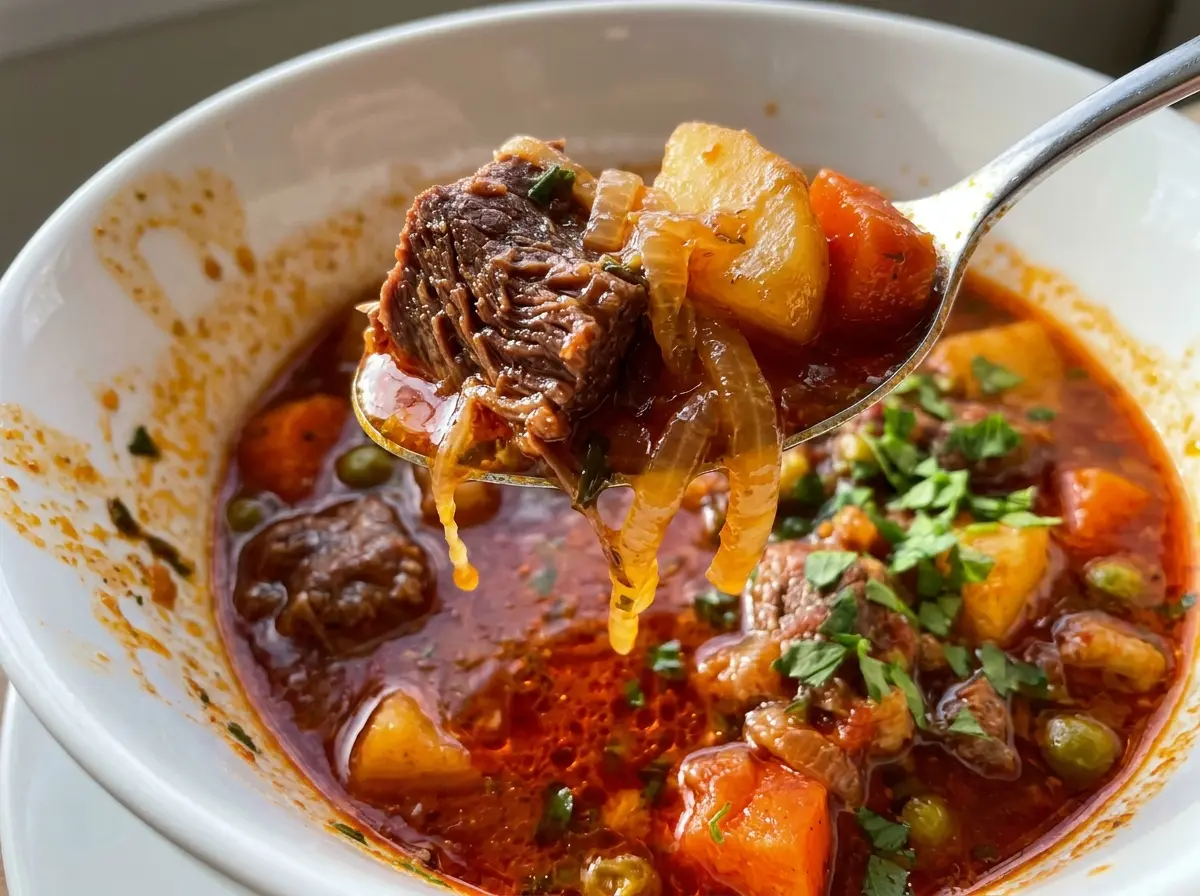
Chuck is a good fit for a stew that spends nearly two hours on the stove: it needs that time to soften, and the potatoes go in later so they don’t cook through before the beef is ready. I keep the simmer low and covered, then judge the finish by the fork, not just the clock. The result is tender beef and potatoes in a savory tomato-and-wine broth.
Kitchen Note
When the beef is beginning to soften, that’s the moment to add the potatoes—not at the start of the simmer. Give them their own covered stretch in the broth, and use a fork to check both the beef and potatoes before calling the stew done.
Save this spezzatino Italian beef stew for a slow-simmer dinner with fork-tender chuck, potatoes, and a tomato-wine broth.
The Wine Needs Those Brown Bits Before the Broth Goes In
The fond on the bottom of the pot is concentrated flavor, and the wine has a specific job before it joins the broth: loosen that fond. After the tomato paste cooks briefly with the vegetables, pour in the wine and scrape the bottom as it simmers. You’ll see the browned spots release into the liquid, turning it darker and giving the stew a more developed base.
Let the wine simmer for its full couple of minutes before adding the broth and tomatoes. That short pause lets the wine’s sharp, raw edge mellow while the liquid reduces slightly. If you pour everything in together, the browned bits are harder to lift cleanly and the wine doesn’t get that brief head start. A dry red wine works best here; a sweet wine would push the broth in a different direction. You don’t need an expensive bottle, just one dry enough to drink and one you’d be happy to use in a pot of stew.
Why Chuck and Yukon Golds Suit This Long Simmer
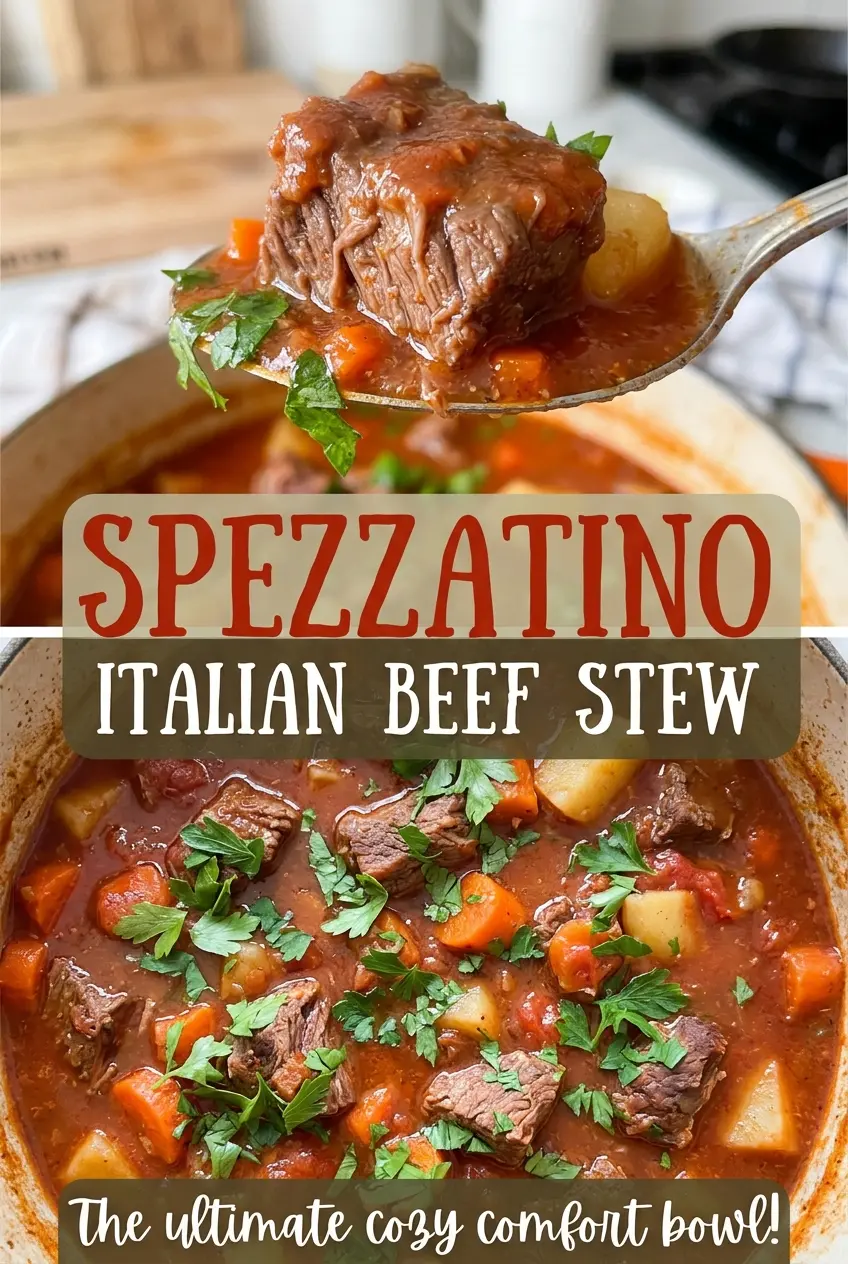
- Beef chuck — Its connective tissue gradually softens during the covered simmer, giving the stew tender pieces and body in the broth. Choose chuck cut into evenly sized pieces; very lean beef won’t turn as tender during this long cook. Beef shoulder is the closest practical substitute, cut to the same size, though tenderness still depends on the cut.
- All-purpose flour — The coating helps the beef brown and gives the cooking liquid a little body as it simmers. A cup-for-cup gluten-free flour blend can stand in at the same amount; choose one intended to replace all-purpose flour, since a single starch won’t coat the beef in quite the same way.
- Dry red wine and tomato paste — The wine loosens the browned bits, while tomato paste gives the broth a more rounded tomato base. Use a basic dry red wine rather than a sweet one. For a wine-free pot, beef broth is the closest swap, though the broth will have less of the wine’s acidity and depth.
- Yukon Gold potatoes — They hold their shape well through the final simmer while becoming tender inside. Red potatoes are a useful swap; cut them to the same size and add them at the same point. Russets tend to break down more, so the broth will turn starchier.
- Onion, carrots, celery, and garlic — These make the aromatic base, and even cuts help them soften together. Fresh garlic gives the clearest flavor here; chop the onion and cut the carrots and celery into similar-sized pieces so they cook evenly.
Build the Pot in Layers, Then Give the Chuck Time
Coat and Brown the Beef
Toss the beef with the salt and pepper, then coat it evenly with flour in a large bowl. Heat 2 tablespoons of olive oil in a 6-quart Dutch oven over medium-high heat. Brown the beef in batches for 2 to 3 minutes per side, transferring each batch to a plate; the pieces should show browned patches rather than look gray and wet. Crowding the pot makes it harder to brown the beef, so give each batch room.
Soften the Vegetables and Tomato Paste
Add the remaining tablespoon of olive oil, then stir in the onion, carrots, and celery. Cook over medium heat for 6 to 8 minutes, stirring occasionally, until the vegetables have softened. Stir in the garlic and tomato paste and cook for 1 minute. Keep the garlic moving through the vegetables so it cooks briefly without catching on the hot pot.
Deglaze and Start the Covered Simmer
Pour in the red wine and scrape the bottom of the Dutch oven to loosen the browned bits. Simmer for 2 to 3 minutes, then add the beef broth, diced tomatoes, thyme, bay leaf, browned beef, and any juices from the plate. Bring the pot to a gentle simmer, cover it, and cook over low heat for 1 3/4 to 2 hours, stirring occasionally. At this point, the beef should be beginning to soften, not necessarily fork-tender yet.
Add the Potatoes for the Finish
Stir in the potatoes, cover the pot again, and simmer for 35 to 45 minutes. The potatoes should be tender when pierced, and the beef should yield easily to a fork. If the beef still feels firm, continue simmering in 10-minute increments until it’s tender. Keep the heat low enough for a gentle simmer while the potatoes cook.
Swaps That Change the Stew Without Losing Its Shape
Make the Coating Gluten-Free
Replace the all-purpose flour with the same amount of cup-for-cup gluten-free flour blend. Coat and brown the beef the same way; the finished broth may be a little less thick, but the stew keeps its familiar structure.
Skip the Wine
Use an equal amount of beef broth in place of the red wine and scrape the pot as it simmers. The stew will still have a savory base, but it will lack the wine’s slight acidity and layered flavor.
Use Red Potatoes Instead
Swap in red potatoes, cut into the same 1-inch pieces and added at the same point. They hold together well, with a slightly firmer, waxier bite than Yukon Golds.
Storage and Reheating
- Refrigerator: Refrigerate leftovers in shallow, covered containers within 2 hours and use them within 3 to 4 days. The potatoes soften as they sit in the broth.
- Freezer: Freeze in airtight portions for up to 3 months for best quality. The potatoes may be softer after thawing, but the stew freezes well overall.
- Reheating: Warm gently on the stovetop, stirring carefully, until the stew reaches 165°F. Avoid a hard boil, which can break the potatoes apart.
Questions That Come Up While the Stew Simmer
Spezzatino Italian Beef Stew
Ingredients
Equipment
Method
- In a large bowl, toss the beef with the salt and pepper.
- Coat the seasoned beef evenly with the flour.
- Heat 2 tablespoons of the olive oil in a 6-quart Dutch oven over medium-high heat.
- Brown the beef in batches for 2 to 3 minutes per side, then transfer it to a plate.
- Add the remaining 1 tablespoon olive oil, onion, carrots, and celery to the pot and cook over medium heat for 6 to 8 minutes, stirring occasionally, until softened.
- Stir in the garlic and tomato paste and cook for 1 minute.
- Pour in the wine and scrape up the browned bits from the bottom of the pot.
- Simmer for 2 to 3 minutes.
- Add the beef broth, diced tomatoes, thyme, bay leaf, browned beef, and any accumulated juices, then bring to a gentle simmer.
- Cover and simmer over low heat for 1 3/4 to 2 hours, stirring occasionally, until the beef is beginning to soften.
- Stir in the potatoes, cover, and simmer for 35 to 45 minutes, until the potatoes are tender and the beef is fork-tender.
- If needed, continue simmering in 10-minute increments until the beef is tender.


