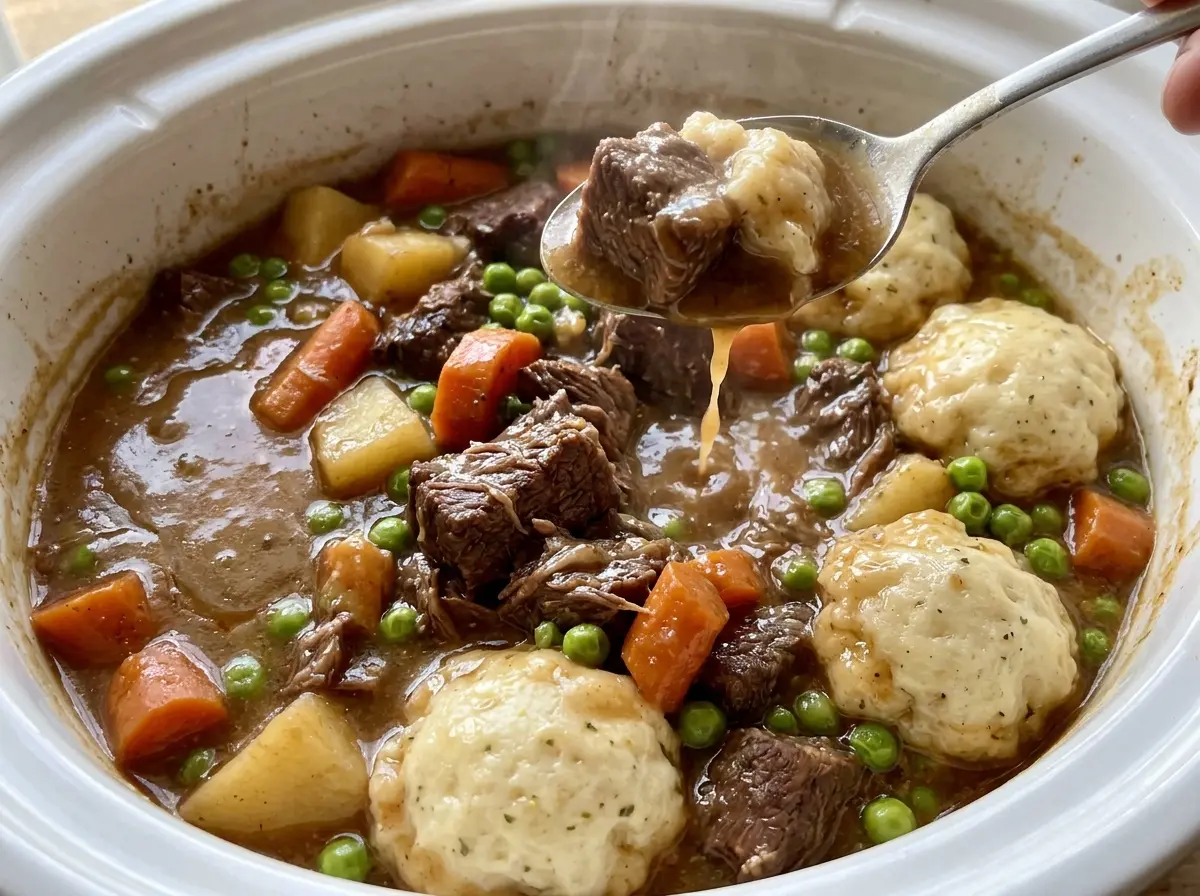
The beef should sizzle as soon as it hits the skillet; if it sits quietly in a puddle of moisture, the pieces are too crowded or the pan isn’t hot enough. I brown it in batches before it goes into the slow cooker, which gives the broth a deeper, more savory start than beef cooked straight in the pot. This slow cooker beef stew and dumplings is the sort of dinner where the stew simmers away while the vegetables soften and the beef turns fork-tender.
The dumplings cook right on top, so there’s no second pot to manage. They’re mixed just until a soft dough forms, then gently placed over the finished stew to cook in the slow cooker’s trapped steam. The result is a thick, hearty bowl with tender beef underneath and soft dumplings on top.
Kitchen Note
Use beef that’s completely thawed before it goes into the skillet. Frozen meat releases moisture and cools the pan, so it steams instead of developing the browned crust that gives the stew its deeper flavor.
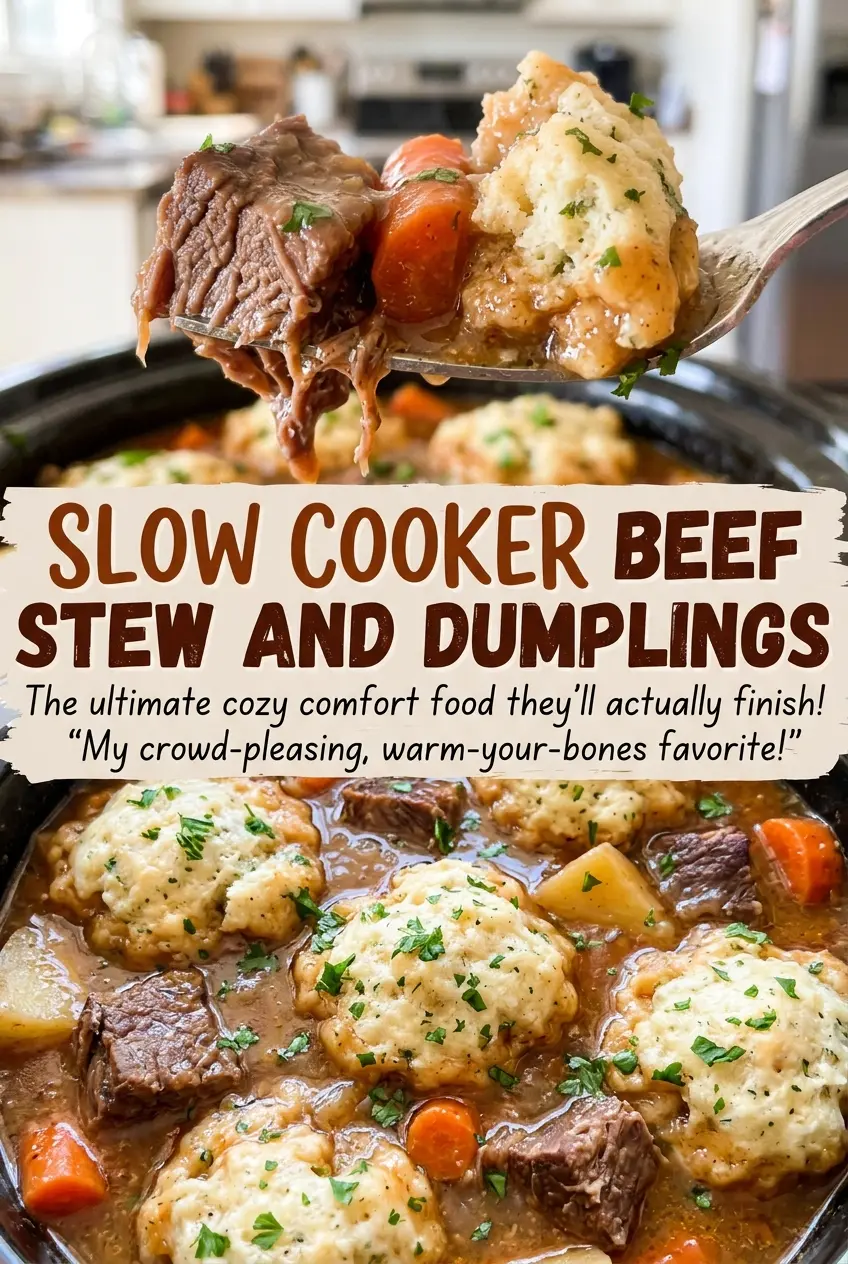
Save this slow cooker beef stew and dumplings for a cozy dinner with fork-tender beef and soft dumplings cooked right on top.
Why the Dumplings Sit Above the Stew Instead of Disappearing Into It
These dumplings aren’t boiled in the broth or baked in a separate dish. They rest on top of the stew, where the slow cooker’s moist heat cooks the dough gently while the beef and vegetables stay underneath. That placement matters: dough stirred into the liquid can break apart and leave you with a cloudy, heavy stew instead of distinct dumplings.
Think of the dumplings as a soft lid over the stew, not a second layer of vegetables. They need enough room to cook through, so I drop the dough in separate mounds rather than spreading it across the surface. As they set, the bottoms pick up a little of the stew’s savory flavor while the tops stay tender. They won’t have the browned crust of oven-baked biscuits, and that’s the point here: you get a pillowy topping without moving the stew out of the slow cooker.
Keeping the dough soft also helps. A firm, kneaded dough makes denser dumplings, while a light hand leaves them tender enough to scoop up with the broth. The dumplings should hold their shape once cooked, but they aren’t meant to be chewy or crisp.
What Chuck, Yukon Golds, and Cold Butter Bring to This Stew
- Beef chuck — Chuck has enough connective tissue and marbling to turn tender during a long, slow cook. Cut the pieces evenly so they cook at a similar pace; a lean steak cut won’t give the broth the same rich body.
- Yukon Gold potatoes — These potatoes keep their shape through the long cook while still becoming creamy at the center. Choose firm potatoes without soft spots; there’s no need to peel them unless you prefer to.
- Low-sodium beef broth and Worcestershire sauce — The broth forms the stew’s base, and Worcestershire adds a rounded, savory note without taking over. Low-sodium broth gives you more control over the salt already added to the beef.
- Frozen peas — They go in near the end, so they keep their color and a little bit of bite instead of turning dull and soft during the long cook. Keep them frozen until you add them.
- Cold butter and baking powder — Small, cold butter pieces leave tender pockets in the dumplings, while baking powder gives the dough lift. Fresh baking powder matters more here than an expensive flour brand; if yours has been open for a long time, replace it for better rise.
- Milk and all-purpose flour — Together they make a soft, scoopable dough. Standard all-purpose flour works well, and the useful prep detail is to stop mixing once the milk disappears and the dough comes together.
From the First Sear to Dumplings That Set on Top
Brown the Beef in Batches
Pat the beef dry and season it with the salt and pepper. Heat the vegetable oil in a 12-inch skillet over medium-high heat, then brown the beef in batches, turning the pieces until several sides are browned, about 3 minutes per batch. If the skillet is crowded, the meat steams and won’t color properly. Transfer each browned batch to a 6-quart slow cooker.
Layer the Vegetables and Start the Slow Cook
Add the diced onion, garlic, carrots, celery, and potatoes to the slow cooker with the beef. Pour in the beef broth and Worcestershire sauce, then add the dried thyme and bay leaf. Cover and cook on LOW for 7 to 8 hours or HIGH for 4 to 5 hours, until the beef is fork-tender and the vegetables are tender. The beef should yield easily when pressed with a fork; don’t judge tenderness by the clock alone.
Thicken the Broth and Add the Peas
Stir the frozen peas into the cooked stew. In a small bowl, whisk the cornstarch with cold water until the mixture is smooth, then stir it into the slow cooker. Set the cooker to HIGH so the broth thickens as the dumplings cook. Whisking the cornstarch with cold water first prevents little dry lumps from getting stirred into the stew.
Mix and Cook the Dumplings
Whisk the flour, baking powder, and salt in a medium bowl, then cut in the cold butter until the pieces are about pea-size. Stir in the milk just until a soft dough forms; stop before it turns elastic or tough. Remove and discard the bay leaf, then drop the dough in 8 mounds over the stew. Cover and cook on HIGH for 45 to 60 minutes without lifting the lid; the dumplings are ready when they feel firm and a toothpick inserted in the center comes out clean.
Simple Swaps That Keep the Stew Comforting
Use red potatoes for a firmer bite
Red potatoes can stand in for the Yukon Golds, cut to the same size. They tend to keep a firmer texture as the stew cooks, so the finished bowl will be a little less creamy around the edges.
Make the dumplings gluten-free
Replace the all-purpose flour with a cup-for-cup gluten-free baking blend that contains xanthan gum, and use gluten-free baking powder, broth, and Worcestershire sauce. The dumplings may be a little more tender and less lofty than the wheat-flour version, but they still make a good topping for the stew.
Trade the peas for frozen green beans
Frozen cut green beans work in place of the peas and can be stirred in at the same point. They bring a more savory, less sweet vegetable note and hold their shape well in the thick broth.
Storage and Reheating
- Refrigerator: Store leftovers in a covered container for 3 to 4 days. The dumplings will absorb broth and soften as they sit.
- Freezer: The stew freezes safely, but the dumplings lose some of their soft, fluffy texture after thawing. Freeze portions in airtight containers for up to 2 to 3 months for best quality.
- Reheating: Warm portions gently in a covered saucepan over low heat, stirring carefully around the dumplings, until the leftovers reach 165°F. Avoid a hard boil, which can break up the dumplings.
Questions That Come Up With Slow Cooker Stew and Dumplings
Slow Cooker Beef Stew and Dumplings
Ingredients
Equipment
Method
- Pat the beef dry; use thawed beef, not frozen.
- Toss the beef with the salt and pepper.
- Heat the oil in a 12-inch skillet over medium-high heat.
- Brown the beef in batches, turning until browned on several sides, about 3 minutes per batch.
- Transfer the browned beef to a 6-quart slow cooker.
- Add the onion, garlic, carrots, celery, and potatoes to the slow cooker.
- Pour in the broth and Worcestershire sauce, then add the thyme and bay leaf.
- Cover and cook on LOW for 7 to 8 hours or HIGH for 4 to 5 hours, until the beef is fork-tender and the vegetables are tender.
- Stir in the peas.
- Whisk the cornstarch and cold water in a small bowl until smooth.
- Stir the cornstarch mixture into the stew and set the slow cooker to HIGH.
- Whisk the flour, baking powder, and salt in a medium bowl.
- Cut in the butter until the pieces are about pea-size.
- Stir in the milk just until a soft dough forms.
- Remove and discard the bay leaf.
- Drop the dough in 8 mounds over the stew.
- Cover and cook on HIGH for 45 to 60 minutes without lifting the lid, until the dumplings are firm and a toothpick inserted in the center comes out clean.


