The yeast mixture is the first little sign that these rolls are on track: active dry yeast turns the warm water foamy before anything else goes into the bowl. Once the dough is mixed, it should feel soft and slightly tacky, not stiff like a firm bread dough. That balance is what gives Texas Roadhouse Rolls their tender middle and golden tops.
I like this recipe because it gives you clear visual cues at every rise. The dough starts with a full rise in the bowl, then gets rolled out and cut before its second rise in the baking pan. Those two rests build a light crumb without asking you to guess when the rolls are ready.
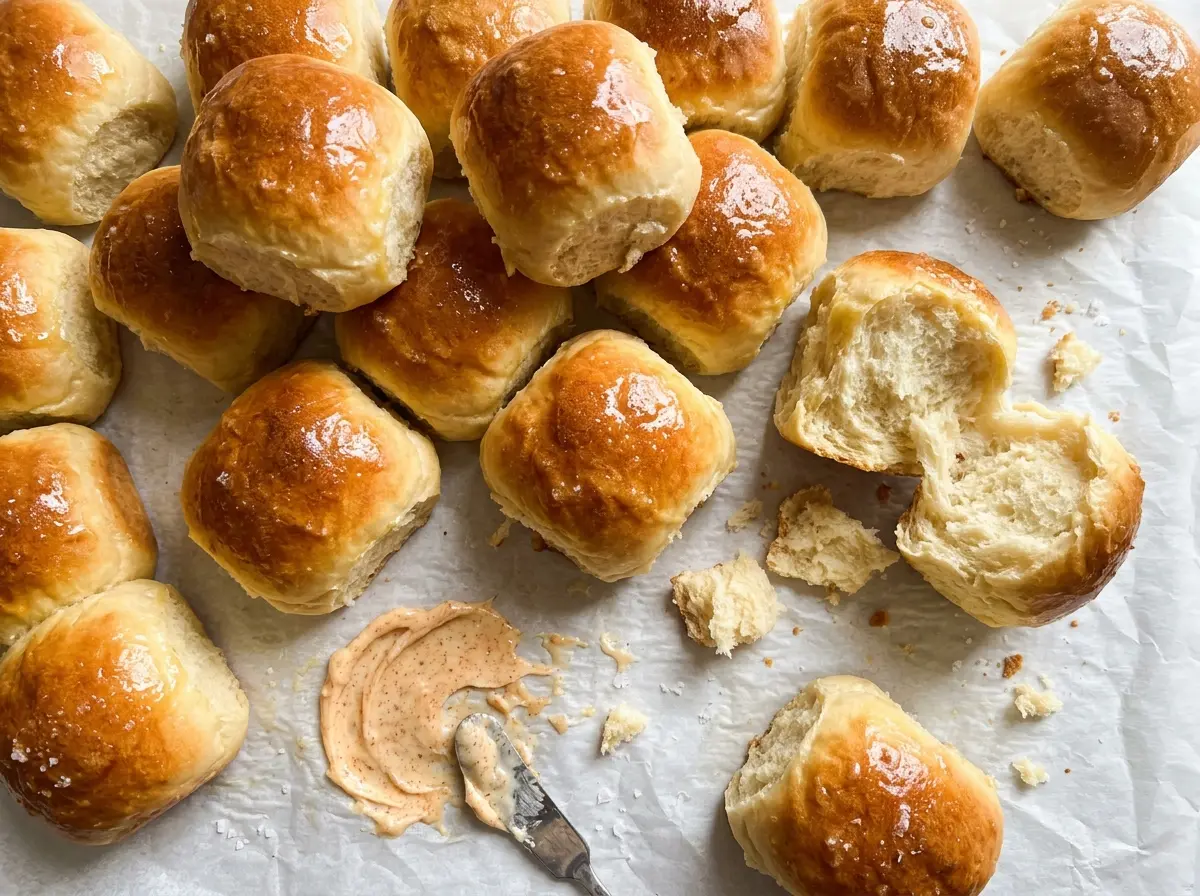
A swipe of melted butter over the hot tops gives them a soft, buttery finish. The cinnamon honey butter is smooth, sweet, and ready by the time the rolls come out warm from the oven.
Kitchen Note
Use a room-temperature egg rather than one straight from the refrigerator. It blends into the warm milk and melted butter more easily, so you won’t have to warm the mixture further just to bring the dough together.
Save these Texas Roadhouse Rolls for soft, buttery centers and a batch of cinnamon honey butter to serve alongside.
Why a 9×13 Pan Gives These Rolls Soft-Sided Centers
These rolls aren’t baked as separate, widely spaced buns. The 9×13-inch pan holds all 16 pieces together, so they rise close to one another and bake with browned tops and softer sides. That contrast is part of what makes them feel like dinner rolls rather than little crusty loaves.
Cutting the dough into 16 portions also keeps the pieces manageable and gives each one room to rise during the second proof. If the rectangle is lopsided, the pieces will vary in size; smaller ones may brown sooner while larger ones need the full bake. Take a moment to roll the dough into an even rectangle before cutting, and the pan will do its part evenly. The goal isn’t a perfectly measured bakery shape. It’s a set of portions close enough in size to puff and color at about the same pace.
That pan-and-portion combination is why I stick with the 9×13-inch size here. A different layout changes how much space the dough has around each piece, which changes the balance of soft sides and golden tops.
How Milk, Egg, and Butter Shape the Tender Crumb

- Active dry yeast — Fresh yeast gives the dough its lift, so check that it foams after standing in warm water and sugar. Instant yeast can work in this dough, but it changes the proofing approach; see the FAQ before swapping it in.
- Whole milk and egg — Together they add richness and help make the crumb tender. Two-percent milk works if that’s what you have, though the rolls will be a little less rich. Keep the egg at room temperature so it blends smoothly with the warm ingredients.
- Unsalted butter — Butter in the dough adds richness, while the separate melted portion brushed over the hot rolls leaves the tops soft and glossy. Unsalted butter keeps the salt level under control; using salted butter will make the rolls taste saltier.
- All-purpose flour — This gives the rolls a soft, familiar texture. Measure without packing it down, and keep the extra dusting flour nearby rather than adding it all at once; too much flour can make the dough firm.
- Honey, powdered sugar, and cinnamon — Honey brings its floral sweetness, powdered sugar makes the butter creamy instead of gritty, and cinnamon gives it its warm finish. A mild honey works well here; a strongly flavored honey will come through more distinctly.
From Foamy Yeast to Golden Tops: The Texture Cues That Matter
Wake the yeast, then bring the dough together
Stir the warm water, active dry yeast, and part of the sugar in a large bowl, then leave the mixture for 5–10 minutes until foamy. If the surface stays flat, don’t move on; the yeast hasn’t shown the activity you’re looking for. Whisk in the warmed milk, egg, remaining sugar, and melted dough butter. Stir in the salt and most of the flour until no dry pockets remain and the dough looks shaggy.
Knead until smooth and elastic
Work in the remaining dough flour by hand and knead for 8–10 minutes. At first the dough will feel rough and cling to your hands, but it should become smoother and stretchier as you knead. The finished dough is slightly tacky, not dry or coated in flour. Use only a light dusting on the work surface if needed; adding too much flour is the easiest way to make the rolls dense.
Give the dough its first rise, then cut the portions
Cover the bowl and let the dough rise in a warm place for 60–90 minutes, until it has doubled in size. Gently punch it down, then roll it on a lightly floured surface into a 9×13-inch rectangle about 1/2 inch thick. Cut the rectangle into 16 pieces and arrange them in the parchment-lined 9×13-inch pan. If the dough springs back as you roll, pause briefly and let it relax before continuing.
Let the pieces puff before baking
Cover the pan and let the rolls rise for 30–45 minutes, until they look puffy; heat the oven to 350°F while they rise. Don’t judge this second rest by the clock alone, since a cooler room slows the dough. Bake for 15–20 minutes, until the tops are golden brown. Melt the butter reserved for brushing and spread it over the rolls while they’re hot.
Beat the cinnamon honey butter until fluffy
Use softened butter, not melted butter, for the spread. Beat it with the honey, powdered sugar, and cinnamon for about 1–2 minutes, stopping when it looks smooth and fluffy with no visible streaks. If the butter is cold and firm, it won’t blend evenly; let it soften before you start. Serve the spread with the warm rolls.
Two Useful Changes for Dairy-Free Rolls or a Less-Sweet Spread
Make the rolls dairy-free
Use unsweetened oat milk in place of the whole milk, and use dairy-free butter in the dough, for brushing, and in the cinnamon honey butter. The rolls will be a little less rich, but the yeast dough still rises and bakes into soft rolls. This change is dairy-free, not egg-free.
Make the cinnamon honey butter less sweet
Use less powdered sugar in the spread and beat it until smooth. The cinnamon and honey will stand out more, and the finished butter will be softer and less thick than the full-sugar version.
Storage and Reheating
- Refrigerator: The rolls don’t need refrigeration; it can dry them out. Keep them airtight at room temperature for up to 2 days.
- Freezer: Freeze fully cooled rolls in an airtight freezer bag for up to 2 months. Thaw at room temperature while still wrapped to help them stay soft.
- Reheating: Warm the rolls briefly in a low oven, or microwave one at a time until just warm. Avoid prolonged heating, which dries the centers.
Questions That Come Up While Making Texas Roadhouse Rolls
Texas Roadhouse Rolls
Ingredients
Equipment
Method
- Stir the warm water, yeast, and 1 tablespoon of the sugar together in a large bowl.
- Let stand for 5–10 minutes, until foamy.
- Whisk in the warm milk, egg, remaining 3 tablespoons sugar, and 1/4 cup melted butter.
- Stir in the salt and 3 1/2 cups flour until a shaggy dough forms.
- Knead in the remaining 1/2 cup flour by hand for 8–10 minutes, until the dough is smooth, elastic, and slightly tacky.
- Cover the bowl and let the dough rise in a warm place for 60–90 minutes, until doubled in size.
- Line a 9x13-inch baking pan with parchment paper.
- Punch down the dough.
- Roll the dough into a 9x13-inch rectangle about 1/2 inch thick on a lightly floured surface.
- Cut the dough into 16 pieces.
- Arrange the pieces in the pan.
- Cover the pieces and let rise for 30–45 minutes, until puffy.
- Meanwhile, heat the oven to 350°F.
- Bake for 15–20 minutes, until golden brown.
- Melt the 1/4 cup butter reserved for brushing.
- Brush the melted butter over the hot rolls.
- Beat the 1/2 cup softened butter reserved for the cinnamon honey butter with the honey, powdered sugar, and cinnamon until smooth and fluffy, about 1–2 minutes.
- Serve with the warm rolls.


