A russet can look soft around the edges while the center is still stubbornly firm. That’s why I don’t judge a microwave baked potato by its skin; I check the middle with a fork. This method gets a fluffy potato on the plate without waiting for the oven to heat, and the timing is easy to remember once you’ve made it.
Turning the potato partway through gives the other side a chance to heat, which helps avoid a hot exterior and a cold spot in the middle. I also keep the simple finish simple: split the potato, fluff the inside, then add unsalted butter and salt while it’s steaming. The result is tender russet flesh with just enough butter to coat every forkful.
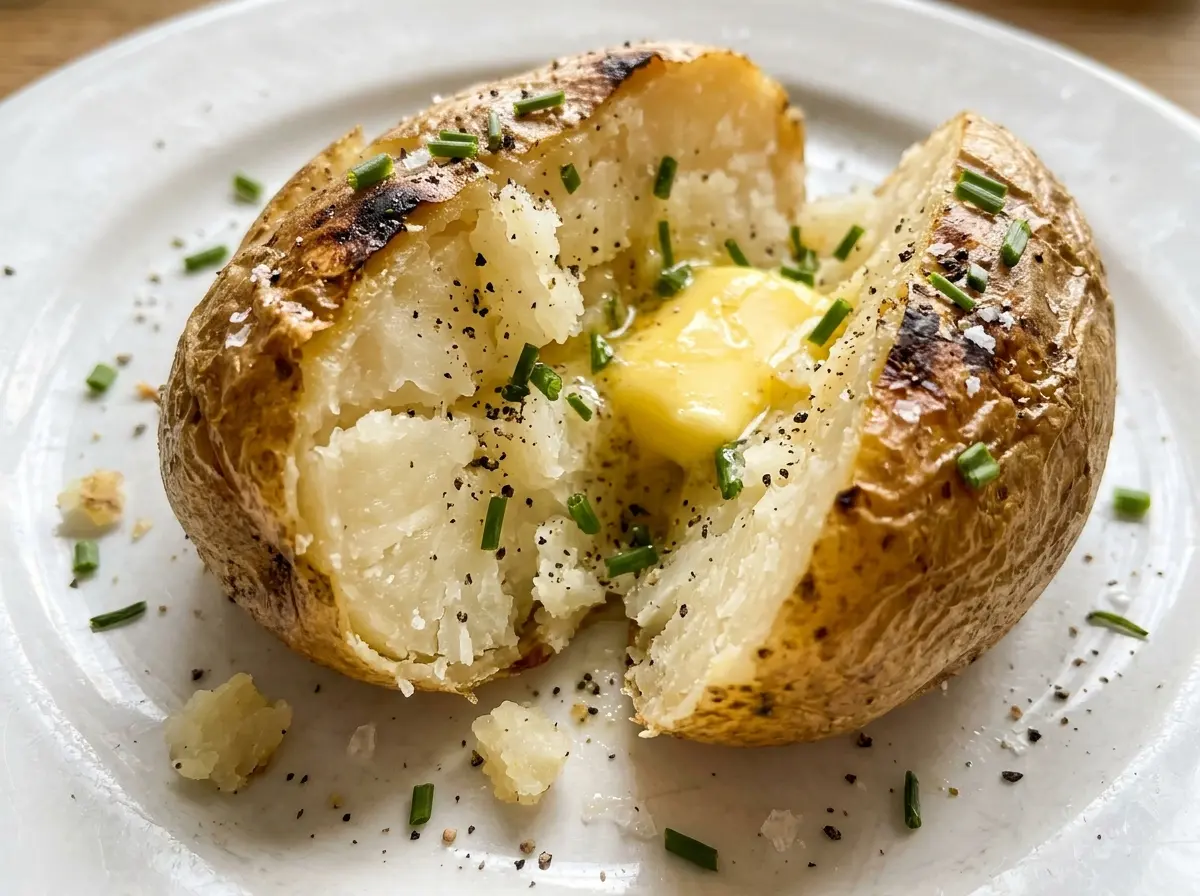
Kitchen Note
The 8-to-10-ounce size matters more than how big the potato looks in your hand. If yours is at the smaller end, start checking for an easy fork slide toward the beginning of the second cooking period.
Save this microwave baked potato for a fluffy, buttery russet when you want a quick single-serving side without turning on the oven.
Why Turning the Potato Halfway Matters More Than Adding Extra Minutes
A microwave doesn’t heat every part of a potato at exactly the same rate. One side may soften before the other, and adding more time without changing the potato’s position can leave the center uneven. Turning it over after the first five minutes gives the opposite side a turn in the stronger part of the microwave’s energy pattern.
That small pause in the cooking sequence is more useful than treating the potato like a timer-only task. The first five minutes start the cooking; the next three to five minutes finish it, with the fork test deciding when to stop. A fork that slides easily into the center tells you more than a soft spot near the skin. If the center still resists, it isn’t ready to split and fluff yet.
Use one large russet in the 8-to-10-ounce range for this timing. A much larger potato has more center to heat, while a smaller one can reach tenderness sooner. The goal isn’t a particular look on the outside; it’s a consistently tender center that opens into fluffy flesh.
Why Russet, Unsalted Butter, and Salt Make This Potato Work
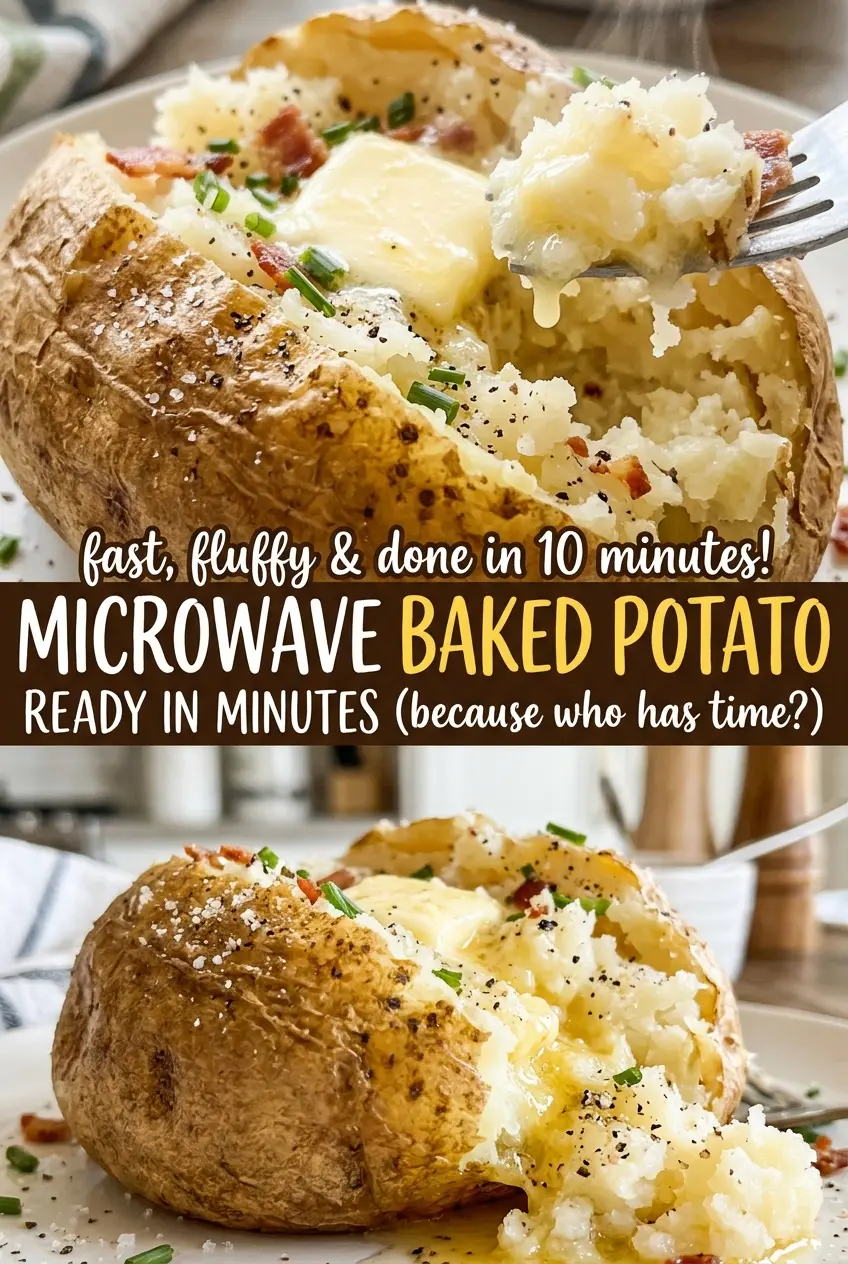
- Russet potato — Russets cook up with a dry, fluffy interior that’s easy to loosen with a fork. Choose one that feels firm and has smooth, unshriveling skin; there’s no need to seek out a specialty brand. A waxier potato won’t give you the same fluffy texture, even when it’s cooked through.
- Unsalted butter — Unsalted butter lets the salt level stay in your hands, and a regular grocery-store butter works well here. If salted butter is what you have, use the same amount and leave out the added salt; the potato will still get a buttery finish without being oversalted.
- Salt — Salt brings out the potato’s mild, earthy flavor instead of covering it up. Fine table salt clings readily to the fluffy interior, while larger crystals give you a more noticeable salty bite. Either way, season the exposed flesh rather than expecting the skin to carry the seasoning.
From Clean Russet to Fluffy Center: The Three Stages
Scrub, Dry, and Pierce the Skin
Scrub the potato clean under running water, then dry it well. Pierce it several times all over with a fork so steam can escape as it heats. Don’t skip the pricking; the skin encloses a hot, steaming interior during microwave cooking. Set the prepared potato on a microwave-safe plate.
Microwave, Turn, and Check the Center
Microwave on HIGH for 5 minutes. Turn the potato over, then microwave for 3 to 5 minutes more. Check the center with a fork: it should slide in easily, not catch on a firm core. If the potato is still resisting, use the remaining time in that second cooking period rather than relying on the skin’s appearance.
Rest, Split, and Fluff
Let the potato rest for 2 minutes after it comes out of the microwave. Split it lengthwise and use a fork to fluff the inside, loosening the flesh without cutting through the skin. Add the butter and salt to the opened potato. The fluffy center gives the butter room to melt through the flesh.
Two Simple Ways to Adjust the Finish
Make It Dairy-Free by Leaving Out the Butter
Skip the butter and keep the potato and salt. The result is dairy-free and lighter, with a drier, more straightforward potato flavor rather than the richness butter gives the fluffy center.
Leave Out the Salt for a No-Salt Finish
Omit the salt and keep the unsalted butter. You’ll get the same fluffy russet texture with a milder taste; this is a useful adjustment when you’re limiting added sodium.
Storage and Reheating
- Refrigerator: Refrigerate leftovers within 2 hours and keep them for 3 to 4 days. The skin softens and the center firms as it chills.
- Freezer: It can be frozen, though the potato’s texture will be less fluffy after thawing. Cool it, wrap it airtight, and use it within 1 month for the best quality.
- Reheating: Reheat on a microwave-safe plate until the center reaches 165°F. Don’t stop when the outside feels hot; the middle needs to be hot, too.
Questions That Come Up While Microwaving a Russet
Microwave Baked Potato
Ingredients
Equipment
Method
- Scrub the potato clean and dry it.
- Pierce the potato several times all over with a fork.
- Place the potato on a microwave-safe plate and microwave on HIGH for 5 minutes.
- Turn the potato over and microwave for 3 to 5 minutes more, until a fork slides easily into the center.
- Let the potato rest for 2 minutes.
- Split the potato lengthwise and fluff the inside with a fork.
- Add the butter and salt.


