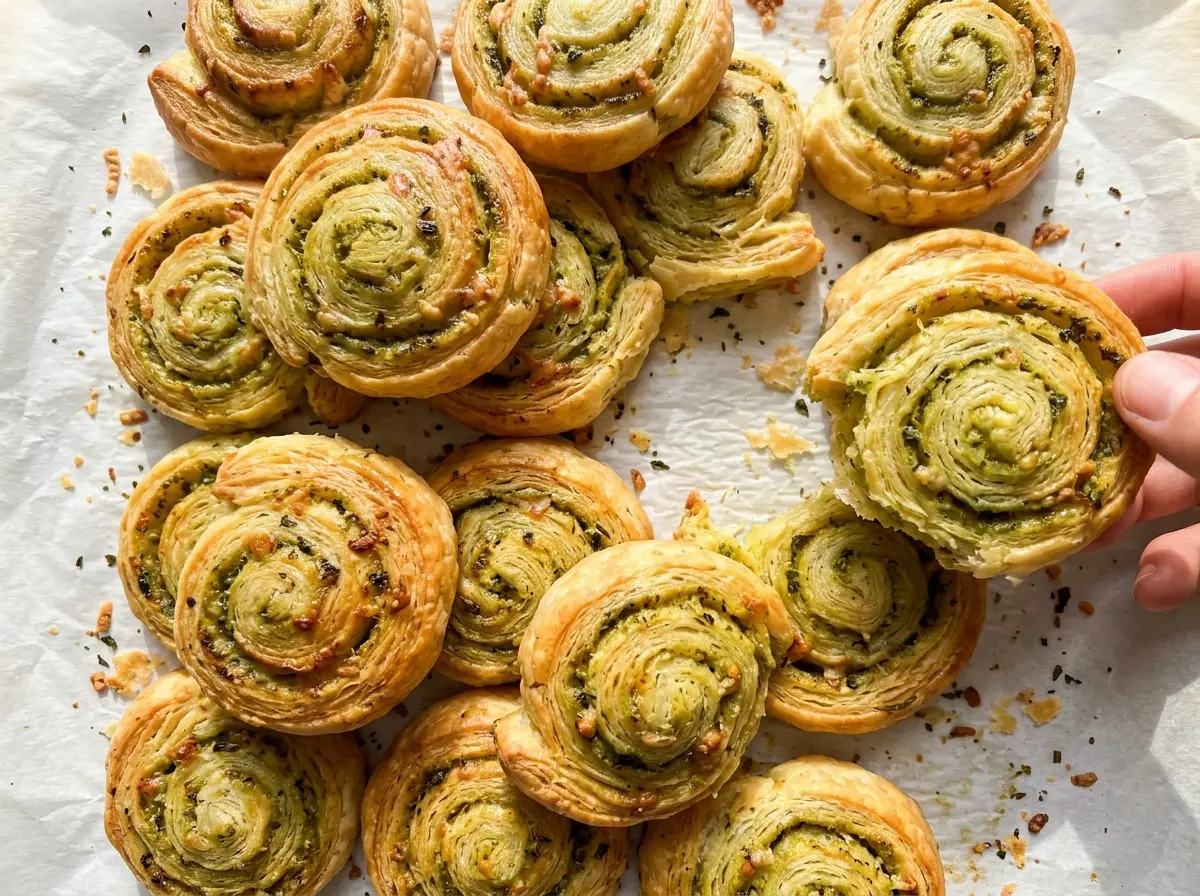
The first slice is where puff pastry pinwheels can go sideways: warm pastry bends under the knife, the filling squeezes out, and the rounds lose their shape before they reach the pan. I keep the pastry cold and give the rolled log a short chill, which makes these Puff Pastry Pesto Pinwheels much easier to slice neatly. Once they bake, the layers puff around a savory ribbon of basil pesto and Parmesan.
Leaving a slim strip of pastry bare along one long edge gives the roll a clean place to close. I start rolling from the opposite edge, then set the log seam-side down so it stays snug while it chills. The egg wash helps the tops turn deep golden, and the Parmesan adds a salty, savory bite without covering up the basil. Serve them warm, when the outside is crisp and the centers are tender.
Kitchen Note
Chill the rolled log for the full 15 minutes before slicing. That brief rest firms the pastry enough for clean rounds, so your knife is less likely to squash the layers.
Save these flaky pesto pinwheels for an easy savory bite with crisp pastry, basil pesto, and Parmesan in every swirl.
That Bare Strip of Pastry Is What Keeps the Pesto Inside
Pesto is oily by nature, and a layer spread right to every edge has nowhere to go once you roll the pastry. Leaving a half-inch border along one long edge gives the log a cleaner seam instead of trapping pesto between two layers at the closing point. It also helps avoid a slick of filling being pushed out as you finish rolling.
Spread the pesto in an even layer rather than leaving thick patches. A thick pocket can make one part of the log harder to roll snugly, while a thin, consistent coating gives each slice a visible spiral. Sprinkle the Parmesan over the pesto so it is distributed across the pastry instead of piling it into the seam. Roll from the opposite long edge toward the bare border, keeping the log snug without pulling or stretching the dough.
Set the finished log seam-side down before chilling. That position helps the seam stay underneath while the pastry firms. If the pastry starts to feel soft or sticky during assembly, pause and let it get cold again before slicing; soft dough is much more likely to flatten under the knife and make uneven pinwheels.
Why Cold Pastry, Basil Pesto, and Parmesan Each Matter
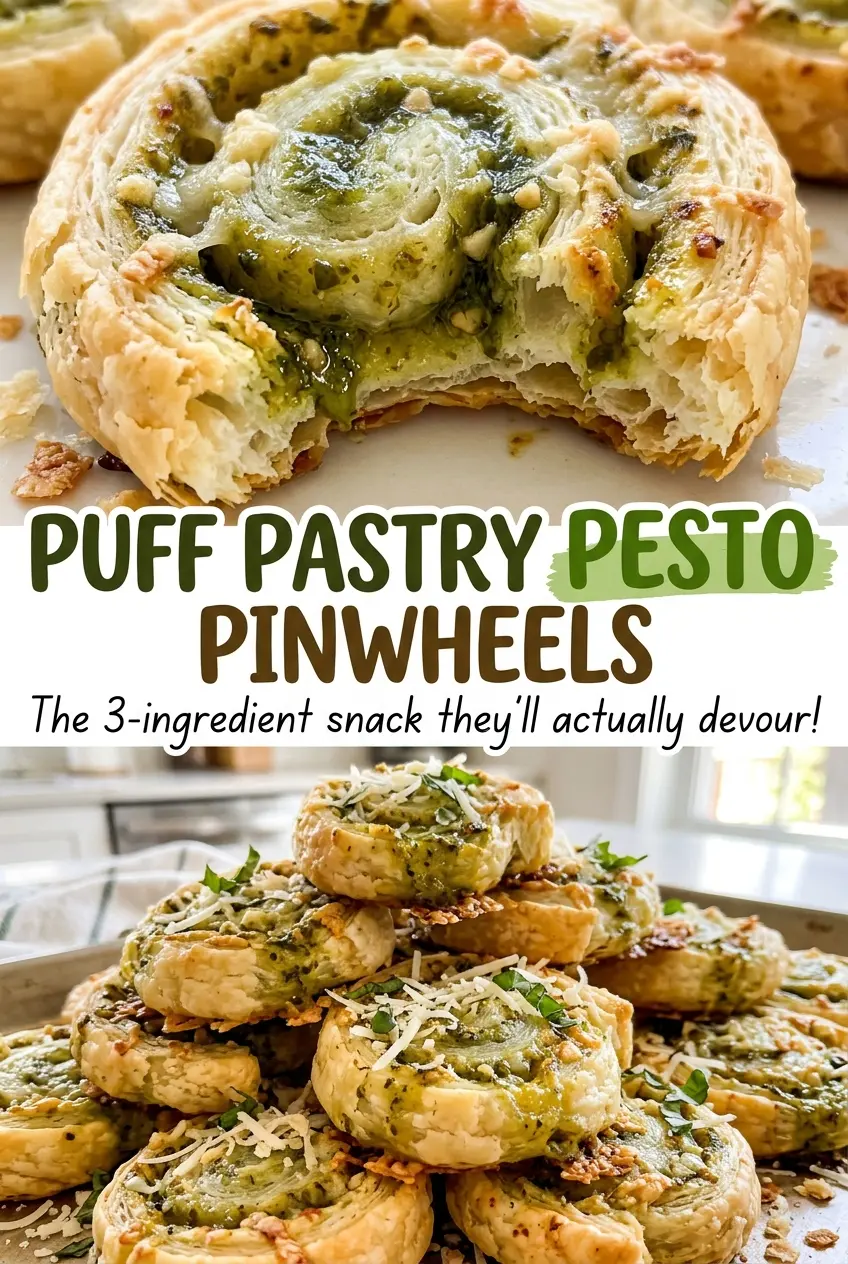
- Puff pastry — Thaw it until it unfolds without cracking, but keep it cold so it remains easy to handle. Frozen puff pastry is a practical choice here because its layered structure creates the flaky edges. If you need a gluten-free version, use gluten-free puff pastry; its rise and crispness can differ from standard pastry, so keep it cold and handle it gently.
- Basil pesto — Pesto brings the concentrated basil, garlic, and oil that make the spiral taste savory without a separate sauce. A good-quality refrigerated or homemade pesto gives a fresh herb flavor, while a shelf-stable jar works when convenience matters. Choose a thick pesto rather than one with excess loose oil, which is harder to spread evenly. Arugula pesto is a workable swap, with a pepperier, less classic basil taste.
- Parmesan — Finely grated Parmesan distributes across the pesto and seasons each bite. Freshly grated cheese melts into the filling more evenly, but packaged finely grated Parmesan is convenient and works well. Pecorino Romano can replace it for a sharper, saltier result; taste the pesto first, since the combination may be more assertively salty.
- Egg and water — Whisking them together makes a thin wash that helps the pastry tops brown. Brush it lightly over the tops rather than letting it pool around the sides, where it can stick the pastry to the parchment. For an egg-free finish, brush the tops with milk instead; the color will be lighter and less glossy.
Rolling and Baking the Pinwheels Without Flattening the Layers
Spread the filling in an even layer
Heat the oven to 400°F and line a baking sheet with parchment paper before you start assembling. Unfold the thawed but still cold pastry on a clean work surface, then spread the pesto over it, keeping a half-inch border bare along one long edge. Sprinkle the Parmesan evenly over the pesto. If the pastry feels soft while you work, handle it gently so it doesn’t stretch or tear.
Roll a snug log and let it firm
Start at the long edge opposite the bare strip and roll the pastry into a snug log. Aim for an even roll from end to end, without squeezing hard enough to push filling out. Place it seam-side down and chill it for 15 minutes; the log should feel firmer and hold its shape better when you slice it. Skipping that chill makes soft pastry more likely to compress into flat rounds.
Slice and space the rounds
Whisk the egg with the water while the log chills. Slice crosswise into half-inch rounds, using a steady downward cut instead of sawing back and forth, which can drag the filling through the pastry. Arrange the rounds about 1 inch apart on the prepared baking sheet. Brush the tops with egg wash, keeping the sides as clean as you can so the layers can puff.
Bake until the swirls are deep golden
Bake for 15 to 20 minutes, until the pastry has puffed and the tops are deep golden brown. Look for color across the raised edges, not just a pale center; pale pastry won’t have the crisp finish you’re after. If one end of the sheet browns faster, rotate the baking sheet during baking. Let the pinwheels cool on the baking sheet for 5 minutes before serving, so the hot filling settles and the pastry firms slightly.
Easy Ways to Change the Pesto Pinwheel Flavor
Use peppery arugula pesto
Swap the basil pesto for an equal amount of thick arugula pesto. The finished pinwheels have a sharper, peppery herb flavor, while the pastry and Parmesan stay the same. Avoid a pesto with a puddle of loose oil, which can make spreading and rolling messier.
Make them gluten-free
Use a gluten-free puff pastry sheet and gluten-free pesto, keeping the same filling proportions and assembly. Gluten-free pastry may be more delicate and may not puff as dramatically, so keep it cold and avoid stretching it as you roll. Check that the Parmesan you choose is suitable for your needs.
Trade Parmesan for Pecorino
Use finely grated Pecorino Romano in place of the Parmesan for a sharper, saltier cheese note. The filling still rolls and bakes the same way, but the pesto-and-cheese combination will taste more pronounced. If your pesto is already salty, this swap makes the overall bite more assertive.
Storage and Reheating
- Refrigerator: Store cooled pinwheels in an airtight container for up to 3 days. The pastry will soften as it sits, though reheating brings back some crispness.
- Freezer: Freeze cooled pinwheels in a sealed freezer-safe container for up to 2 months, separating layers with parchment so they don’t stick together. Thaw in the refrigerator before reheating.
- Reheating: Warm them in a 350°F oven for about 5 to 8 minutes, until heated through and crisp at the edges. The microwave warms them quickly but leaves the pastry soft, so it isn’t the best choice when you want flaky layers.
Questions That Come Up When Making Pesto Pinwheels
Puff Pastry Pesto Pinwheels
Ingredients
Equipment
Method
- Heat the oven to 400°F.
- Line a baking sheet with parchment paper.
- Unfold the puff pastry on a clean work surface.
- Spread the pesto evenly over the pastry, leaving a 1/2-inch border along one long edge.
- Sprinkle with the Parmesan.
- Starting at the opposite long edge, roll the pastry into a snug log.
- Place the log seam-side down.
- Chill the log for 15 minutes to make it easier to slice.
- Whisk the egg with the water.
- Slice the log crosswise into 1/2-inch rounds.
- Arrange the rounds about 1 inch apart on the prepared baking sheet.
- Brush the tops of the pinwheels with egg wash.
- Bake for 15 to 20 minutes, until puffed and deep golden brown.
- Cool the pinwheels on the baking sheet for 5 minutes before serving.


