When the pastry edges rise into little golden walls, the centers can look like they’re headed for the same puffed-up fate. That’s where the fork comes in: docking the middle gives the tartlets a flatter place for mustard, goat cheese, and tomatoes to sit. I like these Puff Pastry Tomato Tartlets for the contrast between crisp pastry and soft, tangy topping.
Roma tomatoes are a good fit here, but even they release plenty of juice once they’re sliced. Salting them before they go on the pastry gives that moisture somewhere to go, instead of letting it collect underneath the cheese. A quick blot afterward makes a noticeable difference.
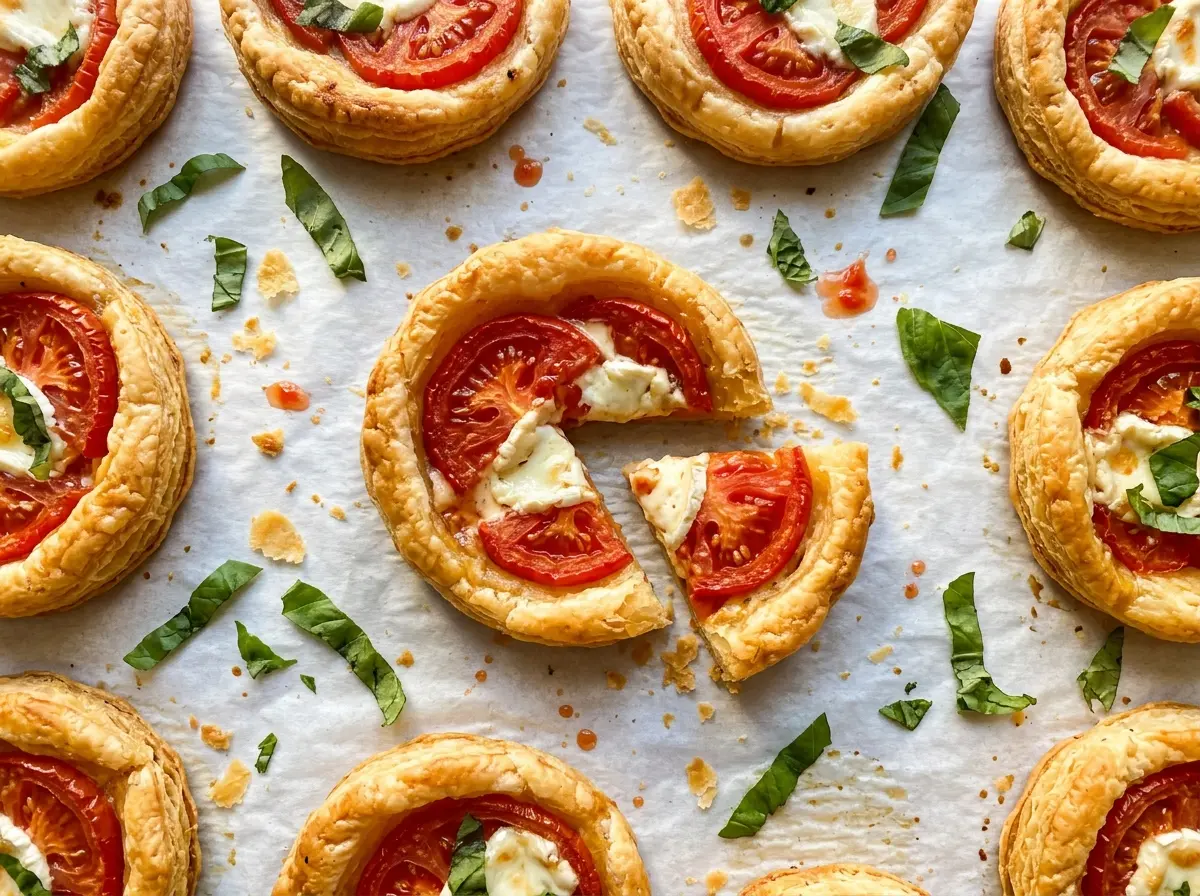
The first bake sets the pastry borders before the toppings go on, so the finished tartlets have defined edges and crisp bottoms. After the second bake, the tomatoes soften and the goat cheese warms without disappearing into the pastry. Give them a short rest on the baking sheet, then serve while the edges are still flaky.
Kitchen Note
Let the tartlets sit on the baking sheet for the full 5 minutes before moving or serving them. The pastry is fragile straight from the oven, and that brief pause helps the bases settle without losing their crisp edges.
Save these Puff Pastry Tomato Tartlets for a crisp, savory bite with juicy tomatoes, tangy goat cheese, and flaky edges.
Why Wet Tomato Slices Flatten Puff Pastry Before It Can Crisp
Puff pastry rises because its layers separate as moisture inside the dough turns to steam. A pool of tomato juice on top works against that crisp finish: it soaks into the delicate layers while the tartlets bake, leaving the middle soft even when the edges are beautifully browned. That’s why I treat the tomatoes before they ever touch the pastry.
Salt draws moisture out of the slices while they rest. Blotting them afterward removes the liquid from the surface, so the pastry doesn’t have to absorb it. This isn’t about drying the tomatoes until they’re leathery; they should still look fresh and juicy. It’s just enough preparation to keep their flavor on top of the tartlet, where you want it.
The other part of the balance is the raised border. It gives each tartlet a defined edge, while the fork-pricked center stays lower and leaves room for the toppings. Together, those small details let the base bake through instead of turning into a soft pocket under the tomatoes.
What Roma Tomatoes, Dijon, and Goat Cheese Each Bring

- Puff pastry — Frozen pastry gives you the distinct, flaky layers that make these tartlets work. Thaw it until it unfolds without cracking, but keep it cool enough to handle; if it gets warm and sticky, the layers can be harder to manage. A gluten-free version is possible with a suitable replacement, though the rise and texture vary by brand.
- Roma tomatoes — Their firm flesh and compact shape make neat crosswise slices that sit well on the small pastry bases. Choose tomatoes that feel firm rather than soft, and slice them evenly so they soften at roughly the same pace.
- Dijon mustard — Dijon brings a sharp, savory layer beneath the mild cheese and sweet tomatoes. A standard grocery-store Dijon works well; you don’t need a specialty jar for this recipe.
- Soft goat cheese — Its creamy texture spreads across the center as it warms, and its tang keeps the topping from tasting heavy. If you prefer a firmer, saltier bite, an equal amount of crumbled feta can replace it, though the tartlets will taste more assertively salty.
- Egg and water — Beating them together makes the wash easy to brush over the borders and helps those edges bake up golden. Brush the border rather than the whole pastry surface so the centers remain easy to fill.
- Olive oil, thyme, and black pepper — The oil gives the tomatoes a light finish, while fresh thyme and pepper add a savory note without covering up the cheese. Fresh thyme has a brighter, more delicate taste than dried thyme, so it’s worth using fresh when you can.
Building Six Tartlets with a Raised, Crisp Border
Salt and blot the tomato slices
Cut the Roma tomatoes crosswise into thin, even slices and toss them with the kosher salt. Let them stand for 15 minutes, then blot both sides with paper towels. The slices should still hold their shape, but their surfaces shouldn’t be shiny with beads of liquid. Set them aside while you prepare the pastry.
Score the pastry without cutting through
Heat the oven to 400°F and line a large rimmed baking sheet with parchment paper. Cut the thawed pastry into 6 rectangles and arrange them on the sheet, leaving room around each piece. Score a 1/2-inch border around every rectangle, pressing only partway through the dough. Prick the centers all over with a fork; avoid piercing the borders, which need to rise.
Bake the shells until lightly golden
Beat the egg with the water in a small bowl, then brush the mixture over the borders. Keep the wash on the outer frame rather than letting it pool in the centers. Bake the pastry for 10 to 12 minutes, until it’s puffed and lightly golden. If a center has risen, press it down gently before adding the toppings so there’s space inside the border.
Add the topping and bake until crisp
Spread Dijon mustard inside each raised border, then divide the goat cheese and tomato slices among the tartlets. Drizzle the tomatoes with olive oil and finish with fresh thyme leaves and black pepper. Bake for 12 to 15 minutes, until the pastry is golden and crisp and the tomatoes have softened. Let the tartlets rest on the baking sheet for 5 minutes before serving.
Two Useful Ways to Change These Tomato Tartlets
Use gluten-free puff pastry
Replace the regular puff pastry with one sheet of gluten-free puff pastry. Thaw and handle it according to its package directions, then use the same topping and assembly. The layers may rise and brown differently from standard pastry, so judge doneness by the golden, crisp edges rather than expecting an identical lift.
Leave out the thyme for a simpler topping
Skip the thyme if you want the Dijon, tomato, and goat cheese to come through without an herbal note. Keep the black pepper and olive oil; the tartlets will still have a balanced, savory topping, just with a cleaner tomato-and-cheese flavor.
Storage and Reheating
- Refrigerator: Refrigerate leftovers within 2 hours and keep them for up to 3 days. The pastry will soften as it sits beneath the topping.
- Freezer: Freezing baked tartlets isn’t recommended. The tomatoes release moisture as they thaw, and the pastry loses its crisp texture.
- Reheating: Reheat in a 350°F oven until warmed through and crisp again, usually about 6 to 8 minutes. The microwave warms them quickly but makes the pastry soft.
Questions That Come Up Before the Tartlets Go in the Oven
Puff Pastry Tomato Tartlets
Ingredients
Equipment
Method
- Toss the tomato slices with the kosher salt.
- Let the tomatoes stand for 15 minutes.
- Blot the tomatoes dry with paper towels.
- Heat the oven to 400°F.
- Line a large rimmed baking sheet with parchment paper.
- Cut the puff pastry into 6 rectangles.
- Arrange the rectangles on the baking sheet.
- Score a 1/2-inch border around each rectangle without cutting through.
- Prick the centers all over with a fork.
- Beat the egg with the water in a small bowl.
- Brush the egg mixture over the pastry borders.
- Bake for 10 to 12 minutes, until puffed and lightly golden.
- Press down the puffed centers of the pastry, leaving the borders raised.
- Spread the Dijon mustard inside each border.
- Divide the goat cheese and tomato slices among the tartlets.
- Drizzle the tomatoes with olive oil.
- Sprinkle with the thyme and black pepper.
- Bake for 12 to 15 minutes, until the pastry is golden and crisp and the tomatoes are softened.
- Let the tartlets rest on the baking sheet for 5 minutes before serving.


