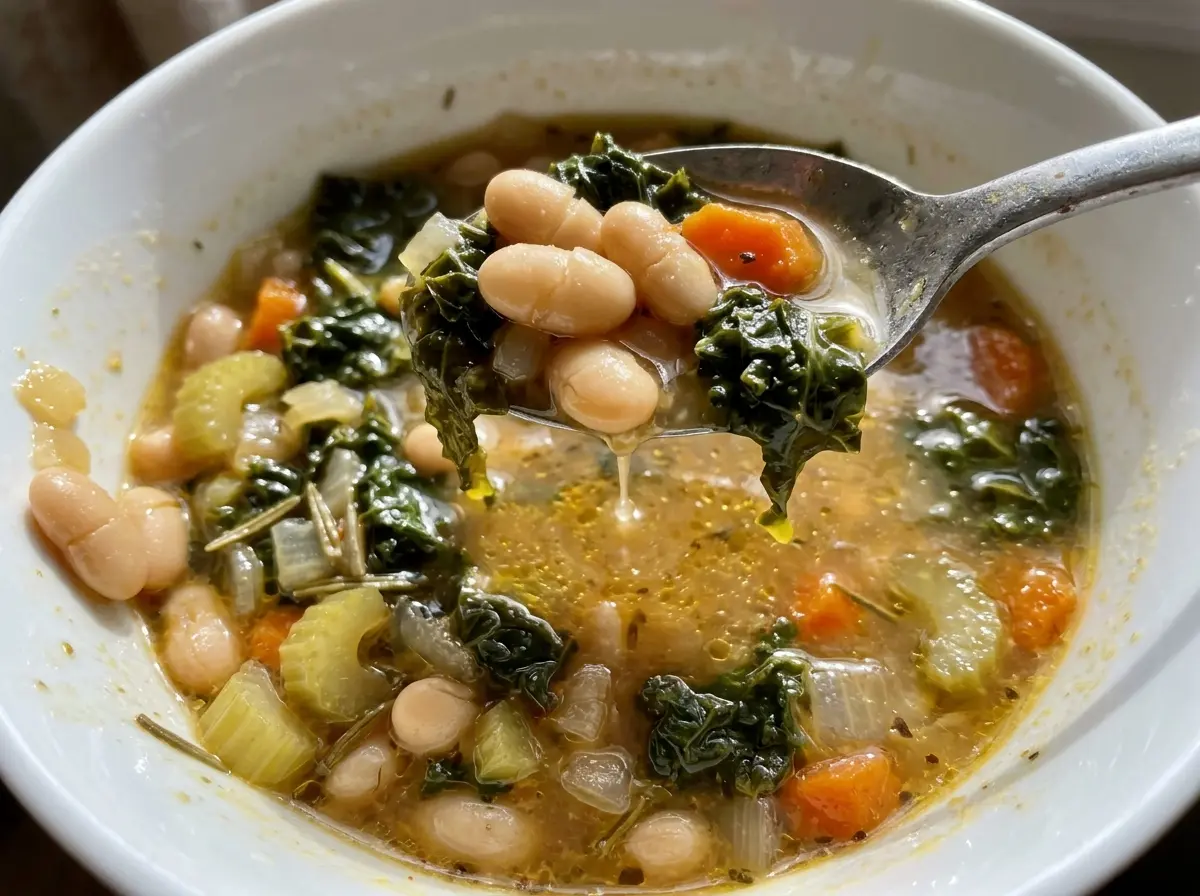
The onion starts to turn sweet in the pot before anything else goes in, and the kitchen quickly smells like rosemary and garlic. That slow, gentle start gives Tuscan White Bean Soup a savory base without needing a long list of steps or a separate pan. I like that the beans do double duty: most stay whole, while a small portion thickens the broth from right inside the pot.
Keep the soup at a gentle simmer rather than a hard boil, and the vegetables have time to soften while the beans take on the tomato and herb flavors. Kale goes in near the end, so it turns tender without losing all its color. A little lemon and Parmesan stirred in off the heat bring the broth into focus: bright, savory, and still light enough to ladle generously.
Kitchen Note
Take the pot off the heat before stirring in the Parmesan. It melts into the hot broth more smoothly that way, and the lemon stays fresh rather than tasting cooked.
Save this Tuscan White Bean Soup for a cozy bowl with rosemary, tender kale, and a broth thickened naturally with beans.
Why Mashing Some of the Beans Thickens the Soup Without Cream
A pot of bean soup can end up thin and brothy even when the beans taste good. Here, mashing about a cup of cannellini beans against the side of the pot gives the liquid body without adding cream, flour, or another thickener. The mashed beans release their starch into the broth, while the rest stay whole for a spoonful with a little more texture.
Do the mashing after the first simmer, before you add the kale. That gives you room to press the beans against the side of the pot without crushing the greens, and you can stir the creamy portion back through the soup evenly. Stop around a cup; mash much more and the soup loses the contrast between silky broth and intact beans. If you prefer a looser bowl, mash a little less rather than reaching for a blender.
This small technique also makes the soup feel more substantial without changing its ingredient list. The tomatoes keep the broth lively, and the beans do the quiet work of making each ladle feel filling.
How the Beans, Rosemary, and Kale Shape This Bowl

- Cannellini beans — Their soft, creamy centers mash easily and thicken the broth while the remaining beans hold their shape. Canned beans are a practical fit here; drain and rinse them so the canning liquid doesn’t cloud the soup or add extra salt.
- Fresh rosemary and garlic — Freshly chopped rosemary gives the broth a clean, piney fragrance, while minced garlic blooms quickly in the warm oil. Fresh rosemary is worth choosing when it looks green and aromatic; dried rosemary is more assertive and can leave woody bits, so it isn’t a direct one-for-one swap in this short-cooked soup.
- Diced tomatoes and vegetable broth — The tomatoes bring acidity and a little sweetness, and low-sodium broth lets the final seasoning stay in your hands. A good everyday canned tomato works well; the broth’s flavor matters more, since it’s the liquid base of every spoonful.
- Kale — Removing the tough stems makes the leaves pleasant to eat after their brief simmer. Choose leaves that look firm rather than limp, and chop them so they fit easily on a spoon. The greens soften in the pot, so there’s no need to cook them separately.
- Lemon juice and Parmesan — Lemon lifts the tomato-and-bean broth, and finely grated Parmesan melts through it for a savory finish. Finely grated cheese incorporates more evenly than thick shreds. For a dairy-free bowl, see the adaptation below rather than using a hard-to-melt block of cheese.
Building the Broth Before the Kale Goes In
Soften the vegetables slowly
Warm the olive oil in a 5-quart Dutch oven or heavy pot over medium heat, then add the onion, carrots, and celery. Cook for 6 to 8 minutes, stirring occasionally, until the vegetables have softened. They should look glossy and tender, not browned around the edges. If they start catching on the bottom, lower the heat so they soften gently instead of taking on a roasted flavor.
Wake up the rosemary and garlic
Stir in the minced garlic, finely chopped fresh rosemary, and crushed red pepper. Cook for 30 seconds, just until the garlic smells fragrant. Keep the mixture moving; garlic can turn bitter if it browns. The short cook gives the rosemary and pepper time to perfume the oil before the broth goes in.
Simmer the beans in the tomato broth
Add the drained and rinsed cannellini beans, diced tomatoes, vegetable broth, kosher salt, and black pepper. Bring the pot to a boil, then reduce the heat to maintain a gentle simmer and cook uncovered for 20 minutes. Look for small, steady bubbles rather than a vigorous boil, which can break up the beans. Leaving the pot uncovered lets the broth reduce slightly as the flavors mingle.
Mash the beans, then tenderize the kale
Use a potato masher to press about 1 cup of beans against the side of the pot, then stir the soup so the mashed beans disperse. Add the chopped kale with its tough stems removed and simmer for 5 to 7 minutes, until the leaves are tender. If the kale still feels chewy, give it another minute and check again. The leaves should be soft enough to eat comfortably but still visible in the soup.
Finish away from the heat
Remove the pot from the heat before adding the lemon juice and finely grated Parmesan. Stir until the cheese is incorporated and the broth looks slightly silkier. The soup should taste savory first, with a light lemony lift at the end. Avoid returning it to a boil after the cheese goes in, which can make the finish less smooth.
Simple Swaps That Change the Bowl Without Losing Its Balance
Swap kale for spinach
Use the same weight of chopped spinach in place of the kale. Stir it in after mashing the beans and cook just until wilted; spinach softens faster and gives the soup a more delicate green texture.
Make the soup dairy-free
Leave out the Parmesan and stir nutritional yeast into the hot soup a little at a time after adding the lemon juice. It brings a savory, cheesy note without dairy, though the broth won’t have quite the same richness as the Parmesan version.
Use Great Northern beans
Replace the cannellini beans with the same amount of canned Great Northern beans, drained and rinsed. They have a slightly firmer texture and a mild flavor; mash the same portion against the pot to give the broth body.
Storage and Reheating
- Refrigerator: Store in an airtight container for 3 to 4 days. The beans continue to absorb broth, so the soup will thicken as it sits; cool and refrigerate it within 2 hours.
- Freezer: Freeze in airtight portions for up to 3 months. The beans and kale hold up well, though the Parmesan may change the texture slightly after thawing.
- Reheating: Warm gently on the stovetop, stirring often, until the soup reaches 165°F. Avoid a hard boil, which can break up the beans and make the cheese finish grainy.
The Questions That Come Up When Making White Bean Soup
Tuscan White Bean Soup
Ingredients
Equipment
Method
- Heat the olive oil in a 5-quart Dutch oven or heavy pot over medium heat.
- Add the onion, carrots, and celery and cook for 6 to 8 minutes, stirring occasionally, until softened.
- Stir in the garlic, rosemary, and crushed red pepper and cook for 30 seconds, until fragrant.
- Add the cannellini beans, diced tomatoes, vegetable broth, salt, and black pepper.
- Bring to a boil, then reduce the heat to maintain a gentle simmer and cook uncovered for 20 minutes.
- Use a potato masher to mash about 1 cup of the beans against the side of the pot.
- Stir in the kale and simmer for 5 to 7 minutes, until the kale is tender.
- Remove the pot from the heat and stir in the lemon juice and Parmesan cheese.


