The first batch of beef should sizzle as soon as it hits the Dutch oven. I used to crowd the pot and wonder why the meat turned gray instead of developing those dark, savory edges. Browning in batches gives each piece room, and it builds the browned bits that make the broth taste like it simmered much longer than it did. That’s the start of this keto beef stew: deeply browned chuck, softened vegetables, and a broth that turns fragrant as it cooks.
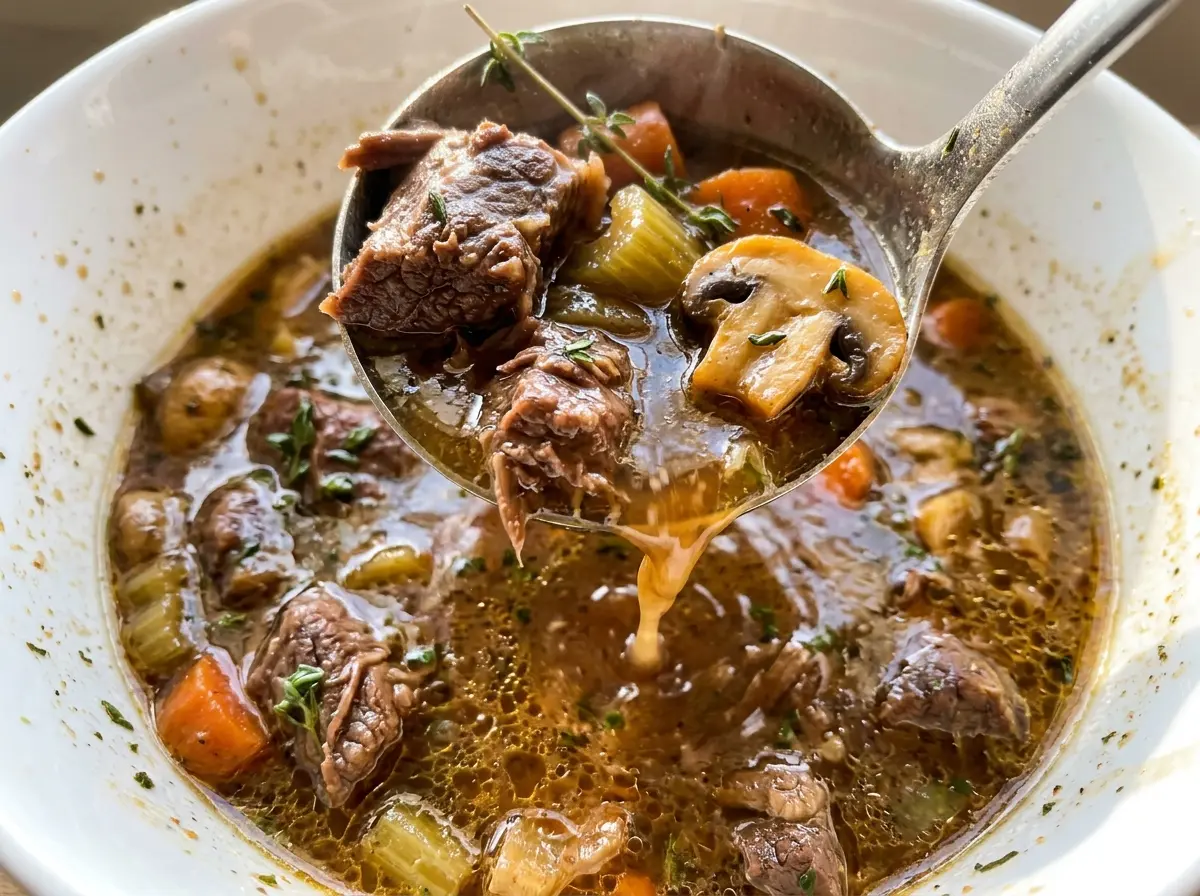
Boneless chuck is a good fit for a long, gentle simmer because its connective tissue softens as the meat cooks. The mushrooms go in later, so they have time to become tender without spending the entire cook in the pot. By the time the beef is fork-tender, the stew has a savory broth with enough substance to feel like dinner, without a flour-based thickener.
Kitchen Note
Pat the chuck dry on all sides before you season it. Surface moisture makes the beef steam before it can brown, so a thorough paper-towel pass is worth the few extra seconds.
Save this keto beef stew for a cozy dinner built around fork-tender chuck and a savory, flour-free broth.
Why This Keto Stew Is Brothy, Not Gravy-Thick
There’s no flour or other starch in this pot, so the finished stew has a savory broth rather than a gravy that clings heavily to a spoon. That’s a useful distinction if you’re expecting the thick texture of a traditional flour-thickened beef stew. Here, the beef and vegetables bring plenty of substance, while the uncovered finish concentrates the broth without turning it into gravy.
The keto name doesn’t mean the stew is carbohydrate-free. It includes onion and carrot, so anyone tracking carbohydrates closely should account for those vegetables rather than assuming they’re absent. The recipe keeps them in the pot for their familiar stew flavor, with the broth and beef doing the rest of the heavy lifting. Expect a bowl with tender pieces and a lighter, savory liquid around them—not a starch-thickened sauce or a purée.
That texture also makes the reduction stage easier to judge: you’re looking for a slightly more concentrated broth, not a dramatic change into a thick sauce. If you prefer a brothier bowl, keep the reduction brief; if you want the savory flavors more concentrated, let the uncovered simmer do its work while keeping an eye on the liquid.
What Chuck, Tomato Paste, and Mushrooms Bring to the Pot

- Boneless beef chuck — Chuck has the connective tissue that benefits from the long, gentle cook. Ask for a whole piece and cut it into even 1 1/2-inch cubes; even sizing helps the pieces become tender at about the same pace. There’s no need to pay extra for a particularly lean cut here.
- Tomato paste — A short cook in the pot before the broth goes in takes away its raw, sharp edge and gives the liquid a deeper savory note. Scrape it around the bottom so it coats the softened vegetables rather than sitting in one lump.
- Cremini mushrooms — Their earthy flavor fits the beef broth, and quartering them leaves substantial bites after simmering. Choose firm mushrooms with dry-looking surfaces; there’s no need for a specialty variety.
- Yellow onion, celery, and carrot — These give the broth its familiar stew base. Cut the carrot into the specified 1/2-inch pieces so it holds its shape during the long cook, and slice the celery evenly so the pieces soften together.
- Low-sodium beef broth — It gives the stew its cooking liquid while leaving room for the kosher salt used on the beef. Dried thyme and bay leaves add a steady herbal note as everything simmers; remove the bay leaves before serving.
Build the Broth in the Same Pot as the Beef
Brown the chuck until the edges are deeply colored
Heat the avocado oil in a 6-quart Dutch oven over medium-high heat, then brown the seasoned beef in batches for about 2 to 3 minutes per side. Give the cubes room so they sear instead of steaming against one another. The browned sides should look richly colored, not pale gray. Transfer the beef to a plate as each batch is ready.
Soften the vegetables and wake up the tomato paste
Add the diced onion, sliced celery, and carrot pieces to the pot. Cook for 5 to 7 minutes, stirring occasionally, until the vegetables have softened. Stir in the tomato paste and minced garlic, then cook for 1 minute; the garlic should smell fragrant, not toasted. Keep the mixture moving so the paste and garlic don’t catch on the bottom.
Scrape up the browned bits and simmer gently
Pour in the beef broth and scrape the bottom of the pot to loosen the browned bits. Add the dried thyme and bay leaves, then return the beef and any juices from the plate. Bring everything to a gentle simmer, cover the pot, and cook over low heat for 1 hour 45 minutes to 2 hours. A quiet simmer is what you want; a hard boil can make the meat and vegetables break down more quickly.
Add the mushrooms and finish the broth
Stir in the quartered mushrooms, cover the pot again, and simmer for 30 to 45 minutes, until the beef is fork-tender. If a fork meets resistance, give the stew more time at a gentle simmer rather than turning up the heat. Remove the bay leaves, then simmer uncovered for 10 to 15 minutes to reduce the broth slightly. The liquid should taste more concentrated, while still remaining brothy.
Two Simple Ways to Adjust the Stew
For a lower-carb vegetable mix
Leave out the carrot and use more of the celery and mushrooms already in the stew. The bowl will have less sweetness and a more savory, earthy balance. Keep the pieces substantial so they still feel like part of the stew.
For a mushroom-free pot
Skip the mushrooms if you don’t enjoy them. The broth will lose some of its earthy depth, but the beef and thyme still make a savory stew; move on to removing the bay leaves once the beef is fork-tender.
Storage and Reheating
- Refrigerator: Store in a covered container for 3 to 4 days. The broth may thicken slightly as it chills.
- Freezer: Freeze in airtight containers for up to 2 to 3 months. The mushrooms may soften further after thawing, but the stew still freezes well.
- Reheating: Warm gently in a saucepan, stirring occasionally, until the stew reaches 165°F. Avoid a hard boil, which can make the beef break apart and the vegetables softer.
Questions That Come Up When Making Keto Beef Stew
Keto Beef Stew
Ingredients
Equipment
Method
- Pat the beef dry and season it with the kosher salt and black pepper.
- Heat the avocado oil in a 6-quart Dutch oven over medium-high heat.
- Brown the beef in batches, about 2 to 3 minutes per side.
- Transfer the browned beef to a plate.
- Add the onion, celery, and carrot to the pot and cook, stirring occasionally, for 5 to 7 minutes, until softened.
- Stir in the tomato paste and garlic and cook for 1 minute.
- Pour in the beef broth and scrape up any browned bits.
- Add the dried thyme and bay leaves, return the beef and its juices to the pot, and bring to a gentle simmer.
- Cover and simmer over low heat for 1 hour 45 minutes to 2 hours.
- Stir in the cremini mushrooms.
- Cover and simmer for 30 to 45 minutes, until the beef is fork-tender.
- Remove the bay leaves.
- Simmer uncovered for 10 to 15 minutes to reduce the broth slightly.


