The skillet gets crowded fast when all that beef goes in at once, and the cubes steam instead of browning. I learned to work in batches, giving each piece room to pick up color before it heads to the slow cooker. That little bit of stovetop time gives this Slow Cooker Beef Stew a deeper, fuller-tasting broth.
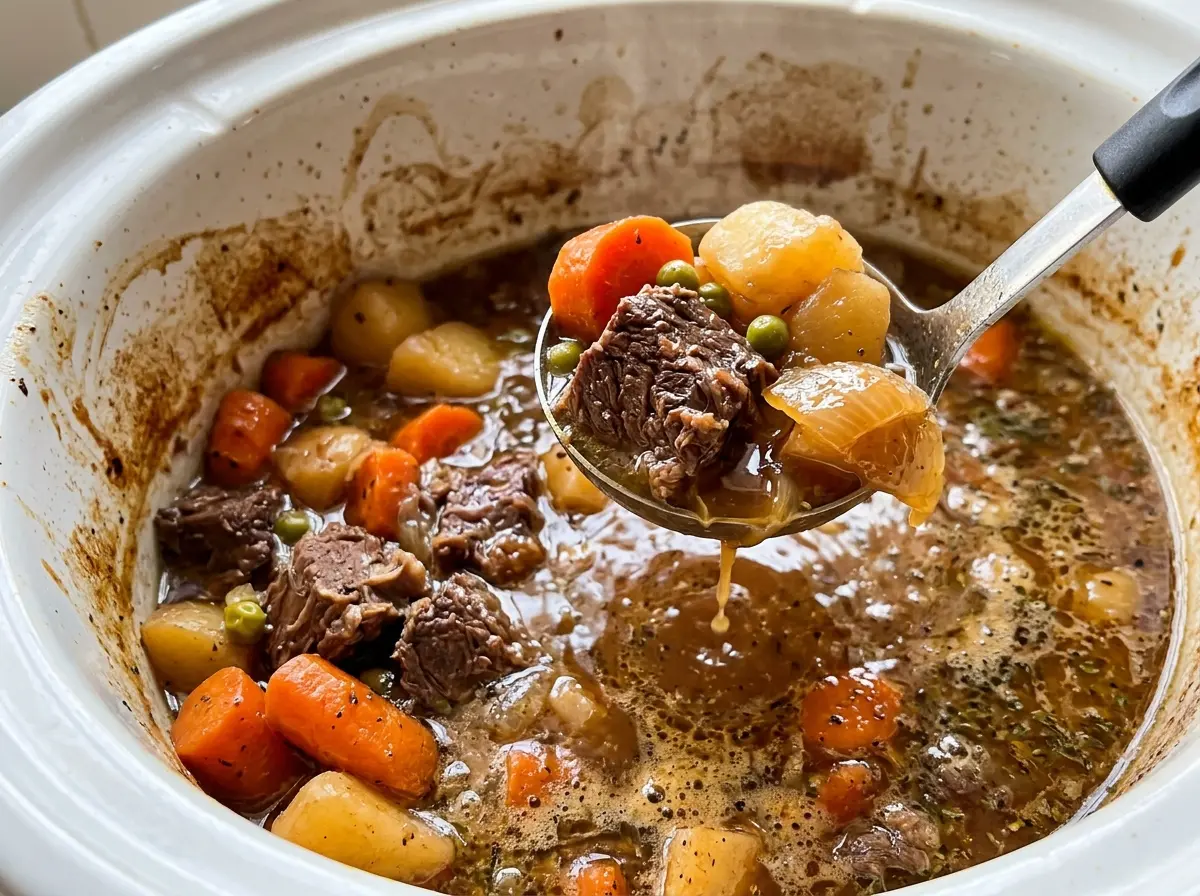
Chuck is the right cut for the long cook: its marbling softens as it cooks, leaving the beef tender enough to break apart with a fork. Yukon Gold potatoes and hearty pieces of carrot and celery hold their shape alongside it, while a final stir of peas and cornstarch slurry turns the broth into a proper stew.
Most of the work happens up front. Once the skillet is put away, the slow cooker takes over until the beef is fork-tender and the vegetables are soft, then the last stretch thickens everything into a savory bowl with plenty of tender beef.
Kitchen Note
Whisk the cornstarch into cold water until the slurry is smooth before it goes into the stew. Dry cornstarch stirred straight into the hot liquid can leave little lumps that are hard to work out.
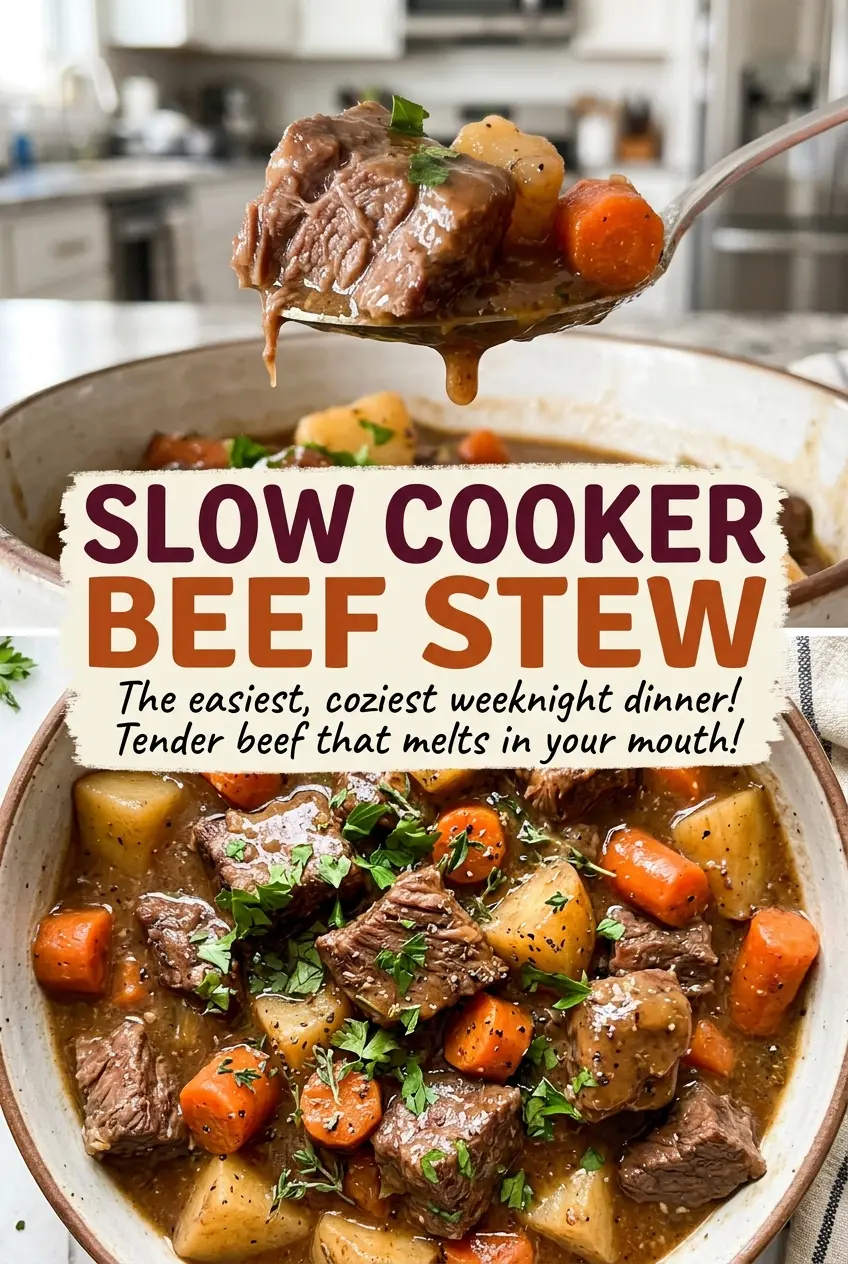
Save this Slow Cooker Beef Stew for a cozy dinner with fork-tender chuck, soft vegetables, and a savory broth that thickens at the end.
Why the Beef Gets Browned Before the Slow Cooker Does
The slow cooker makes the beef tender, but it doesn’t brown it. That flavor has to come from the skillet first. Tossing the chuck in seasoned flour gives the surface a light coating, and browning several sides builds savory bits in the pan before the broth and vegetables go in.
Work in batches rather than tipping all the beef into the skillet together. When the pan is packed, the meat releases moisture and steams; you lose the browned edges that make the finished broth taste rounded instead of flat. A few well-browned sides on each cube are enough. You don’t need to turn every piece into a uniformly dark crust.
The flour coating also gives the broth a little body as it cooks, but it isn’t meant to make the stew thick on its own. The cornstarch slurry handles that final adjustment after the beef and vegetables are tender. Keeping those jobs separate means you can brown the beef without expecting the skillet coating to produce a finished, gravy-thick sauce.
Why Chuck, Yukon Golds, and Low-Sodium Broth Matter Here
- Beef chuck — Its marbling suits a long, gentle cook and helps the cubes become tender rather than dry. If you buy pre-cut stew beef, look for pieces cut from chuck and keep them close to the same size so they cook evenly.
- All-purpose flour — It seasons and lightly coats the beef before browning, then contributes a little body to the broth. Keep the coating even rather than letting extra flour clump on the meat; if you need a flour-free version, see the variation below.
- Yukon Gold potatoes — Their creamy texture works well in a long-cooked stew, and the specified large chunks are substantial enough to sit alongside the beef. Choose potatoes that feel firm, without soft spots or sprouts.
- Low-sodium beef broth — It gives you control over the salt as the broth reduces and picks up flavor from the beef, Worcestershire sauce, tomato paste, and vegetables. A good everyday broth is fine here; the tomato paste and Worcestershire bring plenty of savory depth.
- Tomato paste, Worcestershire sauce, thyme, and bay leaf — These build a savory, gently tangy base without turning the stew into a tomato-heavy dish. Dried thyme is practical for a slow cooker, and the bay leaf should come out before serving.
- Carrots, celery, onion, garlic, and peas — The first four soften into the broth during the long cook, while frozen peas go in near the end so they don’t spend the full cooking time in the pot. Cut the vegetables to the sizes listed in the recipe card for a balanced spoonful.
- Cornstarch — Mixed with cold water, it thickens the stew after the vegetables and beef have cooked. Adding it at the finish keeps the thickening step separate from the slow cooker’s long cooking time.
From a Hot Skillet to Fork-Tender Beef
Coat the Chuck and Brown It in Batches
Mix the flour, salt, and pepper in a large bowl, then toss the beef until the cubes are coated. Heat the vegetable oil in a 12-inch skillet over medium-high heat. Brown the beef in batches, turning it to color several sides, for about 6 minutes per batch; move each batch to the 6-quart slow cooker as it is ready.
Build the Slow-Cooker Base
Add the chopped onion and minced garlic to the slow cooker with the beef. Pour in the beef broth, then add the tomato paste, Worcestershire sauce, dried thyme, bay leaf, potatoes, carrots, and celery. Stir to combine so the paste disperses through the broth rather than sitting in one spot.
Let the Beef Cook Until Fork-Tender
Cover the slow cooker and cook on LOW for 8 to 9 hours or on HIGH for 4 to 5 hours. The beef is ready when a fork slides into a cube easily and the meat gives way without feeling rubbery. If it still feels firm, it needs more cooking; tenderness is the cue to follow.
Thicken the Broth at the Finish
Remove and discard the bay leaf before adding the frozen peas. Whisk the cornstarch with the cold water to make a slurry, then stir it into the stew. Cover and cook on HIGH for 15 to 20 minutes, until the broth thickens and the peas are heated through.
Small Changes That Still Make Sense in This Slow Cooker Stew
Make It Flour-Free
Leave the flour out of the beef coating. The cubes won’t have the same lightly coated surface when browned, but the cornstarch slurry still thickens the stew at the end. For a gluten-free version, use gluten-free low-sodium beef broth and Worcestershire sauce as well.
Leave Out the Peas
Skip the frozen peas if you prefer a more traditional beef-and-root-vegetable stew. The bowl will lose their mild sweetness and green color, but the beef, carrots, potatoes, and broth still make a complete stew.
Make the Broth Less Worcestershire-Forward
Omit the Worcestershire sauce for a simpler beef-and-herb broth. You’ll lose some of its tangy, savory depth, so this version tastes gentler and lets the thyme and browned beef come through more clearly.
Storage and Reheating
- Refrigerator: Store in a covered container for 3 to 4 days. The potatoes soften a little as they sit; refrigerate leftovers within 2 hours.
- Freezer: Freeze in airtight, freezer-safe containers for up to 3 months. The potatoes may be softer after thawing, but the stew still reheats well.
- Reheating: Warm only the portion you need on the stovetop over medium-low heat, stirring occasionally, or heat a covered portion in the microwave, stirring partway through. Reheat until steaming throughout, and avoid boiling it hard, which can break up the vegetables.
Questions That Come Up While the Stew Cooks
Slow Cooker Beef Stew
Ingredients
Equipment
Method
- In a large bowl, mix the flour, salt, and pepper.
- Toss the beef in the flour mixture until coated.
- Heat the oil in a 12-inch skillet over medium-high heat.
- Brown the beef in batches, turning to brown several sides, about 6 minutes per batch, then transfer the beef to a 6-quart slow cooker.
- Add the onion, garlic, broth, tomato paste, Worcestershire sauce, thyme, bay leaf, potatoes, carrots, and celery to the slow cooker, then stir to combine.
- Cover and cook on LOW for 8 to 9 hours or HIGH for 4 to 5 hours, until the beef is fork-tender.
- Remove and discard the bay leaf.
- Whisk the cornstarch with the cold water to make a slurry, then stir it and the peas into the slow cooker.
- Cover and cook on HIGH for 15 to 20 minutes, until the stew thickens.


