When the beef hits a hot Dutch oven, listen for a steady sizzle. If the pot is crowded, the pieces release moisture and steam instead of taking on the deep brown surface that gives a stew its savory backbone. I brown the beef in batches, then let those browned bits stay right where they are.
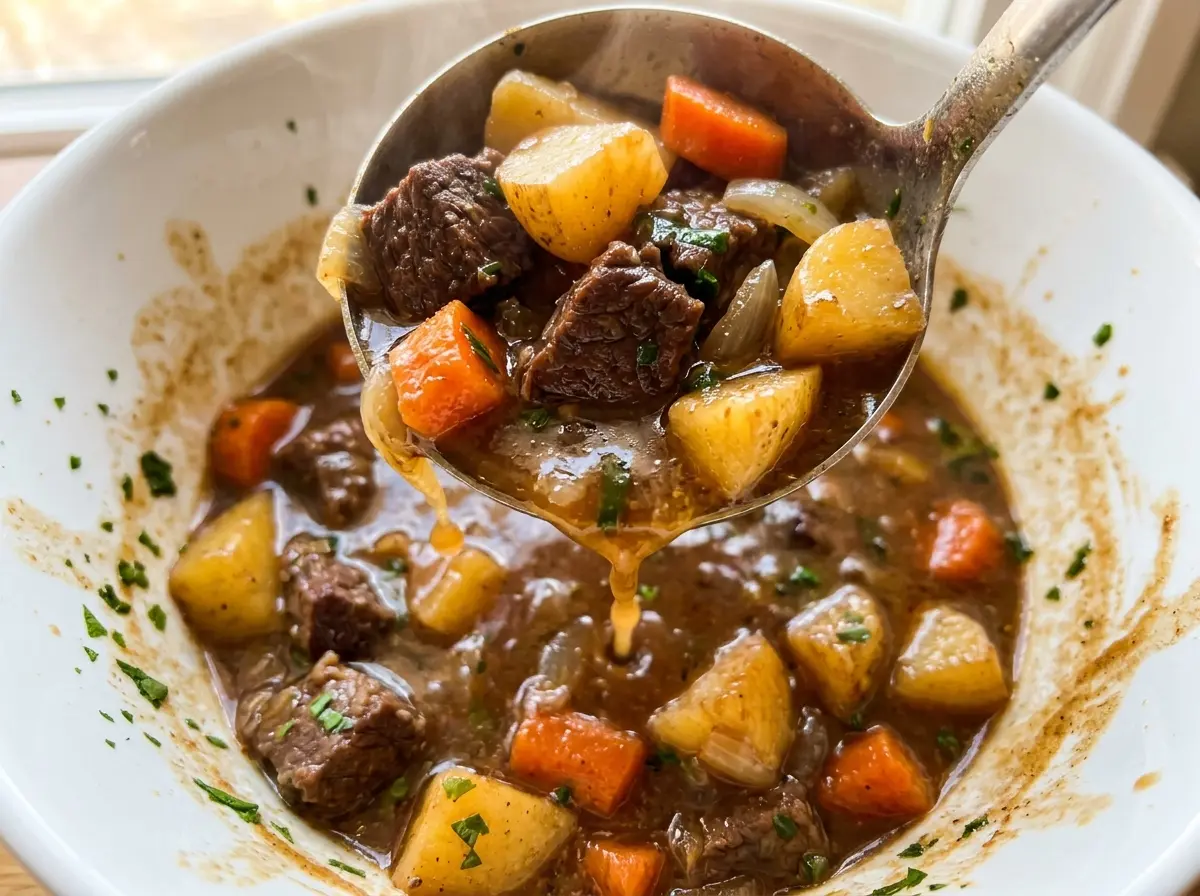
For this Irish Beef Stew, stout brings a roasted, malty edge that plays well with the rich chuck and sweet carrots. Flour goes into the pot before the liquid, so it has a chance to coat the onion and cook briefly instead of clumping in the broth. The long, covered simmer gives the beef time to turn tender, while the potatoes and carrots join later and keep their shape. You end up with a full-bodied broth, fork-tender beef, and vegetables that still look like themselves.
Kitchen Note
After you remove the bay leaf, give the stew its full 5-minute rest before serving. That short pause lets the broth settle and gives you time to check the seasoning in the bowl.
Save this Irish Beef Stew for a slow-simmered dinner with stout-rich broth, tender beef, and hearty vegetables.
Why the Beef Needs Room Before the Stout Goes In
A good sear starts with dry meat and a pot that isn’t overloaded. Patting the beef dry helps its surface brown, while browning in batches leaves enough open space for moisture to escape. If several pieces are pressed tightly together, they steam against each other and stay pale. That won’t ruin the stew, but you miss the browned flavor that makes the broth taste deep rather than simply beefy.
Those brown marks on the bottom of the Dutch oven are part of the base, not something to scrub away. The onion loosens them as it cooks, and the flour gets stirred through that mixture before the stout and broth go in. This order builds flavor and gives the flour a chance to disperse evenly. Keep the heat at medium-high for browning, but don’t let the garlic or flour scorch; either can leave a bitter note that carries through the whole pot.
What the Beef, Stout, and Potatoes Bring to the Pot
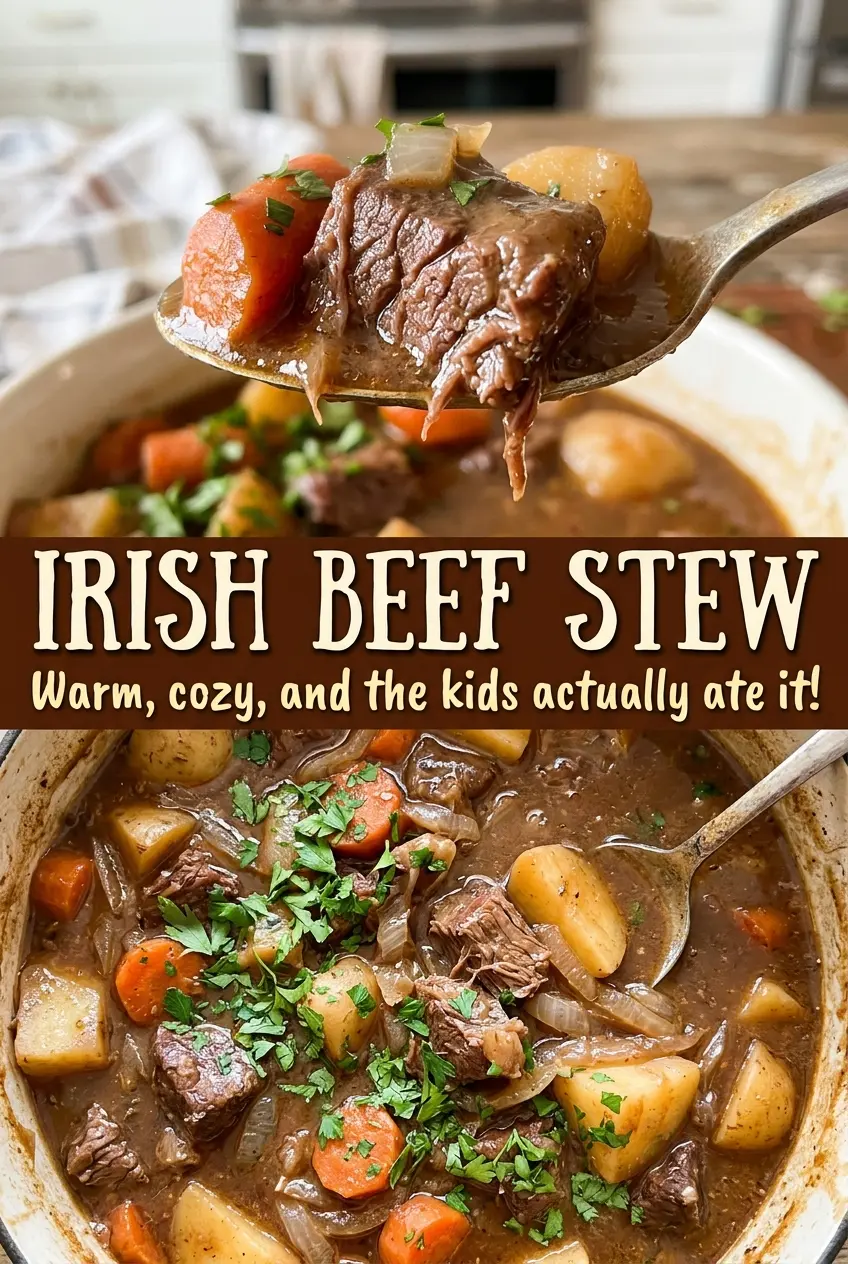
- Beef chuck — Chuck has enough connective tissue to become tender during a slow braise, unlike a very lean cut that can turn dry. Ask for evenly sized pieces, or cut the beef into consistent chunks at home so they cook at a similar pace.
- Stout — A stout such as Guinness gives the broth a roasted, malty flavor and a little bitterness. A different stout works, though its sweetness and roastiness will vary; the broth-forward option below is a good choice when you don’t want beer.
- All-purpose flour — Flour thickens the cooking liquid as it simmers. Use standard all-purpose flour here; it blends into the onion and oil without needing a separate slurry. For a gluten-free version, use the replacement described below.
- Yukon Gold potatoes — Their creamy texture and ability to hold together make them a good fit for a long-simmered stew. Red potatoes are a useful swap with a slightly waxier bite; russets are more likely to soften and break apart.
- Low-sodium beef broth, onion, garlic, thyme, and bay leaf — Low-sodium broth lets the beef, stout, and seasonings stay in balance. A fresh onion and garlic give the base its savory start, while dried thyme and a bay leaf add an earthy background without taking over.
- Carrots — Choose firm carrots that feel crisp, since they hold up better during the final simmer. Cut them into pieces of similar size so they soften at about the same rate.
Building the Stew in the Right Order
Brown the Beef Without Rushing
Pat the beef dry, season it with the salt and pepper, and heat the vegetable oil in a 6-quart Dutch oven over medium-high heat. Brown the beef in batches on all sides, transferring each batch to a plate as it colors. Look for a deep brown surface rather than a gray one, and give the pot a moment to heat back up if the sizzle fades. Don’t crowd the pieces or move them constantly while they’re browning.
Make the Stout Base
Add the chopped onion to the same pot and cook for 5 minutes, stirring occasionally, until it begins to soften. Stir in the minced garlic and cook for 30 seconds; it should smell fragrant, not toasted. Add the flour and cook for 1 minute, scraping the browned bits from the bottom as you stir. Pour in the stout and beef broth, then add the dried thyme and bay leaf and bring everything to a gentle simmer.
Give the Chuck Time to Soften
Return the beef and any juices on the plate to the pot, then cover and simmer over low heat for 1 1/2 to 2 hours. A gentle simmer should show small, occasional bubbles rather than a hard, rolling boil. Stir occasionally so nothing catches on the bottom, and check a piece of beef as the cooking time approaches its end. It should be nearly tender before the vegetables go in.
Finish with the Carrots and Potatoes
Stir in the carrots and potatoes, cover the pot, and simmer for 30 to 40 minutes. The vegetables should be tender when pierced, and the beef should yield easily to a fork. If the beef still feels firm, give it more time at a low simmer rather than raising the heat. Remove the bay leaf before serving.
Two Useful Ways to Adapt Irish Beef Stew
Make It Gluten-Free
Use stout labeled gluten-free and replace the all-purpose flour with a 1:1 gluten-free all-purpose flour blend. Keep the other ingredients and method the same. The exact malt flavor depends on the stout you choose, but the flour blend still gives the broth body.
Skip the Beer
Replace the stout with the same amount of low-sodium beef broth for a version without beer. The stew will still be savory, but it won’t have stout’s roasted, slightly bitter edge. This is a straightforward swap if you prefer a more broth-forward flavor.
Storage and Reheating
- Refrigerator: Refrigerate in an airtight container within 2 hours and use within 3 to 4 days. The potatoes will soften as the stew sits.
- Freezer: Freeze in airtight containers for up to 2 to 3 months for best quality. The stew freezes well, though the potatoes may be softer or a little mealy after thawing.
- Reheating: Warm gently in a covered saucepan over medium-low heat, stirring occasionally, until the center reaches 165°F. Avoid high heat, which can scorch the thickened broth before the stew heats evenly.
Questions I Get Asked About Irish Beef Stew
Irish Beef Stew
Ingredients
Equipment
Method
- Pat the beef dry and season it with the salt and pepper.
- Heat the oil in a 6-quart Dutch oven over medium-high heat.
- Brown the beef in batches on all sides, transferring each batch to a plate.
- Add the onion to the pot and cook for 5 minutes, stirring occasionally.
- Add the garlic and cook for 30 seconds.
- Stir in the flour and cook for 1 minute, scraping up any browned bits from the bottom of the pot.
- Pour in the stout and broth.
- Stir in the thyme and bay leaf, then bring the mixture to a gentle simmer.
- Return the beef and any accumulated juices to the pot, cover, and simmer over low heat for 1 1/2 to 2 hours, stirring occasionally, until the beef is nearly tender.
- Stir in the carrots and potatoes, cover, and simmer for 30 to 40 minutes, until the vegetables are tender and the beef is fork-tender.
- Remove the bay leaf and let the stew rest for 5 minutes before serving.


