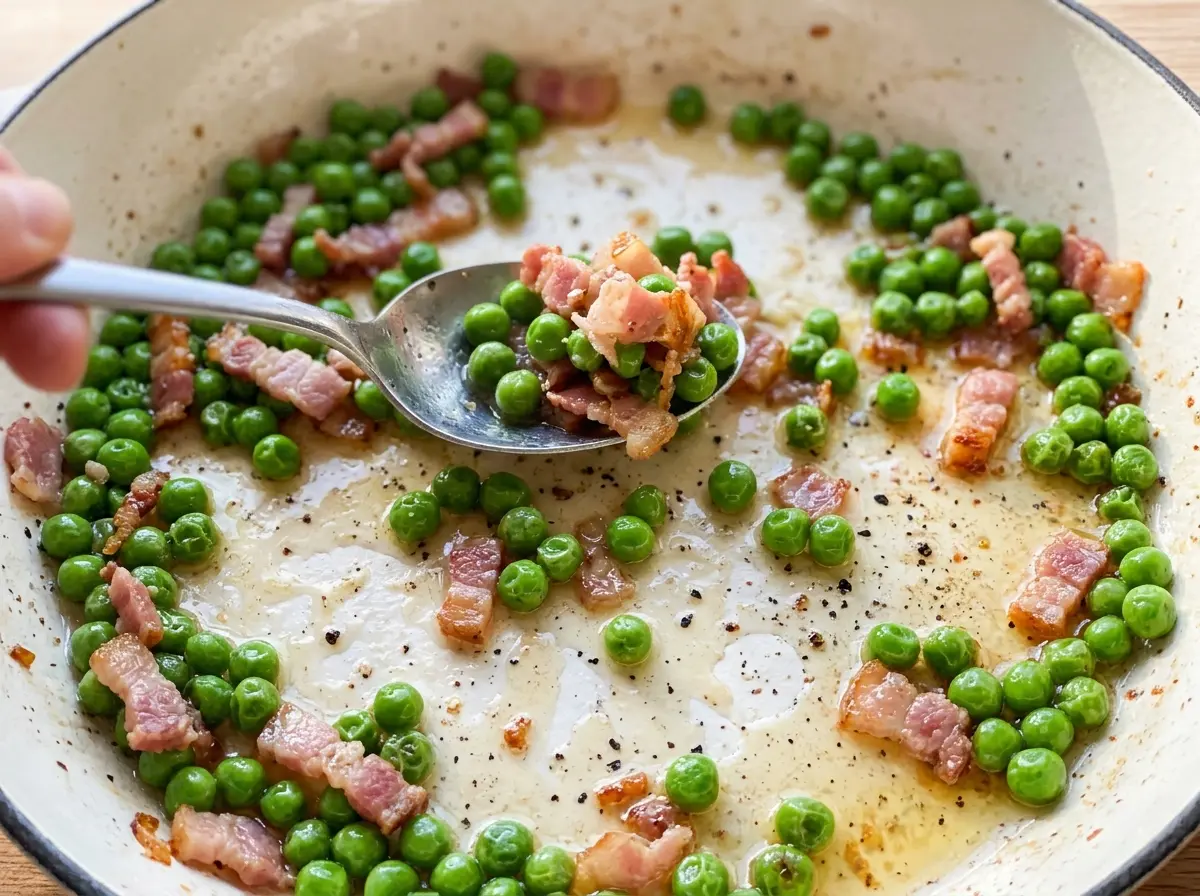
The pancetta starts to sizzle, then the fat slowly gathers in the bottom of the skillet. Give it time: when the pieces turn brown and the pan smells savory, you’ve built the flavor that makes a short list of ingredients taste like more than the sum of its parts. These peas with pancetta are one of my favorite ways to turn a bag of frozen peas into a warm, satisfying side dish.
I cook the peas straight from frozen, with a little chicken broth and the lid on. The broth creates steam while the peas heat through, so there’s no need to thaw them or fuss with a separate pot. Shallot softens in the pancetta fat, and a final pat of butter rounds everything out. You get tender peas, salty browned pancetta, and just enough buttery broth to bring each bite together.
Kitchen Note
Leave the rendered pancetta fat in the skillet when you add the shallot. It gives the shallot a savory base and carries that browned pancetta flavor through the whole dish.
Save these peas with pancetta for a quick side with tender peas, browned pancetta, and a buttery finish.
Why Frozen Peas Don’t Need a Separate Thaw
Thawing peas first sounds like a way to protect their texture, but it adds work and can leave them wet before they even reach the skillet. Starting with frozen peas lets the covered pan do two jobs at once: the broth warms into steam, and the peas heat gently in that moist environment. They come out tender without having to sit in a pot of boiling water.
Keep the lid on while they cook, and don’t keep lifting it to check. The covered skillet holds the steam around the peas, which matters because the broth is a small amount rather than a deep cooking liquid. Stir once during cooking to redistribute the peas, then let the final minutes do their work. When they’re hot and tender, take the skillet off the heat before adding the butter. The peas hold their shape, and the broth stays light instead of becoming a watery puddle.
This approach also makes the timing forgiving: frozen peas go straight from the bag to the skillet, so there’s no waiting for them to thaw and no guessing how much water they’ve picked up. Keep the lid snug and use a skillet large enough for the peas to spread across the bottom.
What Pancetta, Shallot, and Butter Each Bring

- Pancetta — This is the salty, savory backbone, and browning it first gives the dish depth that plain peas don’t have on their own. Diced pancetta from the refrigerated meat section is convenient; if you’re buying it cut to order, ask for a small dice so the pieces brown evenly. Diced bacon works in the same amount, though it brings a smokier flavor and may be saltier.
- Shallot — Finely chopped shallot softens quickly and brings a mild onion flavor without taking over the peas. Choose a firm shallot with dry skin; there’s no need to seek out a specialty variety. Finely chopped yellow onion is a practical substitute, but give it enough time to soften because its pieces are usually larger and its flavor is more pronounced.
- Chicken broth — The broth supplies the moisture that steams the frozen peas and contributes a savory note. A standard boxed broth works well here; choose a lower-sodium version if you want more control over the final salt level. Vegetable broth is the closest swap, especially if you’re leaving out the pancetta.
- Frozen peas — Frozen peas are dependable here because they’re already shelled and can go straight into the covered skillet. Look for a bag with loose peas rather than one frozen into a solid clump. Fresh shelled peas can be used, but they may need a different cooking time depending on their size and freshness.
- Unsalted butter — Stirring butter in off the heat adds a soft, rounded finish without masking the peas. Unsalted butter lets you control the seasoning, but salted butter also works if you reduce or skip the added salt after tasting. For a dairy-free version, olive oil gives a smooth finish, though it tastes less creamy.
From Browning Pancetta to Glossy, Tender Peas
Render and Brown the Pancetta
Set a 12-inch skillet over medium heat and add the diced pancetta. Cook for 5 to 7 minutes, stirring occasionally, until the pieces are browned and most of the fat has rendered. If the pancetta is still pale, give it another moment within that range rather than turning up the heat and risking scorched edges. You want browned pieces and a thin layer of flavorful fat in the pan.
Soften the Shallot
Add the finely chopped shallot and cook for 1 to 2 minutes, stirring. It should look softened and slightly translucent, not browned or crisp. Keep it moving so it cooks evenly in the pan. If the shallot starts coloring quickly, lower the heat; it needs only a short time before the peas go in.
Steam the Peas in the Covered Skillet
Stir in the chicken broth and frozen peas, then cover the skillet. Cook for 4 to 6 minutes, stirring once, until the peas are hot and tender. The lid traps the steam, so keep it in place between that one stir and the end of cooking. If the peas are still cool or firm, give them another moment rather than serving them before they’re heated through.
Finish with Butter Off the Heat
Remove the skillet from the heat before stirring in the butter, kosher salt, and black pepper. Keep stirring until the butter melts and coats the peas. Taste, then serve the peas hot. Adding the butter after the pan leaves the burner gives it time to melt into the warm broth without continuing to cook.
Easy Ways to Change the Peas Without Losing Their Character
Make a vegetarian skillet of peas
Leave out the pancetta and use vegetable broth in place of chicken broth. Soften the shallot in the butter over medium heat, then stir in the broth and frozen peas and continue with the covered cooking. The result is gentler and less salty, with the butter and shallot carrying the savory flavor.
Finish dairy-free with olive oil
Replace the butter with olive oil, stirring it in after you take the skillet off the heat. The peas will still have a silky coating, but the finish will taste lighter and less creamy. The rest of the ingredients and cooking method can stay the same.
Turn the side into a chunky pea mash
After the butter melts, crush some of the peas against the side of the skillet with the back of a spoon, leaving the rest whole. This keeps the pancetta pieces distinct while making the broth and butter cling more closely to the peas. It’s a good change when you want a softer, more substantial spoonful.
Storage and Reheating
- Refrigerator: Store leftovers in a covered container for 3 to 4 days. The peas will soften a little after chilling.
- Freezer: Freeze in an airtight container for up to 2 months. The flavor holds, but thawed peas will be softer than freshly cooked ones.
- Reheating: Warm gently in a covered skillet over low heat or in the microwave, stirring once, until hot. Avoid prolonged high heat, which can make the peas mushy.
Questions That Come Up When Cooking Peas with Pancetta
Peas with Pancetta
Ingredients
Equipment
Method
- Add the pancetta to a 12-inch skillet over medium heat and cook for 5 to 7 minutes, stirring occasionally, until browned and most of the fat has rendered.
- Add the shallot and cook for 1 to 2 minutes, stirring, until softened.
- Stir in the chicken broth and frozen peas, cover the skillet, and cook for 4 to 6 minutes, stirring once, until the peas are hot and tender.
- Remove the skillet from the heat and stir in the butter, salt, and pepper until the butter melts. Taste and serve hot.


