When a fork slides through a russet chunk with almost no pressure, the potatoes are ready for the part that decides whether the mash turns fluffy or heavy. I keep the pieces close to an inch so they soften at about the same pace, then drain them well before adding anything creamy. That’s what makes these Southern mashed potatoes tender without leaving a watery layer at the bottom of the bowl.
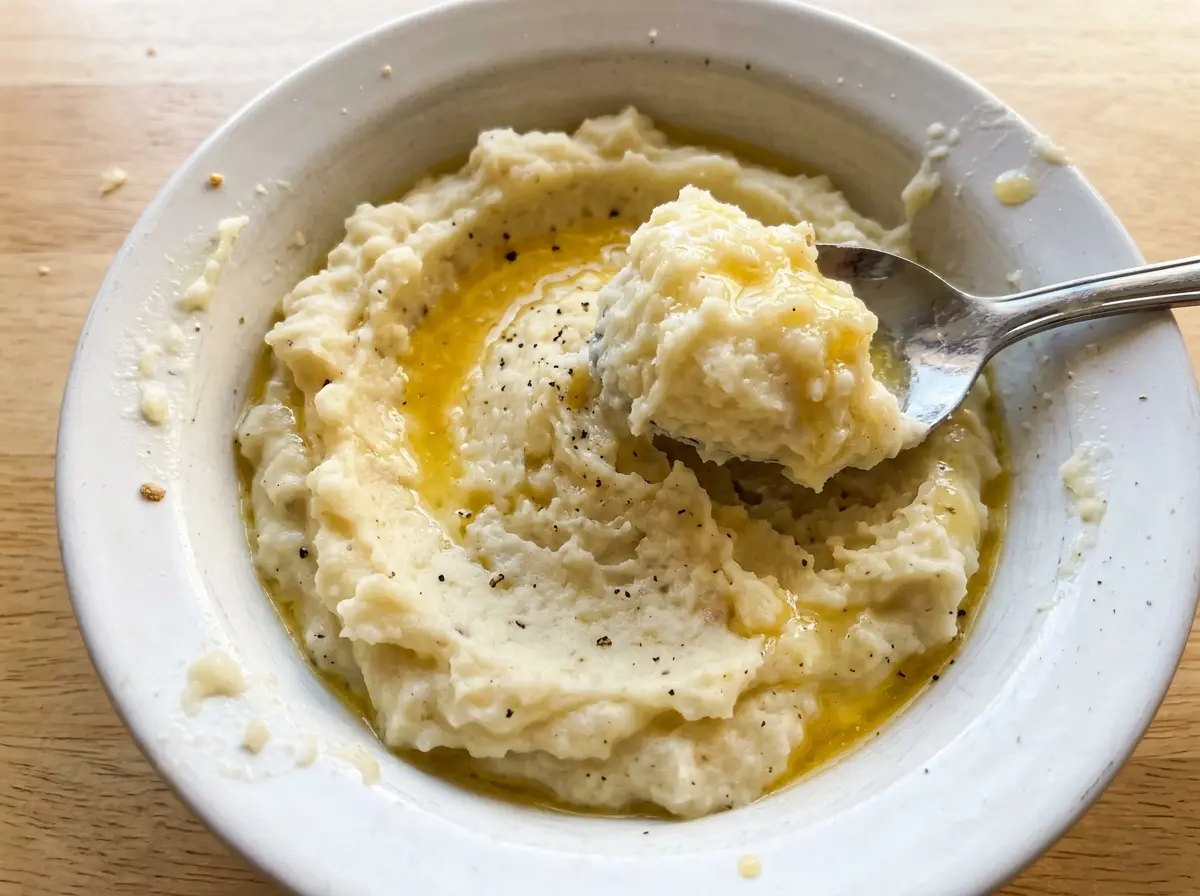
Russets give this mash its soft, starchy texture, while warm whole milk blends in without cooling the potatoes down. I add the butter first and let it melt through the potatoes before stirring in the milk gradually. The result is smooth and buttery, with enough black pepper to keep the richness in balance.
Kitchen Note
I stop mashing once the butter has melted into the potatoes. Working them long after that can turn their soft, fluffy texture sticky.
Save these Southern mashed potatoes for a meal that calls for a warm, buttery side with tender russet texture.
Why the Salt Goes in Twice, Not All at Once
There’s a reason I divide the kosher salt between the cooking water and the finished potatoes. Salt in the water seasons the chunks as they cook, while the last addition lets you adjust the mash after the butter and milk have gone in. Those two moments do different jobs: one seasons the potatoes themselves, and the other helps the whole bowl taste properly balanced.
It’s easy to assume all the salt should go into the pot at the beginning, but that leaves less control over the final seasoning. Butter and milk soften the taste of the potatoes, so a little salt added at the end brings that flavor back into focus. Stir it in with the black pepper, then taste a spoonful while the potatoes are hot. The mash should taste savory, not sharply salty, and the pepper should register without taking over.
The russets contribute plenty of their own soft, starchy character. That’s why this version doesn’t need extra seasoning to taste complete; the split salt, butter, milk, and black pepper keep the potato flavor front and center.
The Russets Set the Texture; the Milk Only Finishes It

- Russet potatoes — Their naturally starchy texture gives the mash its fluffy body. Peeling and cutting them into even chunks helps them cook at a similar rate; waxier potatoes produce a denser, less fluffy result.
- Kosher salt — Its coarse crystals are easy to measure and distribute in the cooking water. Keep the two additions separate so the potatoes are seasoned during cooking and the finished mash gets its final adjustment.
- Unsalted butter — Butter adds richness and a rounded finish, while using unsalted butter leaves the salt level in your control. Cut it into pieces before adding so it melts readily through the hot potatoes.
- Whole milk — Whole milk gives the mash a creamy finish without taking attention away from the potatoes. Warming it before it goes in helps it blend smoothly; cold milk can cool the potatoes and make the mash less pleasant to stir.
- Black pepper — It gives the rich potatoes a gentle, savory edge. Mix it in at the end so it’s distributed through the bowl rather than lost in the cooking water.
From a Gentle Boil to Butter-Glossy Mash
Start with evenly cut, cold-water potatoes
Put the peeled russet chunks in a 5-quart pot and cover them with cold water by 1 inch. Stir in 2 teaspoons of the kosher salt before the pot goes on the heat. Starting with cold water gives the centers time to cook as the water heats, rather than leaving the outsides over-soft before the middle is tender. Keep the chunks close to 1 inch so they finish together.
Keep the boil gentle once it starts
Bring the water to a boil over high heat, then lower the heat until it holds a gentle boil. Cook the potatoes for 15 to 20 minutes, checking for tenderness with a fork. They’re ready when the fork slips in easily and the pieces feel soft all the way through. If the centers still resist, give them more time rather than trying to mash them undercooked.
Warm the milk while the potatoes finish
During the last few minutes of cooking, pour the milk into a microwave-safe measuring cup. Heat it for 45 to 60 seconds, stirring halfway through, until it’s hot but not boiling. Keep an eye on it near the end; you want warm milk ready to blend, not a bubbling cup that’s boiled over. Timing this while the potatoes cook keeps the finish moving smoothly.
Drain well, then build the mash
Drain the potatoes thoroughly and return them to the warm pot, off the heat. Let them steam-dry for 1 minute, then add the butter pieces and mash until the butter has melted and is incorporated. Stir in the warm milk gradually so you can see the texture as it comes together. Mix in the remaining 1 teaspoon of kosher salt and the black pepper, then serve the potatoes hot.
Two Texture Changes That Keep the Same Southern Base
Leave the Mash a Little Rustic
For a more textured bowl, mash just until the butter is incorporated and leave a few small, soft pieces of potato. Stir in the warm milk gradually as usual. The potatoes will feel less uniform and more substantial without changing the ingredient balance.
Use a Ricer for a Finer Finish
If you prefer a more even texture, press the drained potatoes through a potato ricer while they’re still hot, then stir in the butter and warm milk. The ricer breaks up the potatoes into fine pieces, so you get a delicate mash without vigorous beating. Keep the milk gradual so the finished consistency stays easy to control.
Storage and Reheating
- Refrigerator: Transfer leftovers to a covered container and refrigerate within 2 hours. They keep for 3 to 4 days; the mash will firm up as it chills.
- Freezer: Freeze in an airtight container for up to 1 month for best quality. Thaw overnight in the refrigerator; the texture may be slightly less smooth after freezing.
- Reheating: Warm in a covered microwave-safe dish, stirring partway through, or heat gently in a saucepan while stirring. Heat leftovers to 165°F, and avoid high heat, which can dry the edges before the center warms through.
Questions That Come Up Before the Potatoes Hit the Table
Southern Mashed Potatoes
Ingredients
Equipment
Method
- Put the potatoes in a 5-quart pot.
- Add enough cold water to cover the potatoes by 1 inch, then stir in 2 teaspoons of the salt.
- Bring the potatoes to a boil over high heat.
- Reduce the heat to maintain a gentle boil and cook for 15 to 20 minutes, until the potatoes are very tender when pierced with a fork.
- During the last few minutes of cooking, warm the milk in a microwave-safe measuring cup for 45 to 60 seconds, stirring halfway through, until hot but not boiling.
- Drain the potatoes well and return them to the warm pot off the heat.
- Let the potatoes steam-dry for 1 minute.
- Add the butter and mash the potatoes until the butter is melted and incorporated.
- Gradually stir in the warm milk.
- Mix in the remaining 1 teaspoon salt and the black pepper, then serve hot.


