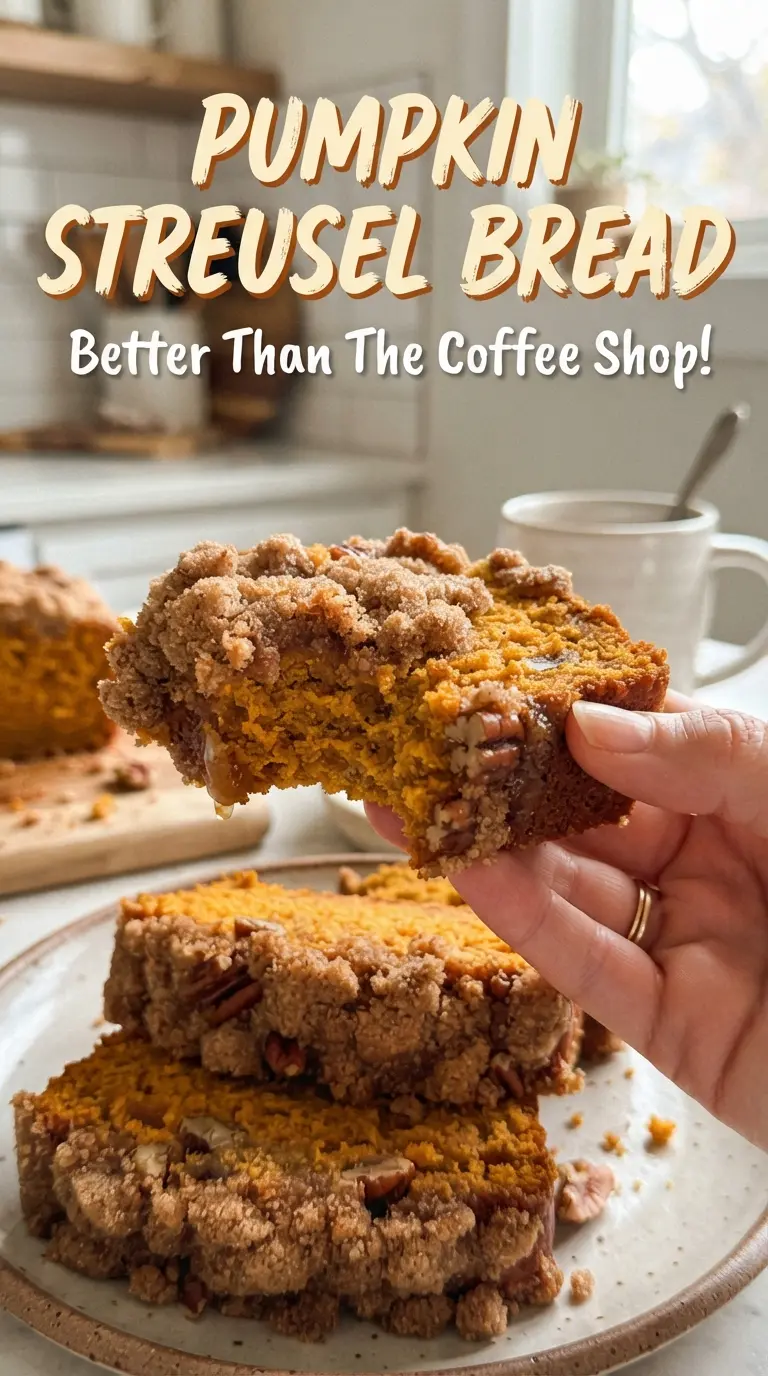
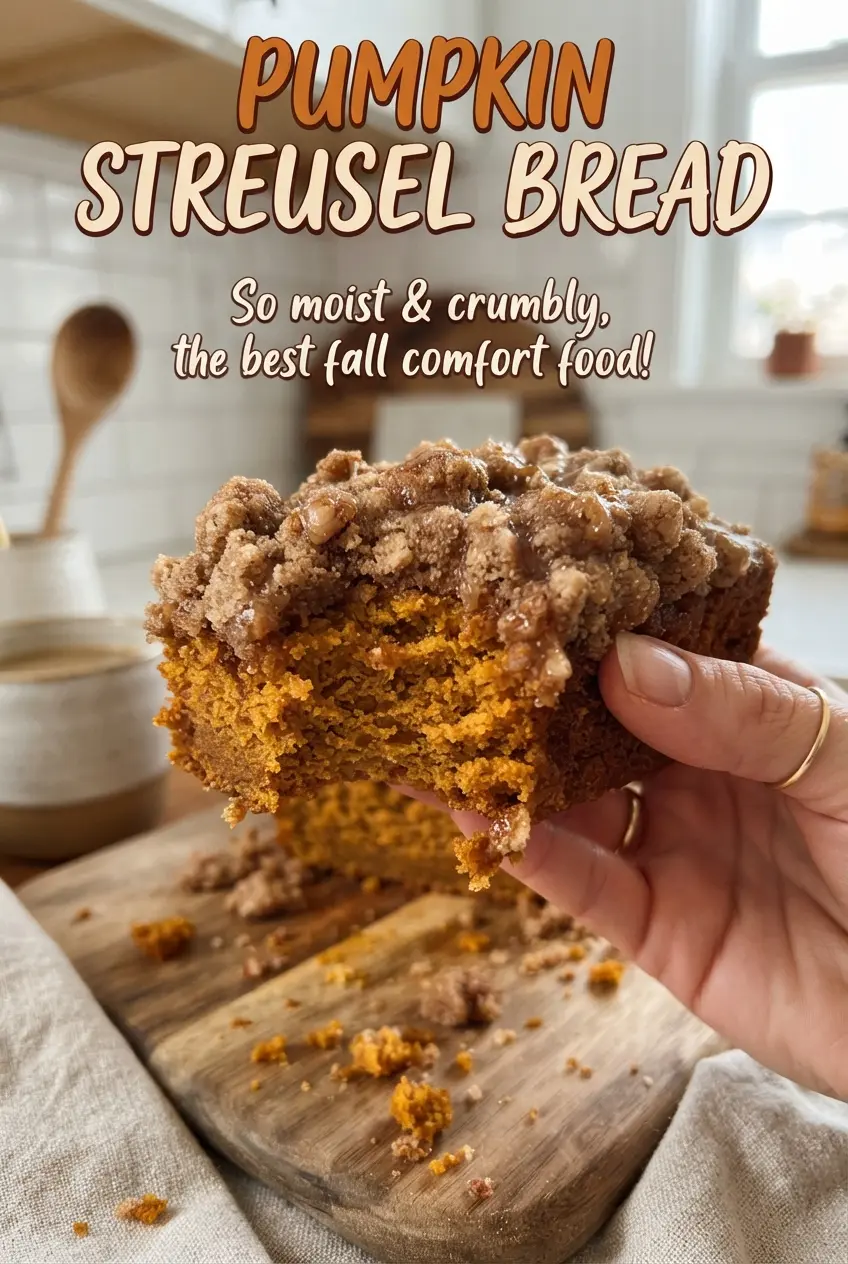
Moist pumpkin bread with a thick cinnamon streusel on top has a way of disappearing before it ever cools completely. The crumb stays tender for days, the top bakes into a crisp, nubbly layer, and every slice gives you that soft-spiced pumpkin center with a buttery crunch right up top. It’s the kind of loaf that earns a permanent spot on the counter while it lasts.
What makes this version work is the balance between the wet batter and the crumb topping. Pumpkin puree brings moisture and body, brown sugar adds depth, and the oil keeps the crumb soft instead of bready. The streusel is built with cold butter, which matters more than people think — warm butter turns into a paste, but cold butter bakes into those crisp, sandy crumbles that stay distinct on the loaf.
Below, I’ll walk through the one step that keeps the streusel from sinking, how to tell when the loaf is baked through without drying it out, and a few smart swaps if you need to work with what’s already in the pantry.
The streusel stayed on top instead of melting into the loaf, and the center was still moist the next day without getting gummy. My kitchen smelled like cinnamon for hours.
Save this Pumpkin Streusel Bread for a soft, spiced loaf with a crunchy cinnamon topping and a bakery-style finish.
The Reason the Streusel Stays Crisp Instead of Disappearing
Streusel on quick bread fails for one of two reasons: the butter is too soft when it goes on, or the batter is too thin for the crumb topping to stay put. This loaf avoids both problems. The topping is mixed with cold butter until it forms coarse crumbs, then chilled, which helps those bits hold their shape long enough to bake into a proper crust.
The batter is thick enough to support the topping without swallowing it. That matters because pumpkin batter carries a lot of moisture, and if you overmix it or loosen it with extra liquid, the streusel sinks and turns sandy instead of crisp. Stir just until the flour disappears, then stop. A few streaks are better than a tough loaf.
- Pumpkin puree — Use plain pumpkin puree, not pumpkin pie filling. Pie filling has sugar and spices already added, which throws off the balance and can make the loaf overly sweet and softer than it should be.
- Vegetable oil — Oil keeps the crumb moist for days and gives you a softer slice than melted butter would. Neutral oil is the right call here because the pumpkin and spice are already doing the flavor work.
- Brown sugar — Brown sugar deepens the flavor and helps the bread stay tender. You can replace part of it with granulated sugar, but you’ll lose some of that molasses note and a little moisture.
- Cold butter for the streusel — This is what makes the topping crumble instead of turning into a paste. If your kitchen is warm, cube the butter first and chill the bowl for a few minutes before rubbing it in.
What Each Ingredient Is Actually Doing in This Recipe
- Primary ingredient (the star) — Quality matters most. Choose the best you can find.
- Cooking medium (oil, butter, or broth) — This carries flavors and prevents dryness.
- Seasonings (salt, pepper, spices, herbs) — Layer flavors so nothing overpowers. Build depth gradually.
- Aromatics (garlic, onion, herbs) — Cook with fat to bloom flavors. Become the foundation.
- Supporting ingredients — Complement the main ingredient without overpowering it.
- Sauce or liquid (if applicable) — Brings flavors together. Balance richness with acid.
- Acid (lemon, vinegar, wine, or other) — Brightens and prevents flat-tasting results.
- Final finish (garnish, glaze, or sauce) — Prevents one-dimensional taste and adds visual appeal.
How to Mix the Batter and Keep the Topper in Place
Building the Streusel First
Start with the streusel before you touch the batter. Rub the flour, brown sugar, cinnamon, and cold butter together until you have pea-sized crumbs and some smaller sandy bits. If it looks smooth, the butter got too warm. Chill the bowl while you make the batter so the topping stays firm enough to sit on top instead of melting in.
Mixing the Pumpkin Base
Whisk the dry ingredients in one bowl and the pumpkin, oil, eggs, sugars, and vanilla in another. When the dry ingredients go into the wet, fold only until the flour disappears. Overmixing here builds structure you don’t want, and that’s how quick bread turns dense or tunnels through the middle. The batter should look thick and spoonable, not pourable like cake batter.
Baking Until the Center Sets
Spread the batter into a greased and lined 9×5-inch loaf pan, then scatter the streusel evenly over the top. Bake at 350°F until a toothpick comes out clean from the center, usually 60 to 65 minutes. If the top is browning too quickly after about 40 minutes, lay foil loosely over the loaf; pressing it down traps steam and softens the streusel.
Cooling Without Crushing the Crust
Let the loaf cool completely in the pan before slicing. It’s tempting to cut it early, but the crumb is still setting while hot, and warm slices can turn gummy or collapse under the streusel. Once it’s fully cool, use the parchment to lift it out cleanly, then slice with a serrated knife so the topping stays intact.
How to Adapt Pumpkin Streusel Bread for Different Kitchens
Dairy-Free Streusel That Still Crumbles
Swap the butter in the topping for a solid plant-based butter stick with a similar fat content. The crumbs won’t taste quite as rich, but they’ll still bake up crisp if the fat stays cold and you chill the mixture before baking.
Gluten-Free Version That Holds Together
Use a cup-for-cup gluten-free flour blend in both the loaf and the streusel. The texture will be a little more tender and less chewy than the original, but it still slices well if you let it cool completely before cutting.
Extra-Spiced Loaf for Stronger Pumpkin Flavor
Add another 1/2 teaspoon of pumpkin pie spice or a pinch of cloves if you want a bolder spice finish. The loaf already has a warm base, so this shifts it toward a more bakery-style spice cake feel without changing the texture.
Storage and Reheating
- Refrigerator: Store tightly wrapped for up to 5 days. The streusel softens a little, but the loaf stays moist.
- Freezer: Freeze the whole loaf or individual slices well wrapped for up to 3 months. Thaw at room temperature without unwrapping so condensation doesn’t make the topping soggy.
- Reheating: Warm slices in a 300°F oven for 8 to 10 minutes. The microwave makes the crumb soft, but it also steams the streusel and takes away the crisp top.
Answers to the Questions Worth Asking
Pumpkin Streusel Bread
Ingredients
Equipment
Method
- Preheat the oven to 350F. Grease and line a 9x5-inch loaf pan.
- Rub the streusel flour, brown sugar, ground cinnamon, and cold butter together into coarse crumbs, then chill. The mixture should look like small clumps rather than a smooth paste.
- Whisk the all-purpose flour, baking soda, salt, and pumpkin pie spice together in a bowl. Break up any spice lumps so the dry mix looks evenly speckled.
- Whisk the pumpkin puree, vegetable oil, eggs, brown sugar, granulated sugar, and vanilla extract until glossy and smooth. No streaks of egg or sugar should remain.
- Fold the dry ingredients into the wet ingredients just until combined. Stop when you no longer see dry flour for a tender loaf.
- Pour the batter into the loaf pan, then cover evenly with the chilled streusel. Sprinkle it across the surface so the top is fully coated.
- Bake for 60-65 minutes, until a toothpick comes out clean. After 40 minutes, tent with foil if browning fast to keep the streusel from darkening too much.
- Cool the bread completely in the pan before slicing. Cutting early can cause the center to seem gummy instead of set.


