Garlic bread deviled eggs bring the two best parts of an appetizer spread into one bite: creamy yolk filling and that unmistakable buttery garlic crunch. The filling stays smooth and savory, with Parmesan and Dijon giving it enough backbone to taste balanced instead of flat, and the toasted panko on top adds the kind of texture that makes people reach for a second one before they’ve finished the first.
What makes this version work is treating the breadcrumb topping like garlic bread, not just a garnish. The garlic gets cooked in butter for a few seconds first, then the panko toasts in that flavored fat until it turns golden and crisp. That step keeps the topping from tasting raw or sandy, and it gives the eggs a real contrast against the soft filling. The yolks also blend better when the garlic is grated fine, which keeps the mixture smooth instead of speckled and chunky.
You’ll find the timing for perfect hard-boiled eggs below, plus the trick for keeping the topping crunchy until the last egg disappears from the platter.
The filling was creamy and the garlic breadcrumb topping stayed crisp until we served the last one. I loved that the Parmesan kept it from tasting heavy.
Save these garlic bread deviled eggs for the appetizer tray that needs a crunchy Parmesan topping and a creamy, make-ahead filling.
The Difference Between Creamy Filling and Watery Filling
Deviled eggs go wrong fast when the yolks are still warm, the mayo is added too early, or the filling gets overworked into a loose paste. For this version, the eggs need to be fully chilled before you peel them. Warm whites tear more easily, and a torn egg white is hard to fill neatly. The yolks should be cool too, or they’ll soften the mayonnaise and make the filling harder to pipe cleanly.
The other place people lose control is the breadcrumb topping. If you add it too early, steam from the filling softens the crunch before the platter even hits the table. Toasting the panko in garlic butter fixes that, but the timing matters just as much as the ingredients. Let the crumbs cool for a minute before you sprinkle them on, then finish with Parmesan at the end so it clings instead of melting into the filling.
What Each Ingredient Is Doing in These Deviled Eggs
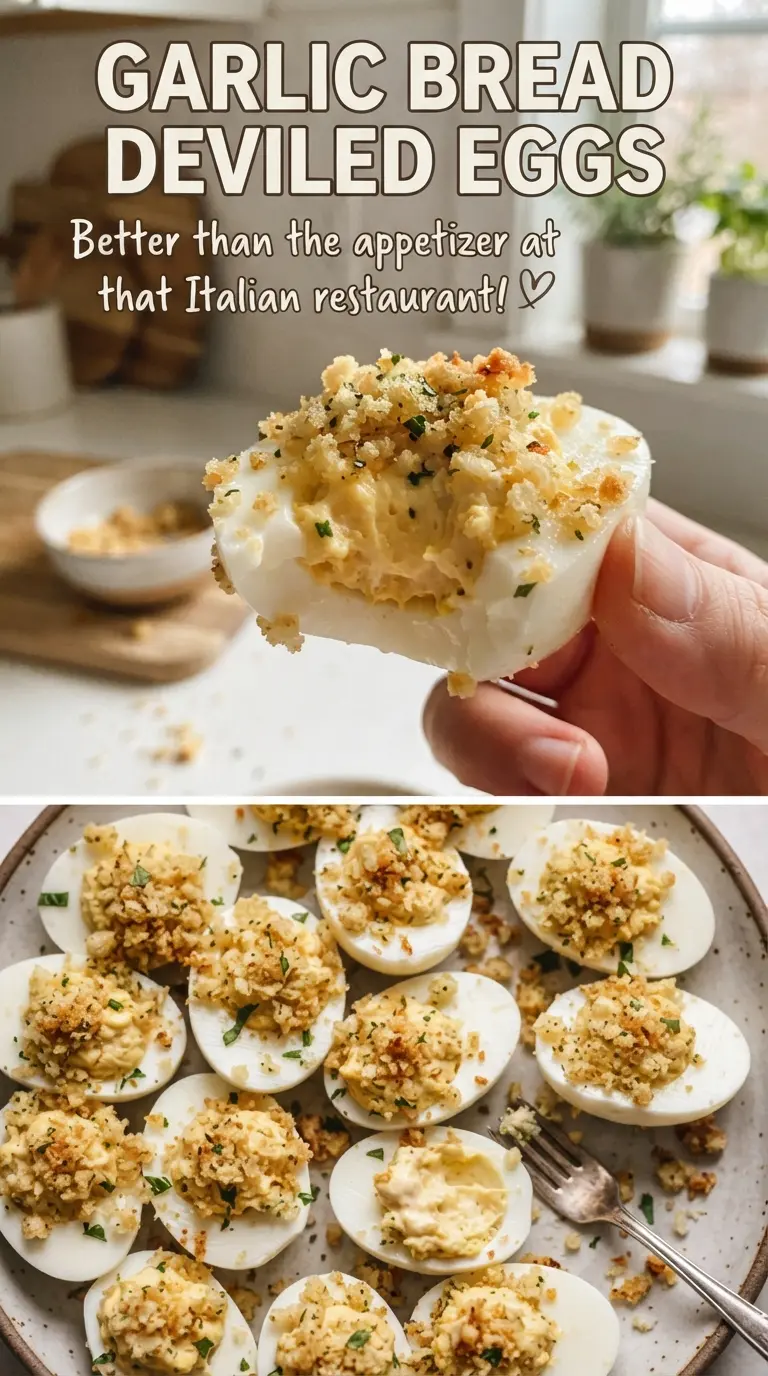
- Eggs — Fresh eggs are fine here, but eggs that are a few days old usually peel more cleanly. That matters more than almost anything else, because rough peeling ruins the look of the finished platter.
- Mayonnaise — This gives the filling its creamy body. Use a good one if you can taste the difference in plain egg salad, because it’s the main flavor carrier in the filling.
- Parmesan — The Parmesan brings saltiness and that nutty, savory edge that makes the eggs taste more like garlic bread and less like standard deviled eggs. Finely grated works best so it disappears into the filling instead of turning grainy.
- Dijon mustard — Just enough sharpness keeps the filling from tasting heavy. It doesn’t make the eggs taste mustardy; it just keeps the richness in check.
- Garlic — Grating the clove into the filling gives you even garlic flavor without harsh bites. Minced garlic belongs in the topping, where it can cook in butter and mellow out.
- Panko breadcrumbs — Panko stays lighter and crisper than regular breadcrumbs. That texture is what makes the topping feel like garlic bread instead of a dusty crumble.
- Butter and parsley — Butter carries the garlic flavor and helps the crumbs brown evenly, while parsley adds a fresh finish so the topping doesn’t taste one-note.
Building the Garlic Butter Crunch Without Softening It
Toast the Topping First
Melt the butter over medium-low heat and add the minced garlic just long enough to smell it bloom, about 30 seconds. If the garlic browns, it turns bitter fast, so keep it moving and add the panko before it has a chance to darken. Toast the crumbs until they’re evenly golden and sound dry when stirred. Stir in the parsley off the heat so it stays green and fresh.
Cook the Eggs the Right Way
Start the eggs in cold water, bring them to a boil, then cover the pot and pull it off the heat for 12 minutes. That method sets the yolks through without leaving them chalky or ringed with gray. Once the timer’s up, chill the eggs in cold water before peeling. If you peel them warm, the whites cling to the shell and tear.
Make the Filling Smooth and Pipeable
Mash the yolks with mayonnaise, Parmesan, Dijon, grated garlic, and salt until the mixture turns creamy and evenly pale. If it looks dry, add a tiny bit more mayo, not warm water or extra mustard, which can throw off the texture. A fork works, but a small food processor gives you the smoothest result. Pipe or spoon the filling into the egg whites once they’re fully dry so it holds its shape.
Finish Right Before Serving
Sprinkle the garlic breadcrumbs over the filled eggs at the last minute. That keeps them crisp and gives the platter the best texture contrast. Finish with a little extra Parmesan so the top looks snowy and savory, then serve right away. These hold well for a short while, but the topping is at its best in the first hour.
How to Adapt These for Different Appetizer Tables
Make Them Gluten-Free
Swap the panko for gluten-free breadcrumbs or crushed gluten-free crackers. You’ll still get crunch, though the texture will be a little denser and less airy than panko. Toast them the same way in the garlic butter so the topping still tastes like garlic bread, not just seasoned crumbs.
Skip the Parmesan for a Dairy-Free Version
Use a dairy-free mayo and leave out the Parmesan in the filling, then finish with the crumbs only if your butter substitute behaves well in the pan. The eggs will taste a little softer and less savory, so add a touch more Dijon to keep the filling from going flat. This version works best when you season it carefully and serve it cold.
Turn Them Into a Bigger Crowd Platter
Double the filling and keep the crumb topping separate until the platter is on the table. The eggs themselves can be assembled a few hours ahead, but the crunch disappears if you season the tops too early. If you need to transport them, pack the filling in a piping bag and the breadcrumbs in a separate container, then assemble at your destination.
Storage and Reheating
- Refrigerator: Store filled eggs without the breadcrumb topping for up to 2 days. The whites stay tender, but the filling can loosen slightly as it chills.
- Freezer: Don’t freeze deviled eggs. The whites turn rubbery and watery after thawing, and the filling separates.
- Reheating: These aren’t meant to be reheated. Serve them cold or cool from the fridge, then add the topping right before serving so the panko stays crisp.
Questions I Get Asked About This Recipe
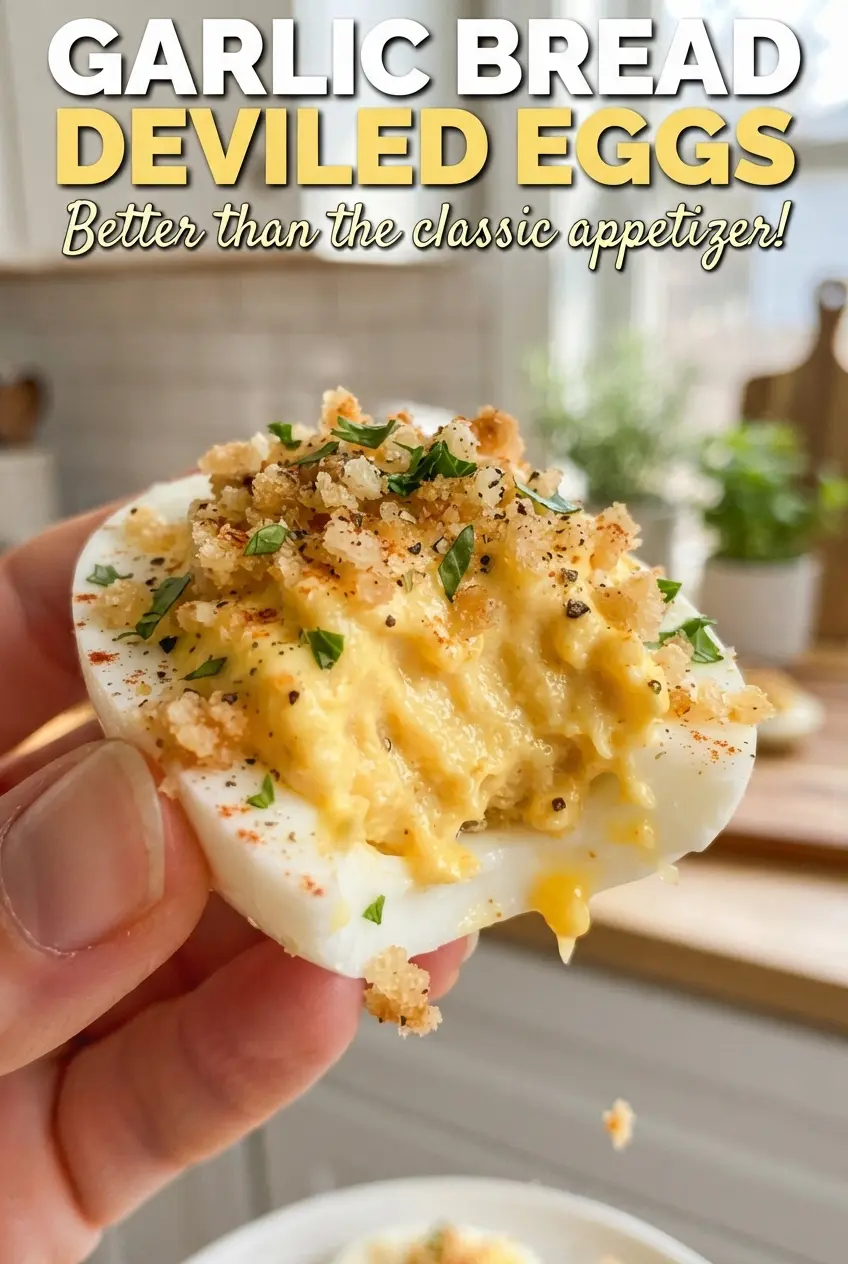
Garlic Bread Deviled Eggs
Ingredients
Equipment
Method
- Melt the butter in a pan and cook the minced garlic for 30 seconds, until fragrant. Add the panko breadcrumbs and toast for 3-4 minutes until golden, stirring as needed for even browning.
- Stir in the chopped parsley and cook for 15 seconds, just until combined. Transfer the toasted garlic crumbs to a plate to cool slightly.
- Place the eggs in a pot and cover with cold water. Bring to a boil, then cover the pot, remove from heat, and let the eggs stand for 12 minutes.
- Chill the eggs, then peel and halve them lengthwise. Remove the yolks carefully to keep the whites intact for piping.
- Mash the yolks with mayonnaise, grated Parmesan, Dijon mustard, grated garlic, and salt until smooth. If needed, scrape the bowl and mash again for an even, creamy texture.
- Pipe the filling into the egg whites. Arrange the halves on a serving platter.
- Sprinkle the garlic breadcrumbs generously over the eggs just before serving so they stay crunchy. Finish with extra Parmesan on top.


