Bright, chunky cranberry relish is the kind of side that wakes up everything on the plate. It’s tart first, then sweet, with a clean citrus edge and just enough texture to keep every bite interesting. The raw cranberries stay lively instead of turning jammy, and that fresh crunch is what makes this version worth putting on the table again and again.
The trick is chopping the fruit in short pulses instead of grinding it into a paste. That keeps the relish loose and spoonable instead of turning it into a puree. The orange goes in with the peel on, which brings in the fragrant oils, while the apple softens the sharp cranberry bite and helps the mixture settle into a balanced, glossy salad-like side.
Below you’ll find the small details that make a big difference: how finely to pulse each fruit, why the sugar needs time to dissolve, and when to add the pecans so they stay crisp. If you’ve ever ended up with cranberry relish that tastes harsh or watery, this version fixes both problems.
The relish set up beautifully after a few hours in the fridge. The sugar mellowed the tart cranberries without making it mushy, and the orange flavor came through so clean.
Save this cranberry relish for Thanksgiving plates, leftover turkey sandwiches, and any meal that needs a bright sweet-tart side.
The Reason This Relish Stays Bright Instead of Turning Jammy
Raw cranberry relish lives or dies on texture. If you run everything too long in the processor, the fruit breaks down into a wet paste and the sharpness gets muddied. Short pulses keep the cranberries distinct, which gives you that fresh, chunky bite people expect from a good relish.
The other thing that matters is balance. Cranberries need enough sugar and enough time for the harsh edge to soften, but not so much processing that they lose their sparkle. Chilling does more than cool the bowl; it gives the sugar time to draw out juices and round off the whole mixture so it tastes integrated instead of scattered.
What Each Fruit Is Actually Doing in the Bowl
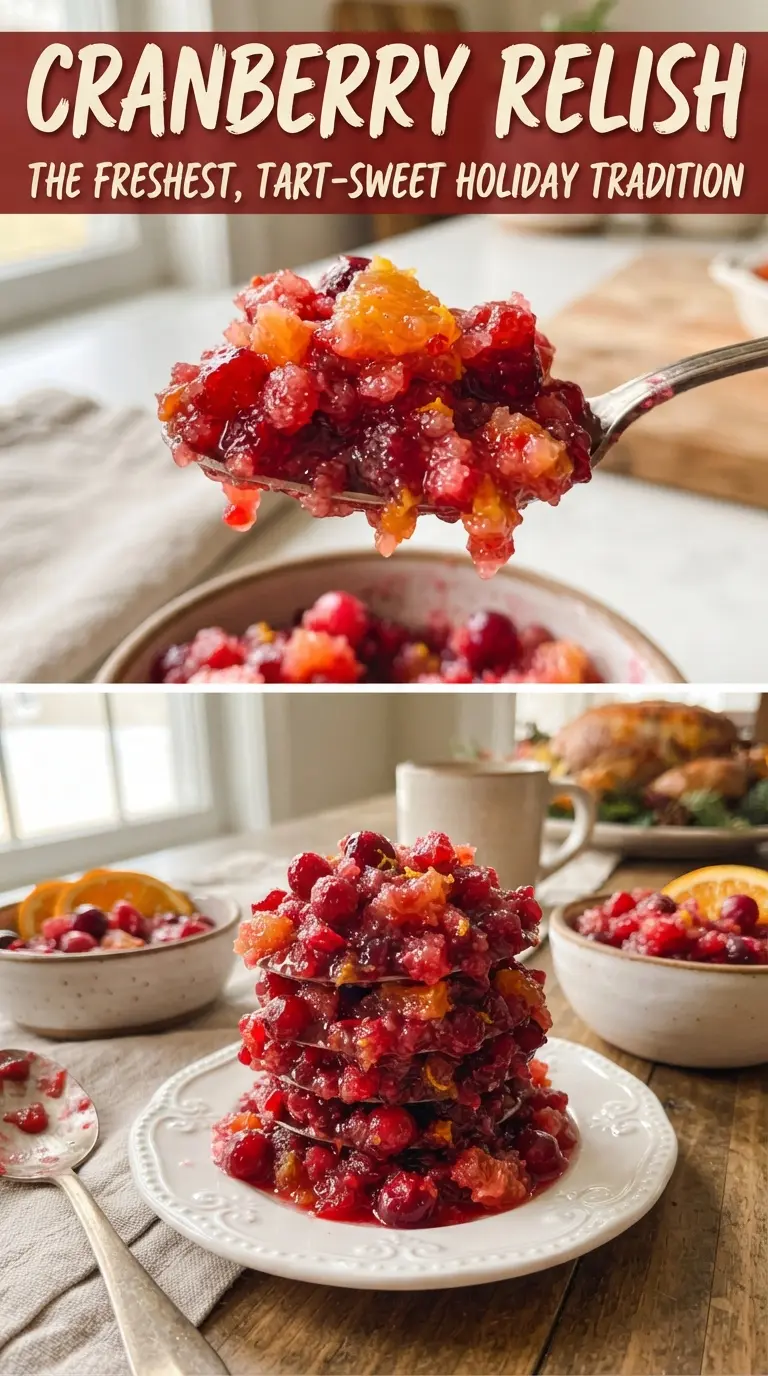
- Fresh cranberries — These bring the bold tart flavor and the ruby color. Use fresh berries if you can, because frozen cranberries release more liquid and can make the relish looser.
- Orange, unpeeled — The peel carries the strongest citrus aroma, which is what keeps the relish from tasting flat. Seed it well so you don’t end up with bitterness from the pith and stray seeds.
- Apple — The apple softens the tart edges and adds body without making the relish heavy. A crisp, slightly sweet apple works better than a mealy one because it keeps a cleaner texture.
- Sugar — This doesn’t just sweeten; it helps the fruit juices pull together into a glossy relish. Start with the listed amount, then taste after chilling if you want it a touch sweeter.
- Pecans — Optional, but they add a good nutty crunch at the end. Stir them in just before serving so they stay crisp instead of soaking up moisture in the fridge.
How to Pulse the Fruit So the Relish Keeps Its Texture
Chopping the Cranberries First
Pulse the cranberries on their own until they look coarsely chopped, not crushed. You want little uneven pieces and a few larger bits, because that range gives the relish its bite. If you process them until they’re almost smooth, the mixture turns sloshy once the sugar starts drawing out juice.
Finishing the Orange and Apple
Pulse the orange and apple separately until they’re finely chopped, then stir them into the cranberries. The orange should be small enough to blend in evenly, but not so fine that the peel disappears completely. The apple should disappear into the background, adding sweetness and structure without turning the whole bowl into applesauce.
Letting the Sugar Do Its Work
Once everything is mixed, cover the bowl and chill it at least 4 hours, or overnight if you have the time. The sugar needs that rest to dissolve and pull the flavors together. If you serve it too soon, it will taste sharp and grainy instead of settled and bright.
Adding the Pecans at the End
Stir the pecans in right before serving. Add them early and they soften, which takes away the contrast that makes them worth using. The relish should spoon onto the plate in glossy mounds with crunchy bits still intact.
Make It Sweeter or Sharper
If you like a softer, more traditional cranberry sauce vibe, add another 2 to 4 tablespoons of sugar after the first chill. If you want it punchier, hold back a tablespoon and let the natural tartness stay front and center. The change is small, but it shifts the whole character of the dish.
Skip the Nuts for a Nut-Free Side
Leave out the pecans and the relish still works beautifully. You lose the final crunch, but the fruit has enough texture on its own that nothing feels missing. This is the cleanest version if you need a nut-free side for a crowd.
Lower-Sugar Version
For a less sweet relish, cut the sugar to 1/2 cup and chill overnight so the fruit has more time to soften the tart edge naturally. It will stay brighter and sharper, with a more tart-salad feel than a classic holiday relish.
Storage and Reheating
- Refrigerator: Keep it covered for up to 5 days. The flavor actually improves on day two, though the fruit will soften a little more.
- Freezer: It freezes, but the texture gets wetter after thawing. If you plan to freeze it, leave out the pecans and thaw it in the fridge overnight.
- Reheating: This relish is served cold, so don’t heat it. If it seems too loose after chilling, stir it and let it sit uncovered for 10 to 15 minutes before serving.
Answers to the Questions Worth Asking
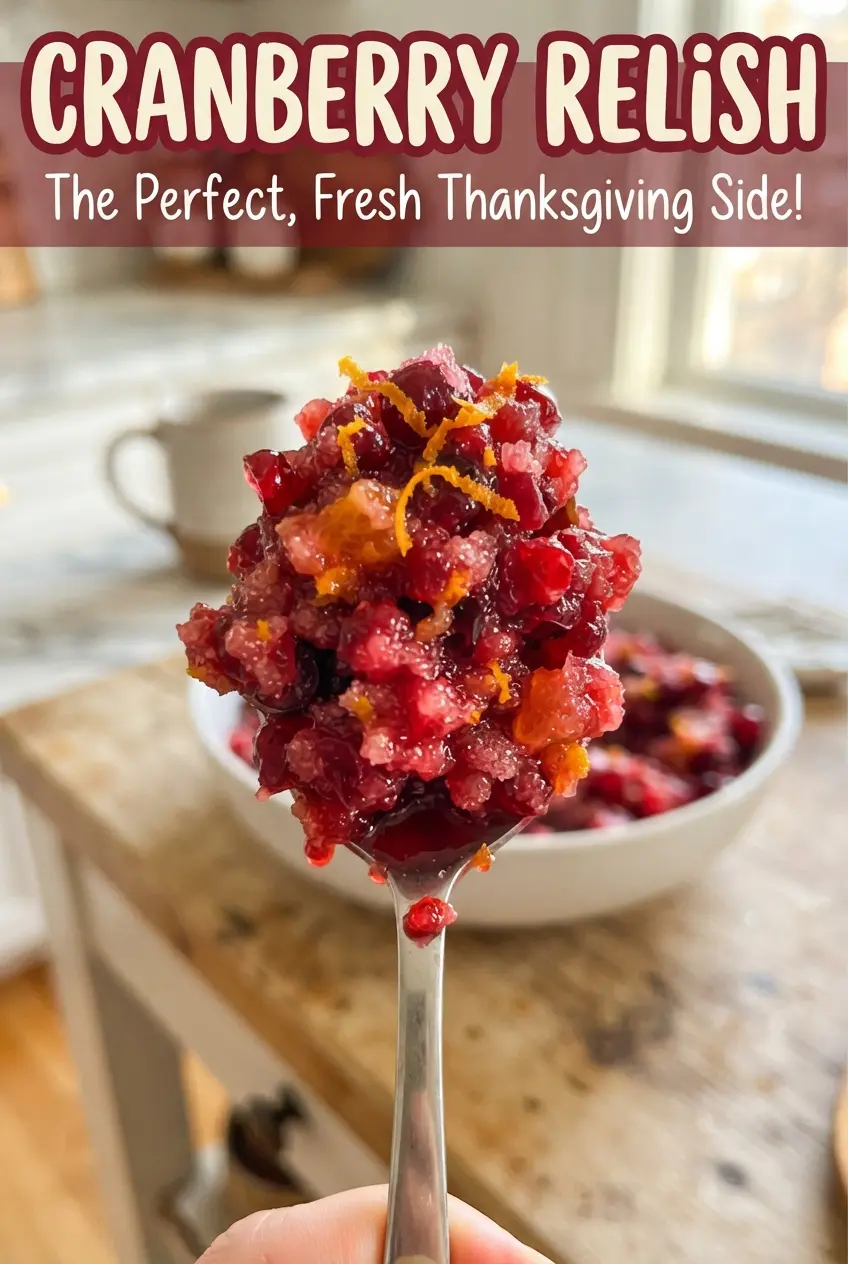
Cranberry Relish
Ingredients
Equipment
Method
- Pulse fresh cranberries in a food processor until coarsely chopped, then transfer them to a bowl.
- Pulse orange and apple in the food processor until finely chopped.
- Stir the finely chopped orange and apple and sugar into the coarsely chopped cranberries until evenly combined.
- Cover and chill at 40°F (4°C) for at least 4 hours or overnight so the sugar dissolves and the flavors meld.
- Stir in chopped pecans just before serving.