Leftover rotisserie chicken noodle soup lands exactly where a good weeknight dinner should: fast, cozy, and full of real flavor without asking much from you. The broth tastes like it simmered longer than it did, the vegetables stay tender instead of mushy, and the shredded chicken keeps the whole pot hearty enough to count as dinner on its own. Egg noodles pull in the broth and turn every bowl into something warm and satisfying.
The trick here is building enough flavor in the first few minutes that the soup doesn’t taste thin. A quick sauté of onion, carrots, and celery gives the broth a base, and adding the chicken near the end keeps it juicy instead of stringy. The lemon at the finish wakes everything up, which matters more than people think in a simple soup like this.
Below, I’ll walk through the small choices that make this soup taste like more than a shortcut. There’s a simple fix for bland broth, the best time to add the noodles, and a few swaps if you’re working with what’s already in the fridge.
The broth came together fast, but it still tasted like it had simmered all afternoon. Adding the lemon at the end made the chicken flavor pop, and the noodles stayed just tender instead of falling apart.
Save this leftover rotisserie chicken noodle soup for the nights when you need a fast pot of comfort with lemony broth and tender egg noodles.
The Shortcut That Keeps Rotisserie Chicken Tender, Not Shreddy
Rotisserie chicken already brings built-in seasoning, but it dries out fast if it sits in boiling broth too long. That’s why the chicken goes in at the end, after the noodles have had most of their cooking time. The broth stays clean and savory, and the meat keeps the soft, pull-apart texture you want in a quick soup.
The other place people go wrong is rushing the vegetable base. A few minutes of sautéing onions, carrots, and celery softens the sharp edges and gives the soup more depth before the broth even hits the pot. If you skip that step, the finished soup still works, but it tastes flatter and more one-note.
What Each Ingredient Is Actually Doing In This Soup

- Rotisserie chicken — This is the backbone of the soup and the reason it comes together so quickly. Pull the meat into bite-size shreds instead of chopping it, because shredded chicken blends into the noodles and broth more naturally. If you’ve got mostly breast meat, keep the simmer short so it stays tender.
- Chicken broth — Use a broth you’d actually drink on its own. If yours is on the weak side, a pinch more salt and a little extra lemon at the end will help, but broth quality still matters more here than in a heavily seasoned soup.
- Egg noodles — These cook fast and release just enough starch to give the broth a little body. If you want to keep leftovers from turning soft, cook the noodles separately and add them to each bowl instead of the pot.
- Lemon juice — This is the thing that keeps the soup from tasting dull. Don’t add it early, or the brightness cooks off; stir it in right before serving so the broth tastes fresh and alive.
- Carrots, celery, and onion — This is the classic soup base for a reason. Slicing the vegetables evenly helps them soften at the same pace, so you don’t end up with crunchy bits floating in an otherwise finished soup.
The 20 Minutes That Build the Whole Bowl
Softening the Vegetables First
Melt the butter or warm the oil in a large pot, then add the onion, carrots, and celery. Cook them until the onion turns translucent and the carrots start to lose their raw edge, about 4 to 5 minutes. If the pot looks dry, the vegetables will stick before they soften, so keep the heat at medium and stir them often enough to keep them moving.
Making the Broth Taste Cooked, Not Thin
Add the garlic for just a minute, then pour in the broth and stir in the thyme, parsley, and garlic powder. Let the broth come to a full boil before the noodles go in, because this is what seasons the whole pot and wakes up the dried herbs. If the broth tastes flat here, it’s usually missing salt, not more herbs, so adjust after it simmers a minute.
Cooking the Noodles to the Right Point
Add the egg noodles and cook until they’re almost tender, not fully soft. They’ll finish in the hot broth after the chicken goes in, and that short carryover keeps them from turning bloated or soggy. If you’re making this ahead, undercook them by an extra minute or two or they’ll absorb too much liquid later.
Finishing with the Chicken and Lemon
Stir in the shredded chicken and let it warm through for 3 to 4 minutes, just until the meat is hot. Turn off the heat and add the lemon juice, then taste and season with salt and pepper. The lemon should brighten the broth, not make it sour, so start with the juice from half a lemon and add more only if the soup still feels heavy.
Ways to Stretch, Lighten, or Rework the Pot
Make It Gluten-Free Without Losing the Comfort
Swap the egg noodles for a gluten-free pasta that holds its shape well, or use rice noodles if that’s what you have. Gluten-free pasta can soften quickly, so pull it off the heat the moment it turns tender. The broth stays the same, but the texture is a little lighter and less chewy than classic egg noodles.
Dairy-Free by Default
Use olive oil instead of butter and the soup stays fully dairy-free without changing the finished texture much. The olive oil brings a slightly rounder, greener note than butter, which works well with the lemon and herbs. The broth won’t taste rich and creamy, but it will still taste full and balanced.
Add More Vegetables When the Fridge Is Bare
A handful of spinach, peas, or chopped zucchini can go in near the end if you want to stretch the pot. Add tender vegetables in the last 2 minutes so they stay bright and don’t collapse into the broth. This is the best move when you need to turn a little leftover chicken into a full dinner for six.
Storage and Reheating
- Refrigerator: Store for up to 4 days. The noodles will keep soaking up broth, so expect a thicker soup by day two.
- Freezer: The broth and chicken freeze well, but the noodles get soft after thawing. For best results, freeze the soup without the noodles and cook fresh noodles when you reheat it.
- Reheating: Warm it gently over medium-low heat until steaming, not boiling. A hard boil can overcook the noodles and make the chicken stringy, so add a splash of broth or water if the soup has thickened too much in the fridge.
Answers to the Questions Worth Asking
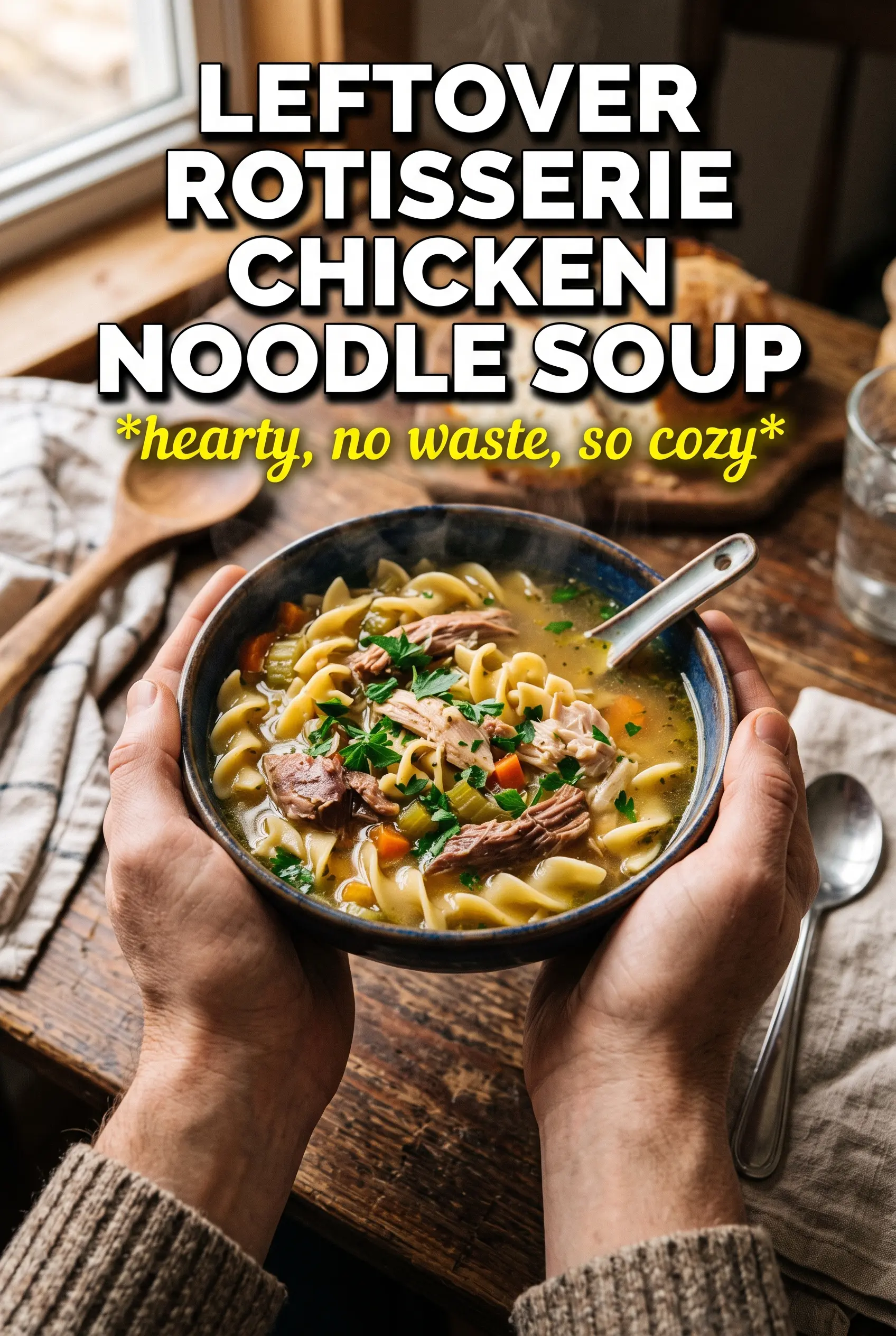
Leftover Rotisserie Chicken Noodle Soup
Ingredients
Equipment
Method
- Melt butter or olive oil in a large pot over medium heat, then add onion, carrots, and celery. Sauté for 4-5 minutes, stirring occasionally, until the onion softens and the vegetables look slightly glossy.
- Add garlic and cook for 1 minute, stirring so it doesn’t brown. Pour in chicken broth and add dried thyme, dried parsley, and garlic powder.
- Bring the broth to a boil over high heat, looking for steady bubbling across the pot. Keep it at a boil before adding noodles.
- Add egg noodles and cook for 5-6 minutes until they are almost tender. Stir occasionally so noodles don’t stick.
- Add leftover rotisserie chicken and simmer for 3-4 minutes until heated through. You should see gentle bubbling and the chicken warmed throughout.
- Squeeze in lemon juice and season with salt and pepper to taste. Taste the broth and adjust so the flavor pops without being sharp.
- Garnish with fresh parsley and serve immediately. The top should look bright green against the golden broth.