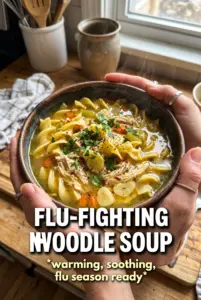
Deeply golden broth, tender shredded chicken, and noodles that soak up just enough ginger and garlic make this flu-fighting chicken noodle soup the kind of pot I keep coming back to when everyone needs something warm and grounding. The lemon at the end wakes everything up, the cayenne leaves a gentle heat behind, and the broth tastes fuller than a simple chicken noodle soup without feeling heavy.
What makes this version work is the layering. Bone-in chicken gives the broth more body, while ginger, garlic, turmeric, and thyme build a base that tastes simmered, not dumped in. The honey, lemon juice, and apple cider vinegar go in at the end on purpose; that last hit of acid sharpens the broth and keeps it from tasting flat after the noodles absorb some of the salt.
Below, I’ll walk through the small choices that matter most, like when to add the noodles so they stay tender, how to keep the broth clear and flavorful, and what to swap if you only have boneless chicken on hand.
The broth turned out rich and golden, and the ginger-cayenne warmth was perfect without being too spicy. I added the lemon at the end like you said and it made the whole pot taste brighter.
Save this flu-fighting chicken noodle soup for the nights when you want a golden broth, fresh lemon, and ginger warmth in one pot.
The Reason the Broth Tastes Deep Instead of Watery
The broth in chicken noodle soup can go flat fast if everything simmers too hard or if the aromatics never get enough time to infuse. Here, the chicken cooks right in the broth, which pulls flavor out of the meat and bones while the ginger, garlic, onion, celery, and carrots soften into the liquid. A steady simmer matters more than a rolling boil; boiling too hard makes the broth murky and can tighten the chicken before it has time to turn tender.
The lemon juice and apple cider vinegar are not decoration. They brighten the broth after the noodles go in and the salt gets absorbed, which is why the soup still tastes full at the table instead of dull and starchy. If your soup ever tastes like it needs something but you can’t name it, that last bit of acid is usually the missing piece.
What the Ginger, Turmeric, and Lemon Are Doing Here

- Bone-in chicken — This gives the broth more body and a richer chicken flavor than boneless pieces alone. If you only have boneless chicken, the soup still works, but the broth will taste lighter and you may want a little extra salt at the end.
- Fresh ginger and garlic — These are what give the soup its warming edge. Fresh is worth using here; powdered versions won’t give you the same bright, clean heat.
- Turmeric — It gives the broth that deep golden color and a faint earthy note. Use a light hand, because too much can make the soup taste dusty instead of comforting.
- Egg noodles — These thicken the soup a little as they cook and make it feel like a full meal. If you expect leftovers, cook them just until tender so they don’t turn mushy in the fridge.
- Lemon juice and apple cider vinegar — The lemon brings freshness, while the vinegar sharpens the broth in a deeper way. If you only have lemon, use a touch more and taste before adding extra.
How to Build the Soup Without Overcooking the Chicken or Noodles
Starting with a Gentle Simmer
Combine the chicken, vegetables, garlic, ginger, broth, turmeric, cayenne, and thyme in a large pot, then bring everything up just until it starts to bubble. Drop the heat to a gentle simmer right away. If the pot boils hard, the broth gets cloudy and the chicken can turn stringy before it has a chance to cook through evenly.
Shredding the Chicken at the Right Moment
After 25 to 30 minutes, the chicken should be cooked through and easy to pull apart. Lift it out onto a plate and shred it while it’s still warm, then slide it back into the pot. If the meat resists shredding, give it a few more minutes; forcing it too early gives you tougher pieces in the soup.
Cooking the Noodles in the Broth
Add the egg noodles only after the chicken goes back in. They need just 6 to 8 minutes, and the soup should stay at a gentle simmer while they cook so they stay tender instead of bloated and soft. If you’re planning leftovers, stop as soon as the noodles are done; they keep absorbing broth as the soup sits.
Finishing with Acid and Seasoning
Stir in the honey, lemon juice, and apple cider vinegar off the heat if possible, then taste for salt and pepper. This is the stage that wakes the whole pot up. If the broth tastes flat, it usually needs more salt or a little more lemon, not more cayenne.
How to Make This Chicken Noodle Soup Work for Different Kitchens
Use boneless chicken thighs for a faster version
Boneless thighs cut the cooking time a little and still give you juicy meat with more flavor than chicken breast. You won’t get quite the same depth in the broth, so lean harder on the ginger, garlic, and a good finishing hit of salt and lemon.
Make it gluten-free with rice noodles
Rice noodles work well if you add them at the very end and watch them closely, because they soften fast. The soup will lose the slight starch-thickened feel that egg noodles give, but the broth stays clean and light.
Skip the honey for a lower-sugar bowl
The honey rounds out the lemon and vinegar, but the soup still works without it if you prefer a sharper finish. If you leave it out, add the lemon slowly and taste as you go so the broth doesn’t turn too tart.
Storage and Reheating
- Refrigerator: Store for up to 4 days. The noodles will keep soaking up broth, so expect the soup to thicken.
- Freezer: Freeze the soup without the noodles for the best texture. Add freshly cooked noodles after thawing and reheating.
- Reheating: Warm it gently over medium-low heat until just steaming. A hard boil will break up the chicken and make the noodles mushy.
Questions I Get Asked About This Recipe
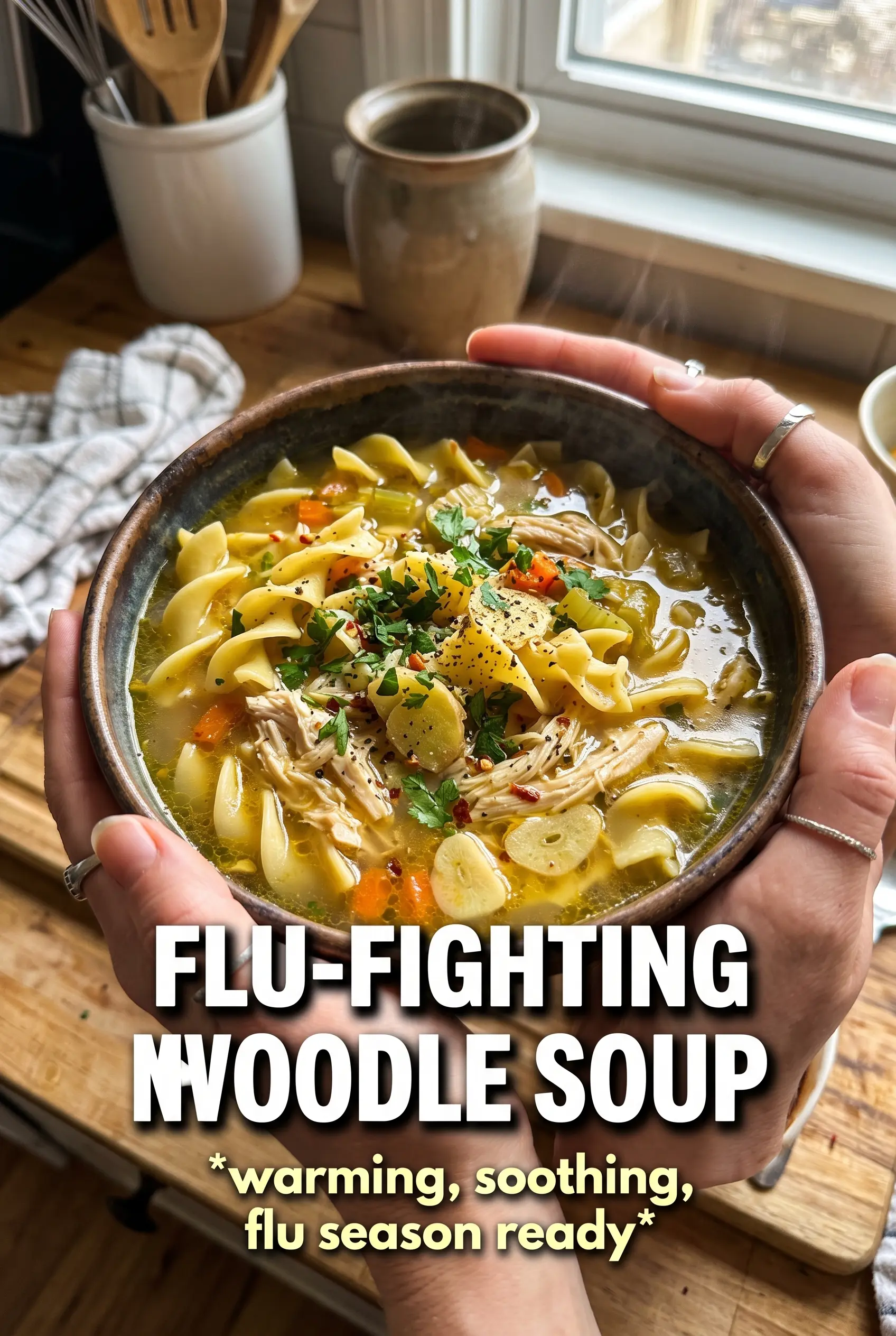
Flu-Fighting Chicken Noodle Soup
Ingredients
Equipment
Method
- Add chicken, carrots, celery, onion, garlic, ginger, chicken broth, turmeric, cayenne pepper, and dried thyme to a large Dutch oven. Bring to a boil over high heat, then reduce to a gentle simmer for 25-30 minutes until the chicken is cooked.
- Remove the chicken, shred it, and return the shredded chicken to the pot. Keep the soup at a steady simmer.
- Add egg noodles to the pot and cook for 6-8 minutes until tender. Stir occasionally so they don’t stick.
- Stir in honey, lemon juice, and apple cider vinegar, then season with salt and pepper to taste. Cook for 1 minute more so the flavors meld.
- Serve hot with extra lemon wedges for squeezing and fresh parsley on top. Spoon broth and noodles evenly in each bowl.