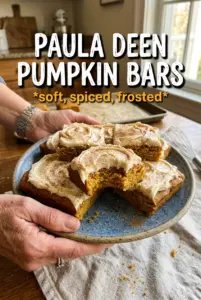
Paula Deen Pumpkin Bars bake up soft, plush, and warmly spiced, with a thick layer of cream cheese frosting that lands somewhere between dessert and indulgence. The bars stay tender instead of dry, and the generous frosting gives each square the kind of finish that makes people come back for a second piece before the pan is halfway gone.
What makes this style of pumpkin bar work is the balance of pumpkin puree, oil, and eggs. Oil keeps the crumb moist for days, while the pumpkin brings body and that unmistakable earthy sweetness. The batter is intentionally simple, but the pan size matters: spread too thin and the bars bake up dry; too thick and the center never sets properly. The frosting matters just as much. Cream cheese and butter need to be beaten until completely smooth before the sugar goes in, or the topping turns grainy instead of silky.
Below you’ll find the little details that keep the bars tender, the frosting spreadable, and the pecan topping neat. If you’ve ever had pumpkin bars that baked up heavy or frosted unevenly, the notes here will help you avoid both problems.
The bars baked up perfectly soft and the frosting stayed thick enough to spread without sliding off. I chilled them before cutting, and the pecan on top made each square look bakery-fancy.
Save these pumpkin bars for the days when you want a thick cream cheese frosting and a soft, spiced crumb in every square.
Why These Pumpkin Bars Stay Tender Instead of Heavy
The most common mistake with pumpkin bars is treating the batter like cake batter and beating it too long after the dry and wet ingredients come together. That builds extra structure, which sounds helpful until the bars bake up dense and a little tough instead of soft and plush. Stir just until the flour disappears. A few streaks are better than overmixing.
The other piece that matters is the pan. A 15×10 jelly roll pan gives you the right thickness for this recipe, which means the center sets at the same time the edges finish. If you use a smaller pan, the bars may need more time and the top can overbake before the middle catches up. If you use a larger sheet pan, the bars turn thin and dry fast.
- Pumpkin puree — Use plain pumpkin puree, not pumpkin pie filling. Pie filling already has sugar and spices mixed in, which throws off both the texture and the seasoning.
- Vegetable oil — Oil is what keeps the crumb soft after chilling. Butter would give a little more flavor, but it also firms up more in the fridge and changes the texture.
- Cinnamon and pumpkin pie spice — These two work together to give the bars a deeper, warmer spice without making them taste sharp or overdone. If you only have pumpkin pie spice, use it in place of both and accept a slightly less cinnamon-forward finish.
What the Frosting and Pecans Are Doing on Top
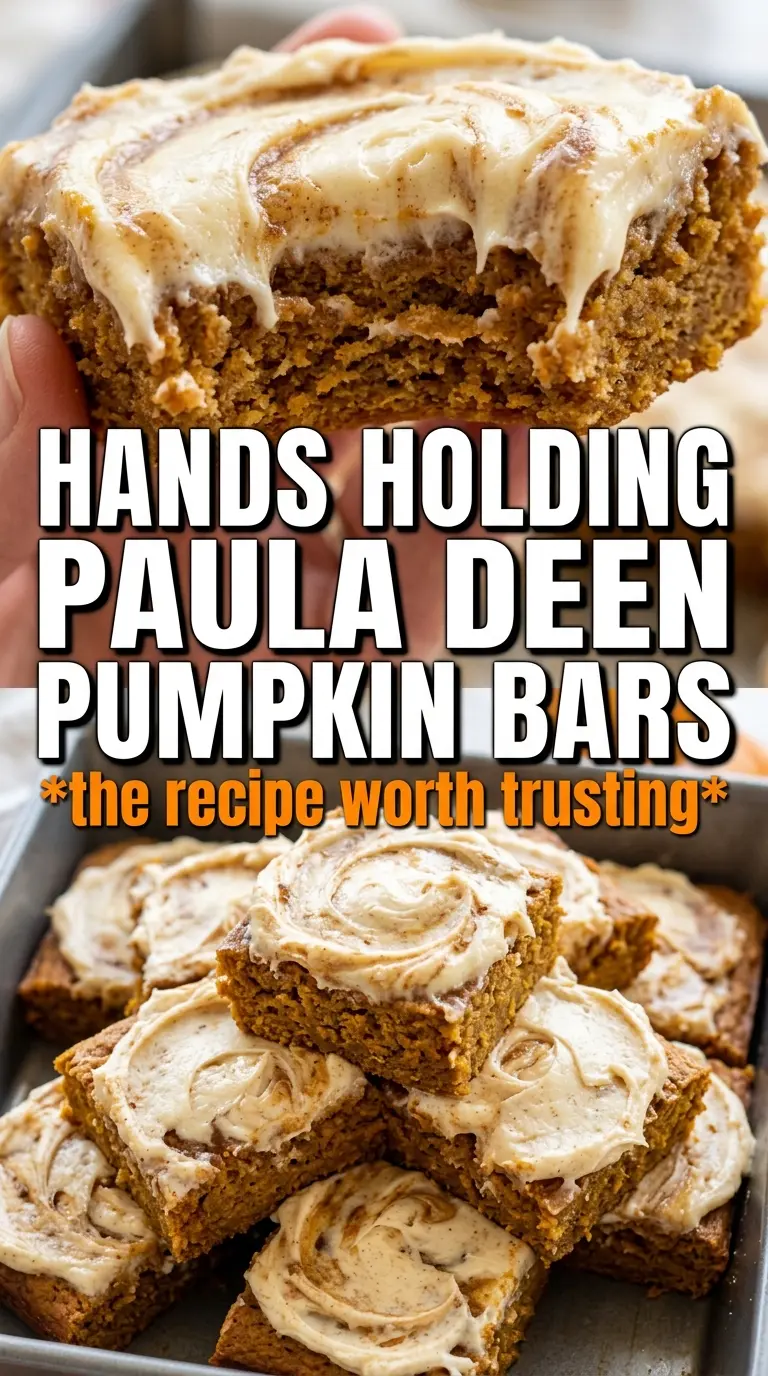
The frosting is half the personality of these bars. Cream cheese brings tang, butter brings richness, and powdered sugar gives the topping enough body to sit in a thick layer without sliding around. If the cream cheese or butter is cold, the frosting turns lumpy and takes forever to smooth out, so let both soften fully before you start. The vanilla may seem small, but it rounds out the sharpness of the cream cheese and makes the whole topping taste finished.
The pecan half on top is more than decoration. It gives each square a little crunch and a visual cue that these are meant to be generous, Southern-style bars, not delicate little tea cakes. Toasted pecans are lovely if you have them, but plain pecans work too. Press them on after frosting so they stay put without sinking.
Building the Batter Without Overworking It
Mix the dry ingredients first
Whisk the flour, sugar, baking powder, baking soda, cinnamon, pumpkin pie spice, and salt until the mixture looks even and pale with no clumps of spice hiding in the corners. That early mixing matters because it keeps the leaveners from landing in one spot and giving you uneven lift. If you see little pockets of cinnamon later, the batter wasn’t combined well enough at this stage.
Bring the wet ingredients together
Beat the eggs, oil, and pumpkin puree until the mixture looks smooth and glossy, with the pumpkin fully broken up. The oil should disappear into the pumpkin instead of floating in separate streaks. If the mixture looks curdled, keep going for a few more seconds; pumpkin puree can look odd before it comes together, but it smooths out quickly.
Fold and spread with a light hand
Add the wet ingredients to the dry and stir only until no flour is visible. The batter will be thick, and that’s exactly what you want. Spread it all the way to the corners of the greased pan so it bakes evenly; an uneven layer gives you dry edges and a gummy center.
Bake until the center just sets
Bake at 350°F until the top looks set and a toothpick comes out with a few moist crumbs, not wet batter. If the middle still looks shiny, it needs a few more minutes. Overbaking is the fastest way to lose the soft, plush texture that makes these bars worth making in the first place.
Cool before frosting
Let the bars cool completely before the frosting goes on. If they’re even a little warm, the cream cheese topping softens and slides, and the pecans won’t hold their neat little spot. A fully cool bar gives you clean cuts and a topping that stays thick.
How to Adapt These Bars for Different Kitchens and Crowds
Gluten-Free Pumpkin Bars
Use a good 1:1 gluten-free baking flour with xanthan gum already included. The bars will be a touch more delicate when warm, so let them cool all the way before cutting. The flavor stays the same, but the crumb may be a little softer and less springy than the original.
Lighter Frosting Layer
If you want less frosting, cut the cream cheese frosting in half and spread it in a thinner layer. The bars will taste a little less rich and a little more pumpkin-forward, but they still hold their moisture well. This works best if you want cleaner, sharper squares for a lunchbox or potluck tray.
Walnut Topping Instead of Pecans
Walnut halves or pieces work if pecans aren’t in the pantry. The flavor turns a little earthier and less buttery, but the crunch still gives the frosting a nice finish. If you’re using chopped nuts instead of halves, press them into the frosting gently so they don’t tumble off when you slice the bars.
Storage and Reheating
- Refrigerator: Store covered for up to 5 days. The frosting firms up, and the bars slice even more cleanly after chilling.
- Freezer: Freeze unfrosted bars for the best texture, wrapped tightly for up to 2 months. Frosting can be frozen separately, but the finished bars are best assembled after thawing.
- Reheating: These are best served chilled or at room temperature, not warmed. If you want to take the chill off, let a piece sit out for 20 to 30 minutes; microwaving melts the frosting and softens the crumb too much.
Questions I Get Asked About This Recipe
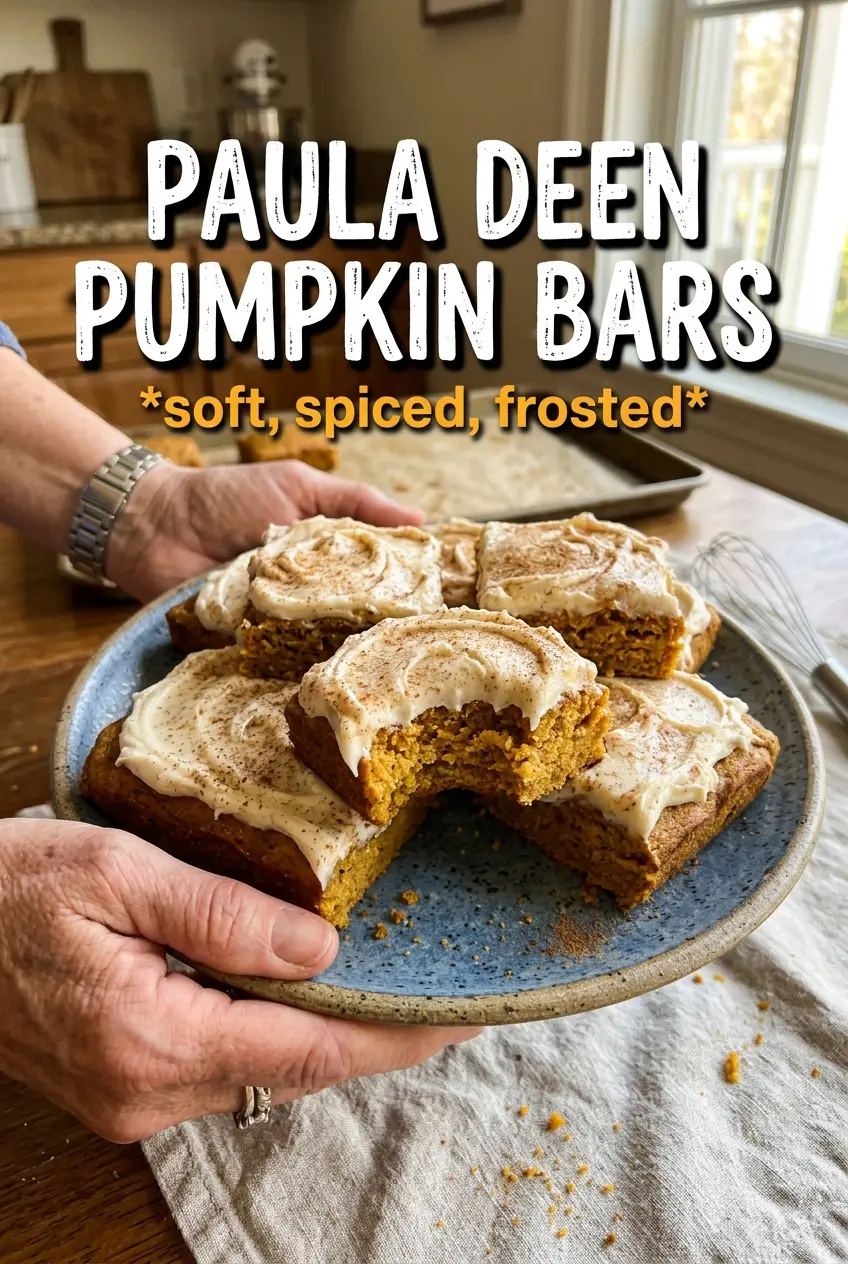
Paula Deen Pumpkin Bars
Ingredients
Equipment
Method
- Preheat oven to 350°F and grease a 15x10 jelly roll pan.
- Whisk together all-purpose flour, granulated sugar, baking powder, baking soda, cinnamon, pumpkin pie spice, and salt until evenly combined.
- Beat eggs, vegetable oil, and pumpkin puree together, then fold into the dry ingredients.
- Spread the batter evenly in the prepared pan.
- Bake at 350°F for 25-30 minutes, until the bars are set.
- Cool completely before frosting.
- Beat cream cheese and unsalted butter until very smooth.
- Add vanilla extract, then gradually beat in powdered sugar until thick and smooth.
- Spread the frosting generously over the cooled bars.
- Press a pecan half onto each bar as garnish.